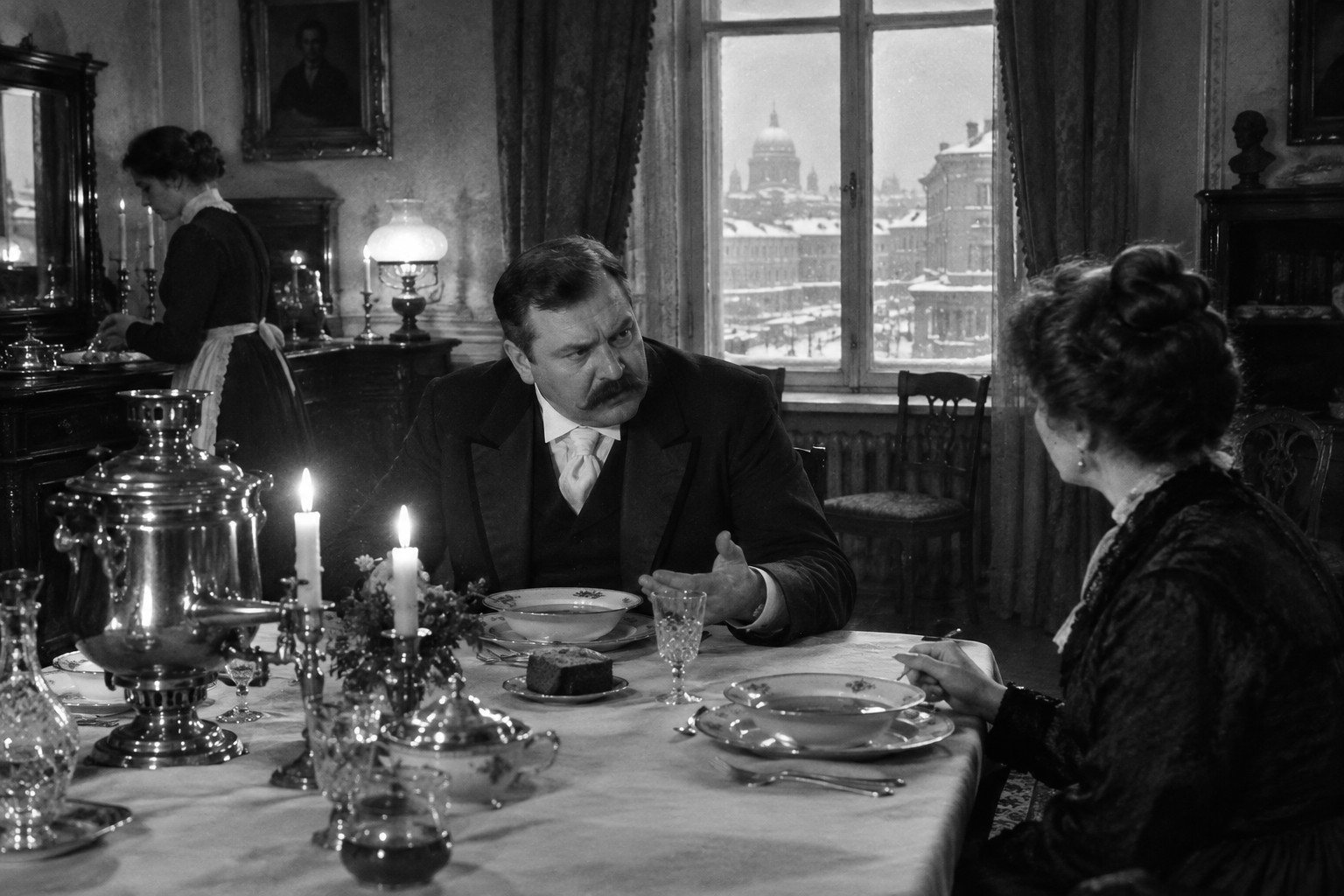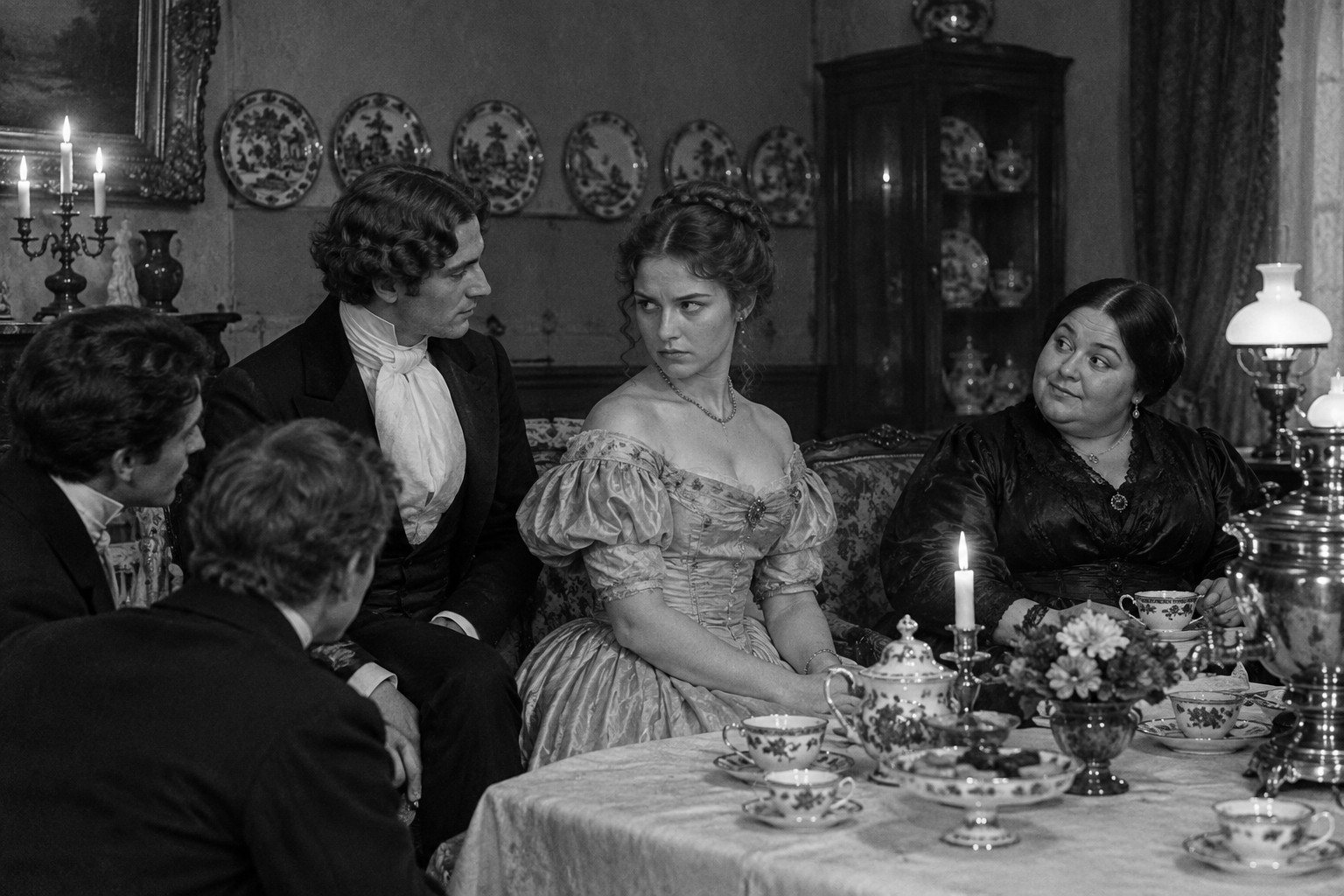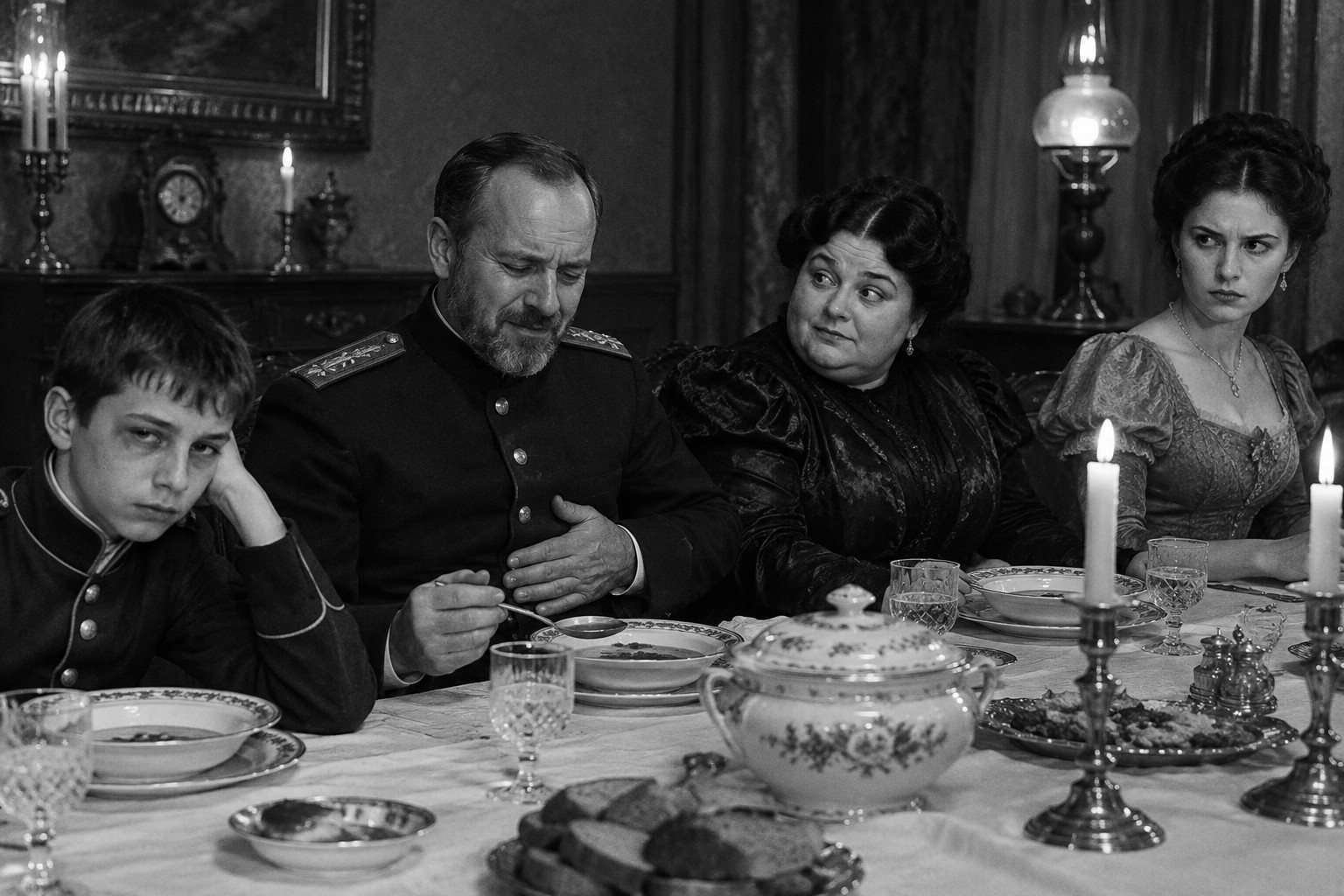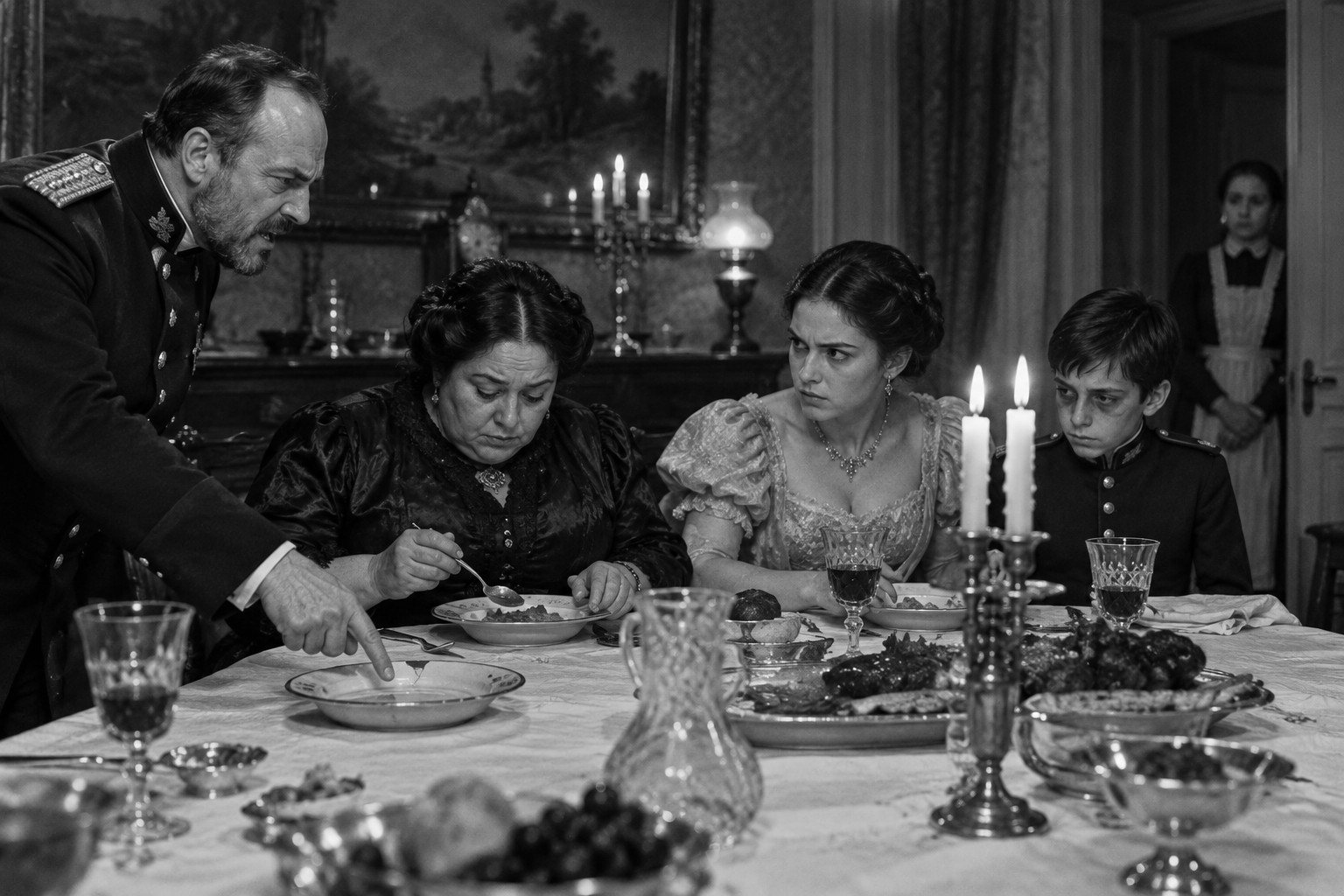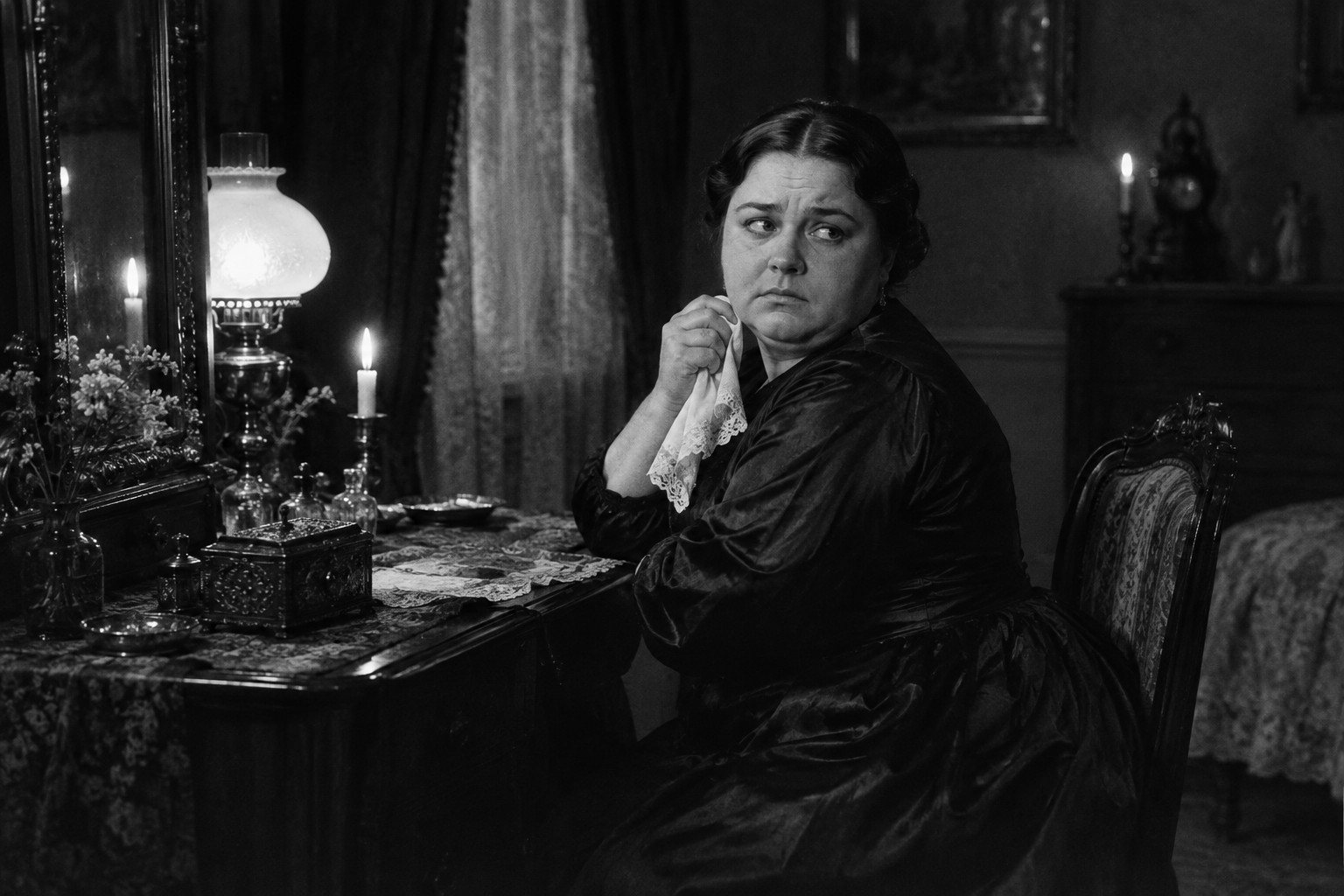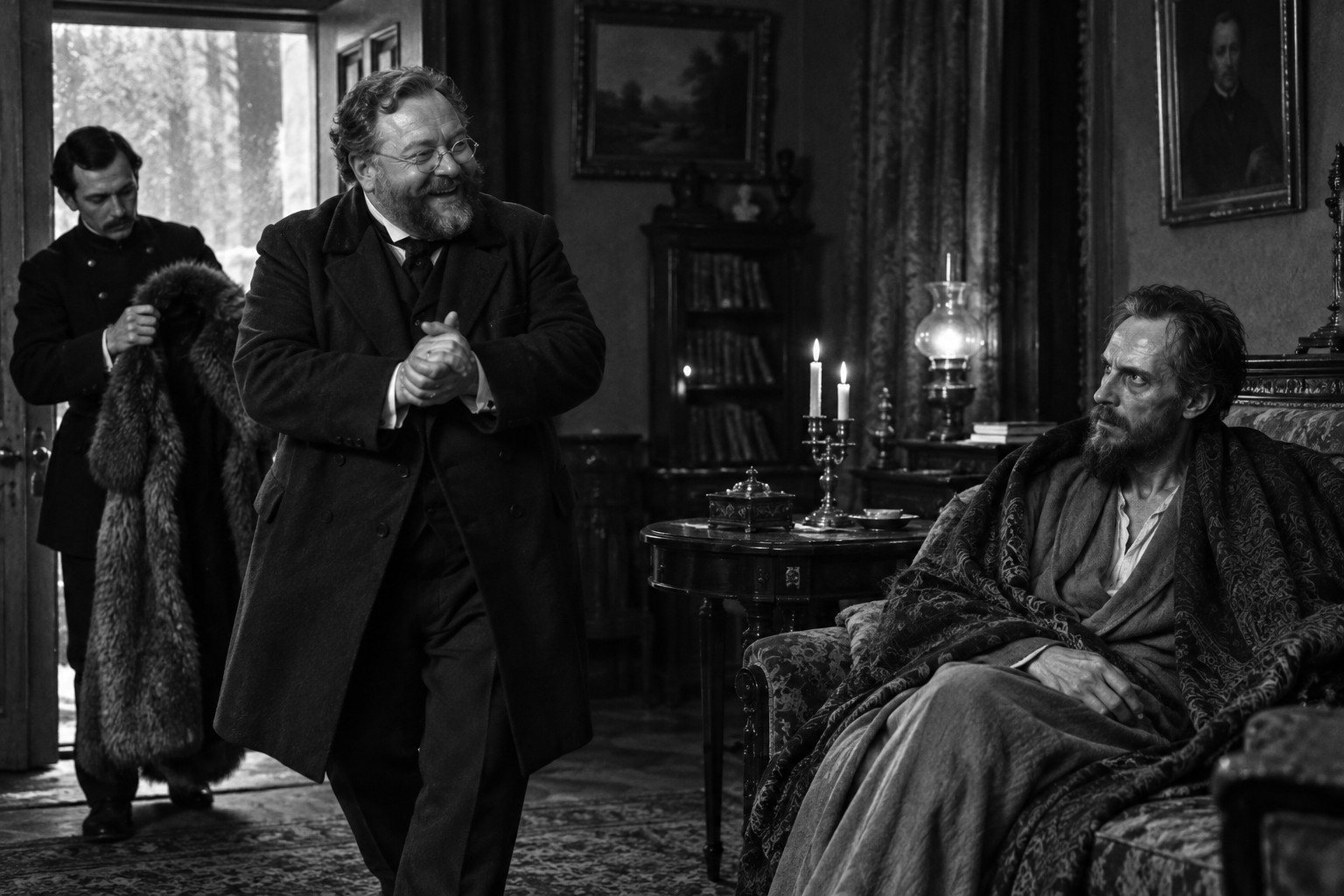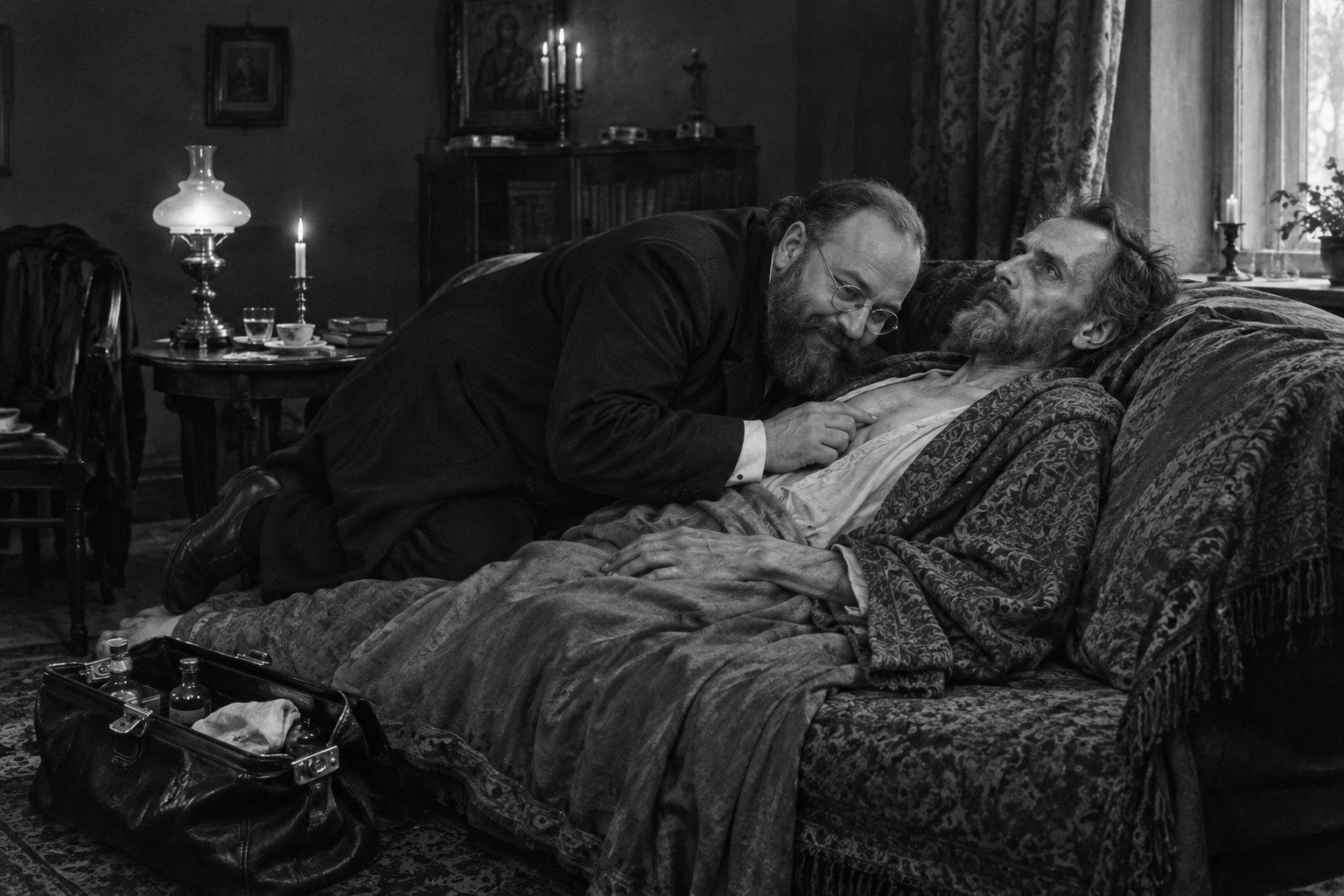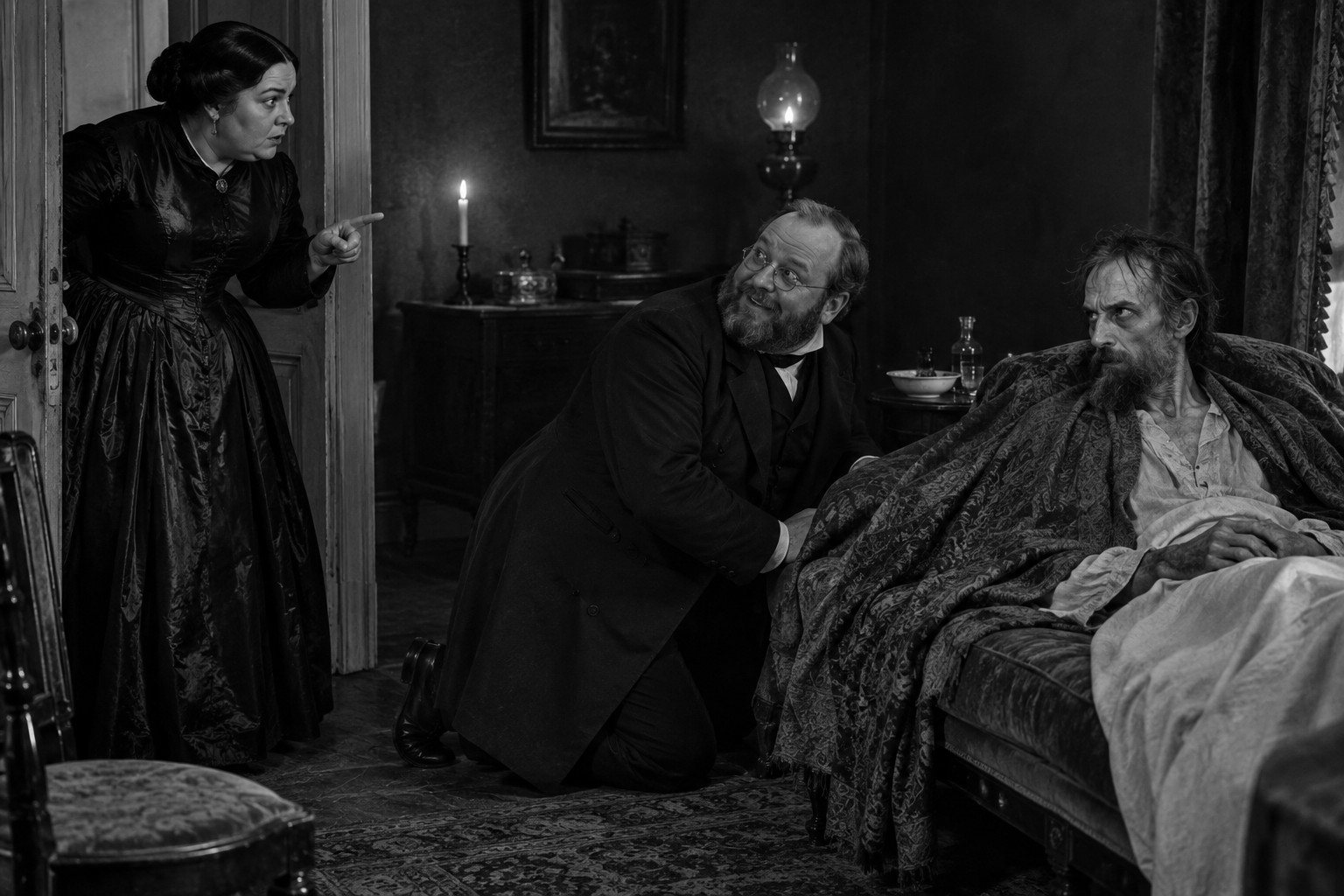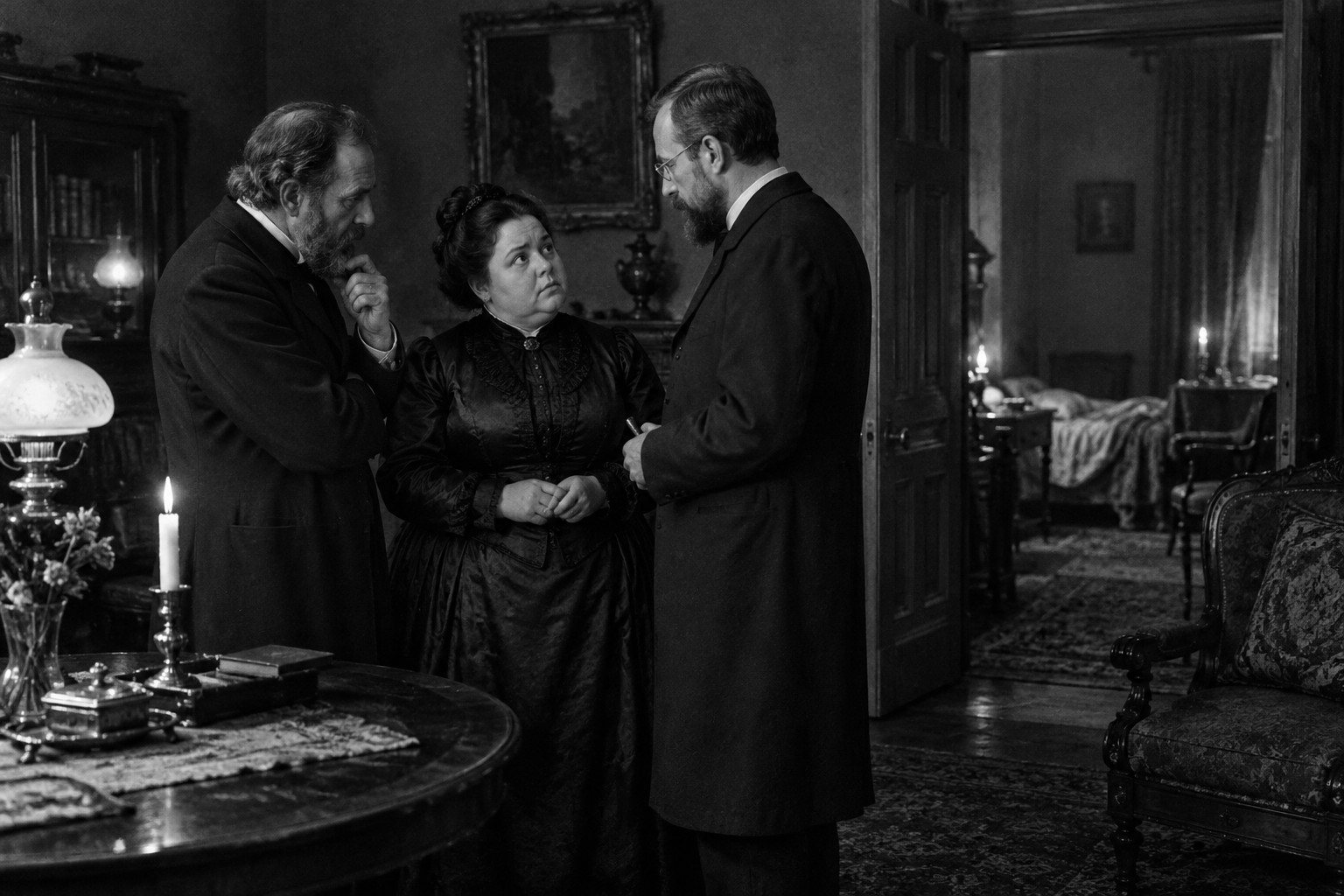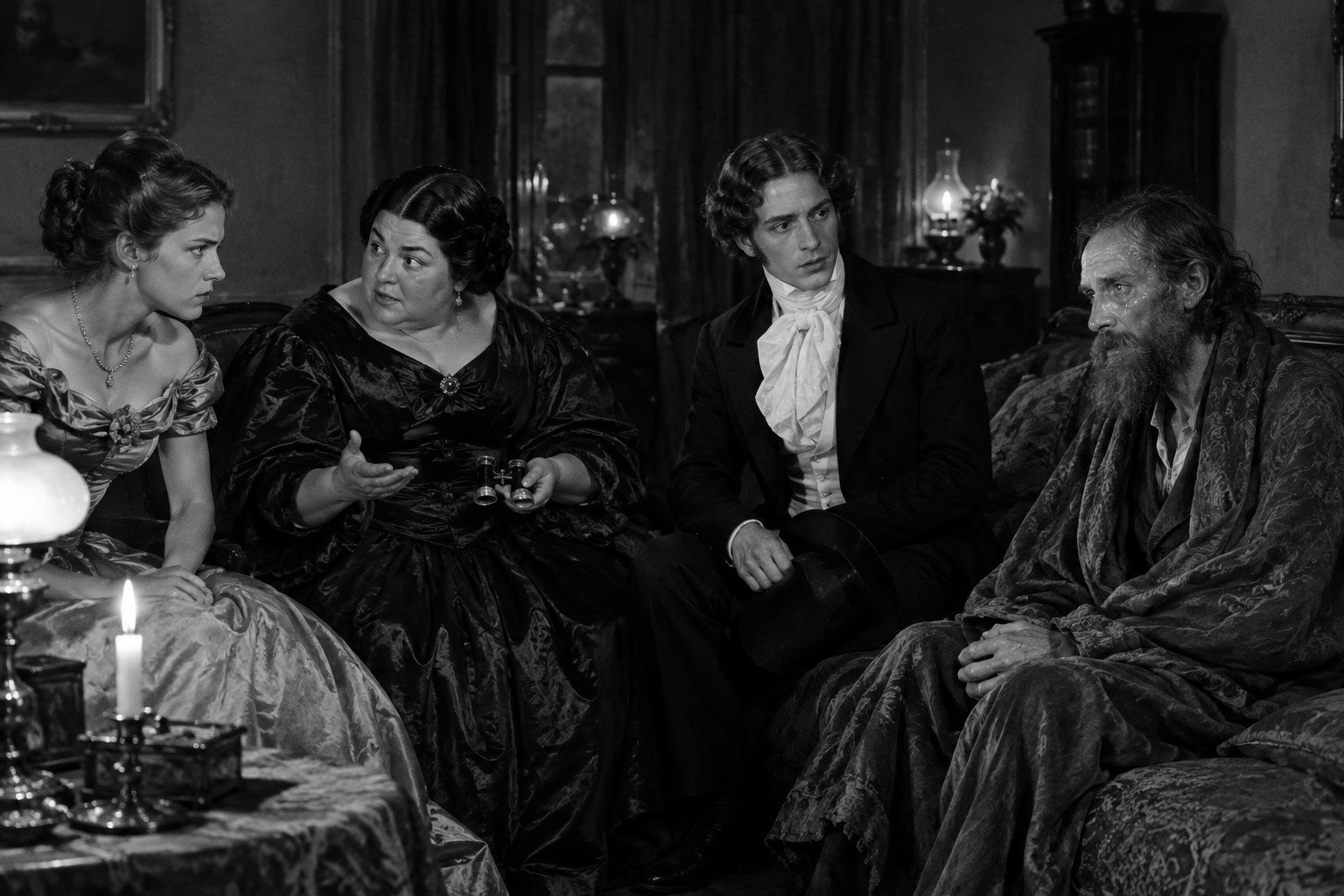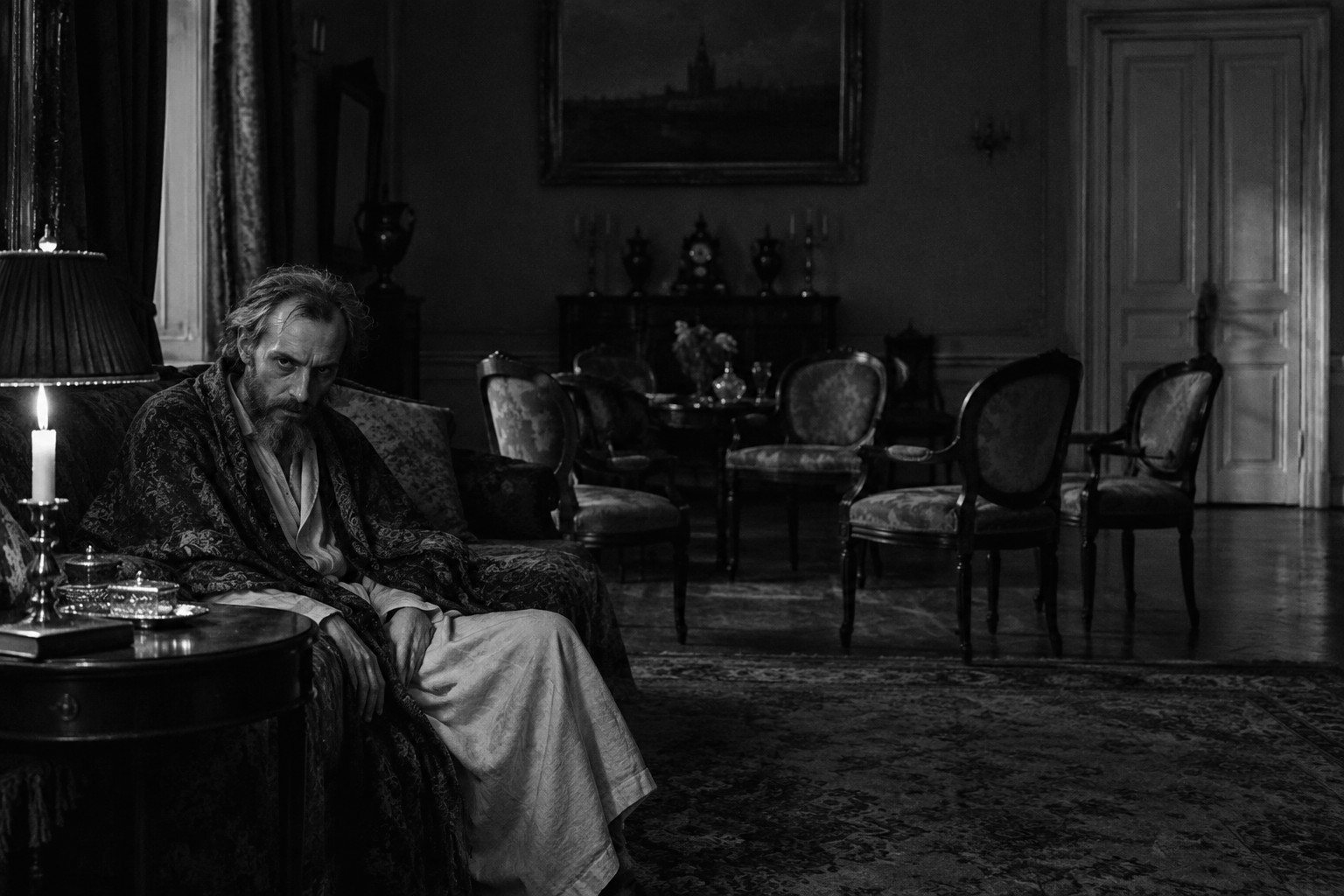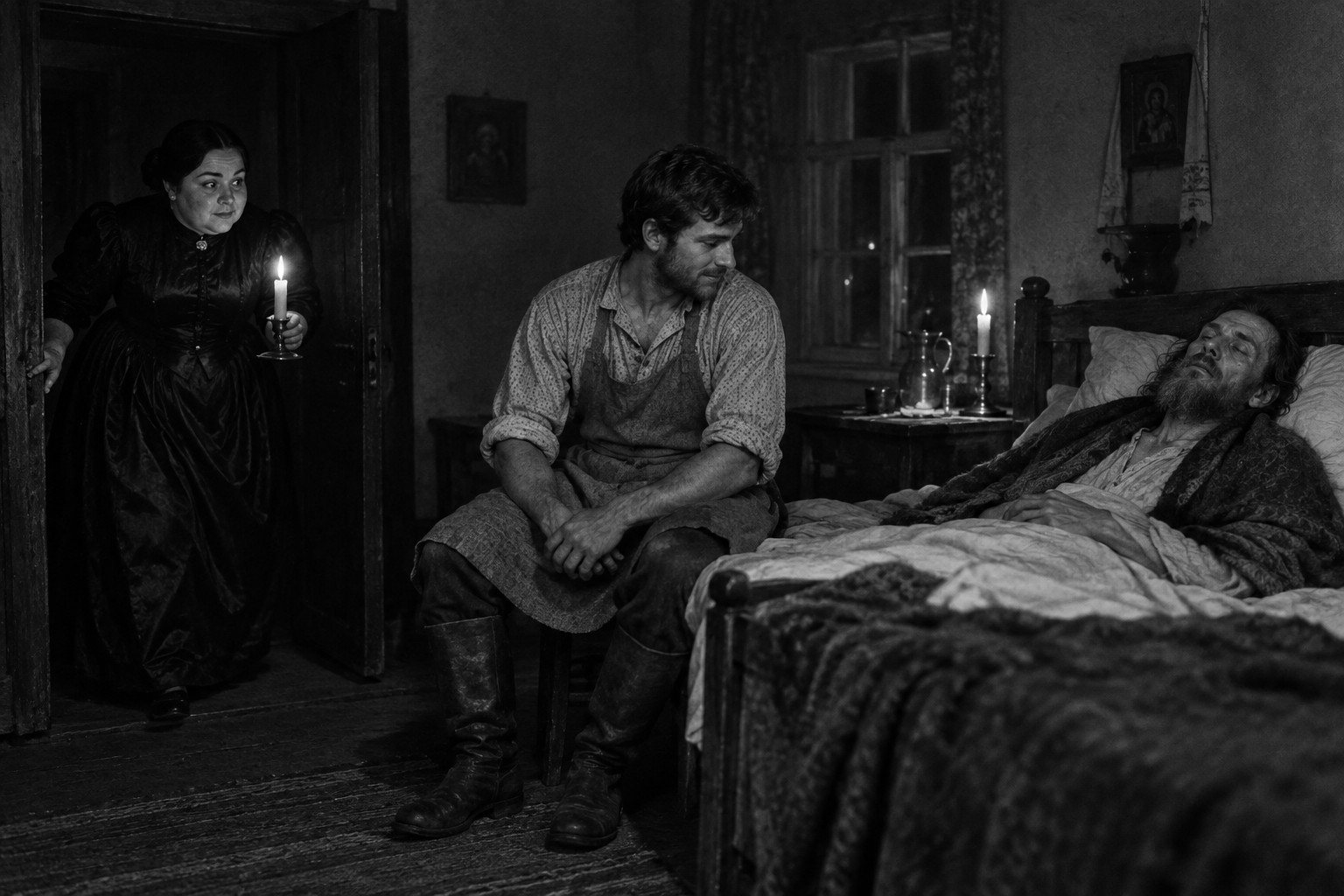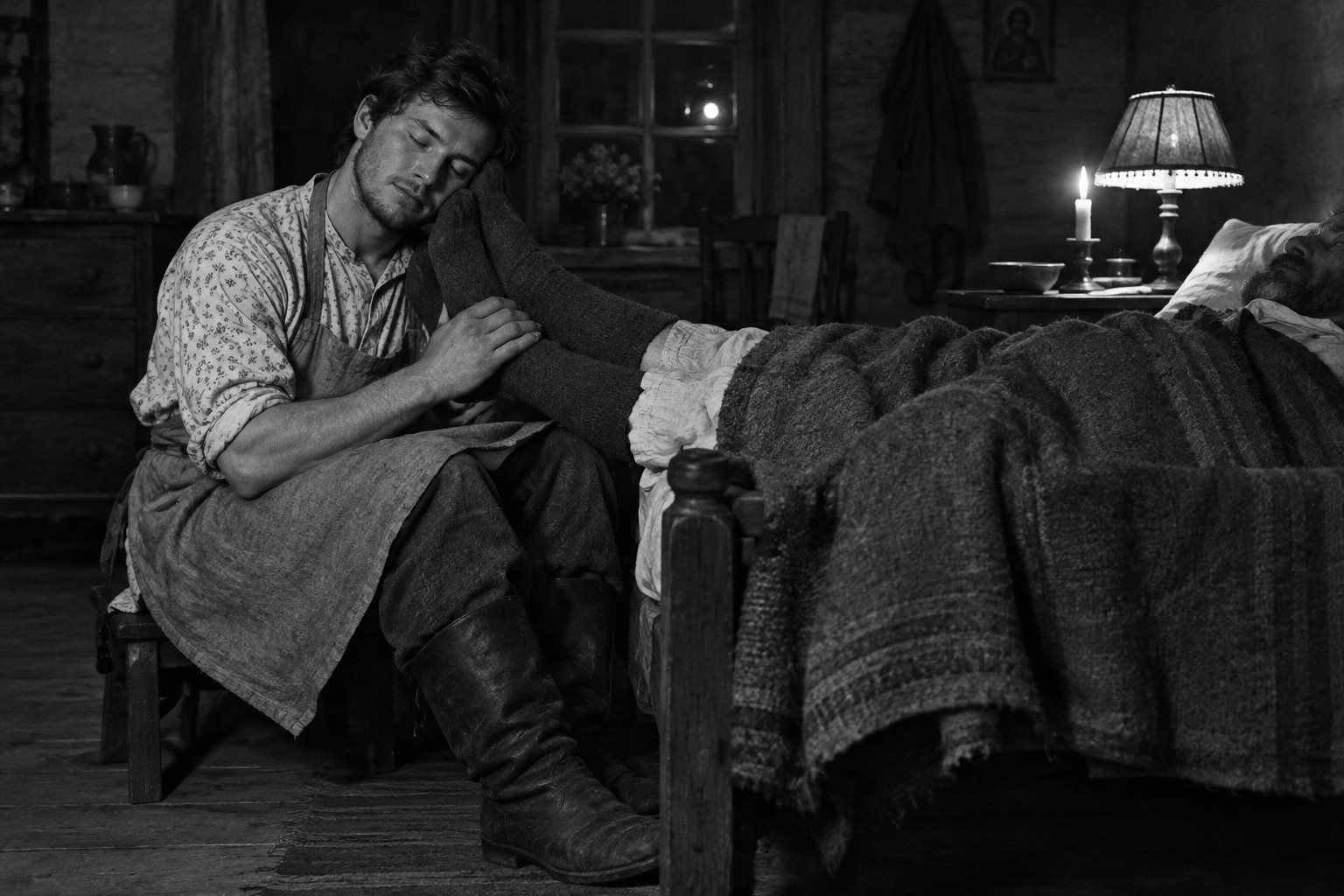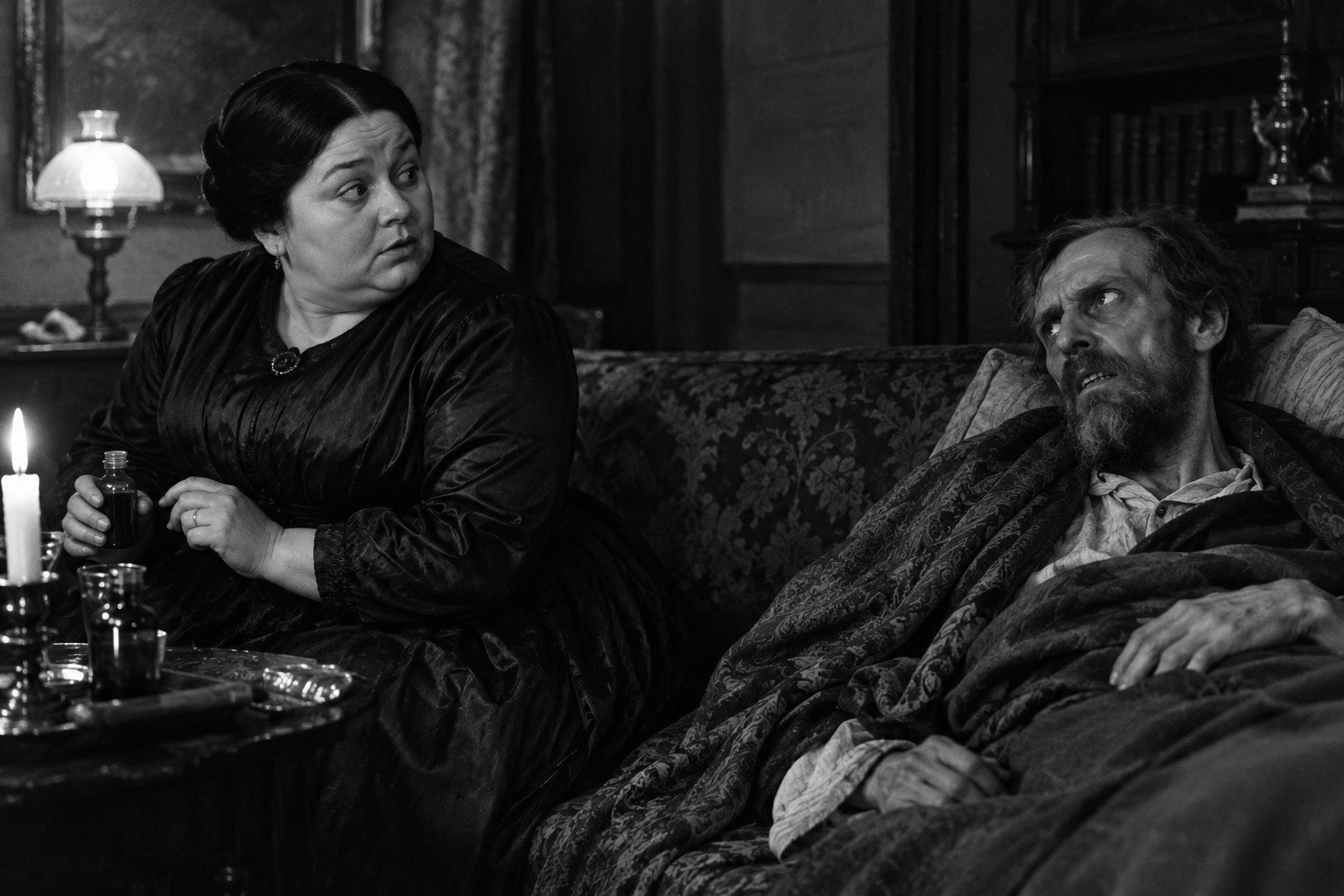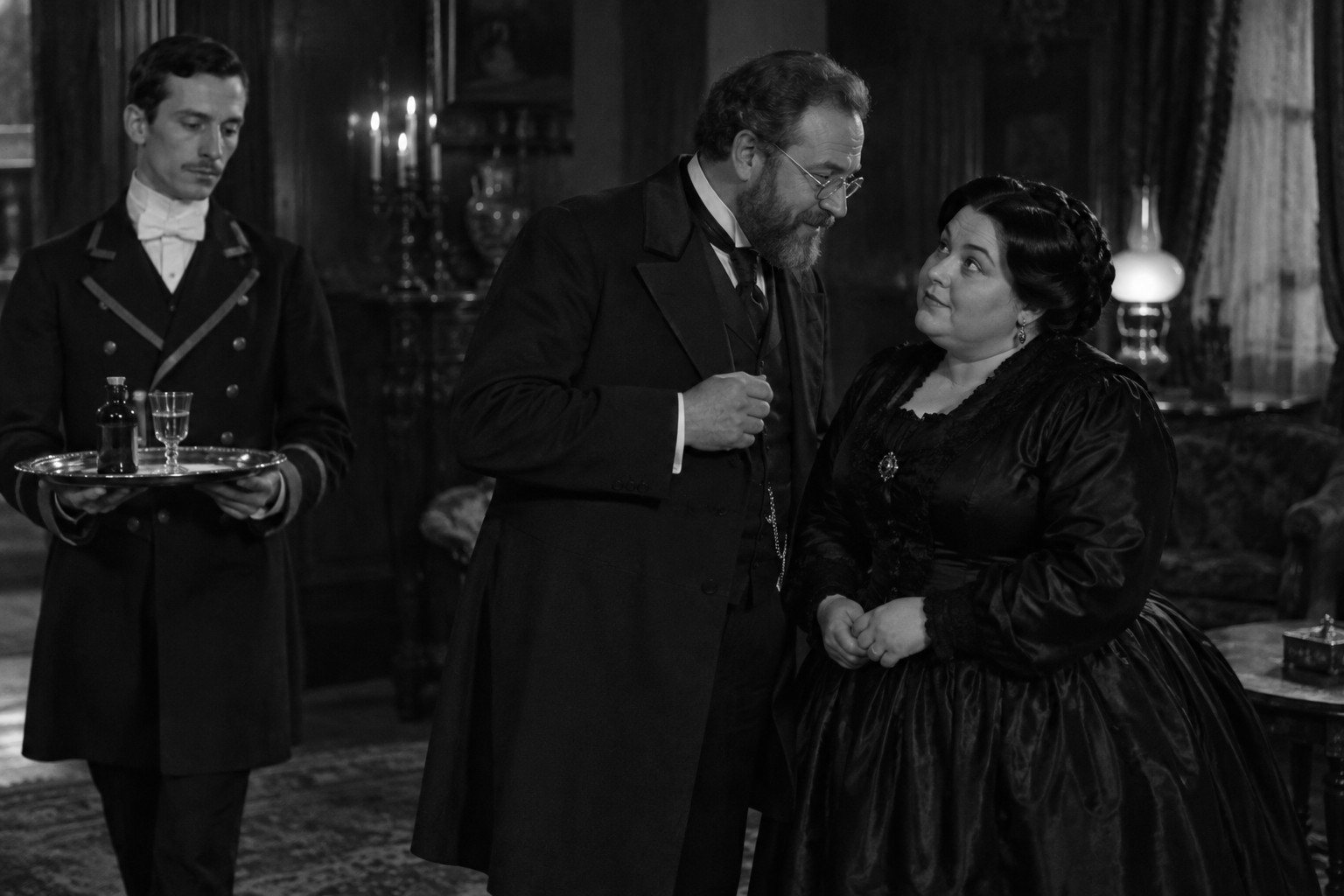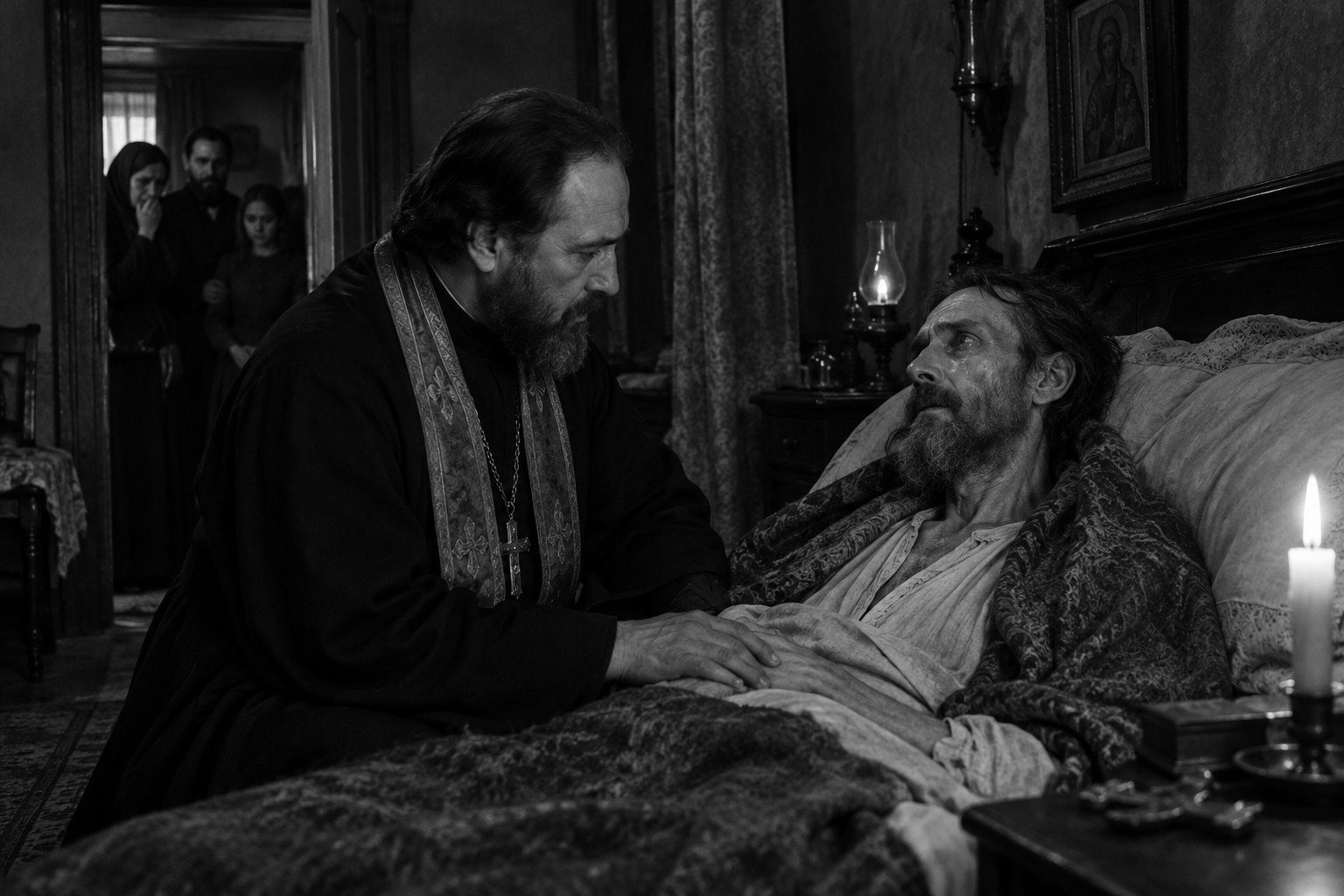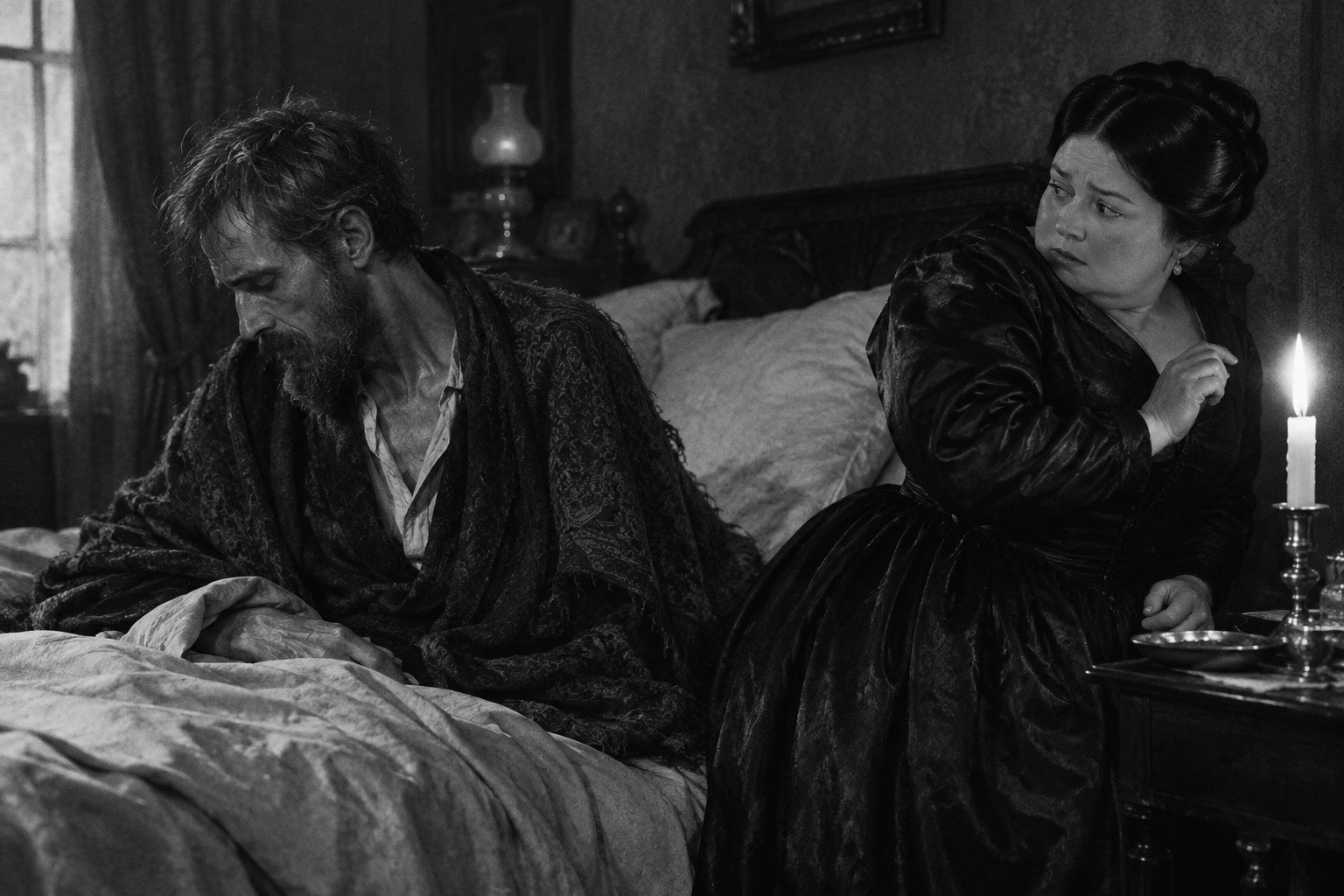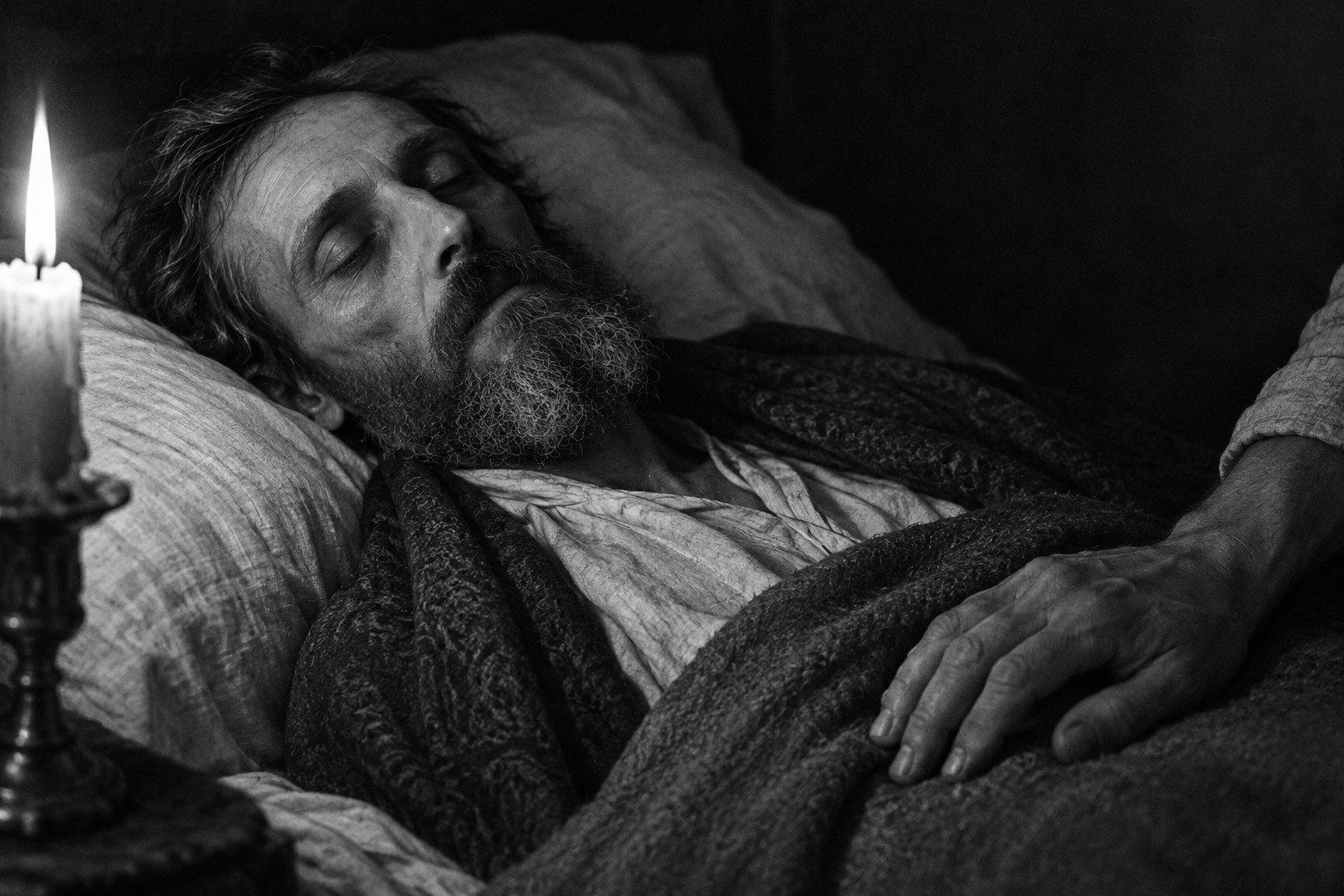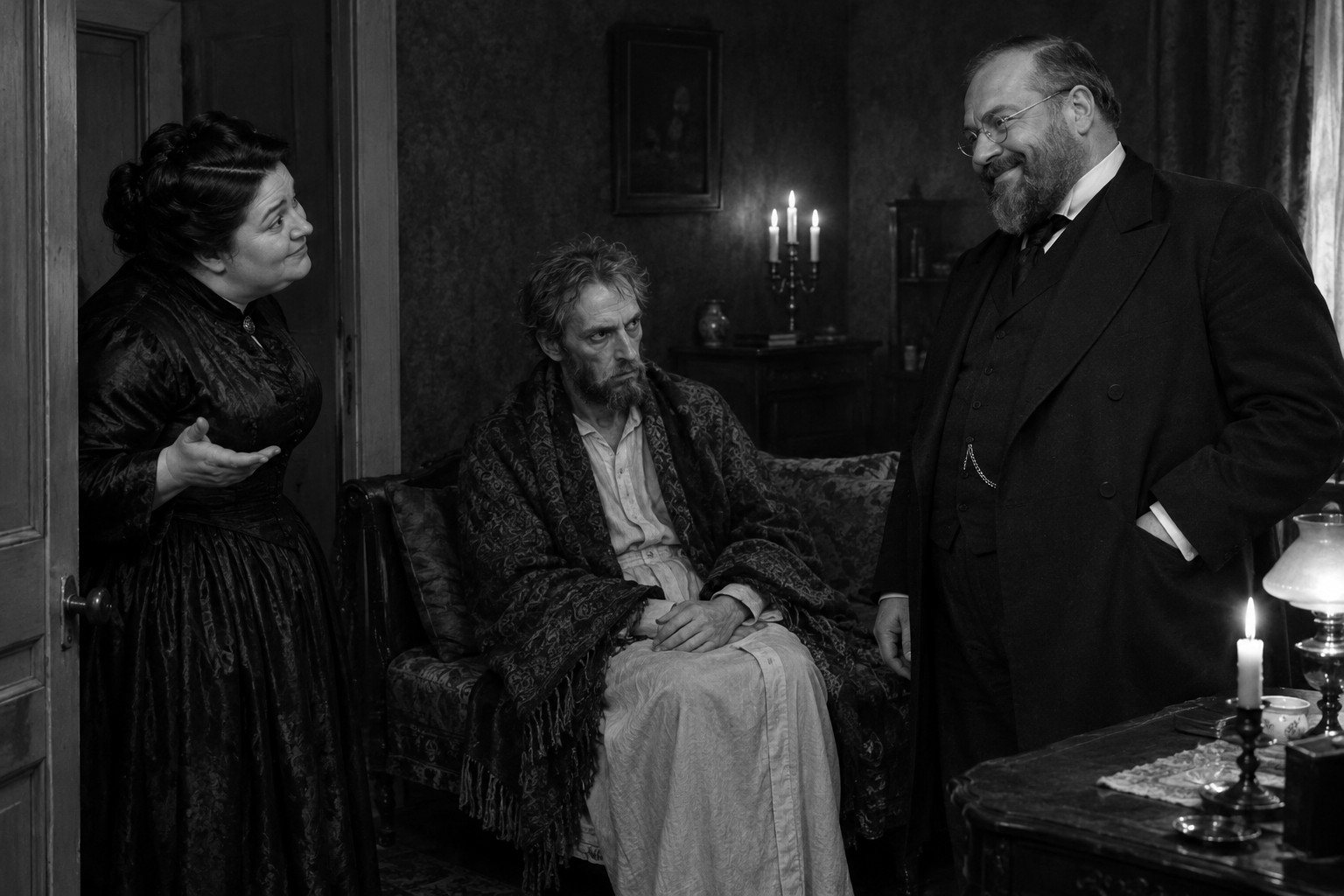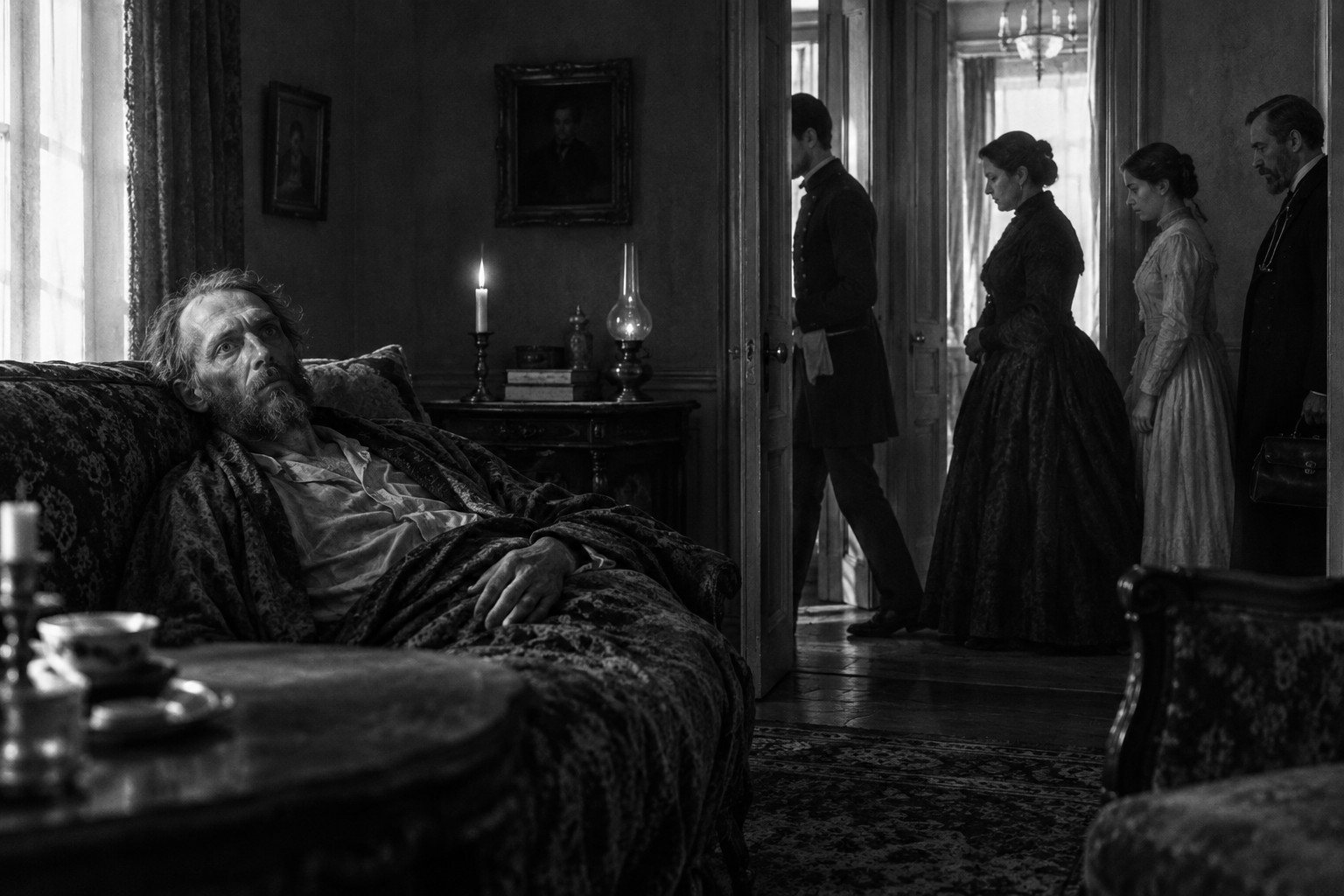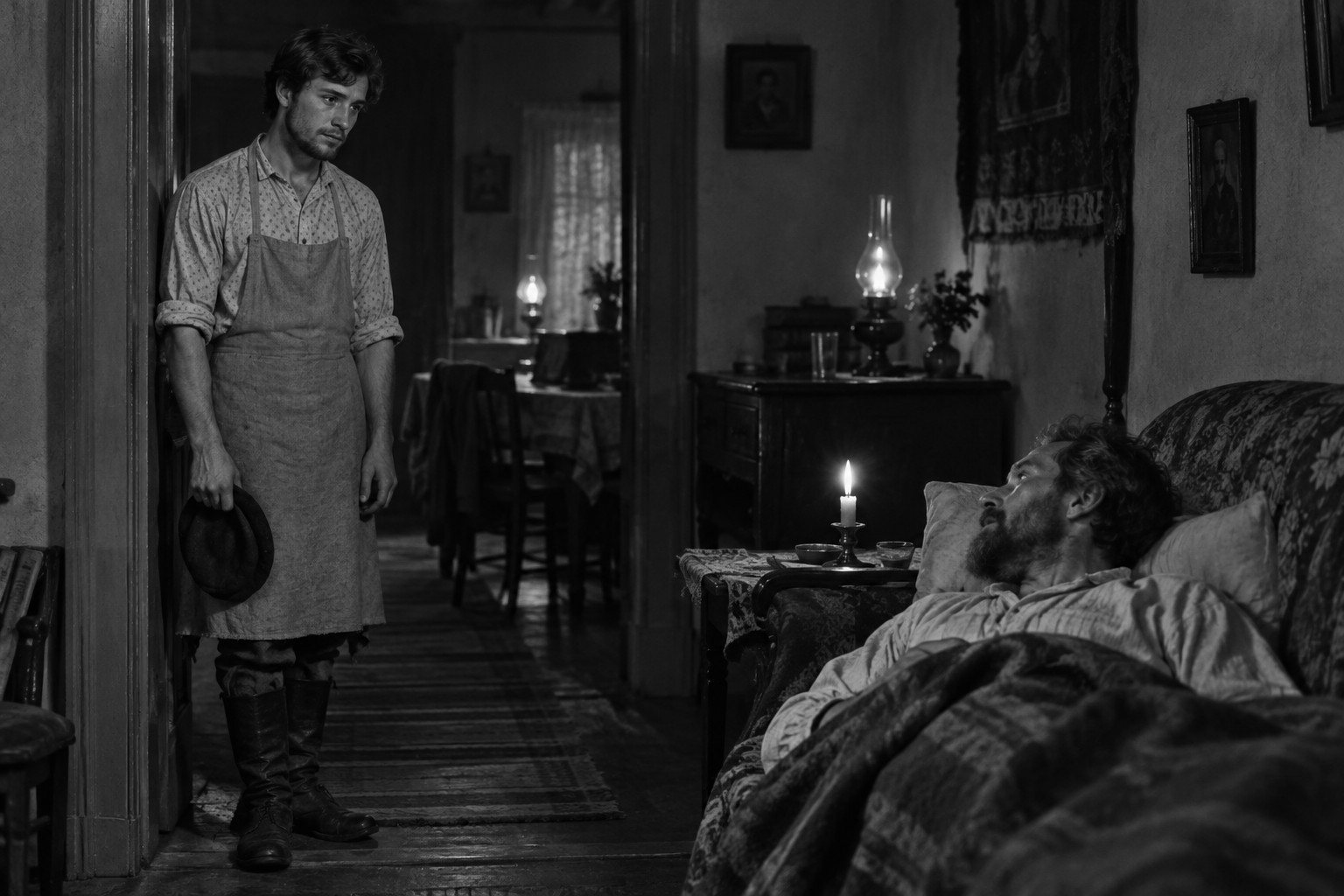
The Death of Iván Ilích — full text
Complete and unaltered, as performed. Read along, or read it after.
I
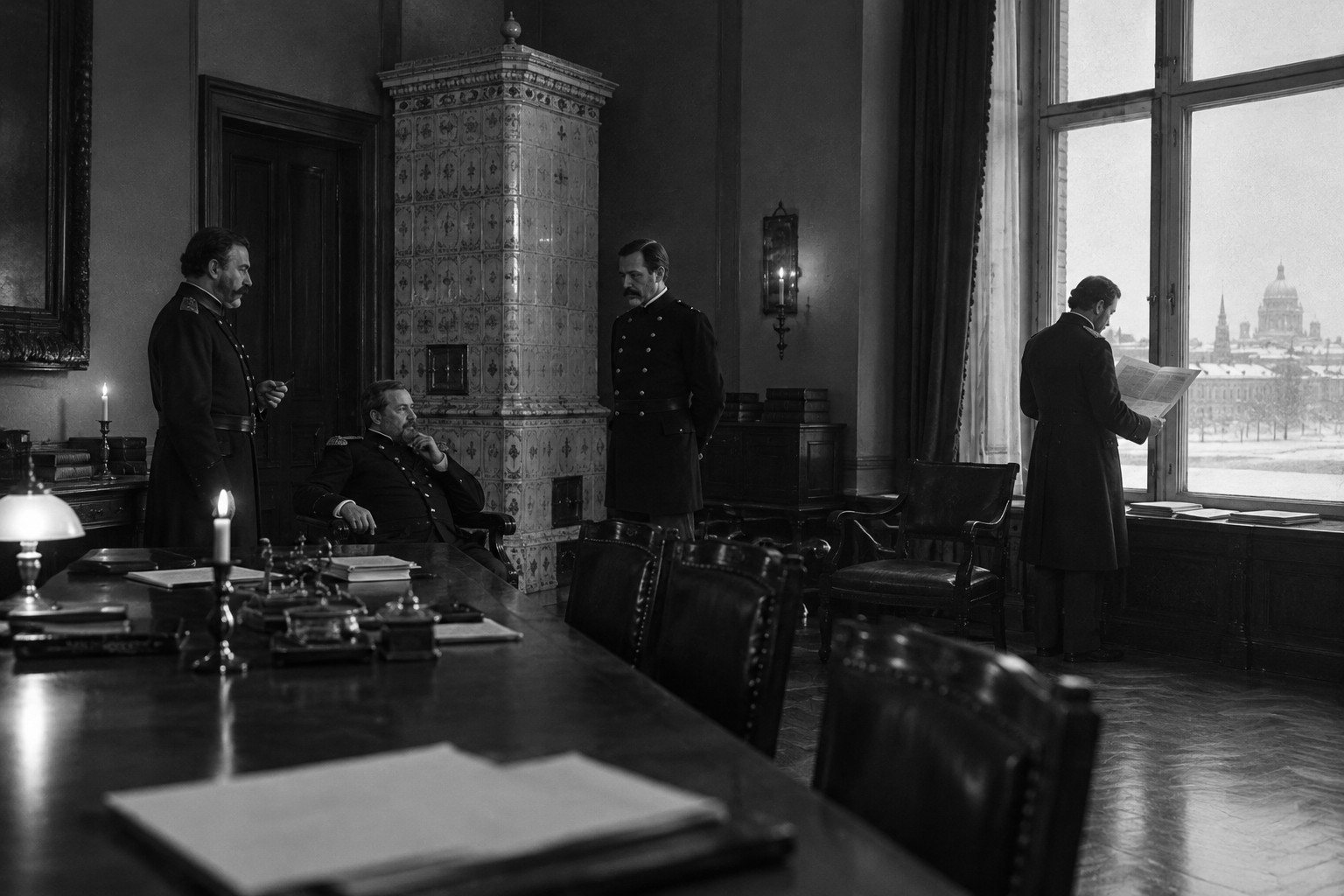
In the large building of the court institutions, during a pause in the case of the Melvínskis, the associates and the prosecuting Attorney met in the cabinet of Iván Egórovich Shébek, and started a conversation on the famous Krasóvski case. Fédor Vasílevich grew excited, proving that it was not subject to their jurisdiction. Iván Egórovich stuck to his opinion, while Peter Ivánovich, who had not entered into the discussion from the start, took no part in it, and looked through the Gazette which had been handed to him.
“Gentlemen,” he said, “Iván Ilích is dead.”
“Is it possible?”
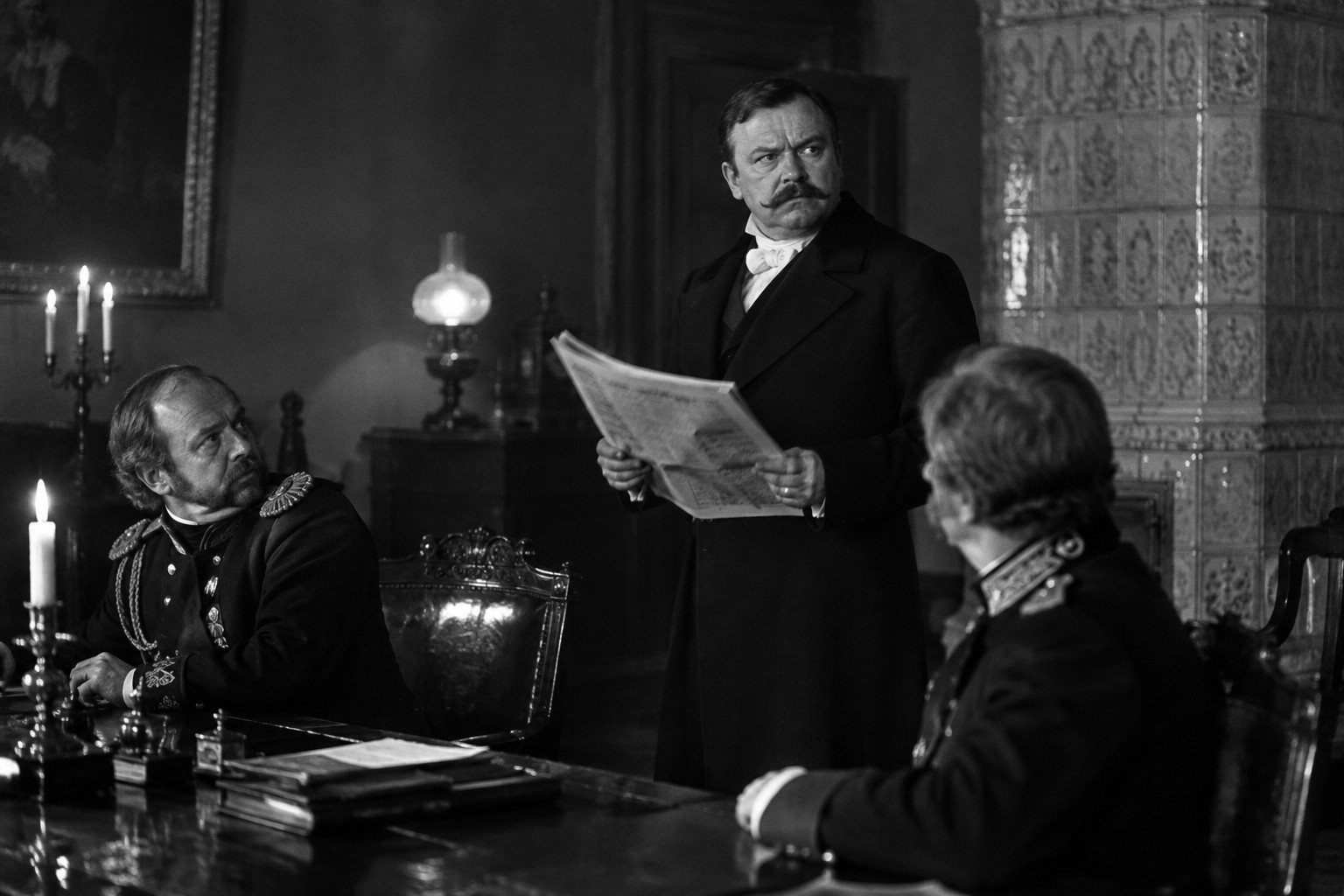
“Here, read it,” he said to Fédor Vasílevich, giving him the fresh-smelling number of the newspaper.
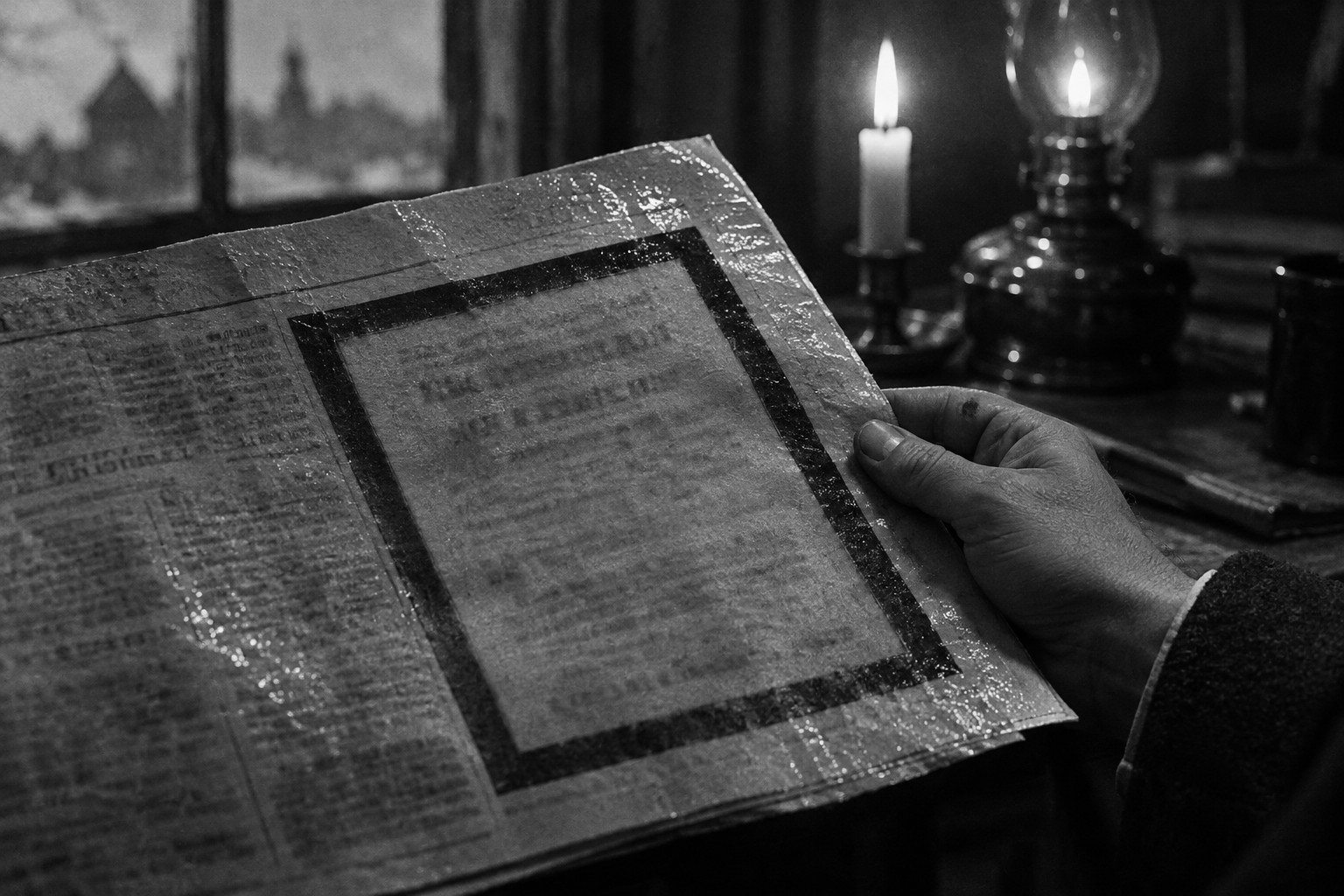
Within a black border was the following announcement: “Praskóvya Fédorovna Golovín with sincere sorrow informs her relatives and acquaintances of the demise of her beloved husband, Iván Ilích Golovín, associate member of the court, which took place on February 4th of this year, 1882. The funeral will be on Friday, at one o’clock p. m.”
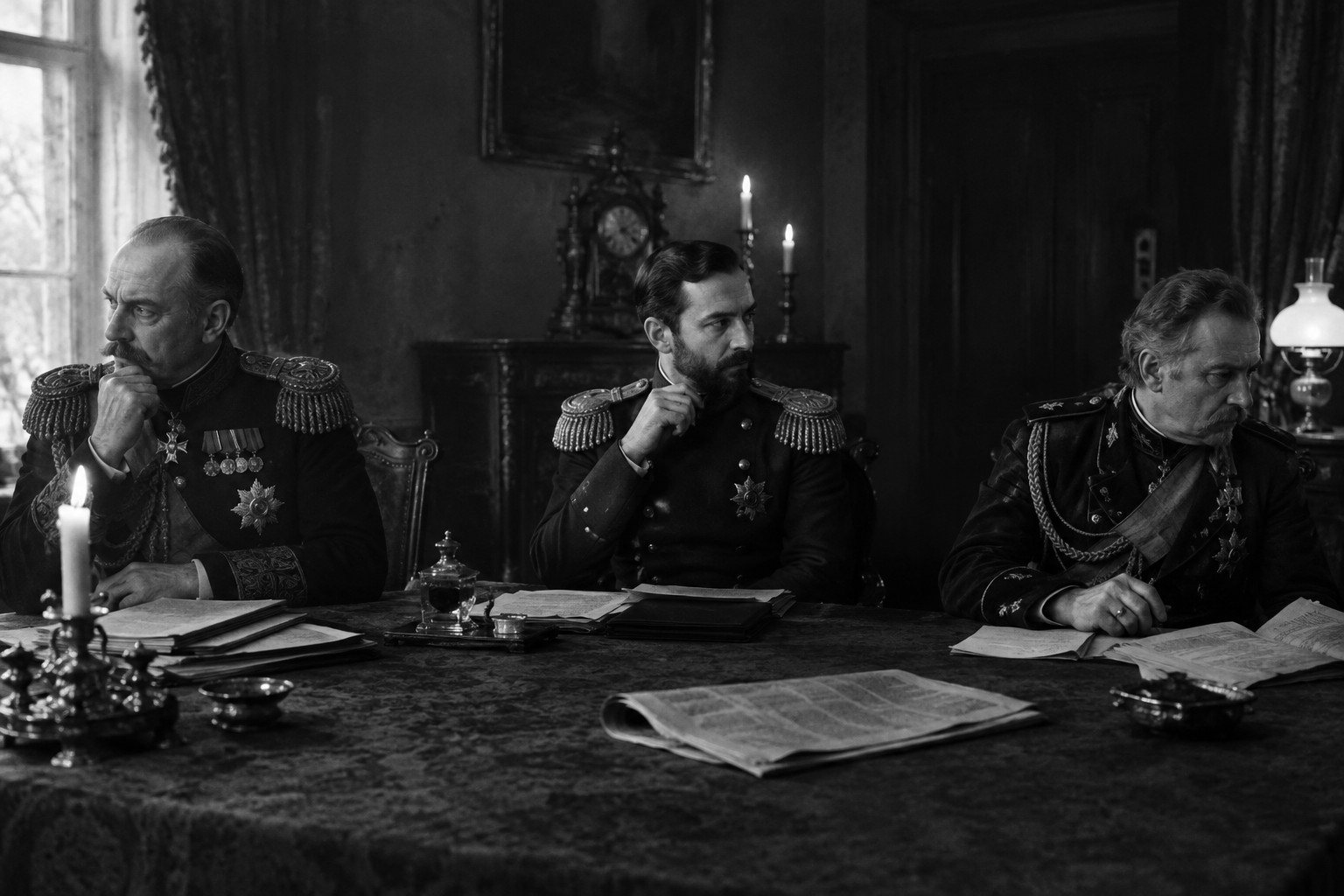
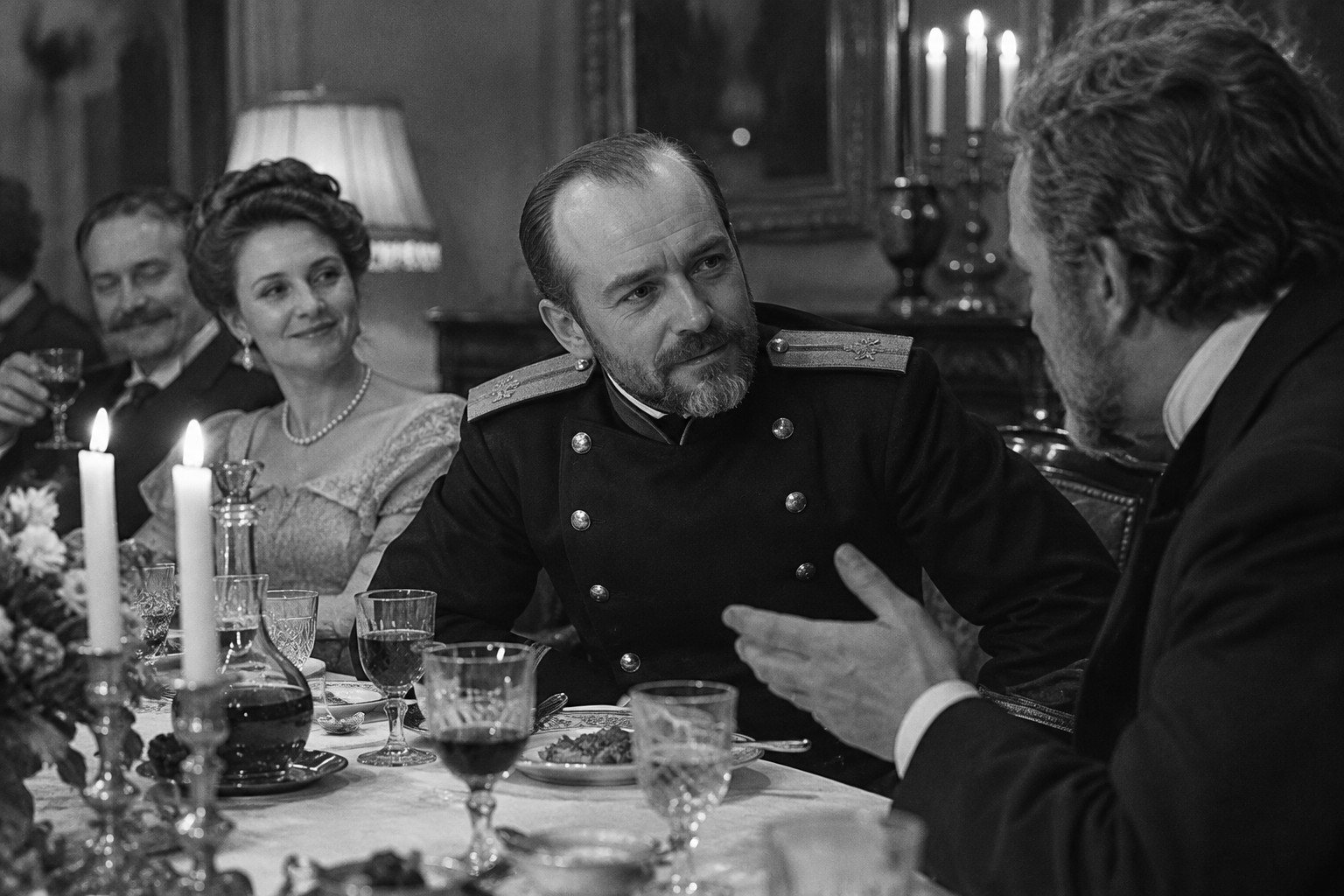
Iván Ilích was an associate of the gentlemen assembled, and they all loved him. He had been ill for several weeks: it was said that his disease was incurable. His post was left open for him, but it was rumoured that in case of his death Aleksyéev would probably be appointed in his place, and that Vínnikov or Shtábel would get Aleksyéev’s place. Therefore, upon hearing about Iván Ilích’s death, the first thought of every one of the gentlemen collected in the cabinet was as to the significance which this death might have on the changes or promotions of the associates themselves or of their friends.
“Now I shall no doubt get Shtábel’s place or Vínnikov’s,” thought Fédor Vasílevich. “I was promised that long ago, and this promotion will mean for me eight hundred roubles increase, in addition to the chancery.”
“I must now ask for the transfer of my brother-in-law from Kalúga,” thought Peter Ivánovich. “My wife will be very glad. She will no longer be able to say that I am not doing anything for her relatives.”
“I never thought he would get up again,” Peter Ivánovich said, aloud. “I am sorry.”
“What was the matter with him, anyway?”
“The doctors could not make it out. That is, they did, but each of them differently. When I saw him the last time, I thought he was getting better.”
“And here I have not called on him since the holidays. I was meaning to all the time.”
“Well, did he have any estate?”
“I think his wife has a little something, but nothing of any consequence.”
“Yes, I shall have to go there; but they have been living a terrible distance away.”
“That is, from your house. From your house everything is a distance away.”
“You really cannot forgive me for living on the other side of the river,” Peter Ivánovich said, smiling at Shébek. And they began to talk of the extent of the city distances, and went back to the court session.
In addition to the reflections evoked in each of them by this death about the transpositions and possible changes in the service likely to happen in consequence of it, the very fact of the death of a close friend evoked in all those who heard of it, as it always does, a feeling of joy because it was Iván Ilích who had died and not they.
“How is this? It is he who is dead, and not I,” each of them thought or felt.
But the close acquaintances, Iván Ilích’s so-called friends, involuntarily thought also of this, that now they would have to perform some very tedious duties of propriety and go to the mass and call on the widow to express their condolence.
His nearest friends were Fédor Vasílevich and Peter Ivánovich.
Peter Ivánovich had been his schoolmate while studying law, and considered himself under obligation to Iván Ilích.
At dinner Peter Ivánovich gave his wife the news of Iván Ilích’s death, and his reflections as to the possibility of his brother-in-law’s transfer to their circuit, and, without lying down to rest himself, he put on his dress coat and drove to Iván Ilích’s house.
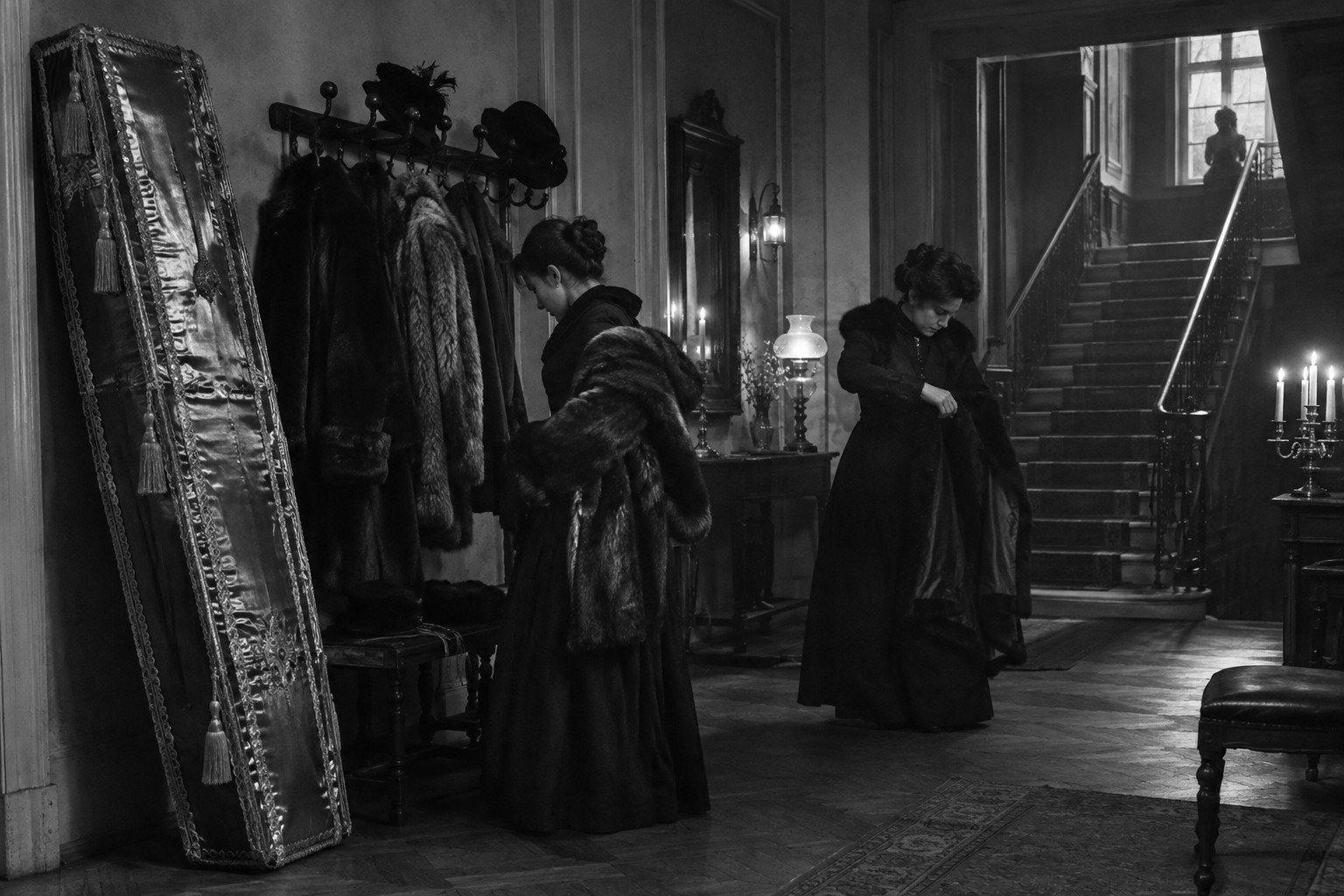
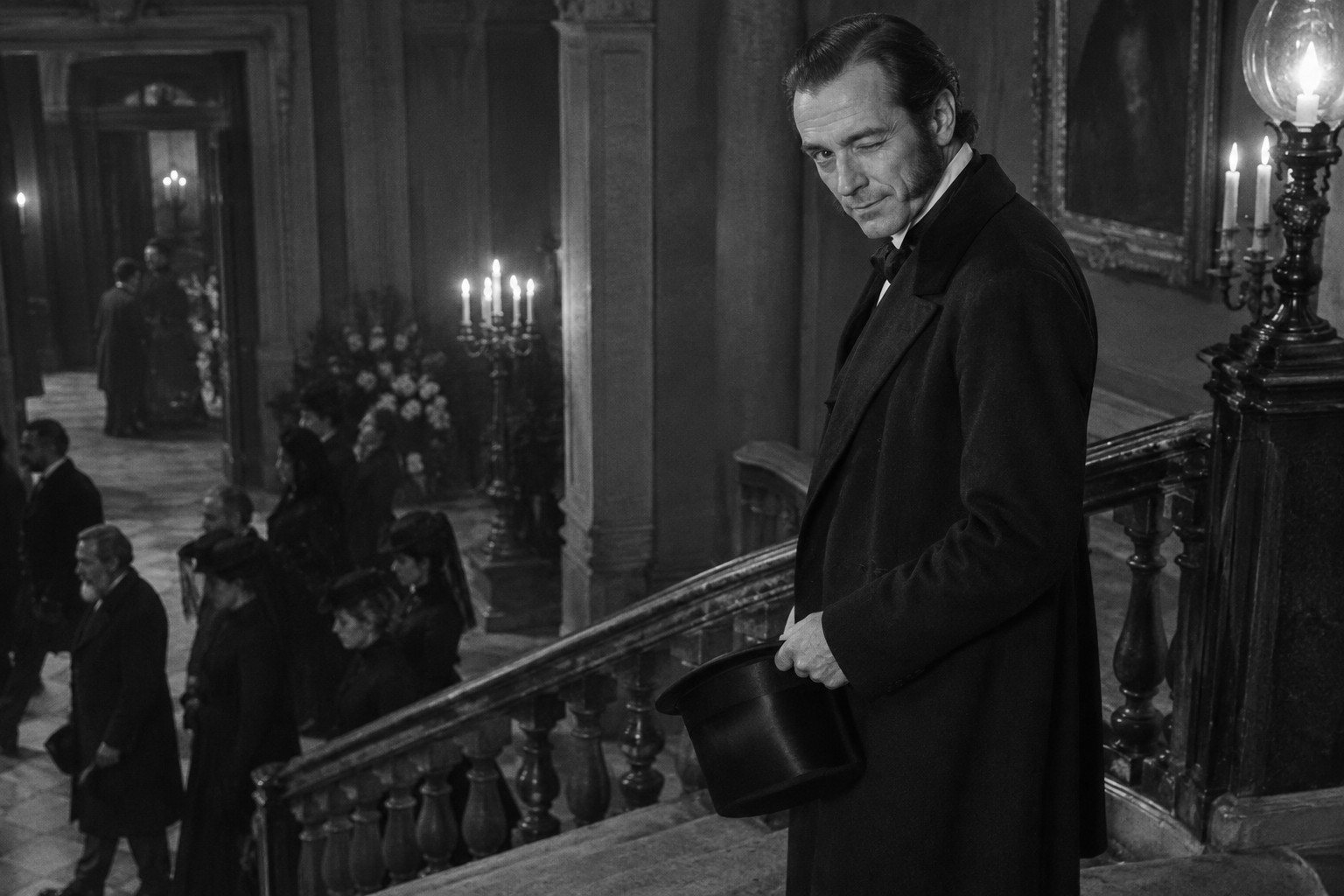
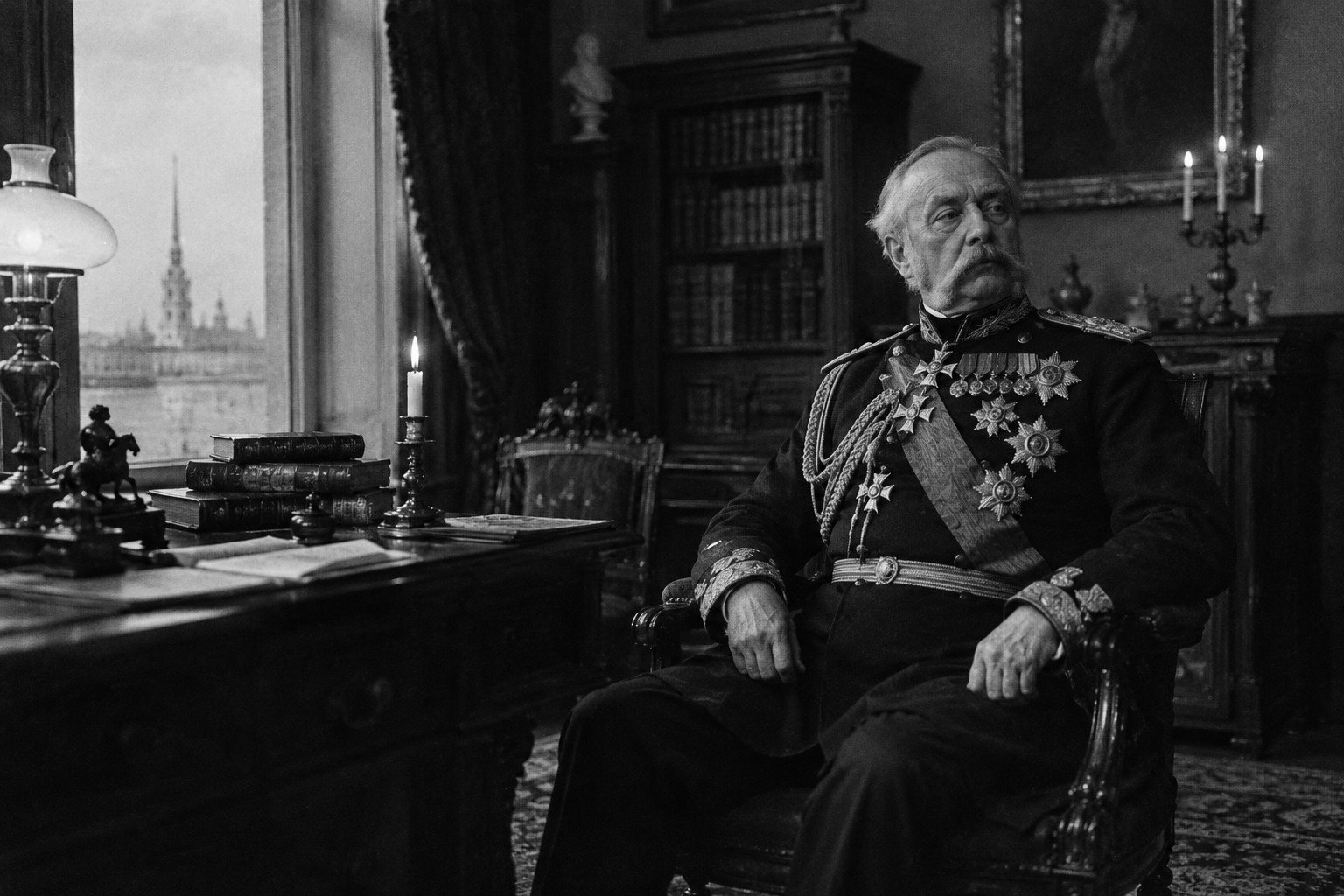
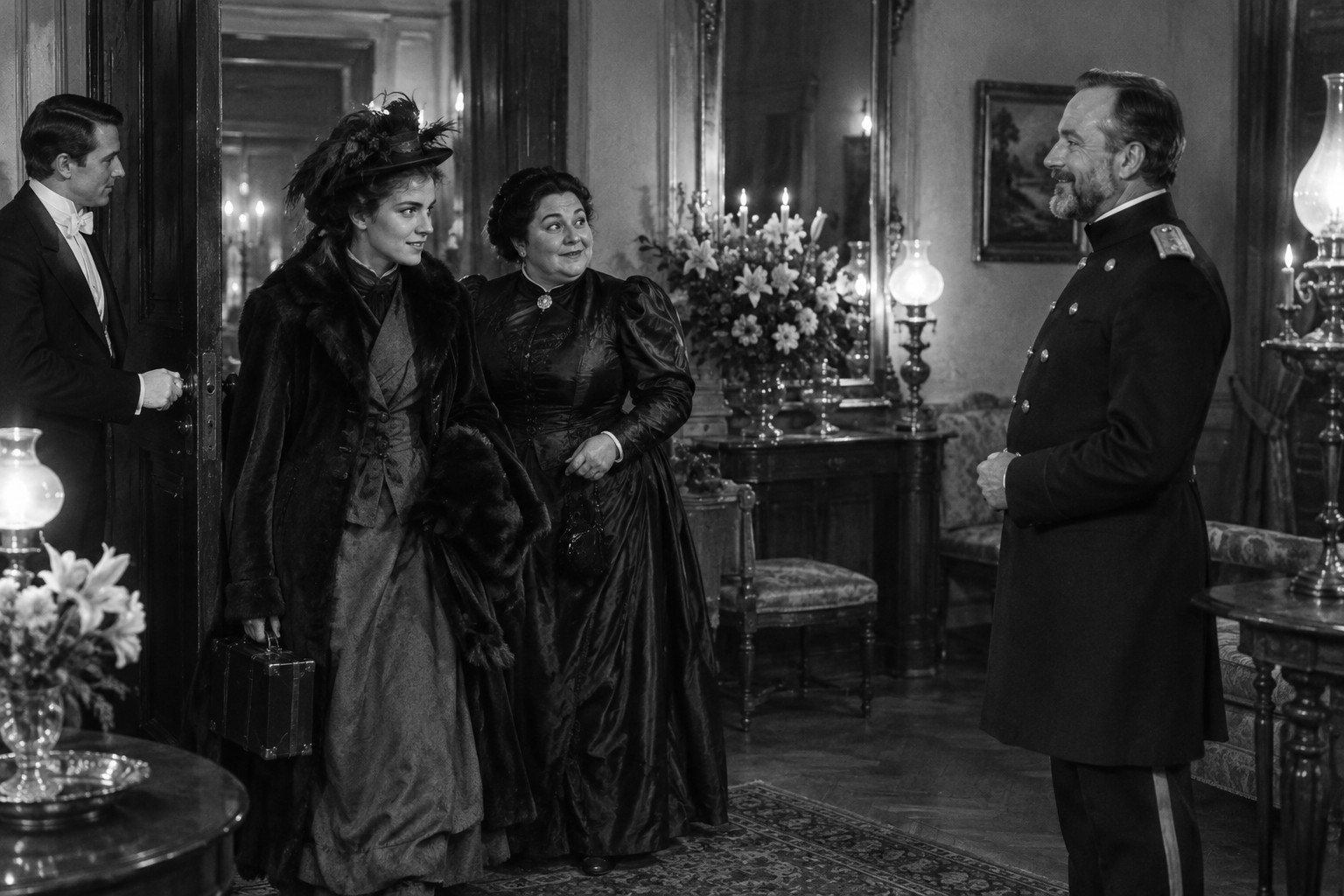
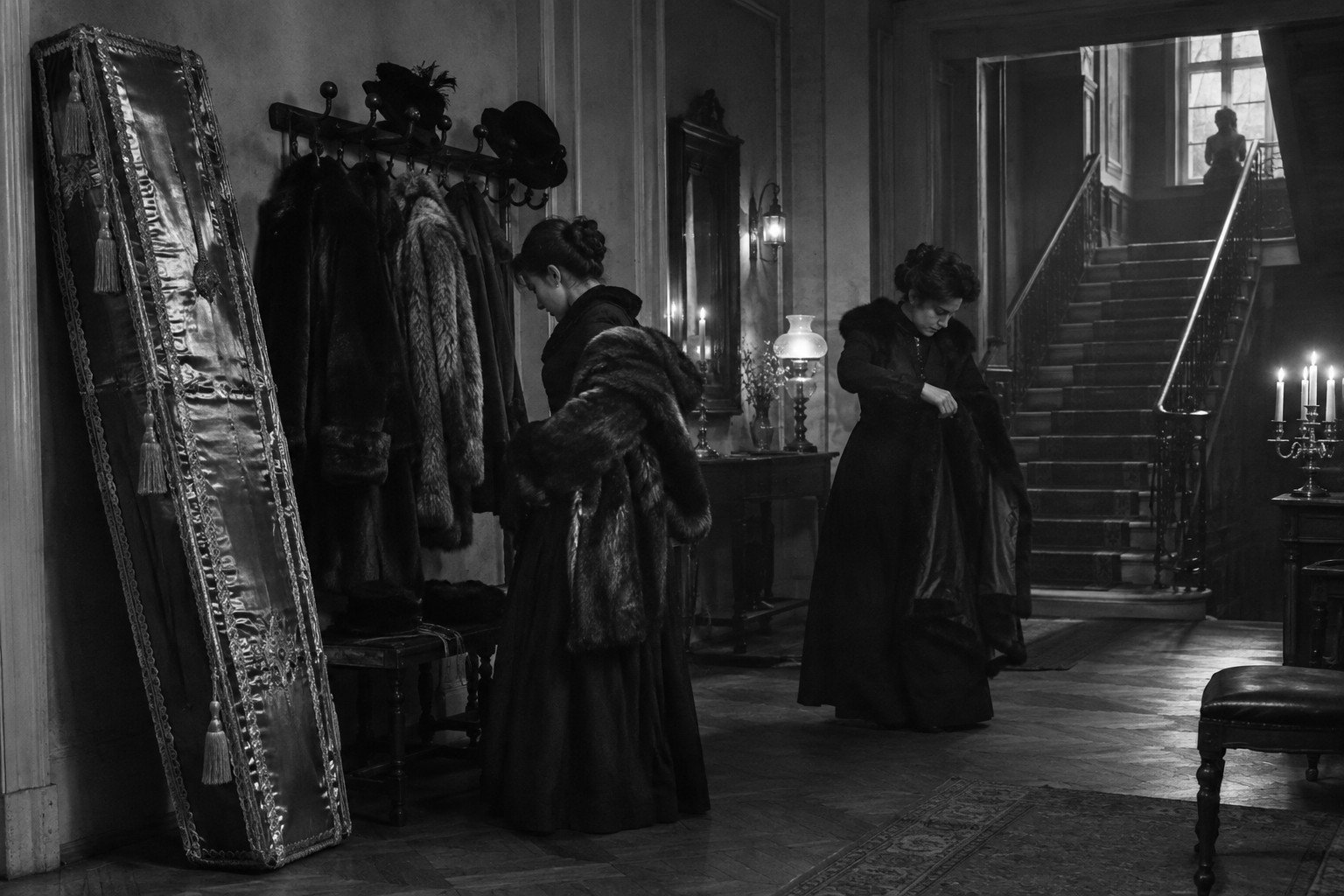
At the entrance to Iván Ilích’s apartments stood a carriage and two cabs. Down-stairs, in the antechamber, near the hat-rack, and leaning against the wall, stood a tinselled coffin-lid with its tassels and burnished galloons. Two ladies in black were taking off their fur coats. One of them, Iván Ilích’s sister, he knew; the other was a stranger to him. Peter Ivánovich’s friend, Schwarz, was coming down-stairs, and, seeing the newcomer from the upper step, he stopped and winked to him, as if to say: “Iván Ilích has managed things stupidly; you and I fixed things better.”
Schwarz’s face with its English side-whiskers and his whole lean figure in the dress coat had, as always, an elegant solemnity about them, and this solemnity, which always contradicted Schwarz’s character of playfulness, had here its particular salt. So Peter Ivánovich thought.
Peter Ivánovich allowed the ladies to precede him, and followed them up the staircase. Schwarz did not start to go down, but stopped up-stairs. Peter Ivánovich knew why he did so he evidently wanted to make an engagement to play a game of vint that day. The ladies went up-stairs to see the widow, and Schwarz, with seriously compressed, strong lips and playful glance, with a motion of his brows showed Peter Ivánovich to the right, to the room where the body lay.
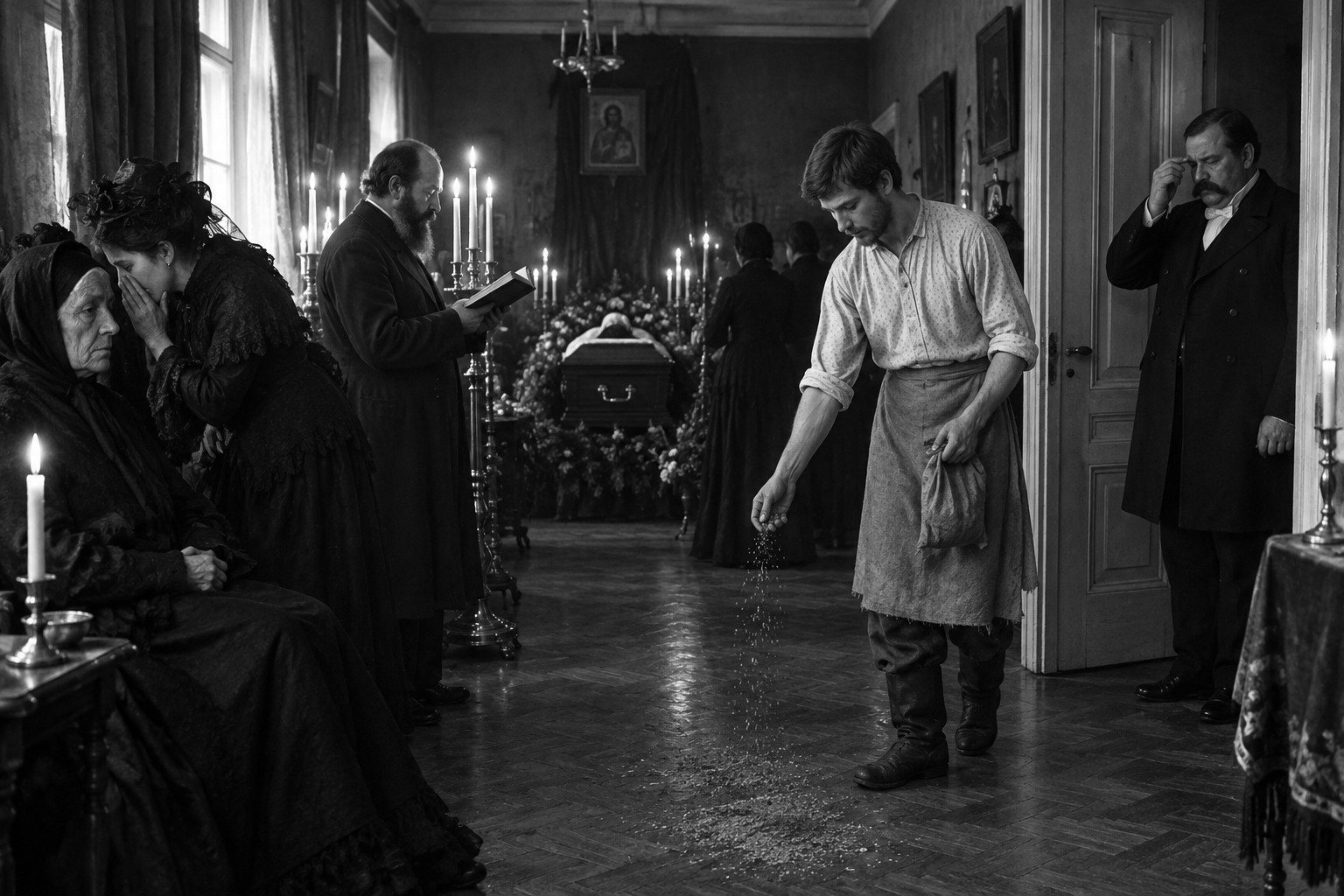
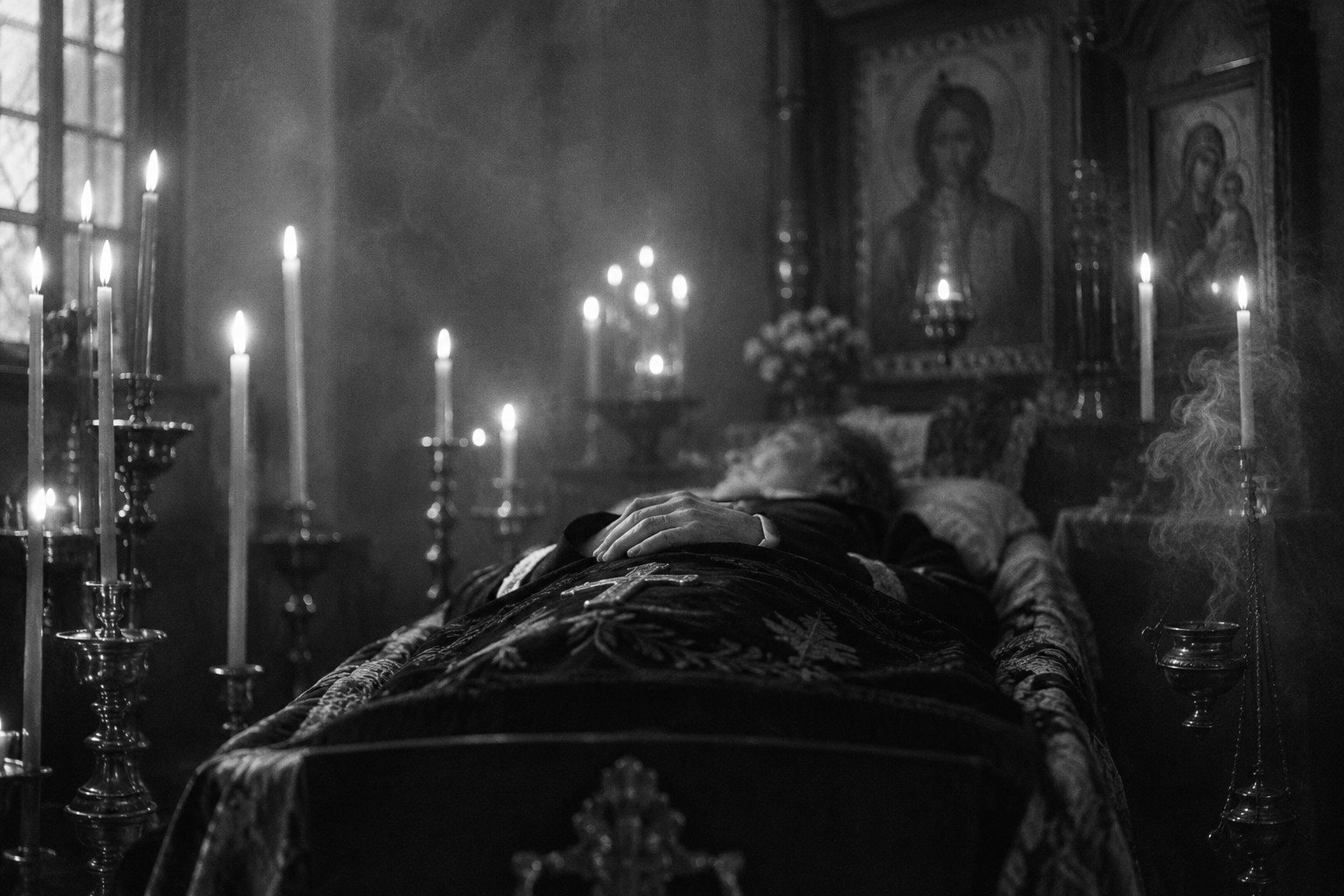
Peter Ivánovich entered, as is always the case, perplexed as to what he would have to do. One thing he knew, and that was that under such circumstances it would never do any harm to make the sign of the cross. But he was not quite sure whether he ought also to make obeisances, and so he chose the middle way: upon entering the room, he began to make the sign of the cross and acted as though he were bowing. At the same time, as much as the motion of his hands and of his head permitted it, he surveyed the room. Two young men, one of them a gymnasiast,—he thought they were nephews,—were leaving the room, making the sign of the cross. An old woman stood motionless and a lady with queerly raised brows was telling her something in a whisper. A sexton, in a Prince Albert, a wide-awake, determined man, was reading something in a loud voice with an expression which excluded every contradiction; Gerásim, a peasant of the buffet-room, was with light steps strewing something on the floor, in front of Peter Ivánovich. As Peter Ivánovich saw this, he at once caught the light odour of the decomposing body.
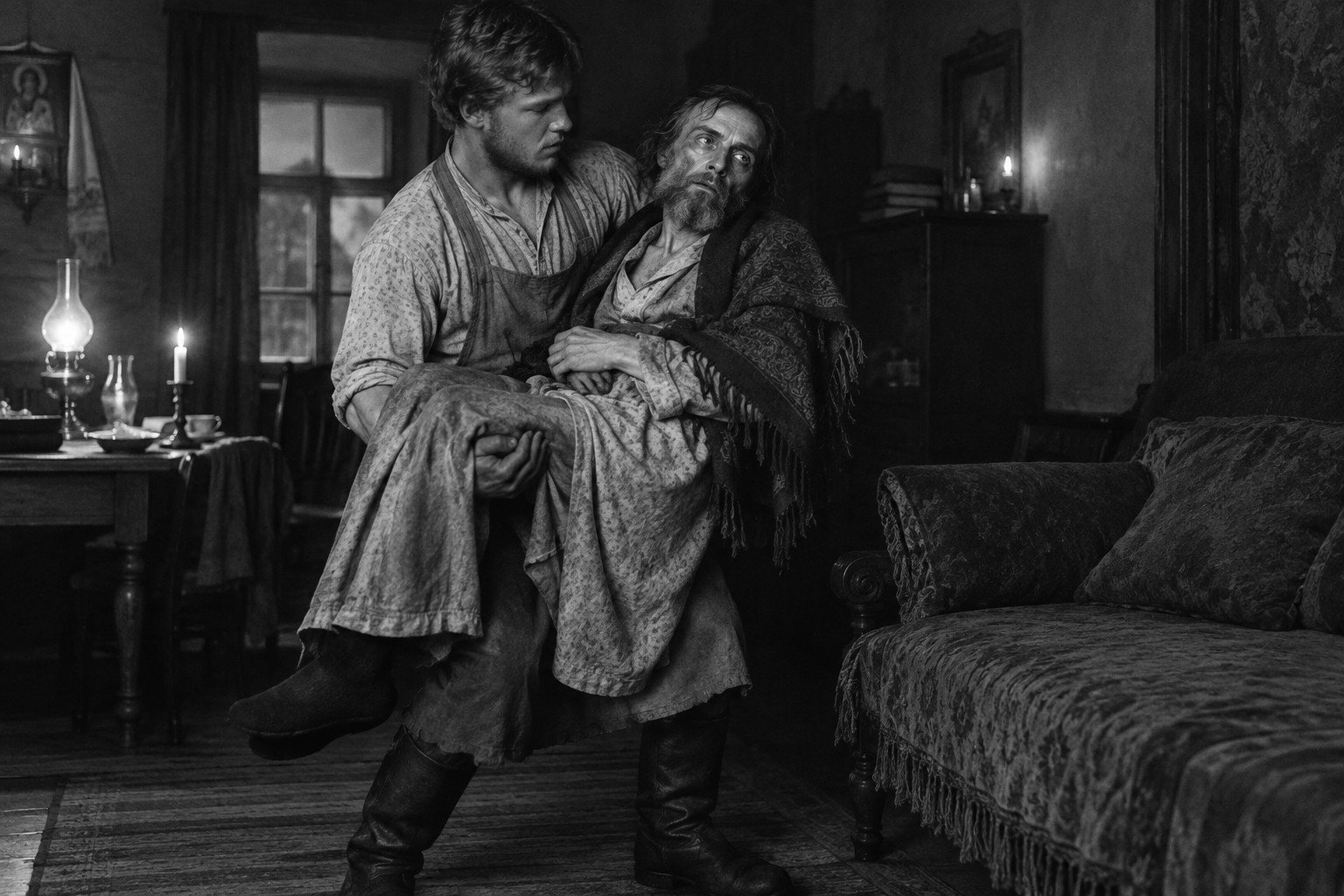
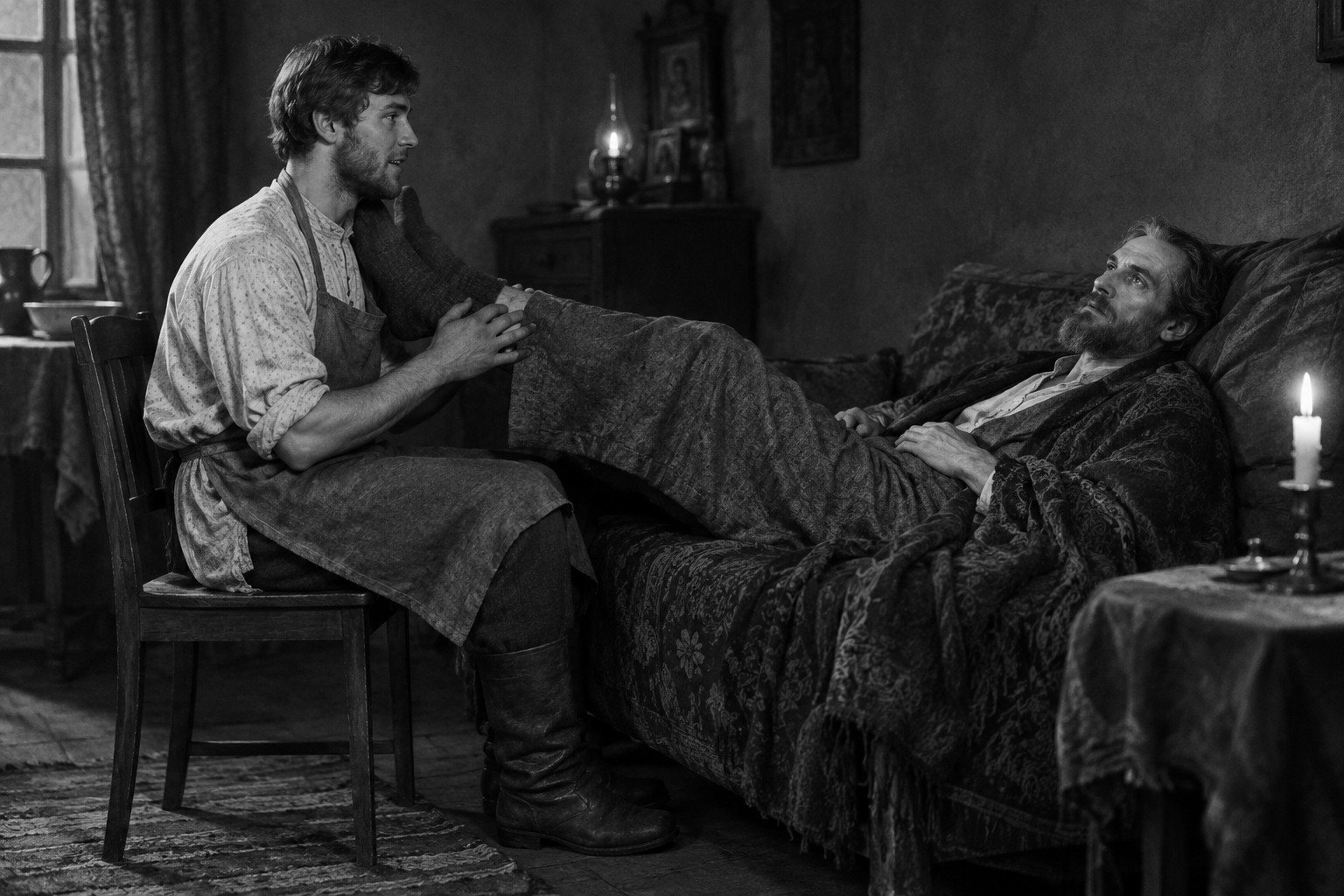
During his last call on Iván Ilích, Peter Ivánovich had seen this peasant in the cabinet: he had been performing the duty of a nurse, and Iván Ilích was particularly fond of him. Peter Ivánovich kept making the sign of the cross and slightly inclined his head in a central direction between the coffin, the sexton, and the images on the table in the corner of the room. Afterward, when this motion of making the sign of the cross with his hand appeared to him to have lasted long enough, he stopped and began to look at the corpse.
The dead man was lying, as all dead men lie, quite heavily, in corpse-like fashion sinking with the stark members of his body in the bedding of the coffin, with an eternally bent head on a pillow, and displayed, as corpses always do, his yellow, waxen brow with bare spots over his sunken temples, and a towering nose which seemed to be pressing against the upper lip. He was very much changed and much thinner than when Peter Ivánovich had seen him the last time, but, as is the case with all corpses, his face was more beautiful and, above all, more significant than that of a living man. On his face there was an expression of this, that what was necessary to do had been done, and done correctly. Besides, in this expression there was also a rebuke or reminder to the living.
This reminder seemed to Peter Ivánovich out of place, or, at least, having no reference to him. For some reason he felt ill at ease, and so hastened to cross himself again and, as it appeared to him, too precipitously and out of keeping with the proprieties, turned around and walked toward the door.
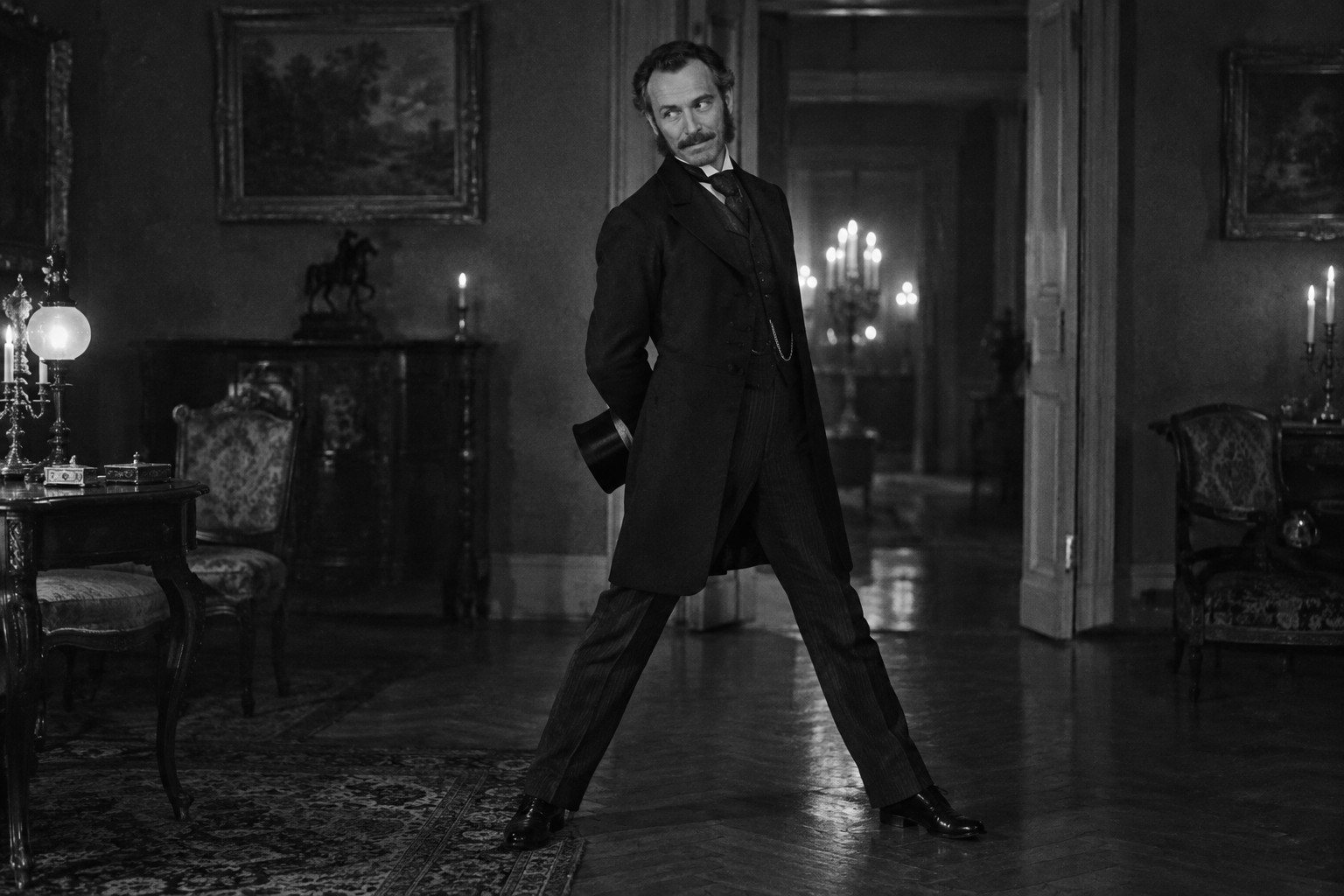
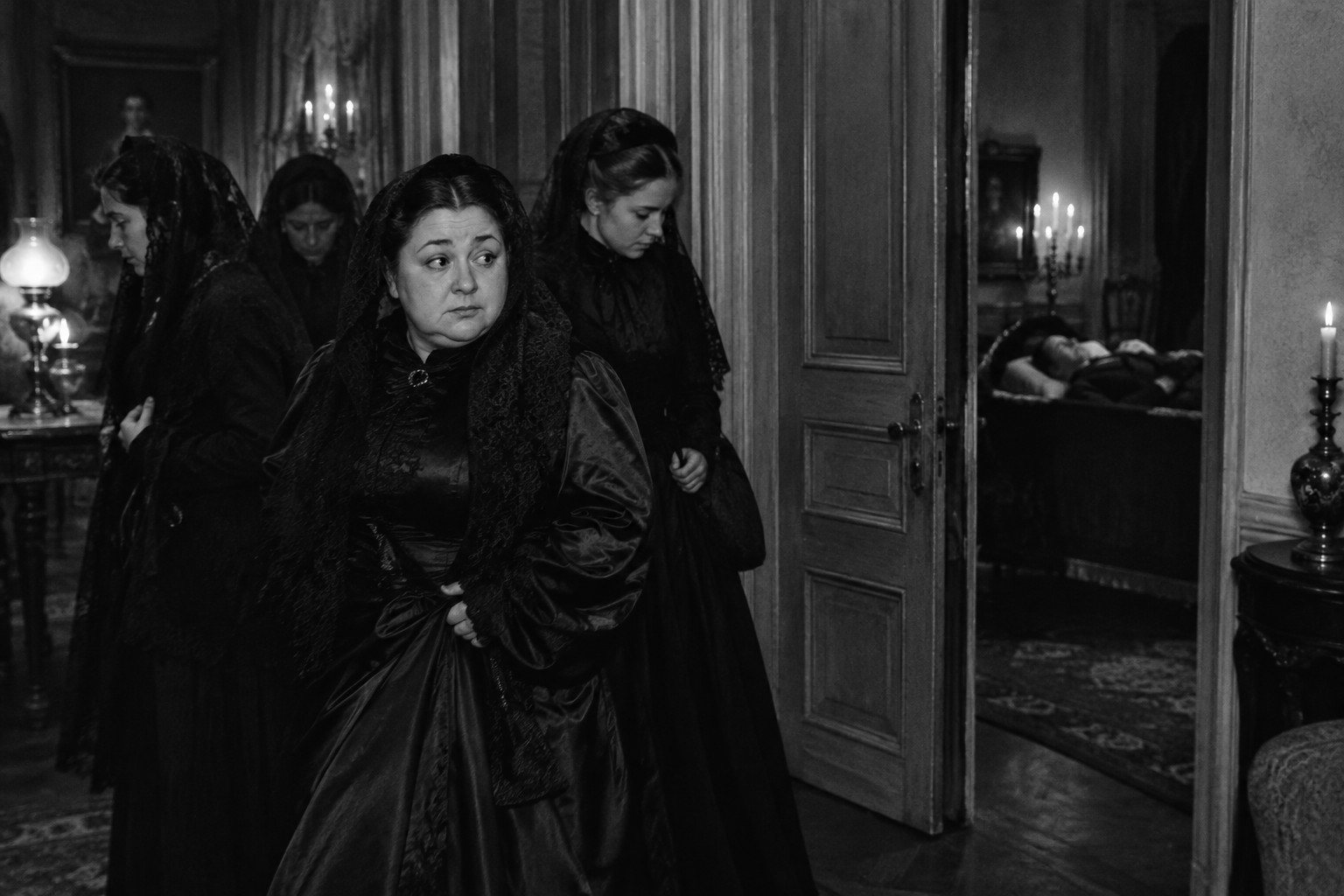
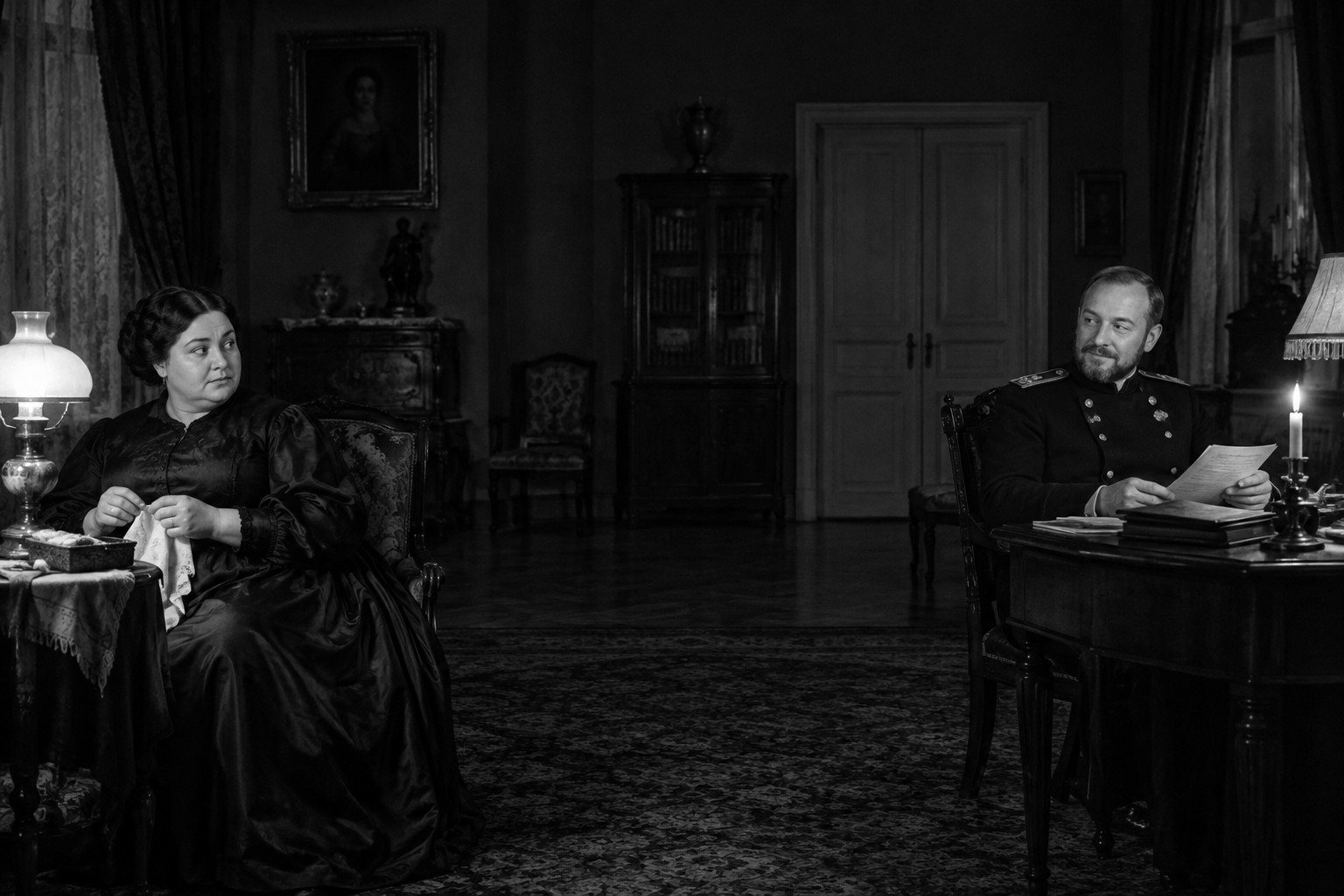
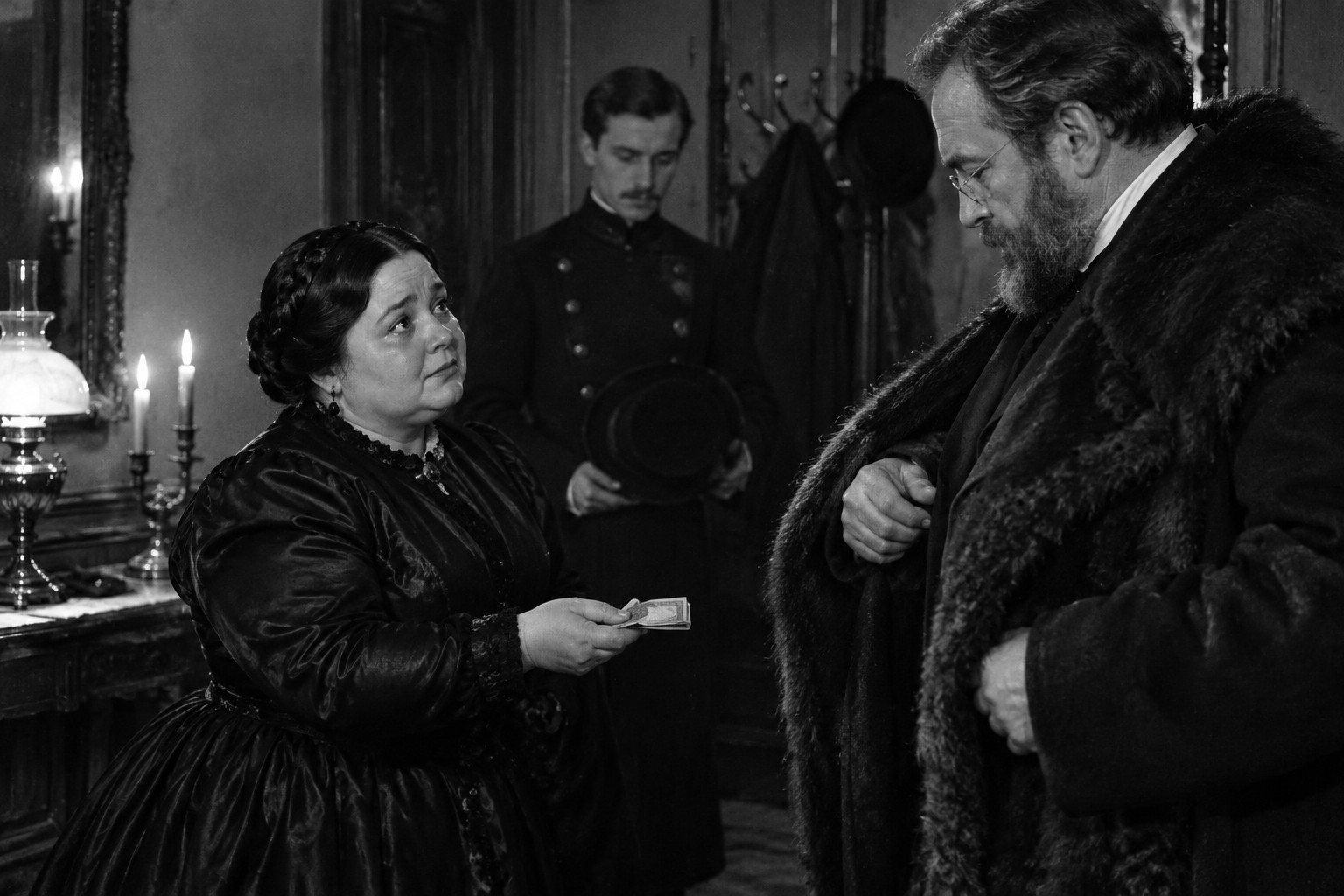
Schwarz was waiting for him in a middle room, spreading his legs wide, and with both his hands playing behind his back with his silk hat. One glance at Schwarz’s playful, natty, and elegant figure refreshed Peter Ivánovich. Peter Ivánovich understood that he, Schwarz, was standing above such things, and did not surrender himself to crushing impressions. His very glance said: the incident of the mass for Iván Ilích can by no means serve as a sufficient reason for declaring the order of the session disturbed, that is, that nothing could keep him that very evening from clicking with the deck of cards after breaking the seal, while the lackey would place four fresh candles on the table; altogether there was no cause for supposing that this incident could keep them from passing an agreeable evening. Indeed, he said so in a whisper to Peter Ivánovich as he passed by, proposing that they meet for the game at the house of Fédor Vasilevich. But it was apparently not Peter Ivánovich’s fate to have a game of vint that evening. Praskóvya Fédorovna, an undersized, fat woman, who, in spite of all efforts to the contrary, had been expanding all the time downward from the shoulders, dressed in black, with her head covered with lace, and with the same upturned brows as those of the lady who was standing at the coffin, came out of her apartments with other ladies and, taking them to the door of the room where the dead man lay, said: “The mass will be read at once. Pass in.”
Schwarz made an indefinite bow and stopped, evidently neither accepting nor declining the offer. When Praskóvya Fédorovna recognized Peter Ivánovich, she sighed, went up close to him, took his hand, and said: “I know that you were a true friend to Iván Ilích,” and looked at him, expecting from him an action which would correspond to these words. Peter Ivánovich knew that, as it was necessary there to make the sign of the cross, so here it was necessary to press her hand, to sigh, and to say: “Believe me!” And so he did. Having done it, he felt that the desired result was achieved: both he and she were touched.
“Come with me: before it begins there, I have to talk with you,” said the widow. “Give me your arm.”
Peter Ivánovich gave her his arm, and they went to the inner apartments, past Schwarz, who gave Iván Ilích a sad wink.
“There goes the vint! You must not be angry with us if we choose another partner. If you get off, we may play a five-handed game,” said his playful glance.
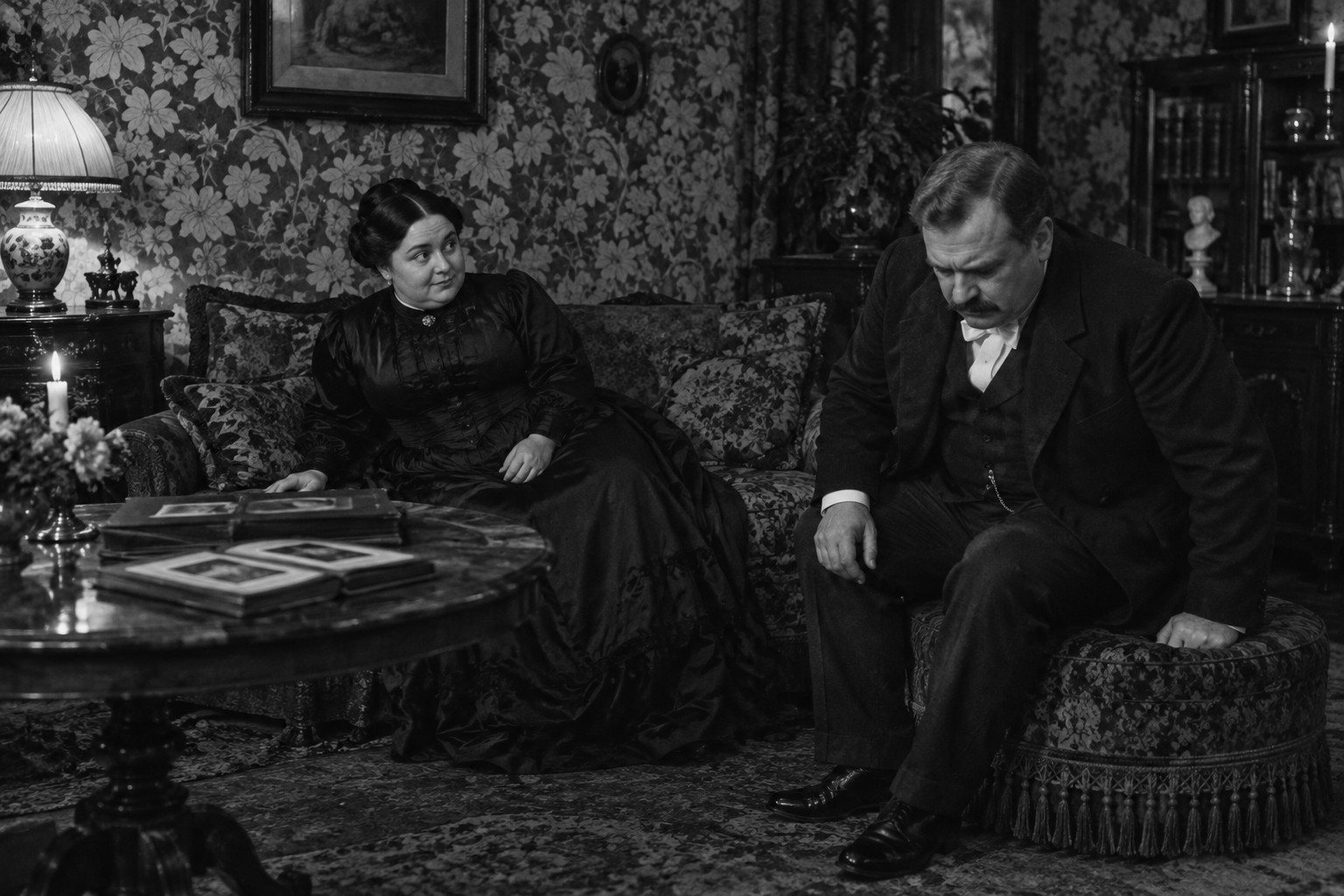
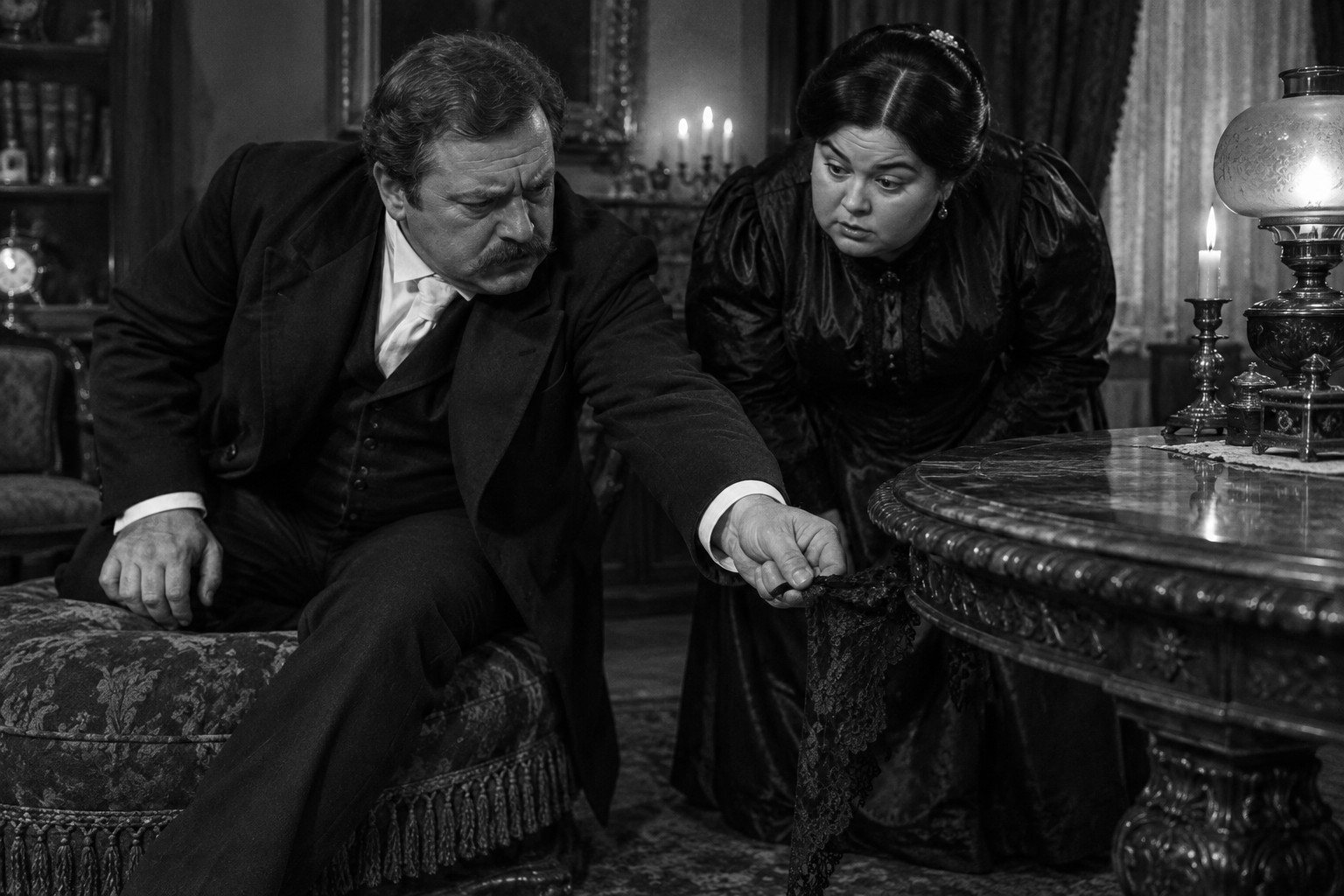
Peter Ivánovich sighed more deeply and more sadly still, and Praskóvya Fédorovna pressed his hand gratefully. Upon entering her drawing-room, which was papered with pink cretonne and was illuminated by a dim lamp, they sat down at the table,—she on a divan, and Peter Ivánovich on a pouffe with crushed springs and unevenly yielding seat. Praskóvya Fédorovna was on the point of cautioning him and asking him to take another seat, but found this cautioning incompatible with her present condition, and so changed her mind.
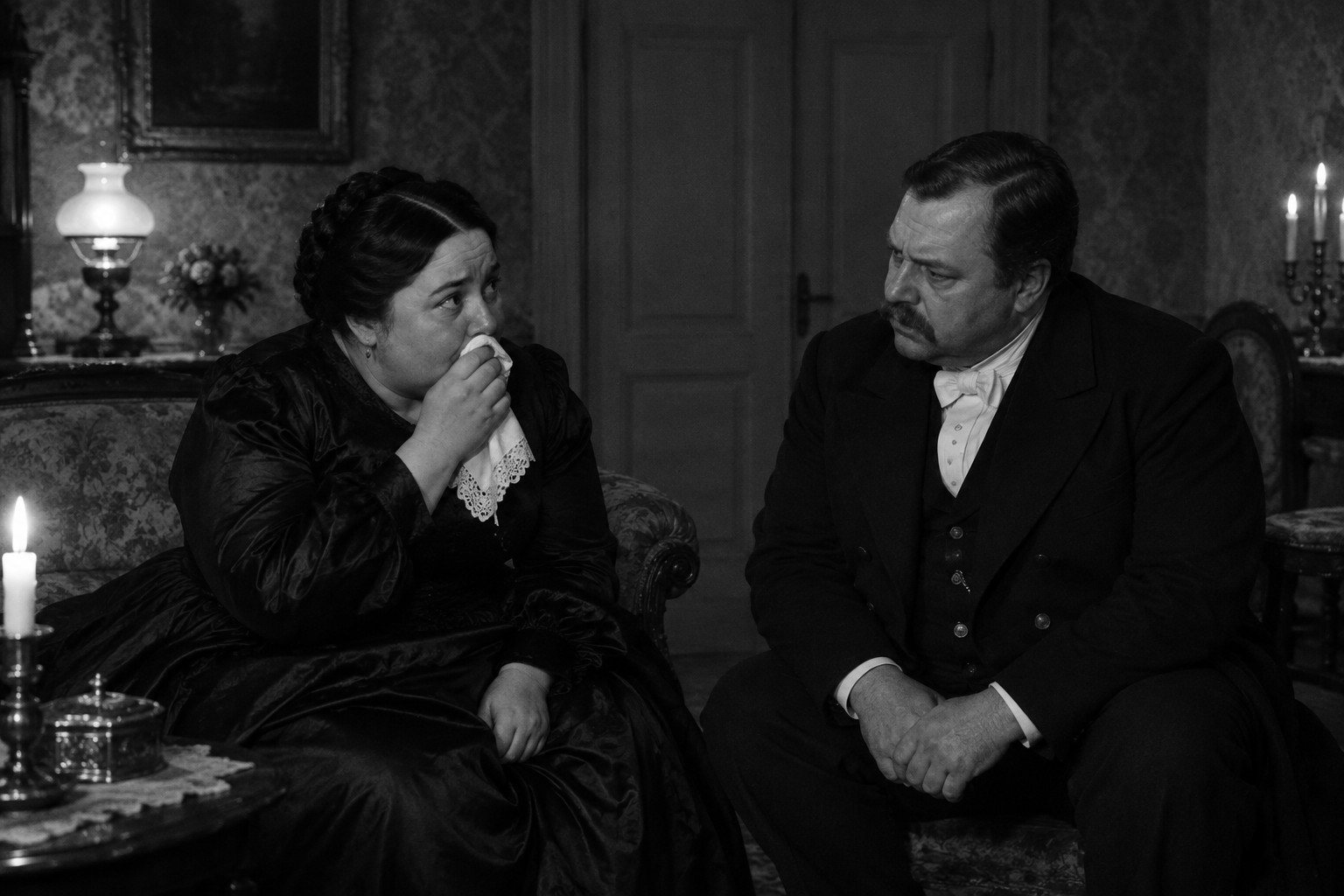
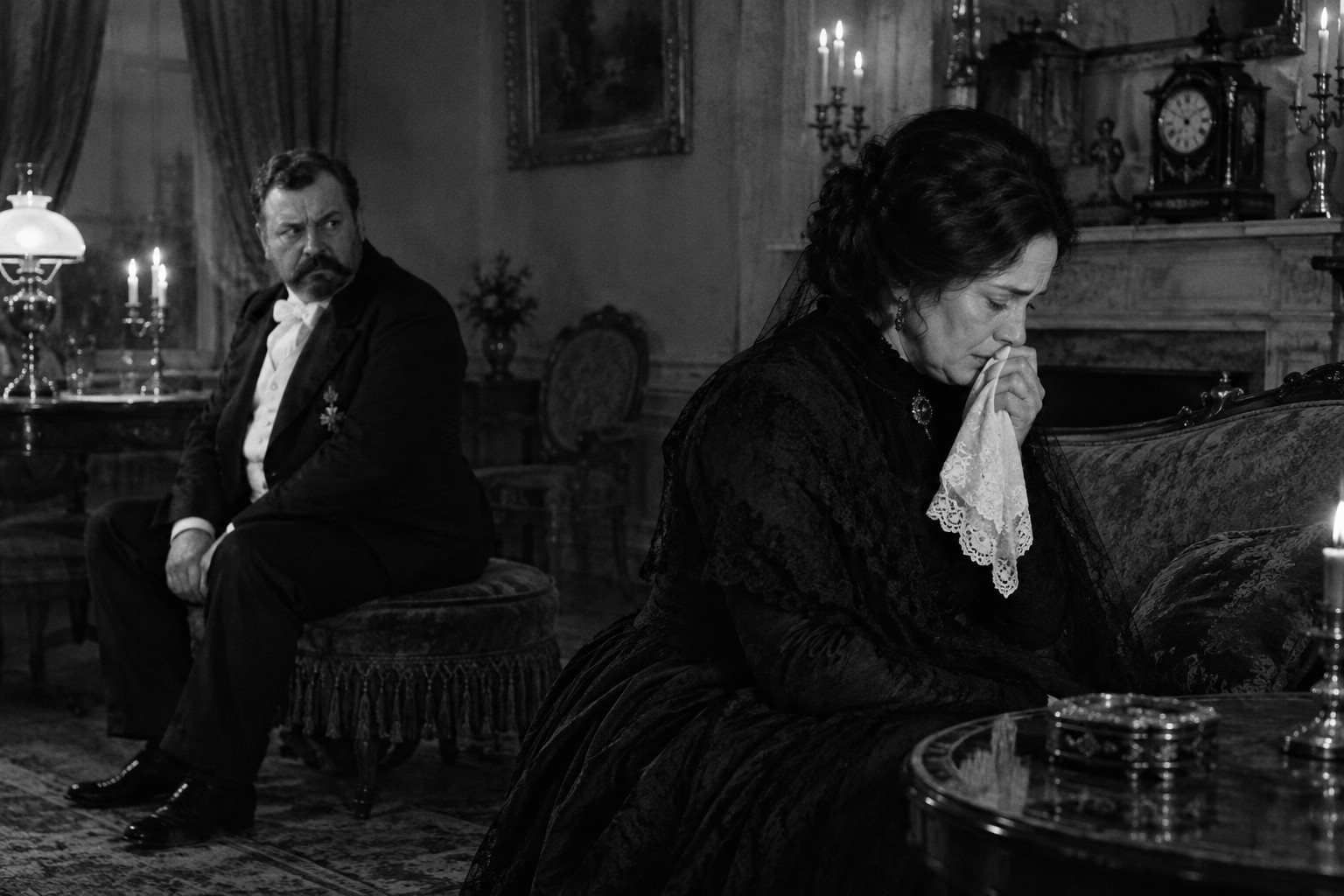
Seating himself on this pouffe, Peter Ivánovich recalled how Iván Ilích had appointed this room and had consulted him in regard to this very pink cretonne with its green leaves. As the widow, on her way to seat herself, passed by the table (the drawing-room was altogether too full of trifles and of furniture), the black lace of her black mantilla caught on the carving of the table. Peter Ivánovich raised himself in order to disentangle it, and the liberated pouffe began to agitate under him and to push him. The widow began to free her lace herself, and Peter Ivánovich sat down again, choking the riotous pouffe. But the widow did not free the lace entirely, and Peter Ivánovich raised himself again, and again the pouffe became agitated and even clicked. When all this was ended, she took out her clean cambric handkerchief and began to weep. But Peter Ivánovich was cooled off by the episode with the lace and by the struggle with the pouffe, and sat scowling. This awkward situation was interrupted by Sokolov, Iván Ilích’s butler, who came to report that the lot in the cemetery which Praskóvya Fédorovna had chosen would cost two hundred roubles. She stopped weeping and, looking at Peter Ivánovich with the glance of a victim, said in French that it was very hard for her. Peter Ivánovich made a silent sign, which expressed unquestionable assurance that that could not be otherwise.
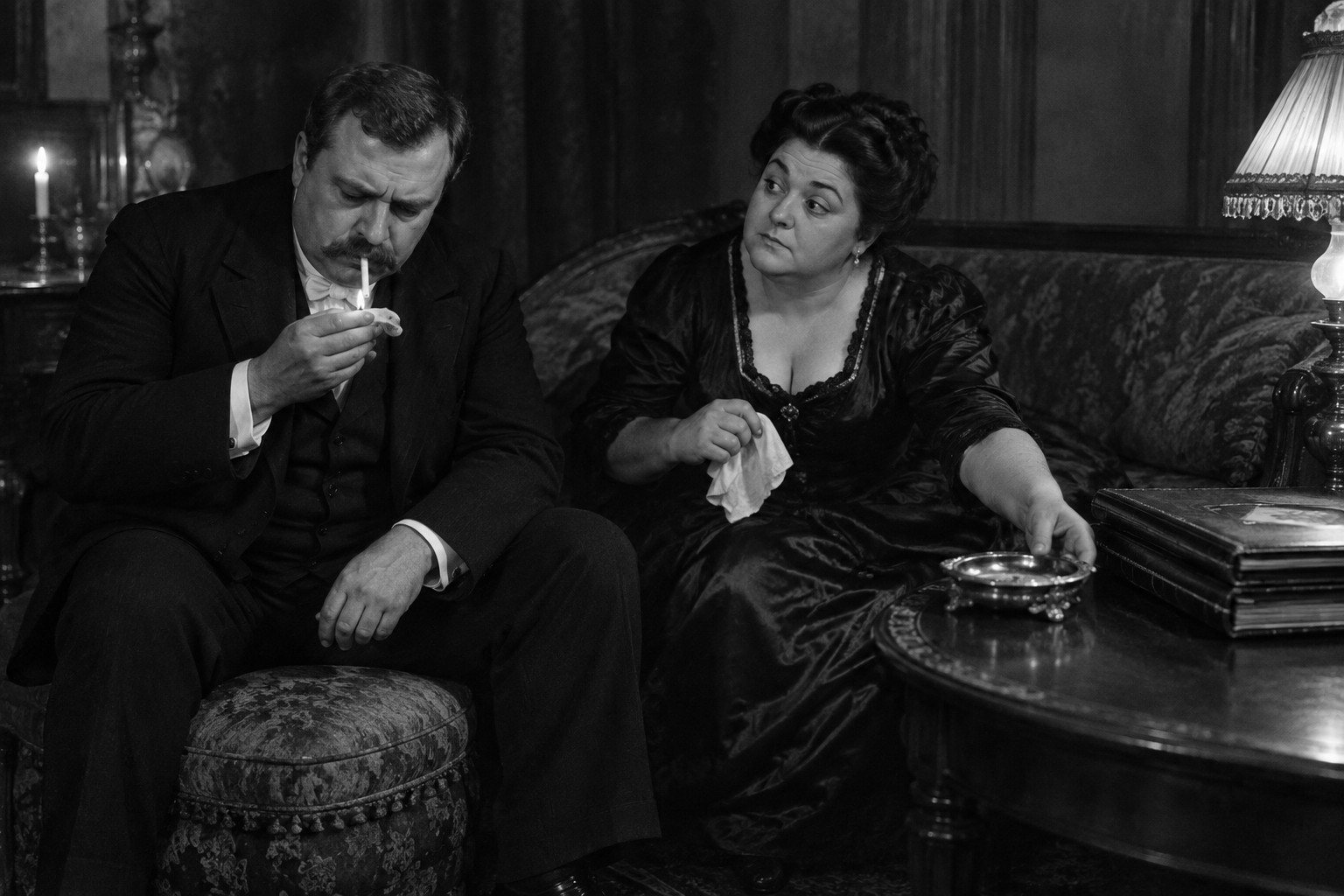
“Do smoke, if you please,” she said, in a magnanimous and at the same time crushed voice, and proceeded to busy herself with Sokolóv concerning the price of the lot. Peter Ivánovich heard, while starting to smoke, how she inquired very circumstantially about the different prices of the land and settled on the lot which she was going to take. Having finished about the lot, she also made her arrangements about the singers. Sokolóv went away.
“I do everything myself,” she said to Peter Ivánovich, pushing aside the albums which were lying on the table, and, observing that the ashes were threatening the table, she without delay moved up the ash-tray to Peter Ivánovich, and said: “I consider it a bit of hypocrisy to assure people that my grief prevents me from attending to practical matters. On the contrary, if there is anything which can, not console, but distract me, it is the cares concerning him.” She again drew out her handkerchief, as though getting ready to cry, and suddenly, as though overcoming herself, she shook herself, and began to speak calmly. “But I want to ask you about a certain matter.”
Peter Ivánovich made a bow, without permitting the springs of the pouffe, which began to stir under him, to get away.
“The last three days he suffered terribly.”
“Suffered terribly?” asked Peter Ivánovich.
“Oh, terribly! The last minutes, nay hours, he never stopped crying. It was unbearable. I cannot understand how I stood it; you could hear him three rooms off. Oh, what I have endured!”
“And was he really in his right mind?” asked Peter Ivánovich.
“Yes,” she whispered, “to the last minute. He bade us good-bye within fifteen minutes of his death, and also asked us to take Volódya away.”
The thought of the suffering of this man, whom he had known so closely, at first as a merry boy, as his schoolmate, and later, when he was grown, as his partner, suddenly terrified him, in spite of the disagreeable consciousness of his hypocrisy and of that of the woman. He again saw that brow and that nose which pressed against the lip, and he felt terribly for himself.
“Three days of frightful suffering, and death. Why, this may happen to me now, any minute,” he thought, and for a moment he felt terribly. But immediately, he did not know himself how, the habitual thought occurred to him that this had happened to Iván Ilích, and not to him, and that this should not and could not happen to him; that if he thought in this manner, he submitted to a gloomy mood, which he ought not to do, as was evident from Schwarz’s face. Having reflected thus, Peter Ivánovich calmed himself and interestedly inquired about the details of Iván Ilích’s end, as though death was an accident which was peculiar to Iván Ilích but by no means to him.
After many details of the really terrible physical sufferings which Iván Ilích had endured (these details Peter Ivánovich learned only from the way these torments of Iván Ilích affected the nerves of Praskóvya Fédorovna), the widow apparently found it necessary to pass over to business.
“Oh, Peter Ivánovich, it is so hard, so terribly hard, so terribly hard!” and she started weeping again.
Peter Ivánovich sighed and waited for her to clear her nose. When she had done so, he said, “Believe me—” and she became again voluble and made a clear breast of what evidently was her chief business with him. This business consisted in questions as to how to obtain money from the government on the occasion of her husband’s death. She made it appear as though she were asking Peter Ivánovich’s advice in regard to the pension; but he saw that she knew down to the minutest details, what he did not know, what could be got out of the government in consequence of this death, but that she wanted to find out if it were not possible in some way to get a little more money out of it. Peter Ivánovich tried to discover a means to do so, but, after reflecting a little and out of propriety scolding our government for its stinginess, be said that he thought that nothing more could be got from it. Thereupon she sighed and obviously was trying to find a means for ridding herself of her visitor. He understood this, and so put out his cigarette, pressed her hand, and went into the antechamber.
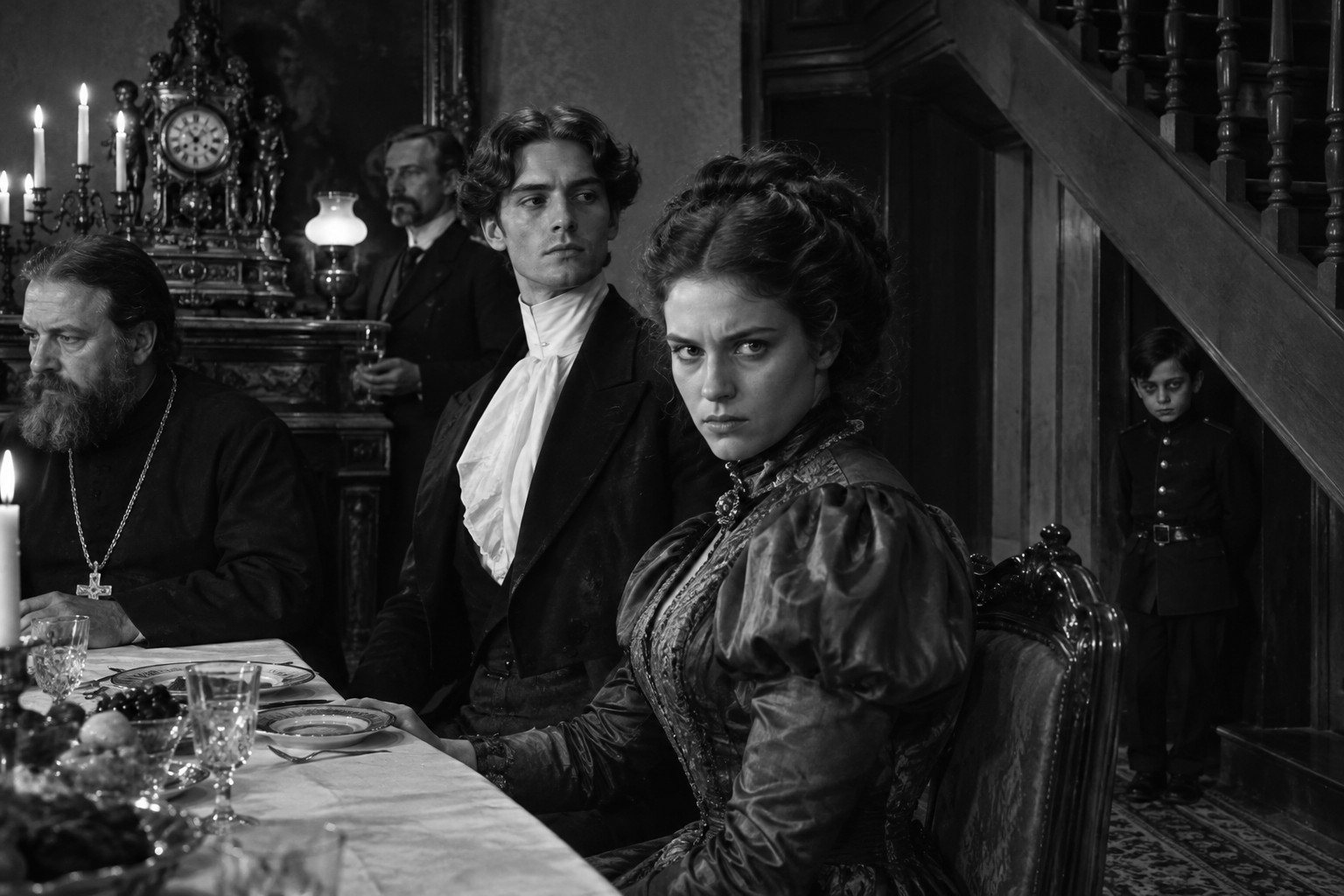
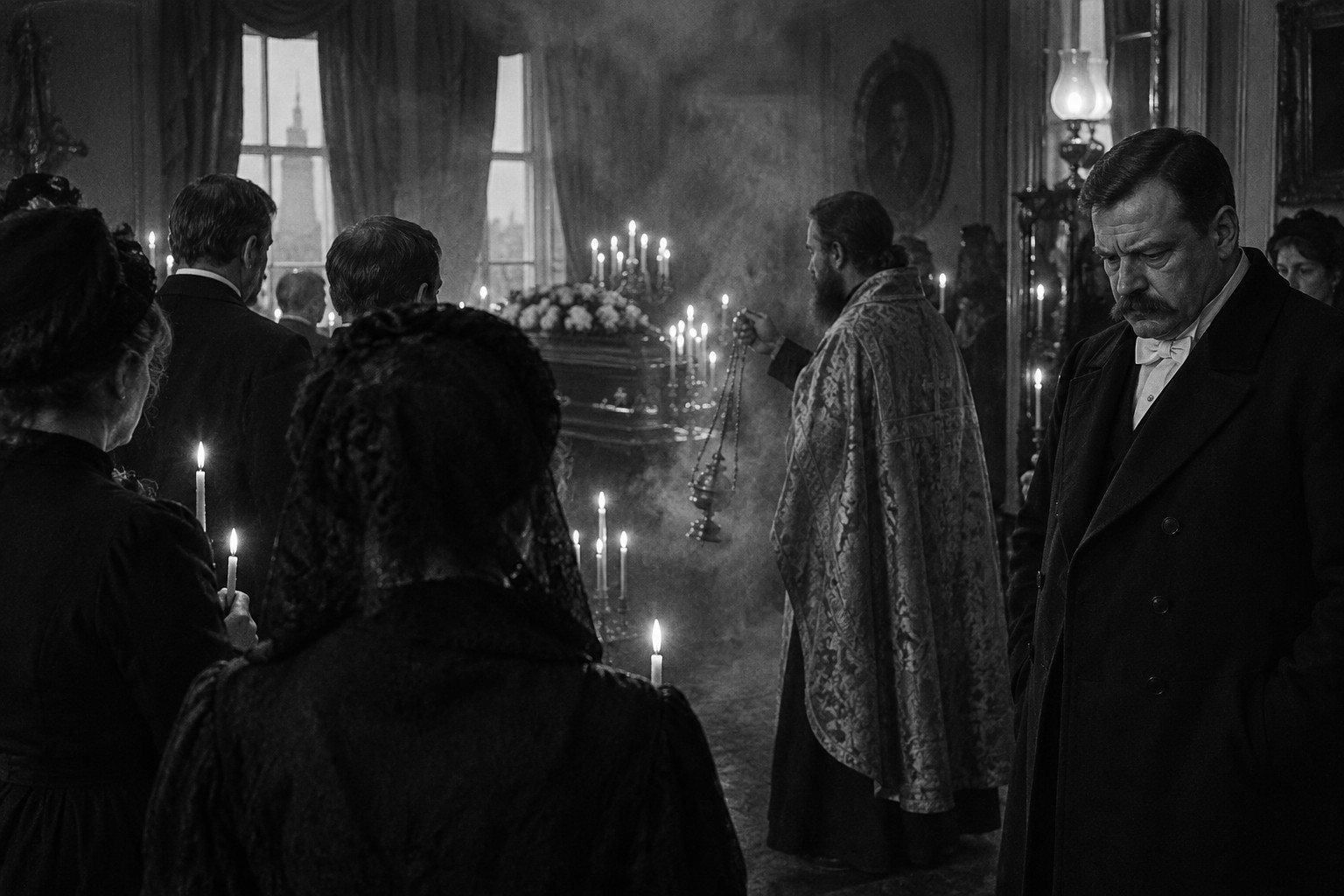
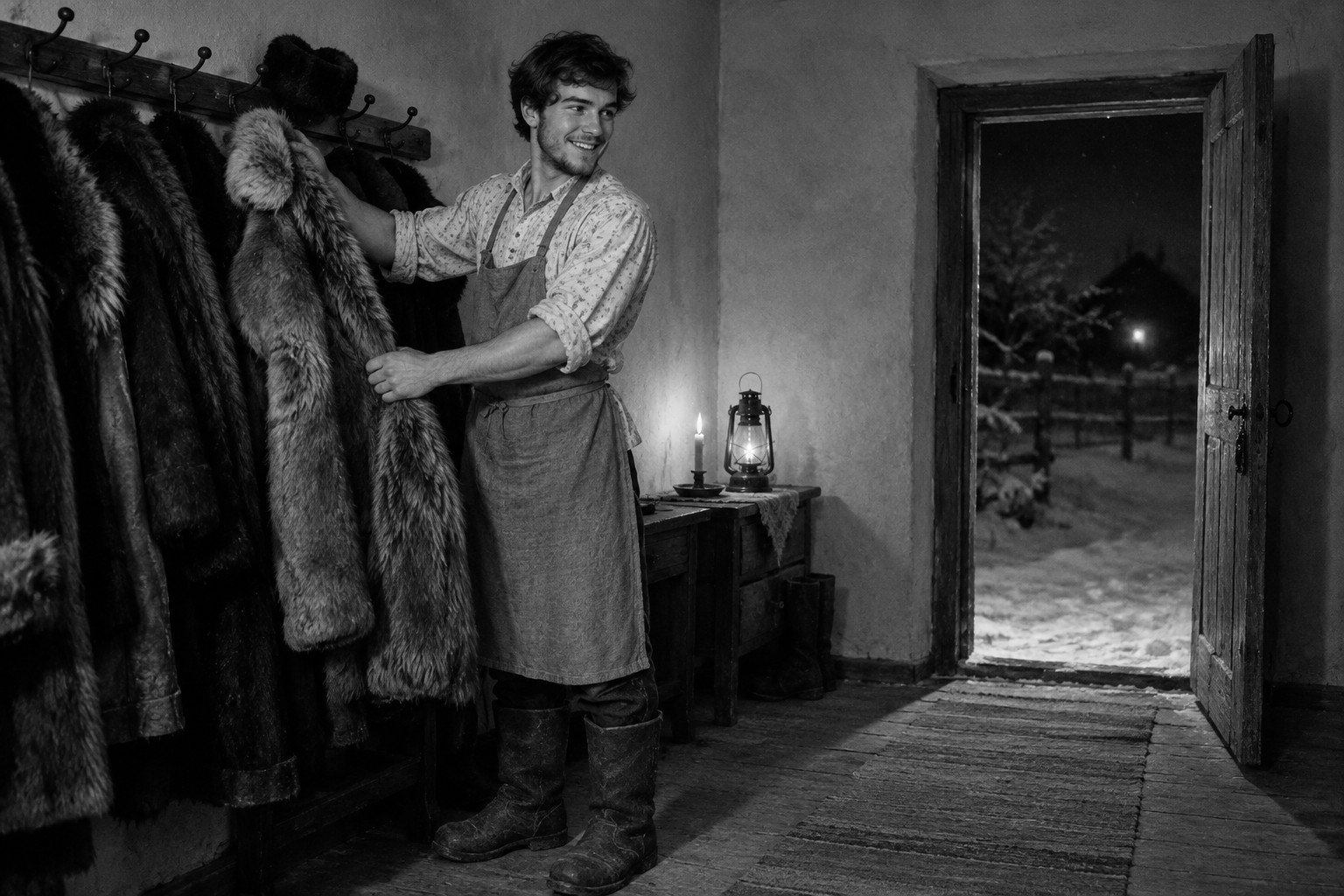
In the dining-room with a clock, to which Iván Ilích had taken such a fancy that he had purchased it in a bric-à-brac shop, Peter Ivánovich met a priest and a few acquaintances who had come to be present at the mass, and saw Iván Ilích’s daughter, a pretty young lady, with whom he was acquainted. She had a gloomy, determined, almost angry look. She bowed to Peter Ivánovich, as though he were guilty of something. Back of the daughter stood, with the same offended look, a wealthy young man, an examining magistrate and an acquaintance of Peter Ivánovich, who, as he had heard, was her fiancé. He bowed dejectedly and was on the point of passing into the room of the dead man, when from under the staircase appeared the small form of a gymnasiast, Iván Ilích’s son, who resembled his father terribly. This was little Iván Ilích, such as Peter Ivánovich remembered him in the law school. His eyes were small and such as one generally sees in impure boys of thirteen or fourteen years of age. Upon noticing Peter Ivánovich, the boy began to frown sternly and shamefacedly. Peter Ivánovich nodded to him, and entered the room of the dead man. The mass began, and there were the candles, groans, incense, tears, sobs. Peter Ivánovich stood frowning, looking at his feet in front of him. He did not once cast a glance on the dead man, and did not to the end succumb to the dissolving influences, and was one of the first to leave the room. There was no one in the antechamber. Gerásim, the peasant of the buffet-room, leaped out from the room of the deceased man, and with his powerful hands rummaged among all the fur coats, in order to find the one which belonged to Peter Ivánovich and which he handed to him.
“Well, friend Gerásim?” said Peter Ivánovich, to be saying something. “Are you sorry?”
“It is God’s will. We shall all of us be there,” said Gerásim, displaying his white, solid peasant teeth; like a man in the heat of intense work, he opened the door in lively fashion, called the coachman, helped Peter Ivánovich in, and jumped back to the porch, as though considering what else he had to do.
It was especially pleasant for Peter Ivánovich to breathe the pure air, after the odour of incense, of the dead body, and of carbolic acid.
“Whither do you command me to drive you?” asked the coachman.
“It is not yet late,—I will make a call on Fédor Vasilevich.”
And Peter Ivánovich departed. He indeed found them at the end of the first rubber, so that it was convenient for him to come in as the fifth.
II
Iván Ilích’s past life was simple and most common, and yet most terrible.
Iván Ilích died at the age of forty-five years, as a member of the court of justice. He was the son of an official who had in various ministries and departments of St. Petersburg made that career which brings people to that state from which, though it becomes evident to them that they are no good for the performance of any essential duty, they none the less cannot be expelled, both on account of their long past service and their ranks, and so receive imaginary, fictitious places, and non-fictitious thousands, from six to ten, with which they live to a good old age.
Such had been the privy councillor, the useless member of all kinds of useless establishments, Ilyá Efímovich Golovín.
He had three sons: Iván Ilích was his second; the eldest had made a similar career to that of his father, only in a different ministry, and was rapidly approaching that official age when one attains that inertia of salary. The third son was a failure. He had continuously ruined himself in various places, and was now serving with the railways, and his father and his brothers, but especially their wives, not only disliked meeting him, but without some extreme need did not even mention his existence. His sister was married to Baron Gref, a St. Petersburg official like his father-in-law.
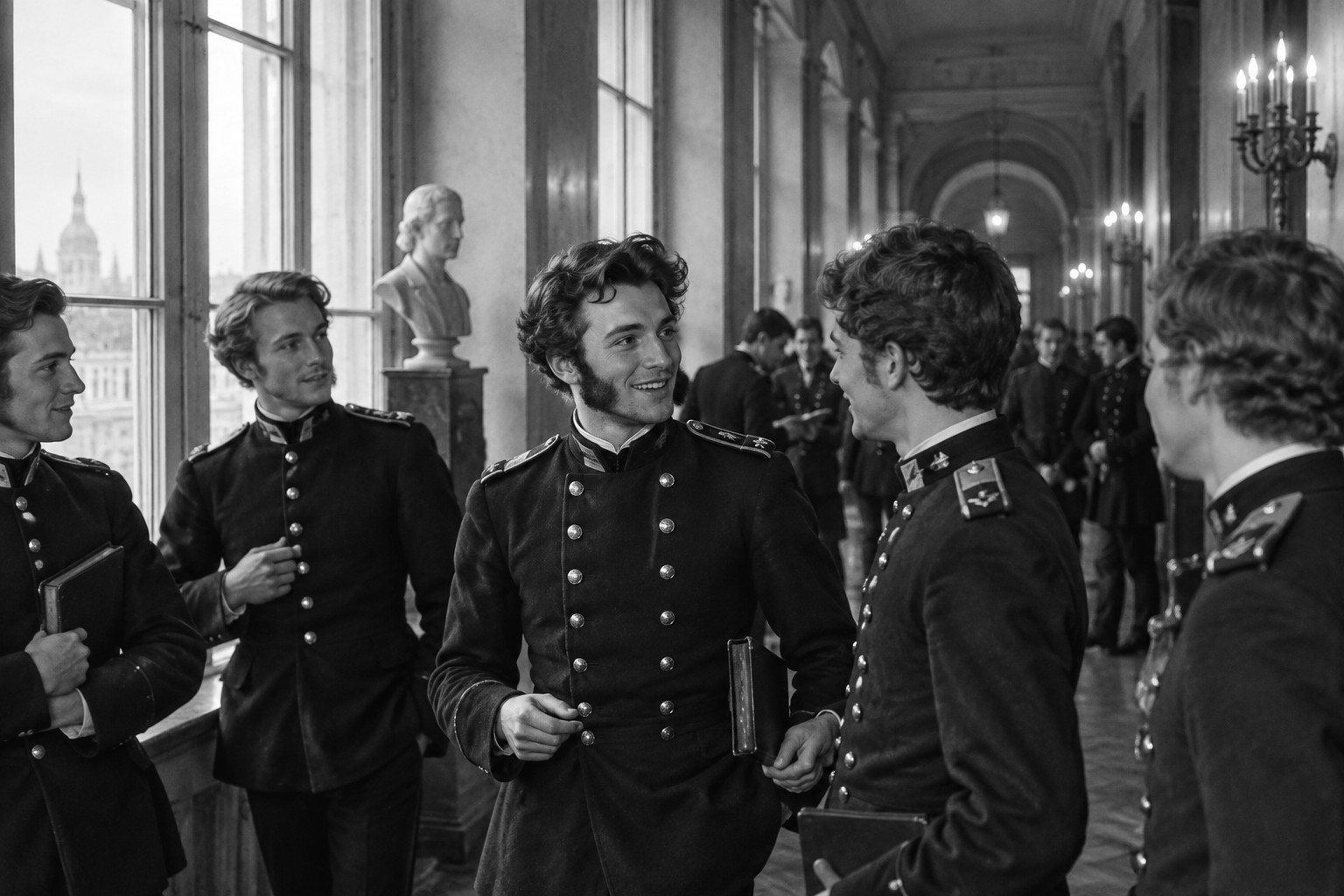
Iván Ilích was “le phénix de la famille,” as they said. He was not as cold and as precise as the elder, and not as desperate as the younger. He was intermediate between them,—a clever, lively, agreeable, and decent man. He attended the department of law together with his younger brother. The younger brother did not graduate, and was expelled in his fifth year, while Iván Ilích graduated high in his class. Even while studying law he was what he was later, during his whole life,—a capable, jolly, and affable man, who none the less strictly carried out what he considered to be his duty; and he considered his duty that which was so considered by men in the higher spheres. Neither as a boy nor as a grown man did he curry favour with any one, but from his earliest youth he tended, like a fly to the light, to men who occupied the highest positions in the world, adopted their manner and their views of life, and established friendly relations with them. All the distractions of childhood and youth had passed for him without leaving any great traces; he abandoned himself to sensuality and ambition, and toward the end to the liberalism of the higher classes, but all this within certain limits which his feeling indicated to him correctly.
He had committed acts, while studying law, which had presented themselves to him as great abominations and had inspired him with contempt for himself at the time that he had committed them, but later, when he observed that such acts were also committed by distinguished personages and were not considered to be bad, he, without acknowledging them to be good, completely forgot them and was by no means grieved at the thought of them.
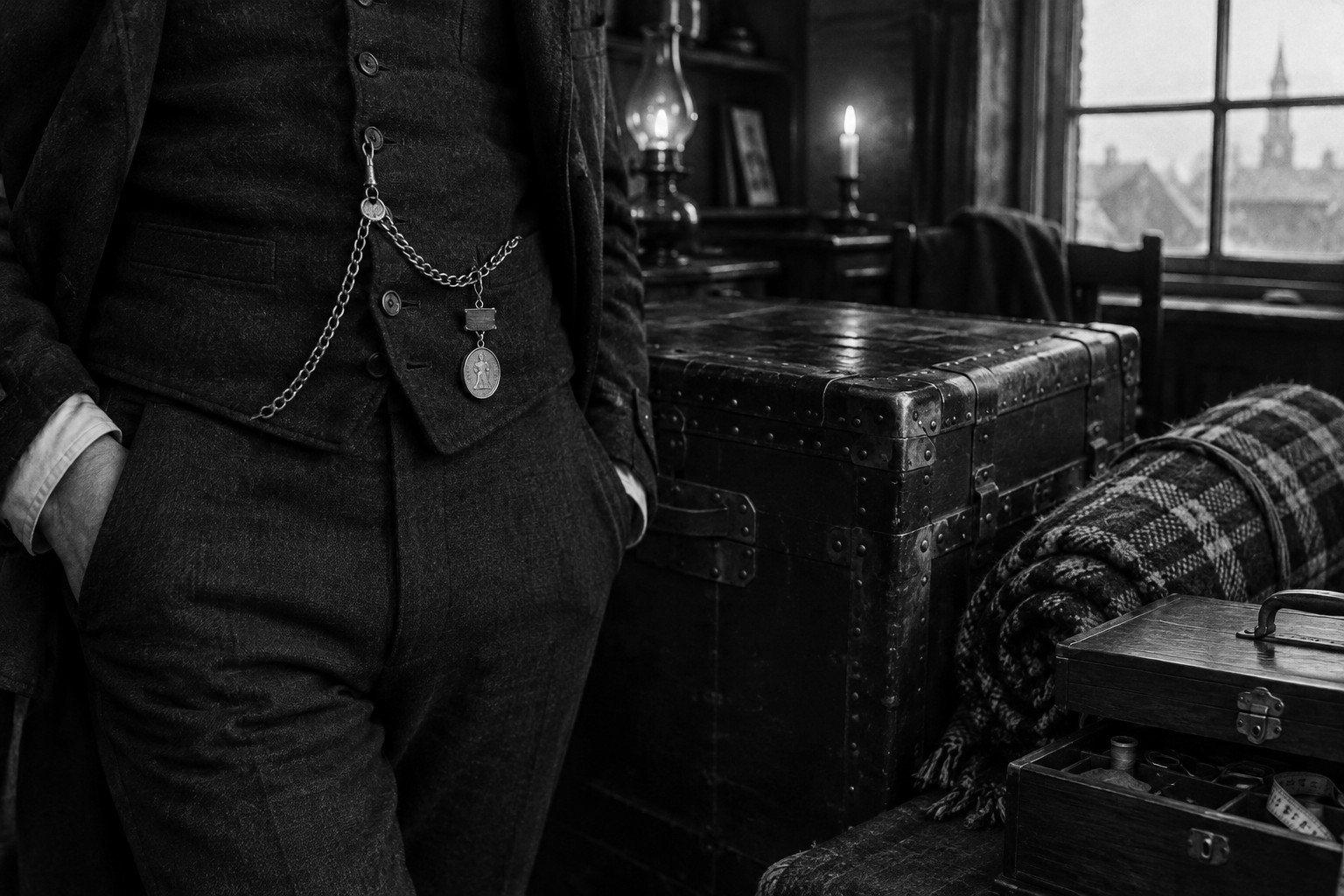
Having graduated from the law school in the tenth class and having received from his father money with which to provide himself with clothes, Iván Ilích ordered them at Charmeur’s, attached to his fob a small medal with the inscription, “Respice finem,” bade good-bye to the prince and to his tutor, dined with his companions at Donon’s, and with new trunk, underwear, clothes, shaving and toilet appurtenances, and a plaid, all of them ordered and bought in the best shops, departed for the province to take the place of an official on the governor’s special business, which his father had procured for him.
In the province Iván Ilích at once arranged the same easy and pleasant position for himself that he had enjoyed in the law school. He served, made a career for himself, and at the same time passed his time pleasantly and decently; now and then he journeyed to the counties at the command of the authorities, bore himself with dignity both toward those who stood above him and those who stood beneath him, and with precision and incorruptible honesty, which he could not help but be proud of, carried out the business entrusted to him, especially in matters of the dissenters.
In matters of his service he was, in spite of his youth and proneness to light merriment, extremely reserved, official, and even severe; but in matters of society he was often playful and witty, and always good-hearted, decent, and a “bon enfant,” as was said of him by his chief and his chief’s wife, at whose house he was a close friend.
There was also in the province a liaison with one of the ladies, who obtruded herself on the dandyish jurist; and there was a modiste, and drinking bouts with visiting aids-de-camp, and drives to a distant street after supper; there was also a subserviency to the chief, and even to the wife of the chief, but all this bore upon itself such an elevated tone of decency that it could not be called by any bad words: it all only fitted in with the French saying, “Il faut que jeunesse se passe.” Everything took place with clean hands, in clean shirts, with French words, and, above all else, in the very highest society, consequently with the approval of most distinguished persons.
Thus Iván Ilích served for five years, and a change was made in the service. There appeared new institutions of law, and new men were needed.
Iván Ilích became such a new man.
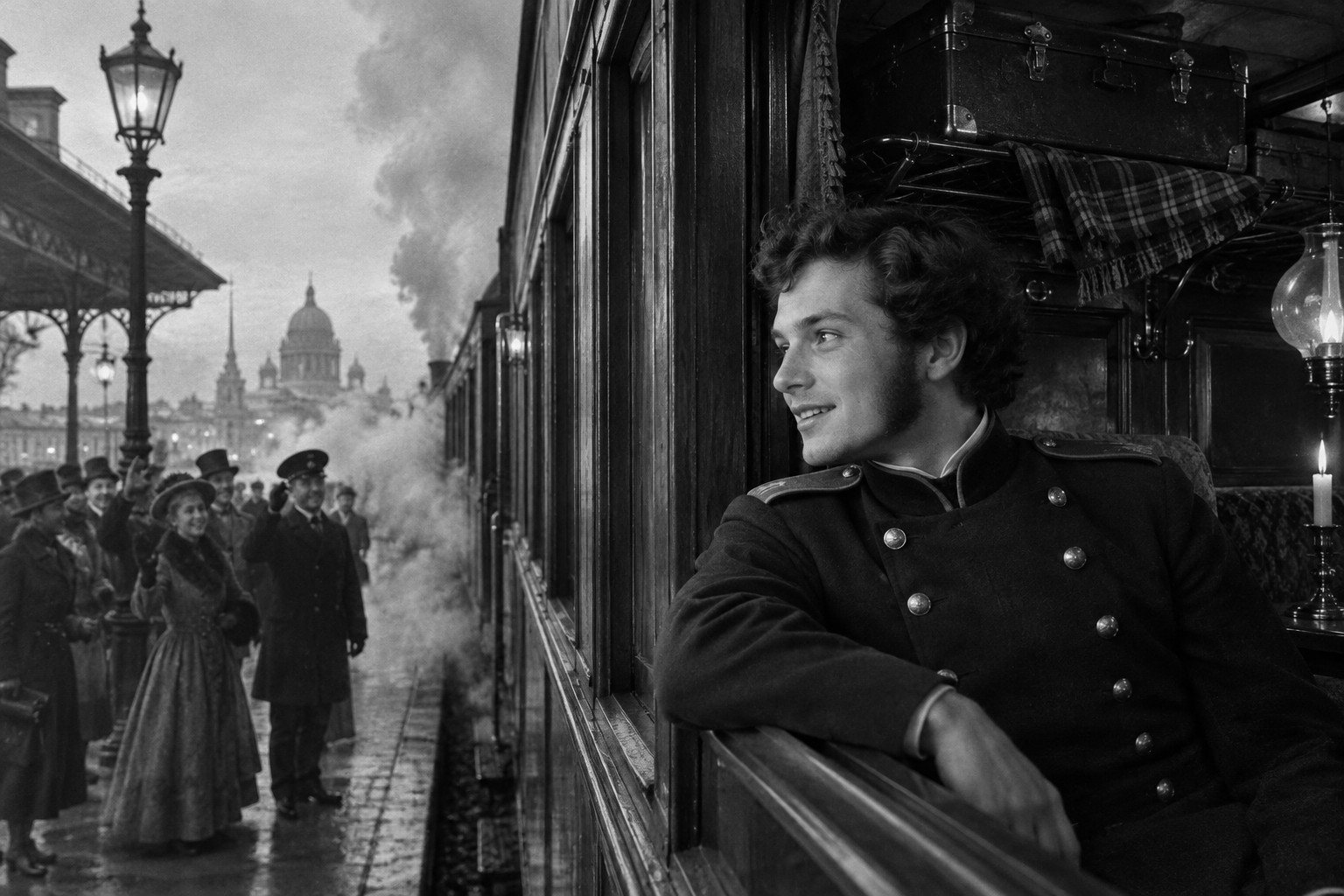
Iván Ilích was offered the place of examining magistrate, and accepted it, although this place was in another Government and it became necessary for him to give up the established relations and establish new ones. Iván Ilích was seen off by his friends, a group was formed, a silver cigarette case was presented to him, and he departed for the new place.
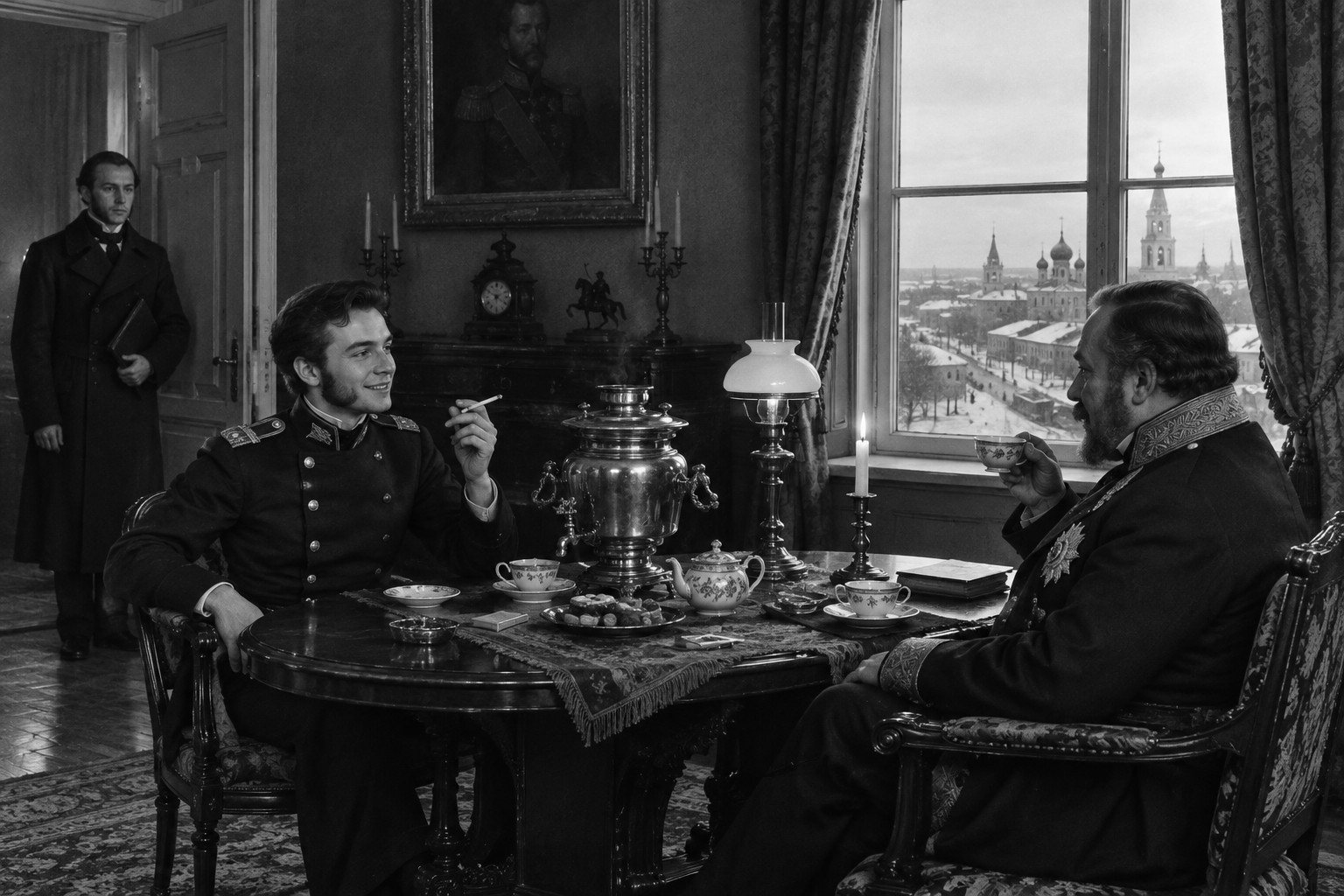
Iván Ilích was the same comme il faut, decent examining magistrate, who knew how to separate his official duties from his private life and who inspired general respect, that he had been as an official on special business. The post of the examining magistrate itself presented much more interest and attraction to him than the one he had formerly held. In his former office it had been a pleasure to him with an easy gait, and wearing Charmeur’s undress uniform, to pass by the trembling petitioners, who were waiting for an audience, and by the official people, who envied him, and to enter directly the chief’s private room and sit down with him at tea while smoking a cigarette, but there had been but few people who were directly dependent on his will. Such people had been chiefs of rural police and dissenters, whenever he was sent out on some special business; and he had been fond of treating such people, who were dependent on him, politely, almost chummily, and of making them feel that he, who might crush them, was treating them in a friendly and simple manner. There had been but few such people.
But now, while he was an examining magistrate, Iván Ilích felt that all, all without exception,—the most important and most self-satisfied people,—were in his hands, and that he needed only to write certain words on a paper with a certain heading, when such an important, self-satisfied man would be brought to him in the capacity of defendant or witness, who, if he had no mind to let him sit down, would stand before him and answer his questions. Iván Ilích never misused this power and, on the contrary, tried to mitigate its expression; but the consciousness of this power and the possibility of mitigating it formed for him the chief interest and attraction of his new service. In the service itself, more especially in his examinations, he very soon acquired the manner of removing from himself all those circumstances which had nothing to do with the service, and of simplifying every extremely complicated matter to a form which would permit the matter to be reflected merely externally on paper, and which completely excluded his personal view and, above all, made it possible to observe the whole necessary formality. This was a new business, and he was one of the first men who in practice worked out the application of the statutes of the year 1864.
On arriving in the new city, in the capacity of examining magistrate, Iván Ilích made new acquaintances and connections, arranged matters for himself anew, and assumed a somewhat different tone. He placed himself in a certain dignified aloofness from the provincial authorities, chose the best circle consisting of members of the legal profession and of the wealthy gentry who lived in the city, and assumed a tone of slight dissatisfaction with the government, of moderate liberalism, and of cultured civism. Besides this, Iván Ilích, though making no change in the elegance of his toilet, in this new office stopped shaving his chin and permitted his beard to grow as it listed.
In this new city Iván Ilích’s life again arranged itself in a most agreeable manner: the society which found fault with the governor was jolly and pleasant, the salary was larger, and not a small degree of pleasure was at that time added by the whist which Iván Ilích began to play, being possessed of the ability of playing cards merrily, and reflecting rapidly and very shrewdly, so that on the whole he was always winning.
After two years of service in the new city, Iván Ilích met his future wife. Praskóvya Fédorovna Míkhel was the most attractive, clever, and brilliant girl of the circle in which he moved. Among the other amusements and relaxations from the labours of the examining magistrate, Iván Ilích established playful, light relations with Praskóvya Fédorovna.
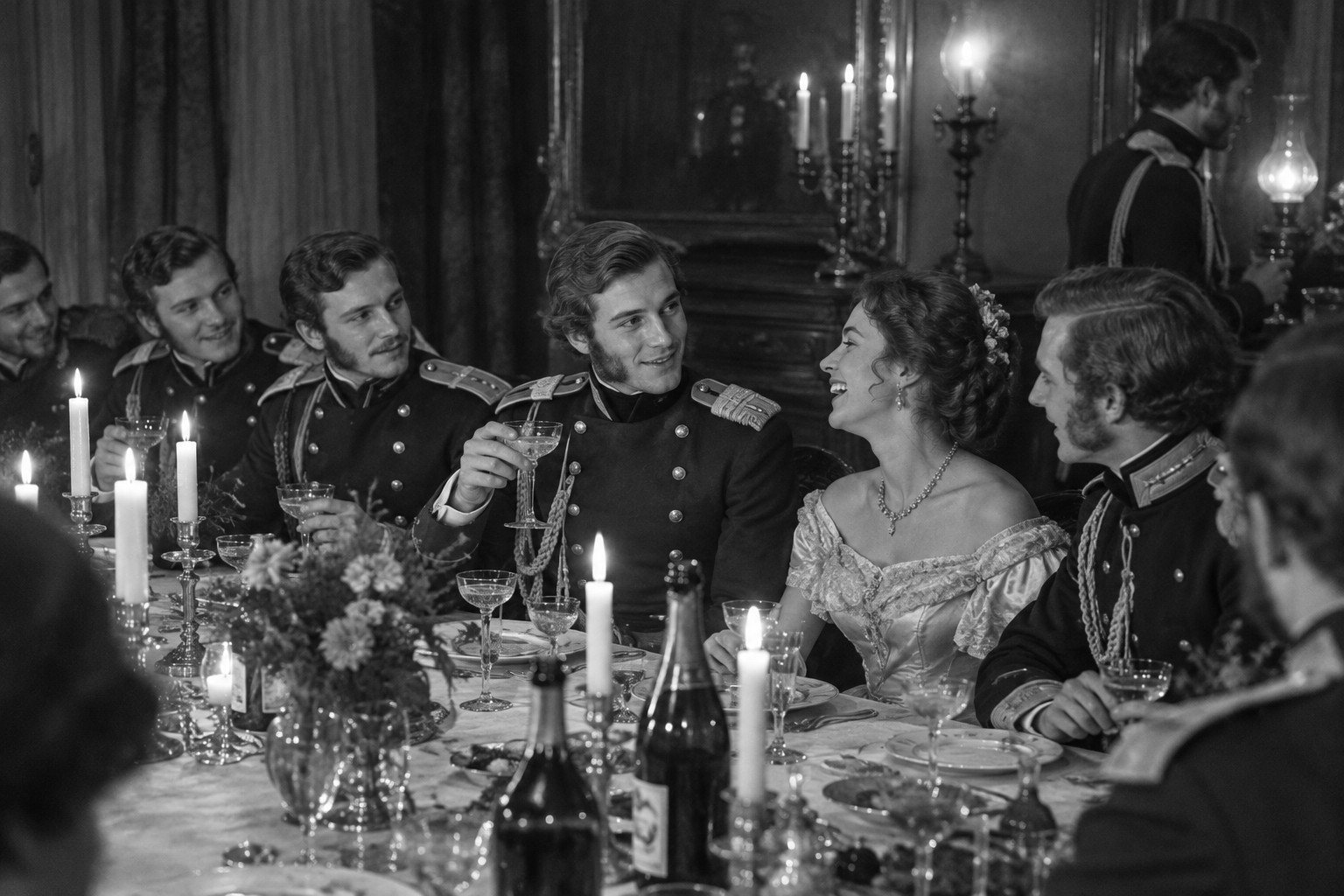
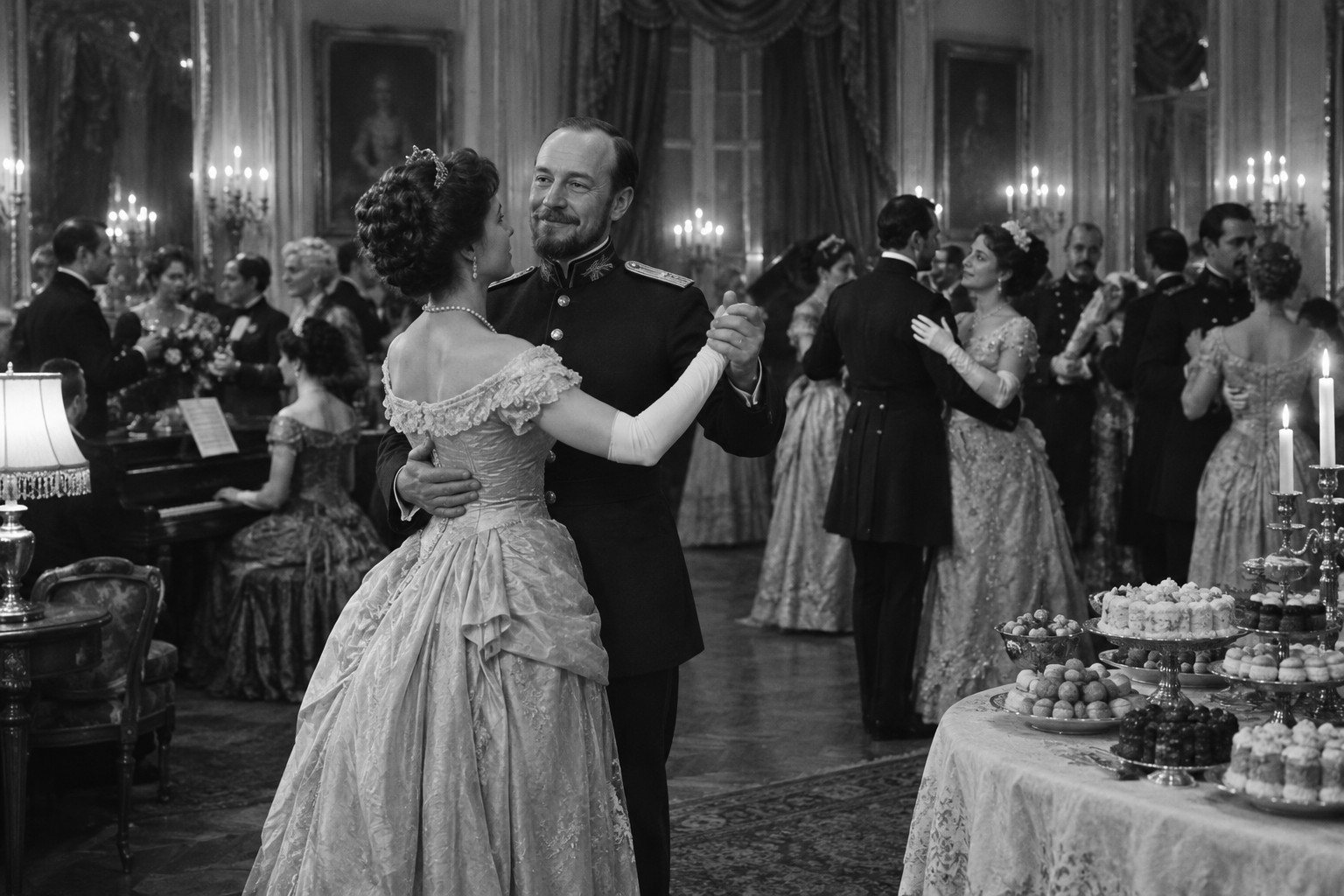
Iván Ilích had been in the habit of dancing while he was an official on special business; but being an examining magistrate, he danced only as an exception. He now danced in this sense that, though he was serving in the new institutions and belonged to the fifth class, he could prove, when it came to dancing, that in this line he was better than anybody else. Thus he occasionally danced with Praskóvya Fédorovna toward the end of the evening, and mainly during these dances conquered her. She fell in love with him. He did not have any clear and definite intention of getting married, but when the girl fell in love with him, he put this question to himself: “Indeed, why can’t I get married?”
Miss Praskóvya Fédorovna belonged to a good family of the gentry, and she had some little property. Iván Ilích could count on a more brilliant match, but this one was not bad, either. Iván Ilích had his salary, and she, so he hoped, would have as much again. It was a good alliance; she was a sweet, pretty, and absolutely decent woman. To say that Iván Ilích married because he loved his fiancée and found in her a sympathetic relation to his views of life would be as unjust as saying that he married because the people of his society approved of the match. Iván Ilích married for two reasons: he was doing something agreeable for himself in acquiring such a wife, and at the same time did what people in high positions regarded as regular.
And so Iván Ilích got married.
The process of marrying itself and the first period of his marital life, with the conjugal affection, new furniture, new dishes, new linen, passed very well until his wife’s pregnancy, so that he began to think that his marriage would not only not impair that character of the easy, agreeable, merry, and always decent life, which was approved of by society and which he regarded as peculiar to life in general, but that it would even intensify it. But heginning with the first month of his wife’s pregnancy, there appeared something new, unexpected, disagreeable, oppressive, and indecent, which it had been impossible to expect, and impossible to get rid of.
Without the least provocation, as it seemed to Iván Ilích, “de gaité de cœur,” as he said to himself, his wife began to impair the pleasure and decency of life: she was without any cause jealous of him, demanded his attentions, nagged him in everything, and made disagreeable and vulgar scenes with him.
At first Iván Ilích hoped to free himself from the unpleasantness of this situation by means of that same light and decorous relation to life which had helped him out before; he tried to ignore his wife’s disposition and continued to live lightly and agreeably, as before: he invited his friends to his house, to have a game, and tried himself to go to the club or to his friends; but his wife one day began with such energy to apply vulgar words to him, and continued so stubbornly to scold him every time that he did not comply with her demands, having apparently determined not to stop until he should submit, that is, should stay at home and experience tedium like herself, that he became frightened. He comprehended that marital life, at least with his wife, did not always contribute to the pleasures and the decency of life, but on the contrary frequently violated them, and that, therefore, it was necessary for him to defend himself against these violations. Iván Ilích began to look for means for this. His service was the one thing which impressed Praskóvya Fédorovna, and Iván Ilích began by means of his service and the duties resulting from it to struggle with his wife, hedging in his independent world.
With the birth of a child, with the attempts at nursing it and the various failures in this matter, with the real and imaginary diseases of the child and of the mother, when Iván Ilích’s coöperation was demanded, though he was unable to comprehend a thing about these matters, the necessity for hedging in his world outside his family became more imperative for him.
In measure as his wife became more irritable and more exacting, Iván Ilích more and more transferred the centre of his life into his service. He began to love his service more and grew to be more ambitious than he had been before.
Very soon, not more than a year after his marriage, Iván Ilích understood that marital life, though it presented certain comforts of life, in reality was a very complex and difficult matter, in relation to which, in order to perform one’s duty, that is, to lead a decent life, which is approved by society, it was necessary to work out a certain relation, just as in the case of the service.
And Iván Ilích worked out such a relation to the marital life. He demanded from his domestic life nothing but those comforts of a home dinner, of the hostess, of the bed, which she could give him, and, above all, that decency of external forms which were determined by public opinion. In everything else he sought merry enjoyment and decency, and he was thankful when he found them. Whenever he met with opposition and grumbling, he immediately withdrew to the separate world of his service, in which he hedged himself in and found his pleasure.
Iván Ilích was esteemed as a good official, and after three years he was made associate prosecuting attorney. His new duties, their importance, the possibility of summoning to court and incarcerating any person, the publicity of the speeches, the success which Iván Ilích had in this matter,—all this attracted him more and more to the service.
There came a succession of children. His wife became more irritable and grumbled more and more, but his relations to domestic life, as worked out by him, made him almost impermeable to her irritability.
After seven years of serving in one city, Iván Ilích was transferred to another Government in the capacity of prosecuting attorney. They moved; they had little money, and his wife did not like the place to which they moved. Though his salary was larger than before, the living was more expensive; besides, two of the children died, and so the domestic life became even more disagreeable for Iván Ilích.
Praskóvya Fédorovna reproached her husband for all mishaps in this their new place of abode. The majority of the subjects of conversation between husband and wife, especially the education of the children, led to questions which recalled former quarrels, and quarrels were ready to burst forth at any moment. There remained only those rare periods of amorousness which came over the two, but did not last long. Those were islets where they anchored for awhile, but they soon set out again into the sea of hidden enmity, which found its expression in their mutual alienation. This alienation might have grieved Iván Ilích, if he had thought that this ought not to be so; but he now recognized this situation not only as normal, but even as the aim of his activity in the family. His aim consisted in freeing himself more and more from these unpleasantnesses and giving them the character of innocuousness and decency; and this he obtained by passing less and less time with his family, and when he was compelled to be with them, he tried to make his position secure by the presence of third parties.
But the chief thing was his service. The whole interest of life centred for him in the official world. This interest absorbed him. The consciousness of his power, of the possibility of ruining any man he wanted to ruin, his importance with his inferiors, even externally, upon entering court or meeting them elsewhere, his success before his superiors and his subordinates, and, above all, the mastery with which he conducted his cases, of which he was conscious,—all this all this gave him pleasure, and with his conversations with friends, and with dinners and whist, filled his life. Thus, in general, Iván Ilích’s life continued to run as he thought that it ought to run,—agreeably and decently.
Thus he lived another seven years. His eldest daughter was now sixteen years old; another child had died, and there was left a boy, a gymnasiast, the subject of their contentions. Iván Ilích wanted to send him to a law school, but Praskóvya Fédorovna, to spite him, sent the boy to a gymnasium. The daughter studied at home and grew well, and the boy, too, studied not badly.
III
Thus Iván Ilích’s life had run for seventeen years from the time of his marriage. He was now an old prosecuting attorney, who had declined several transfers in the expectation of a more desirable place, when suddenly there happened a disagreeable circumstance which completely upset the calm of his life. Iván Ilích was waiting for the place of presiding judge in a university city; but Góppe somehow got ahead of him, and received that place. Iván Ilích was annoyed at this, began to make reproaches, and quarrelled with him and with the nearer authorities; they grew cold to him, and at the next appointment he was again left out.
That happened in the year 1880. That year was the most difficult one in Iván Ilích’s life. In that year it appeared that, on the one hand, the salary was not large enough to live on, and that, on the other, all had forgotten him, and that what in relation to him appeared to him as the greatest and most cruel injustice, to others appeared as an entirely common affair. Even his father did not consider it his duty to help him. He felt that all had abandoned him, considering his situation with thirty-five hundred roubles salary most normal and even fortunate. He alone knew that, with the consciousness of those cases of injustice which had been done him, and with the eternal nagging of his wife, and with the debts which he had begun to make, since he was living beyond his means,—he alone knew that his situation was far from being normal.
To economize, he took that summer a leave of absence and went with his wife to pass the summer in the country with Praskóvya Fédorovna’s brother.
In the country without his service, Iván Ilích for the first time experienced not only tedium, but also intolerable despondency, and he decided that it was impossible to live in this manner and that it was necessary to take some decisive measures.
Iván Ilích passed a sleepless night, during which he walked up and down the terrace, and be decided to go to St. Petersburg, to bestir himself, and, in order to punish them, who had not appreciated him, to go over to another ministry.
On the next day he went to St. Petersburg, in spite of the dissuasions of his wife and his brother-in-law.
He went there with one thing in view,—to obtain a place which would give him a salary of five thousand a year. He no longer stuck to any ministry, political bias, or manner of activity. All he needed was a place, a place with five thousand, in the administration, in the banks, with the railways, in the institutions of Empress Mary, even in the custom-house,—but it had by all means to be five thousand, and he by all means to leave the ministry, where they did not know how to appreciate him.
This journey of Iván Ilích was crowned by remarkable, unexpected success. In Kursk F. S. Ilín, an acquaintance of his, entered the coach of the first class, and informed him of the contents of the latest despatch received by the governor of Kursk, that shortly a transposition would take place in the ministry: Iván Seménovich was to be appointed in Peter Ivánovich’s place.
The proposed transposition had, in addition to its meaning for Russia, a special meaning for Iván Ilích, for, by bringing to the front Peter Petróvich and, apparently, his friend Zákhar Ivánovich, it was extremely favourable for Iván Ilích. Zákhar Ivánovich was Iván Ilích’s schoolmate and friend.
In Moscow the news was confirmed. Upon arriving at St. Petersburg, Iván Ilích found Zákhar Ivánovich, from whom he received the promise of a certain place in his former ministry of justice.
A week later he telegraphed to his wife: “Zákhar Miller’s place, with first report I receive appointment.”
Thanks to this transposition of persons, Iván Ilích suddenly received an appointment in his former ministry, which advanced him two points above his comrades, and gave him a salary of five thousand, and thirty-five hundred for travelling expenses. His whole anger against his former enemies and against the whole ministry was forgotten, and he was quite happy.
Iván Ilích returned to the village merry and satisfied, as he had not been for a long time. Praskóvya Fédorovna herself was merry, and a truce was established between them. Iván Ilích told of how he had been honoured in St. Petersburg, how all those who were his enemies had been put to shame and now were fawning before him, how he was envied his position, and especially how much all loved him in St. Petersburg.
Praskóvya listened to it all, and looked as though she believed it all, and did not contradict him in anything; she only made plans for the new arrangement of life in the city to which they were going to move. Iván Ilích saw with delight that these plans were his plans, that they agreed with one another, and that his arrested life was once more receiving the real character of merry pleasantness and decency which was peculiar to it.
Iván Ilích came back for but a short time. On September the 10th he had to enter upon his new office, and, besides, he needed time to arrange matters in the new place, to transfer everything from the province, to purchase things, to order a lot more,—in short, to arrange matters as they had been determined upon in his mind, and almost in precisely the same manner as had been decided also in Praskóvya Fédorovna’s mind.
Now that everything had been arranged so successfully and he and his wife agreed in their aims, and besides lived so little together, they became more friendly with one another than they had been since the first years of their married life. Iván Ilích intended to take his family away at once, but the insistence of his sister and his brother-in-law, who suddenly became unusually amiable and familiarly interested in Iván Ilích and his family, had this effect, that Iván Ilích departed by himself.
Iván Ilích departed, and the happy mood which was produced by his success and the agreement with his wife, one intensifying the other, did not leave him all the time. He found charming quarters, precisely what husband and wife had been dreaming of together. The large, high-studded reception-rooms in the old style, the comfortable, magnificent cabinet, the rooms for his wife and his daughter, the class-room for his son,—everything was as if purposely intended for them; Iván Ilích himself attended to their appointments: he chose the wall-paper, bought more furniture, especially such as was old-fashioned, which gave the aspect of a comme il faut style and which he had re-covered, and everything grew and grew, and arrived at the ideal which he had formed for himself. When he had half arranged matters, his arrangement surpassed his expectations. He understood that comme il faut, elegant, and non-vulgar character which everything would assume when it was ready.
When he fell asleep, he imagined the parlour as it would be. As he looked at the drawing-room, which was not yet finished, he already saw the fireplace, the screen, the shelves, and those scattered chairs, those dishes and plates along the walls, and the bronzes, when they should all be set up in their proper places. He rejoiced at the thought of how he would surprise Praskóvya and Lízanka, who also had good taste in such things. They were not expecting it at all. He was particularly fortunate in finding and purchasing some old things, which gave it a peculiarly noble aspect. In his letters he purposely represented matters worse than they were, in order to startle them the more. All this interested him so much that even his new service, though he liked it, interested him less than he had expected.
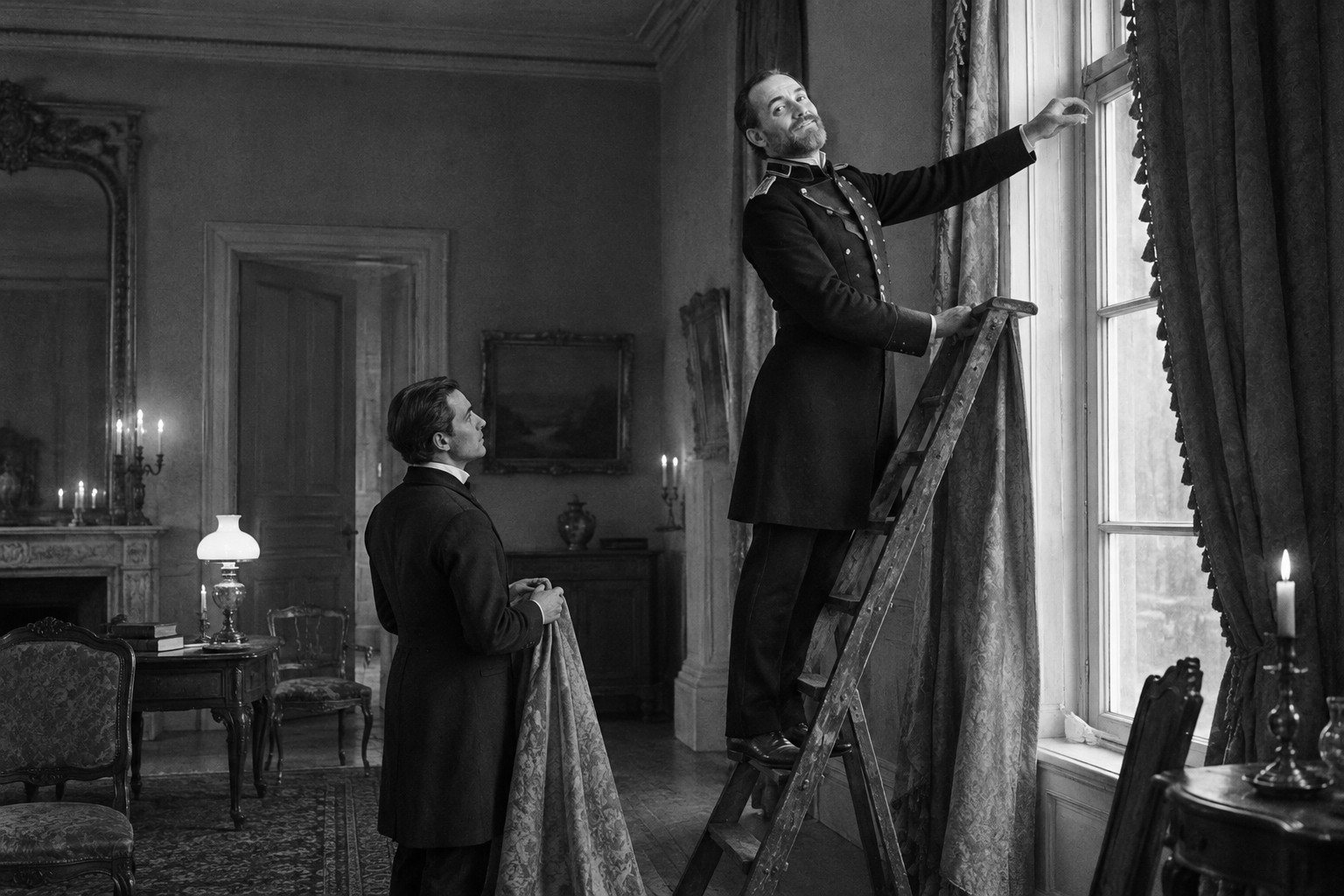
At the sessions he had minutes of absent-mindedness; he was wondering what borders to put on the curtains, whether to have them straight or gathered. He was so busy with this, that he frequently bothered with it himself, transposed the furniture, and himself hung the curtains in different places. One day he climbed a ladder in order to show the paper-hanger how he wanted the drapery hung; he made a misstep and fell, but, as he was a strong and agile man, he caught himself in time, merely striking his side against the window-frame knob. The blow hurt a little, but this soon passed away.
Iván Ilích felt himself particularly happy and well during this time. He wrote: “I feel that fifteen years have jumped off from me.” He had intended to be through with it all in September, but it lasted until the middle of October. But it was superb, so not only he said, but also all those who saw it.
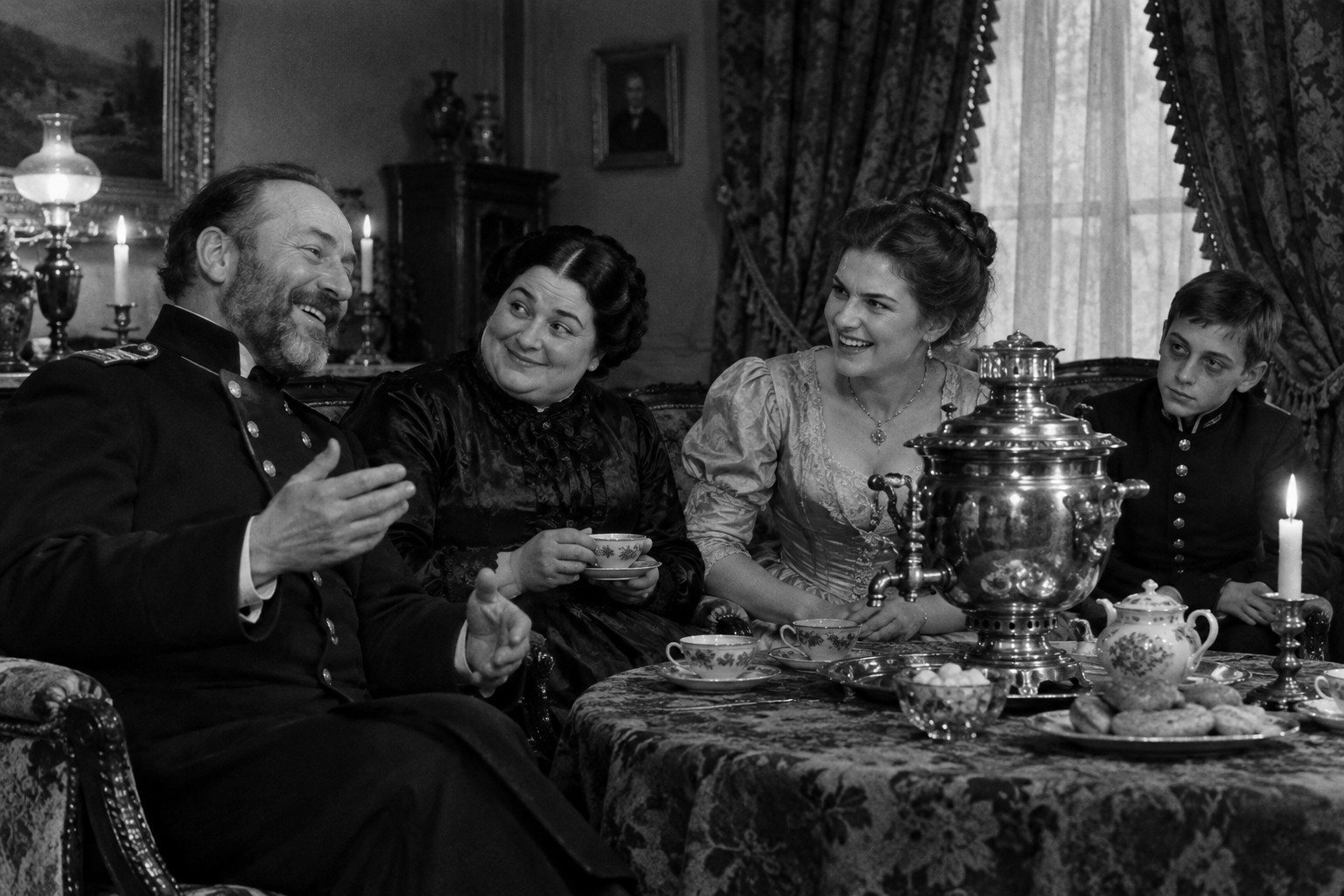
In reality it was the same as in the case of all not very wealthy men, who want to be like the rich, and so only resemble one another: there were stuffs, black wood, flowers, rugs, and bronzes, dark and burnished, everything which people of a certain class have in order to resemble all people of a certain class. And everything was so much like it in his house, that it was even impossible to direct one’s attention to it, but to him it appeared as something quite special. When he met his family at the railway station and brought them home to his illuminated and fixed-up apartments, and a lackey in a white necktie opened the door into an antechamber which was all adorned with flowers, and they later entered the drawing-room and the cabinet, and went into raptures from pleasure,—he was very happy, led them around everywhere, imbibed their praises and shone with joy. On that evening, when Praskóvya Fédorovna asked him at tea, among other things, how he had fallen, he laughed and impersonated to them how he flew down and frightened the paper-hanger.
“That’s what I am a gymnast for. Another man would have been killed, but I barely hit myself right here; when you touch it, it hurts, but it is all going away; it is simply a bump.”
And they began to live in their new quarters, in which, as is always the case when people have settled down, there was wanting just one room, and with their new means, to which, as always, only a little, some five hundred roubles, was wanting, and everything was very well. Especially well it was at first, when things were not yet all arranged, and it was necessary still to look after things,—now to buy, now to order, now to transpose, now to fix things. Though there was some disagreement between husband and wife, both were so much satisfied, and they had so much to do, that everything ended without any great quarrels. When there was nothing more to arrange, it became a little tedious and something was wanting, but they made new acquaintances, acquired new habits, and life was filled out.
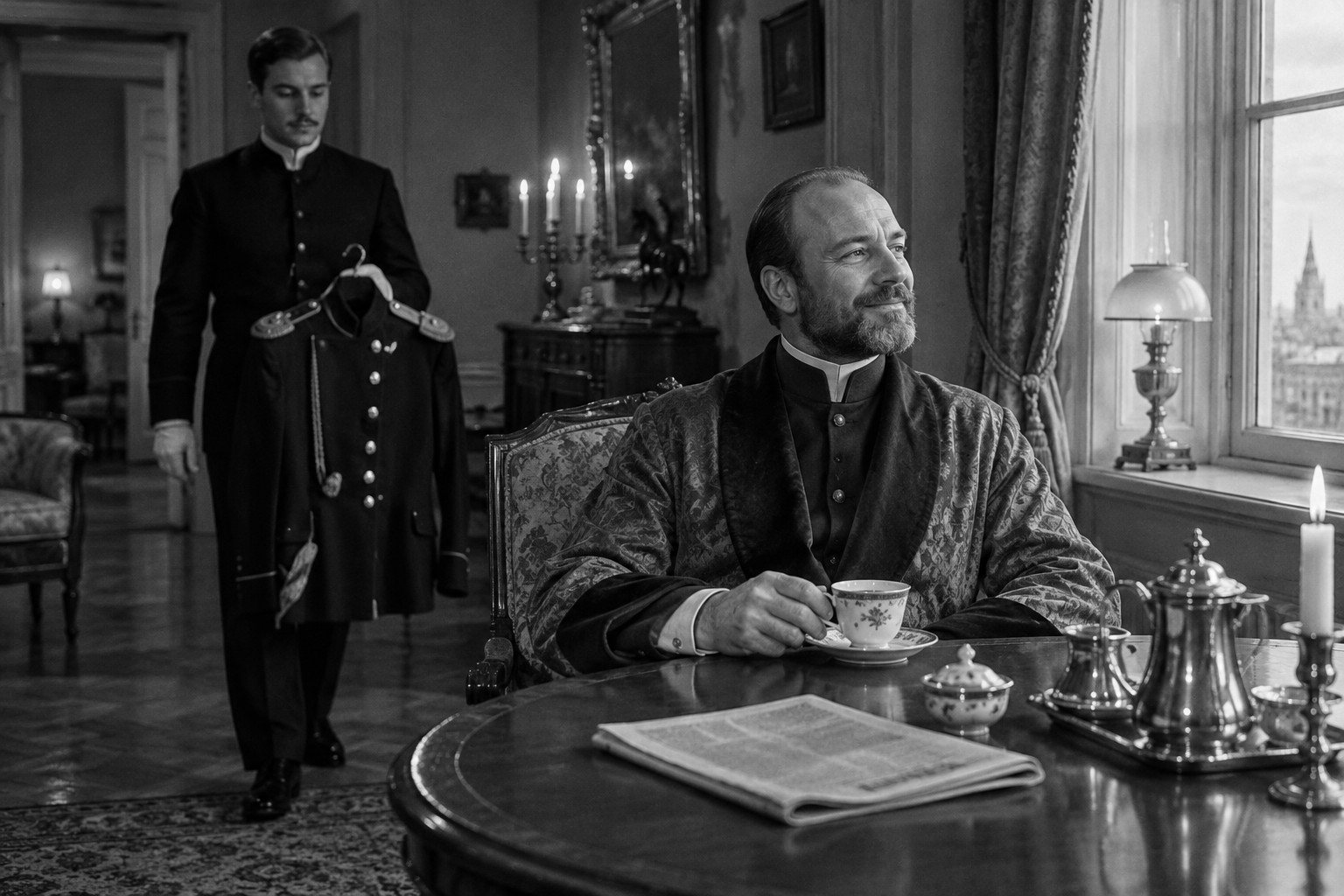
Iván Ilích passed the morning in the court and returned for dinner, and at first his disposition was good, though it suffered somewhat from the apartments. Every spot on the table-cloth and on the upholstery, a torn cord of the curtain, irritated him. He had put so much labour into the arrangement of things, that every bit of destruction pained him. But, in general, Iván Ilích’s life went on as according to his faith it had to run,—lightly, agreeably, and decently. He got up at nine, drank coffee, read the newspaper, then put on his undress uniform, and went to court.
Here he found the collar set in which he had to work: he immediately found his way into it. There were petitioners, inquiries at the chancery, the chancery itself, the sessions,—public and administrative sessions. In all this it was necessary to exclude everything raw and vital, which for ever impairs the regularity of the course of official affairs: it was necessary not to permit any relations with people outside of official ones, and the cause for such relations must be nothing but official, and the relations themselves must be nothing but official. For example, a man comes and wants to find out something. Iván Ilích, as a private citizen, can have no relations with such a man; but if there exists a relation with such a man, as to a member of the court, such a relation as can be expressed on paper with a heading,—within the limits of such relations Iván Ilích does everything, absolutely everything possible, and with this he observes the semblance of human, amicable relations, that is, politeness. The moment the official relation comes to an end, every other relation is also ended. This ability to separate the official side, without mixing it with real life, Iván Ilích possessed in the highest degree, and through long practice and talent he had worked it out to such a degree that at times he permitted himself, like an artist, as though in jest, to mix the human and the official relations. He took this liberty, because he felt himself able always, whenever it should be necessary, again to segregate what was official and reject what was human.
Things went with Iván Ilích not only easily, agreeably, and decently, but even artistically. During pauses he smoked, drank tea, and chatted a bit about politics, a little about general matters, a little about cards, and most of all about appointments. And he returned home tired, but with the feeling of the artist who has finished with precision his part, one of the first violins in the orchestra.
At home the daughter and her mother were either out calling somewhere, or they had guests; the son was in the gymnasium, prepared his lessons with tutors, and studied well such things as are studied in a gymnasium. After dinner, if there were no guests, Iván Ilích at times read a book of which people were talking a great deal, and in the evening sat down to attend to business, that is, he read documents and looked into the laws, comparing depositions and finding corresponding statutes. This neither annoyed him, nor gave him pleasure. He felt ennui when it was possible to play vint; but when there was no vint, this was better than sitting alone or with his wife. His pleasures consisted in small dinners, to which he invited ladies and gentlemen who were distinguished so far as their worldly position was concerned, and in such pastime with them as would resemble the usual pastime of such people, just as his drawing-room resembled all other drawing-rooms.
One time they even had an evening party, and there was some dancing. Iván Ilích felt happy and everything was well, except that he had a great quarrel with his wife on account of the cake and confectionery: Praskóvya Fédorovna had her own plan, but Iván Ilích insisted that everything be purchased from an expensive confectioner, and bought a lot of cake, and the quarrel was due to the fact that the cake was left over, while the confectioner’s bill amounted to forty-five roubles. The quarrel was great and disagreeable, so that Praskóvya Fédorovna said to him, “Fool, ninny!” He clutched his head and in his anger made some mention about divorce. But the evening itself was a merry one. The best society was present, and Iván Ilích danced with Princess Trufónov, the sister of the one who was known through the founding of the society of “Carry away my grief.”
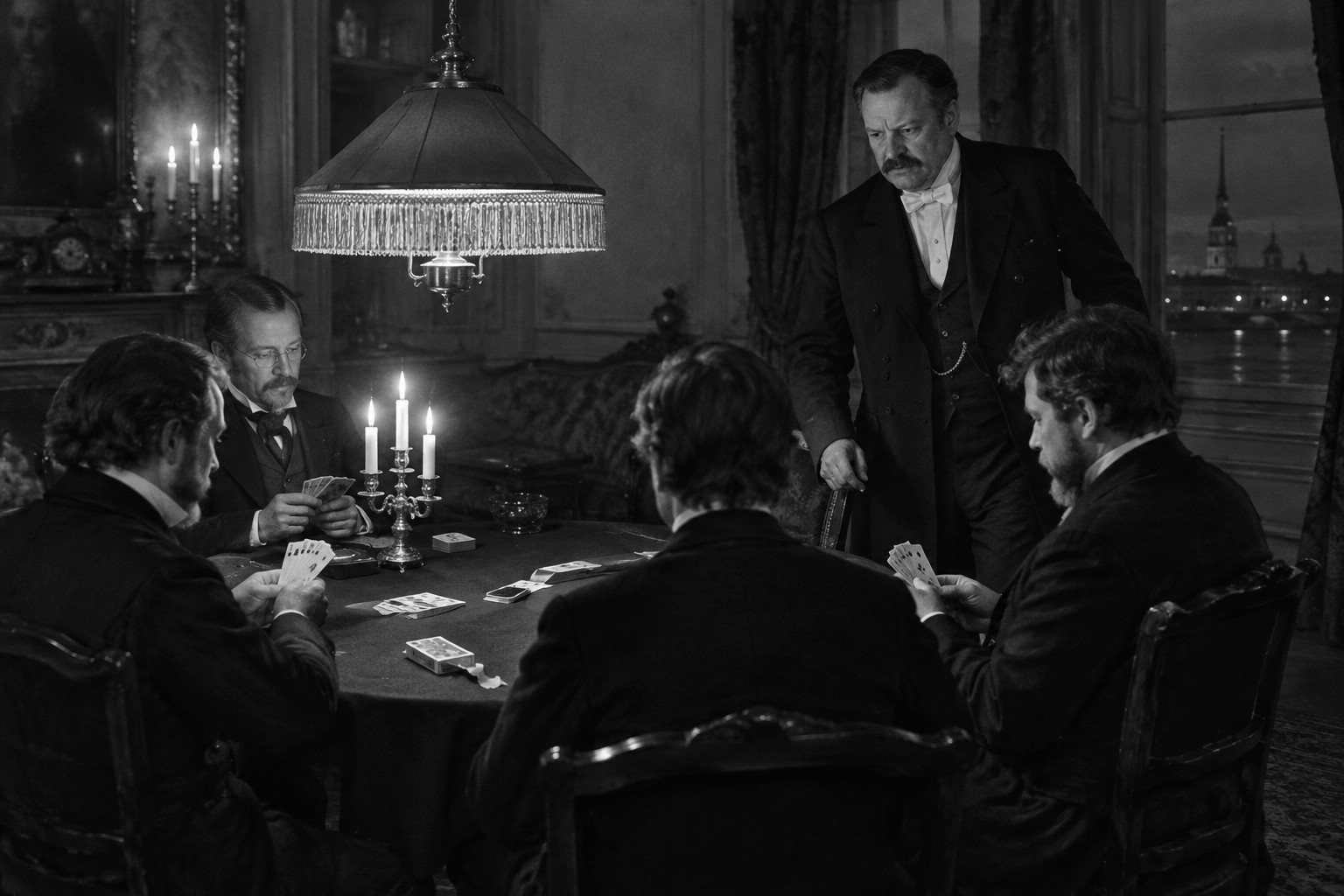
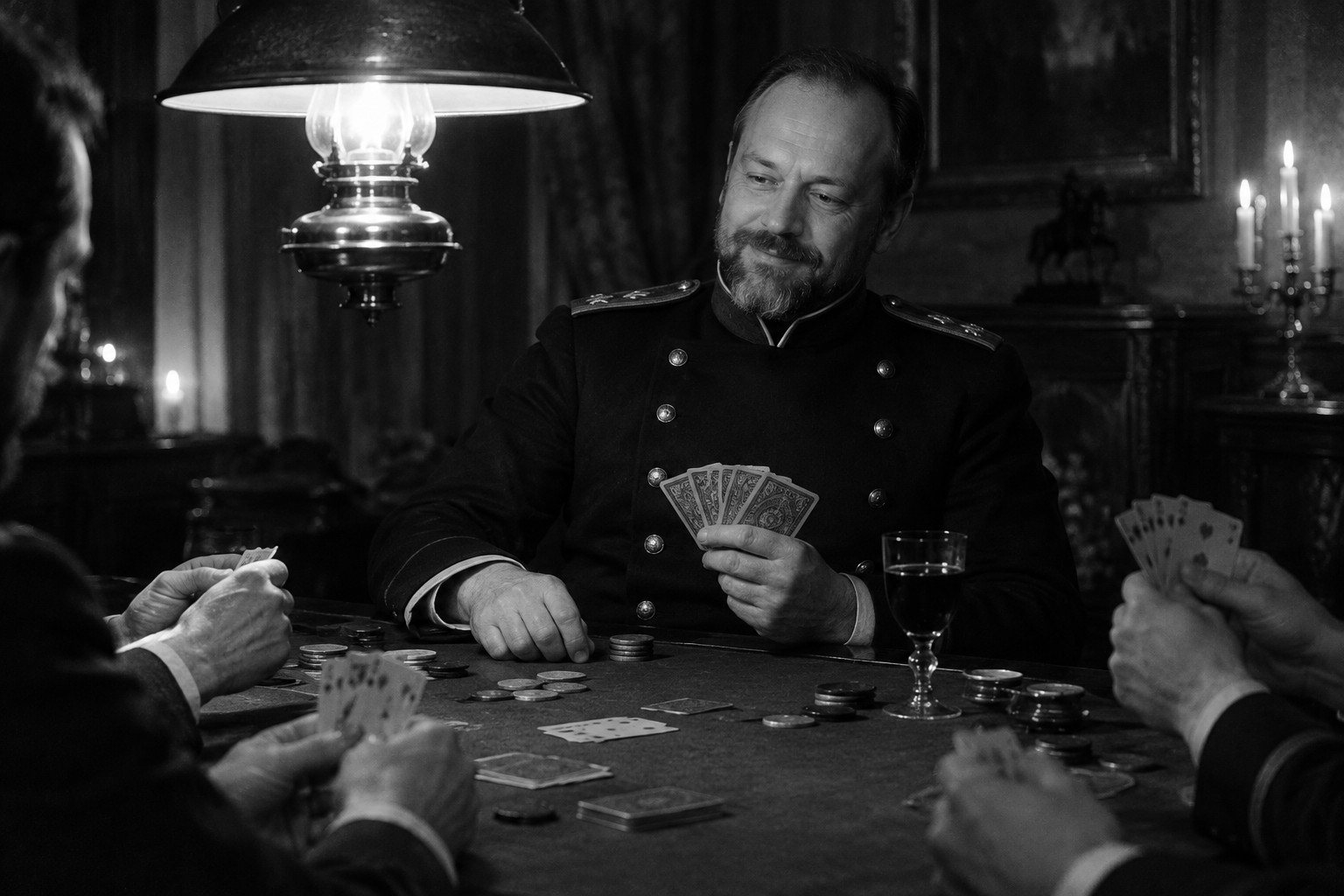
The official joys were the joys of self-love; the social joys were the joys of vanity; but Iván Ilích’s real joys were the joys of the game of vint. He confessed that after everything, after any joyless incidents in his life, it was a joy, which shone like a candle before the rest, to sit down with good players, not bellowing partners, to a game of vint, by all means in a four-handed game (“a five-handed game is annoying, though I pretend that I like it”), and to carry on a clever, serious game (when the cards come your way), then to eat supper and drink a glass of wine. Iván Ilích used to lie down to sleep after a game of vint in a very good frame of mind, especially if his winnings were small (large ones are disagreeable).
Thus they lived. Their society circle consisted of the best, and distinguished and young people called on them.
In their opinions of the circle of their acquaintances, husband, wife, and daughter were in complete agreement. Without having plotted on the subject, they all alike washed their hands clean and freed themselves from all kinds of friends and relatives, slatternly people, who flew at them gushingly in their drawing-room with the Japanese plates along the wall. Soon these slatternly friends stopped flying about, and the Golovíns had nothing but the very best society left. Young men paid court to Lízanka, and Petríshchev, the son of Dmítri Ivánovich Petríshchev, and the only heir to his fortune, as examining magistrate, began to pay attention to Lízanka, so that Iván Ilích even had a talk about this matter with Praskóvya Fédorovna, whether he had not better take them out driving on tróykas, or arrange a performance for them.
Thus they lived, and everything went on thus, without any change, and everything was well.
IV
All were well. It was impossible to call ailment that of which Iván Ilích now and then said that he had a peculiar taste in his mouth and an uncomfortable feeling in the left side of his abdomen.
But it so happened that this discomfort kept growing and passing, not yet into a pain, but into the consciousness of a constant weight in his side and into ill humour. This ill humour, growing and growing all the time, began to spoil the pleasure of the light and decent life which had established itself in the family of the Golovíns. Man and wife began to quarrel more and more often, and soon there disappeared the ease and pleasure, and with difficulty decency alone was maintained. The scenes became more frequent again. Again there were left some islets, but only a few of these, on which husband and wife could meet without any explosion. Praskóvya Fédorovna now said not without reason that her husband was hard to get along with. With her usual habit of exaggerating, she said that he had always had such a terrible character that one had to have her goodness to have stood him for twenty years. It is true, the quarrels now began with him. It was he who began to find fault, always immediately before dinner, and frequently just as he was beginning to eat, during his soup. Now he remarked that some dish was chipped, or the food was not just right, or his son had put his elbow on the table, or there was something wrong with his daughter’s hairdressing. For everything he blamed Praskóvya Fédorovna.
Praskóvya Fédorovna at first retorted and told him disagreeable things, but he once or twice flew into such a rage during the dinner that she understood that this was a morbid condition, which was provoked in him by the partaking of the food, and she curbed herself: she no longer retorted, but only hastened to eat her dinner. Praskóvya Fédorovna regarded her humility as a great desert of hers. Having made up her mind that her husband had a terrible character, and had been the misfortune of her life, she began to pity herself, and the more she pitied herself, the more did she hate her husband. She began to wish that he would die, but she could not wish this, because then there would be no salary. And this irritated her still more against him. She considered herself terribly unfortunate even because his very death could not save her, and she was irritated and concealed her irritation, and this concealed irritation increased her irritation.
After a scene, in which Iván Ilích was particularly unjust, and after which he during the explanation said that he was indeed irritable, but that this was due to his disease, she said to him that if he was ill, he had to undergo a cure, and so demanded of him that he should consult a famous physician.
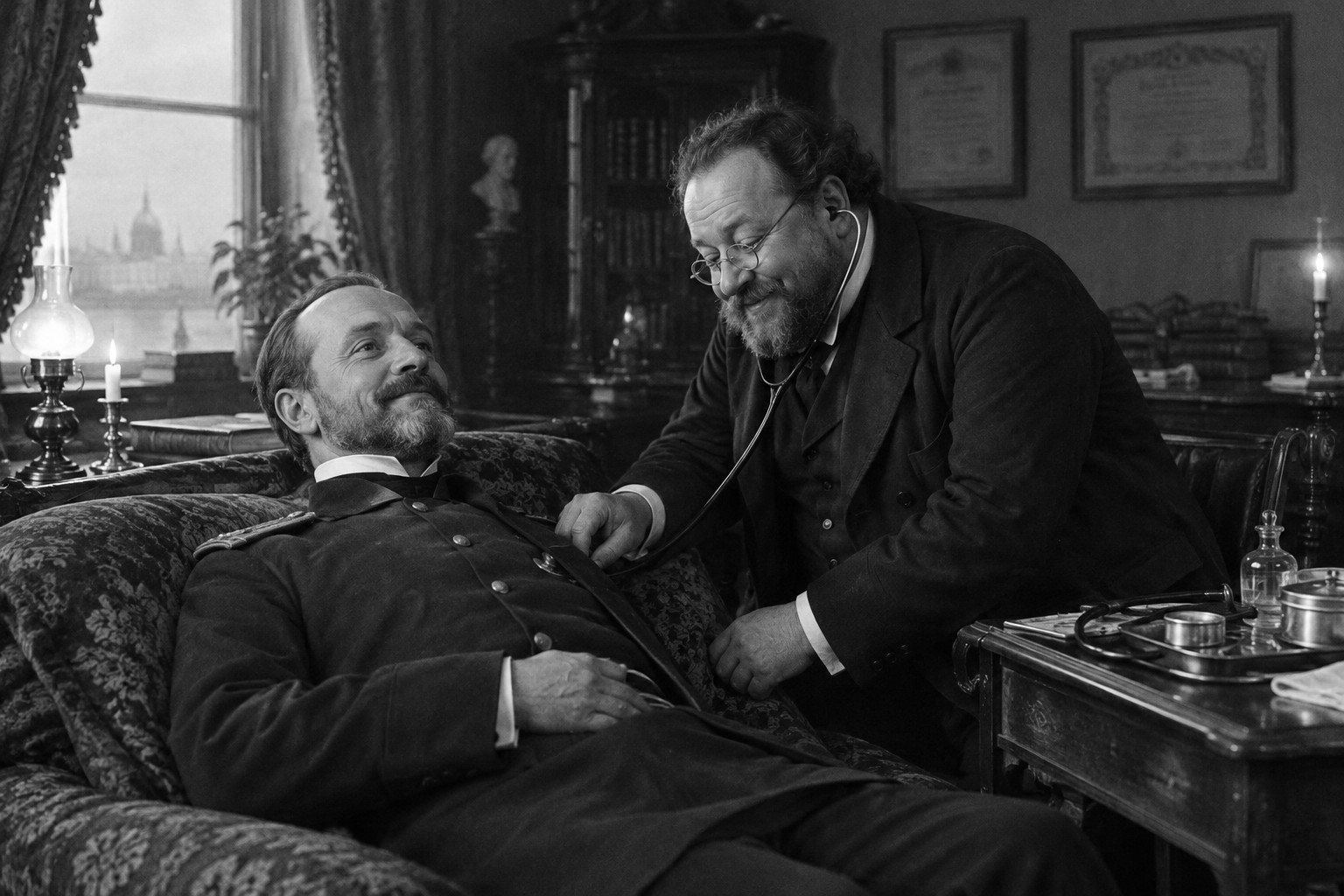
He went to see him. Everything was as he had expected; everything was done as such things always are. The expectancy, and the assumed importance of the doctor, which was familiar to him and which he knew in himself in the court, and the tapping, and the auscultation, and the questions which demanded previously determined and apparently useless answers, and the significant aspect which seemed to say, “Just submit to us, and we shall arrange everything; we know indubitably how to arrange it all, in the same fashion for any man you please.” Everything was precisely as in the court. Just as he assumed a certain mien in respect to the defendants, so the famous doctor assumed the same mien.
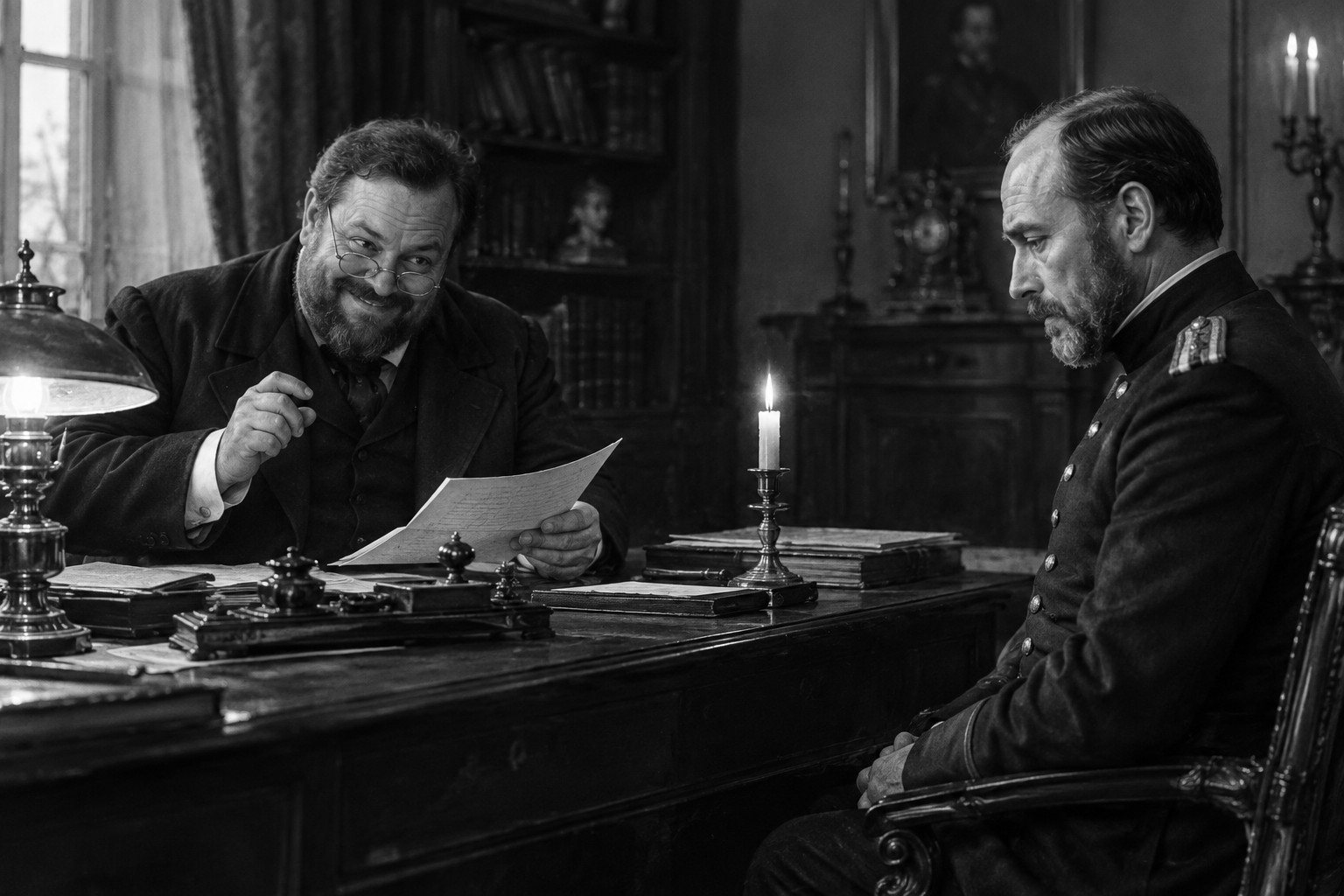
The doctor said, “So and so shows that inside of you there is so and so; but if that is not confirmed by the investigation of so and so, we shall have to assume so and so. If we assume so and so, then—” and so forth. Iván Ilích was interested in but one question, and that was, whether his situation was dangerous, or not. But the doctor ignored this irrelevant question. From the doctor’s standpoint, this question was idle and not subject to consideration; there existed only a weighing of probabilities,―between a floating kidney, a chronic catarrh, and the disease of the cæcum. This dispute the doctor decided in the presence of Iván Ilích in a brilliant manner in favour of the cæcum, with the proviso that the investigation of the urine might give new symptoms, and then the case would be revised. All that was precisely what Iván Ilích had a thousand times done in just as brilliant a manner in the case of defendants. The doctor made his résumé in just as brilliant a manner, and looked with a triumphant and merry glance over his glasses at the defendant. From the doctor’s résumé Iván Ilích drew the conclusion that things were bad, and that it was a matter of indifference to him, the doctor, and, for all that, to all people, but bad for himself. This conclusion morbidly affected Iván Ilích, provoking in him a feeling of great pity for himself and of great anger against this doctor who was indifferent to such an important question.
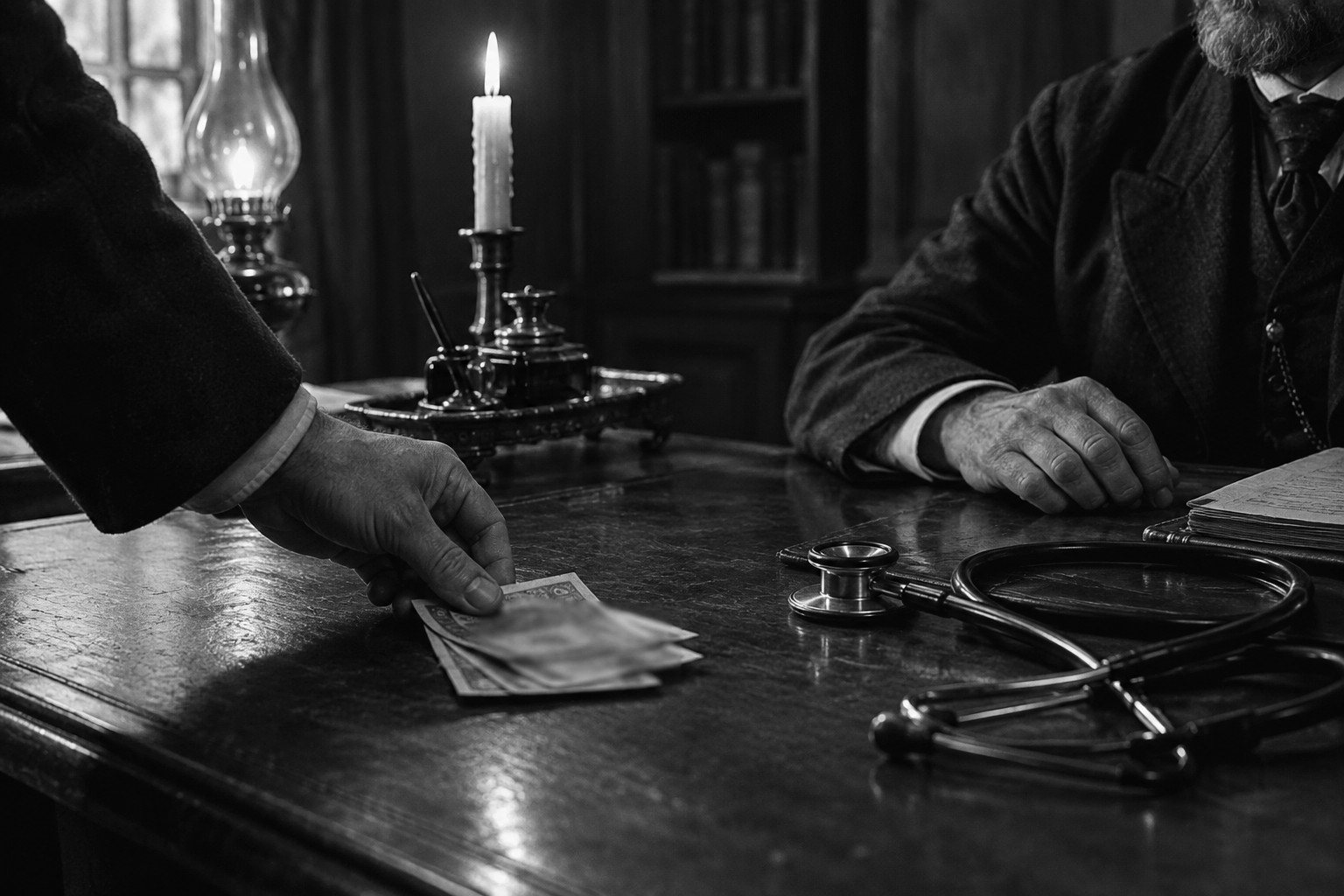
But he did not say anything; he only got up, put the money down on the table, and said, sighing, “We sick people no doubt frequently put irrelevant questions to you. Is this, in general, a dangerous disease, or not?”
The doctor cast a stern glance at him with one eye, above his glasses, as though saying, “Defendant, if you do not remain within the limits of the questions put to you, I shall be obliged to order your removal from the court-room.”
“I have already told you what I consider necessary and proper,” said the doctor. “Further things will be disclosed in the investigation.”
And the doctor made a bow.
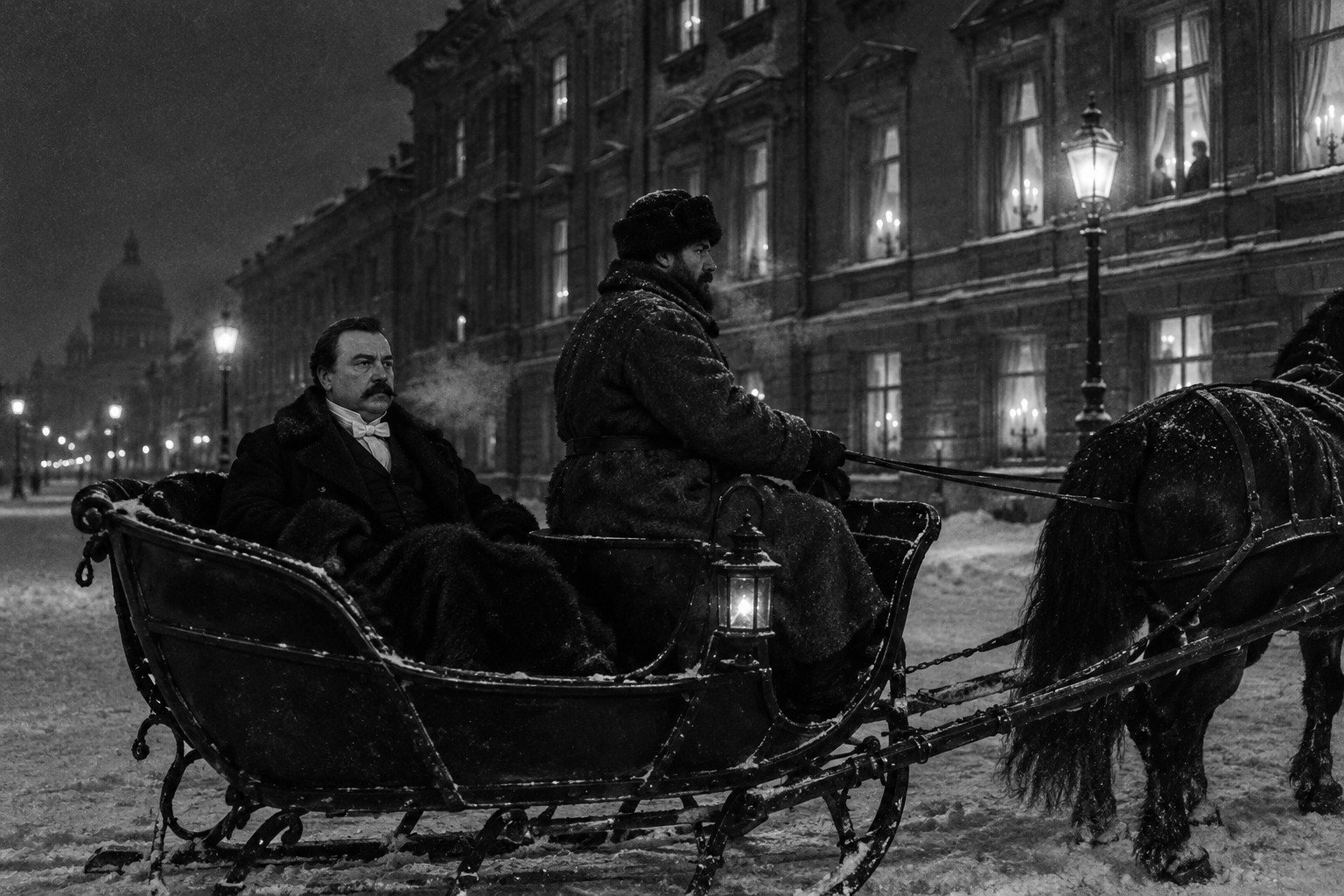
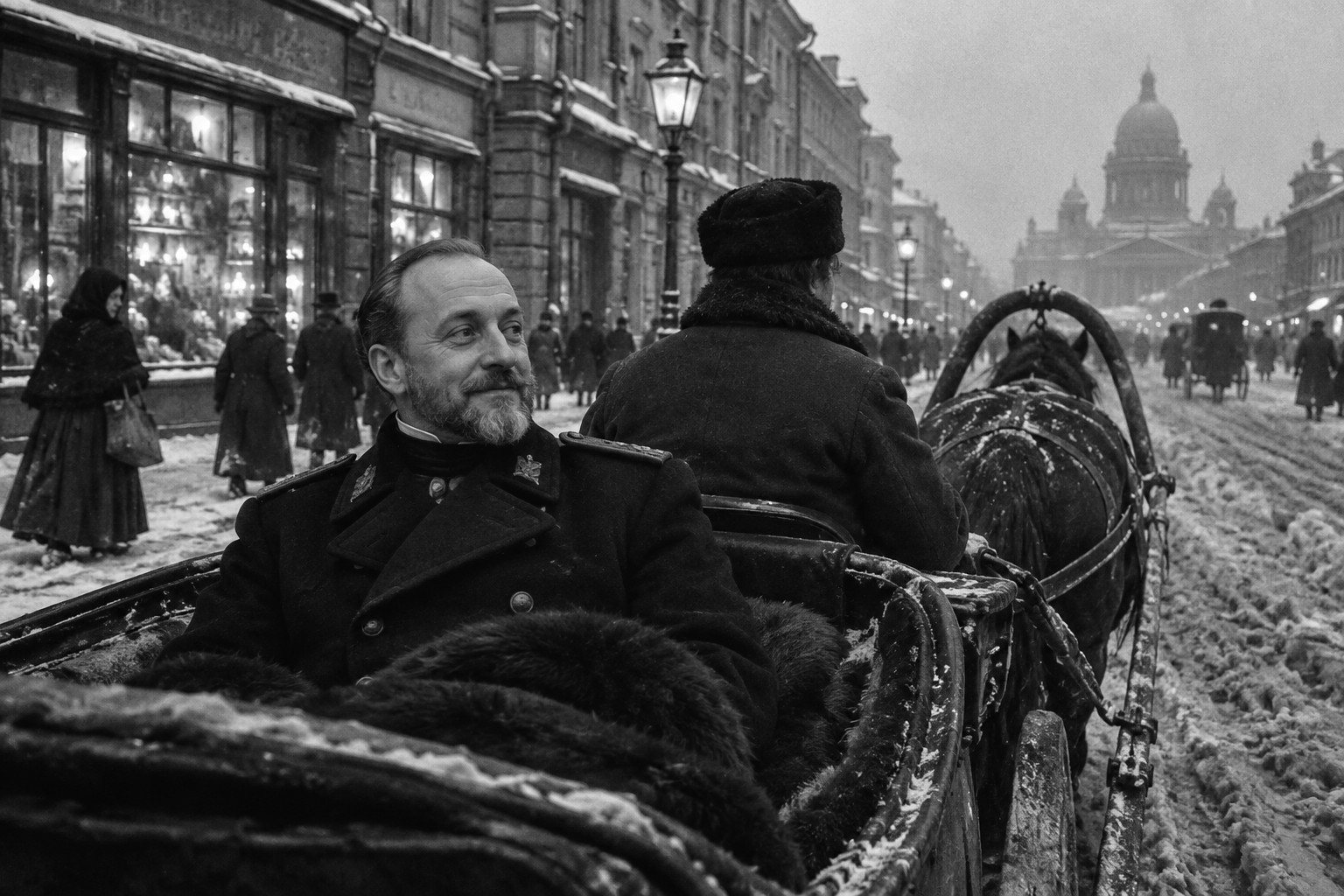
Iván Ilích went out slowly, gloomily seated himself in the sleigh, and drove home. All the way he continued analyzing everything which the doctor had said, trying to translate all those mixed, obscure scientific terms into simple language, and to read in them an answer to the question, “Am I in bad shape, in very bad shape, or is it still all right?” And it seemed to him that the meaning of everything said by the doctor was that he was in bad shape. Everything in the streets appeared sad to Iván Ilích. The drivers were sad, the houses were sad, the passers-by, the shops were sad. But this pain, this dull, grinding pain, which did not leave him for a minute, seemed, in connection with the doctor’s obscure words, to receive another, a more serious meaning. Iván Ilích now watched it with another, a heavy feeling.
He came home and began to tell his wife about it. His wife listened to him, but in the middle of the conversation his daughter entered, with a hat on her head; she was getting ready to drive out with her mother. She made an effort to sit down and listen to all that tiresome talk, but did not hold out, and her mother, too, did not stop to hear the end of it.
“Well, I am very glad,” said his wife. “So now, be sure and take the medicine regularly. Give me the recipe,—I will send Gerásim to the apothecary’s.”
And she went out to get dressed.
He did not dare to draw breath while she was in the room, but when she left, he heaved a deep sigh.
“Well,” he said, “maybe it is, indeed, all right yet.”
He began to take medicine, to carry out the doctor’s prescriptions, which were changed in consequence of the urine investigation. But here it somehow happened that in this investigation and in what was to follow after it things became mixed up. It was impossible for him to make his way to the doctor himself, and it turned out that things were done differently from what the doctor had ordered. Either the doctor had forgotten something or told an untruth, or was hiding something from him.
But Iván Ilích none the less began punctually to carry out the doctor’s instructions, and at first found some consolation in performing this duty.
Iván Ilích’s chief occupation, since his visit to the doctor, became a punctual execution of the doctor’s instructions as regards hygiene and the taking of medicine and the watching of his disease and of all the functions of his organism. People’s diseases and health became his chief interest. When they spoke in his presence of sick people, of such as had died or were recuperating, especially of a disease which resembled his own, he, trying to conceal his agitation, listened, inquired, and made deductions as to his own disease.
The pain did not subside; but Iván Ilích made efforts over himself, in order to make himself believe that he was feeling better. He was able to deceive himself so long as nothing agitated him. But the moment he had some unpleasantness with his wife, some failure in his service, bad cards in vint, he immediately felt the full force of his disease. Formerly he had borne these failures, hoping that he would mend what was bad, would struggle and gain some success, would get a full hand; but now every failure sapped his strength, and cast him into despair. He said to himself: “I had just begun to mend, and the medicine had begun to act, when this accursed misfortune or unpleasantness befell me—” And he was furious at the misfortune or at the people who caused him an unpleasantness and were killing him, and he felt that this anger was killing him, but was unable to keep from it. It would seem that it must have become clear to him that this embitterment against circumstances and people only intensified his disease, and that, therefore, he ought to pay no attention to unpleasant incidents; but he made the very contrary reflection: he said that he needed calm, and watched everything which impaired his calm, and became irritable with every least impairment. What made his condition worse was his reading books on medicine and consulting doctors. His health declined so evenly that he was able to deceive himself when he compared one day with another,—there was little difference. But when he consulted doctors, it seemed to him that he was growing worse, and very rapidly at that; but, in spite of that, he constantly consulted doctors.
This month he called on another celebrity: the other celebrity told him almost the same as the first celebrity, but put the questions differently. The consultation with this celebrity only increased Iván Ilích’s doubt and fear. The friend of a friend of his, a very good doctor, determined the disease in a still different manner, and, although he promised a cure, he with his questions and assumptions still more confused Iván Ilích and intensified his doubts. A homoeopathist determined the disease in a still different way and gave him some medicine, and he took it for a week, secretly from all. But at the end of the week he felt no relief and lost his confidence in all former treatments and in the present one, too, and so became still more dejected. At one time a lady acquaintance told him of a cure by means of holy images. Iván Ilích caught himself listening attentively and believing the actuality of the fact. This incident frightened him.
“Is it possible I have mentally grown so feeble?” he said to himself. “Nonsense! It’s all bosh! I must not submit to my small faith, but, selecting one physician, must strictly adhere to his treatment. I shall do so. It’s all over with that. I will not think, and will stick to the one treatment until summer. We shall know what to do after that. Now there is an end to wavering!”
It was easy to say all that, but impossible to execute it. The pain in his side was still annoying and seemed to be increasing and growing more constant; the taste in his mouth grew more and more queer,—he thought a disgusting smell came from his mouth,—and his appetite and his strength grew weaker and weaker. It was impossible for him to deceive himself: something terrible, new, and more significant than anything that had ever taken place in his life was now going on in him. He alone knew of it, and all those who surrounded him did not understand it, or did not wish to understand it, and thought that everything in the world was going on as before. That tormented him more than anything. His home folk, especially his wife and his daughter, who were in the very heat of calls, he saw, did not understand a thing about it and were annoyed because he was so cheerless and so exacting, as though it were his fault. Though they tried to conceal this, he saw that he was an obstacle to them, but that his wife had worked out for herself a certain relation to his disease and held on to it independently of what he said and did. This relation was like this:
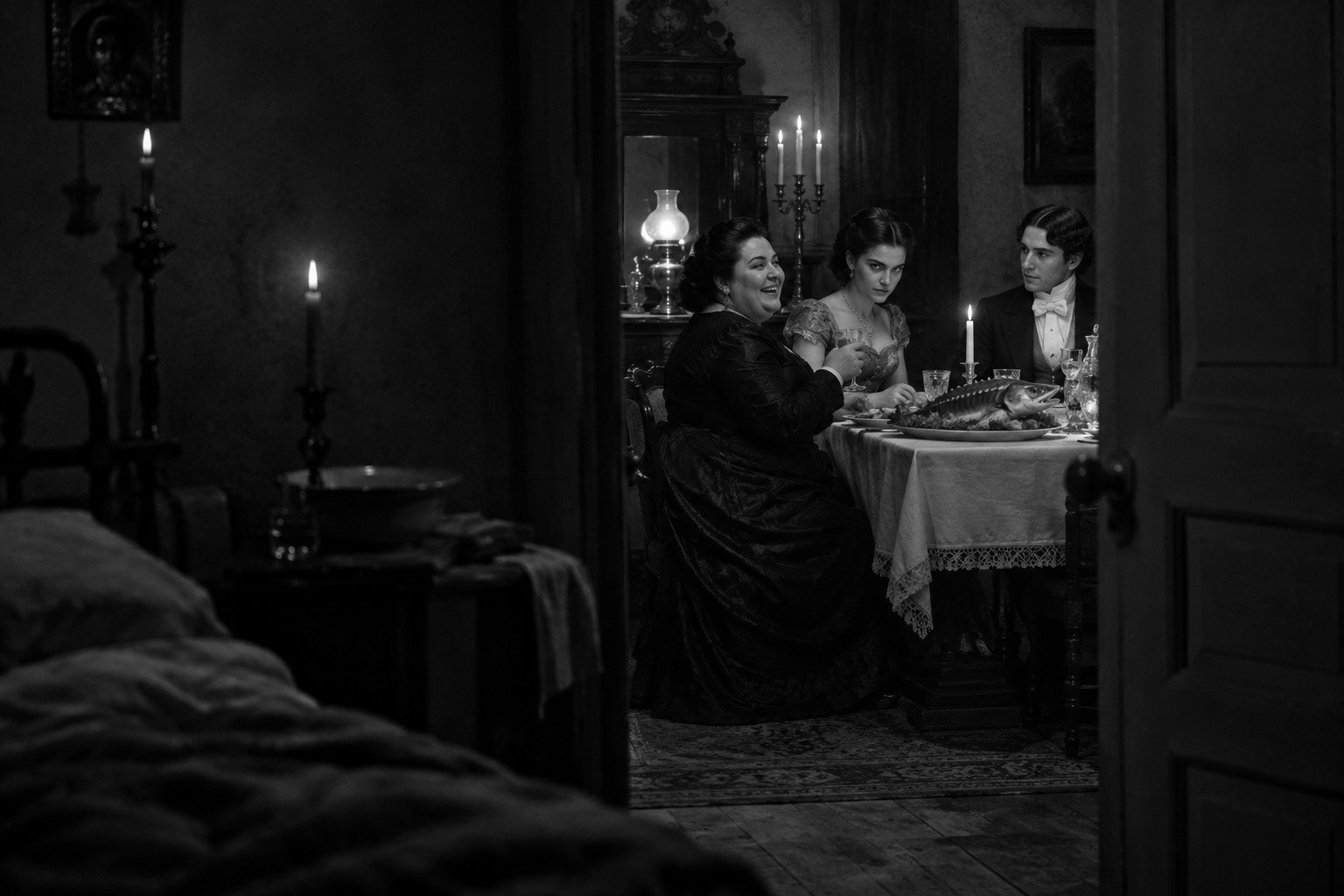
“You know,” she would say to her friends, “Iván Ilích, like all good people, is unable strictly to take the prescribed cure. To-day he will take the drops and eat what he is ordered to eat, and will go to bed early; to-morrow, if I do not watch him, he will forget to take the medicine, will eat some sturgeon (and he is not allowed to eat that), and will sit up playing vint until one o’clock.
“‘When did I do it?’ Iván Ilích will say in anger. Just this once at Peter Ivánovich’s.’
“‘And yesterday at Shébek’s.’
“‘It makes no difference, I cannot sleep from pain anyway.’
“‘Whether from pain or from anything else, you will never get well this way, and you only torment us.’”
Praskóvya Fédorovna’s external relation to her husband’s ailment, which she expressed to him as much as to others, was this, that Iván Ilích had himself to blame for this ailment, and that this whole ailment was a new annoyance which he was causing his wife. Iván Ilích felt that that came involuntarily from her, but that did not make it any easier for him.
In the court Iván Ilích observed, or thought that he observed, the same strange relation to himself: now it seemed to him that people peeped at him as at a man who was soon to make a place vacant; now his friends began in a jesting manner to tease him on account of his suspiciousness, as though the fact that something terrible and horrible, something unheard-of, which was taking place in him and gnawing at him and drawing him somewhere, were a most agreeable subject for jests. He was particularly irritated by Schwarz, who with his playfulness, vivacity, and comme il faut ways reminded him of what he had been ten years before.
Friends come to have a game, and they sit down at the table. The cards are dealt; the new cards are separated, and the diamonds are placed with the diamonds,—seven of them. The partner says, “Without trumps,” and supports two diamonds. What else should one wish? It ought to be jolly and lively,—a clean sweep. And suddenly Iván Ilích feels such a gnawing pain, such a bad taste in his mouth, and it feels so queer to him to be able with all that to find any pleasure in a clean sweep.
He looks at Mikhail Mikhaylovich, his partner, as he with the hand of a sanguine man strikes the table and politely and condescendingly refrains from sweeping in the stakes and moves them up to Iván Ilích, in order to give him the pleasure of taking them in, without going to much trouble or stretching his hand far.
“Does he really think that I am so feeble that I cannot stretch out my hand?” thinks Iván Ilích, and he forgets what is trumps, and unnecessarily trumps his own cards, and loses the clean sweep by three points, and, what is more terrible still, he sees Mikhaíl Mikháylovich suffering, and that makes no difference to him. And it is terrible for him to think that it makes no difference to him.
All see that it is hard for him, and they say to him: “We can stop, if you are tired. You had better rest.”
Rest? No, he is not in the least tired, he will finish the rubber. All are sad and silent. Iván Ilích feels that it is he who has cast this gloom over them, and he cannot dispel it. They eat supper and leave, and Iván Ilích is left alone with the consciousness that his life is poisoned for him and poisons others, and that this poison does not weaken him, but more and more penetrates all his being.
And it was with this consciousness, in addition to the physical pain, and with terror, that he had to lie down in his bed, and often be unable from pain to sleep the greater part of the night. In the morning he had to get up again, go to the court, or, if not in court, stay at home all the twenty-four hours of the day, each of which was a torment. And he had to live by himself on the edge of perdition, without a single man to understand or pity him.
V
Thus passed a month, and two months. Before New Year his brother-in-law arrived in the city, and stopped at their house. Iván Ilích was at court. Praskóvya Fédorovna was out shopping. Upon entering his cabinet, Iván Ilích found there his brother-in-law, a healthy sanguine nian, who was himself unpacking his satchel. Upon hearing Iván Ilích’s steps, he raised his head and for a second looked at him in silence. This glance disclosed everything to Iván Ilích. The brother-in-law opened his mouth to exclaim something in amazement, but held himself back. This motion confirmed everything.
“Well, have I changed?”
“Yes—there is a change.”
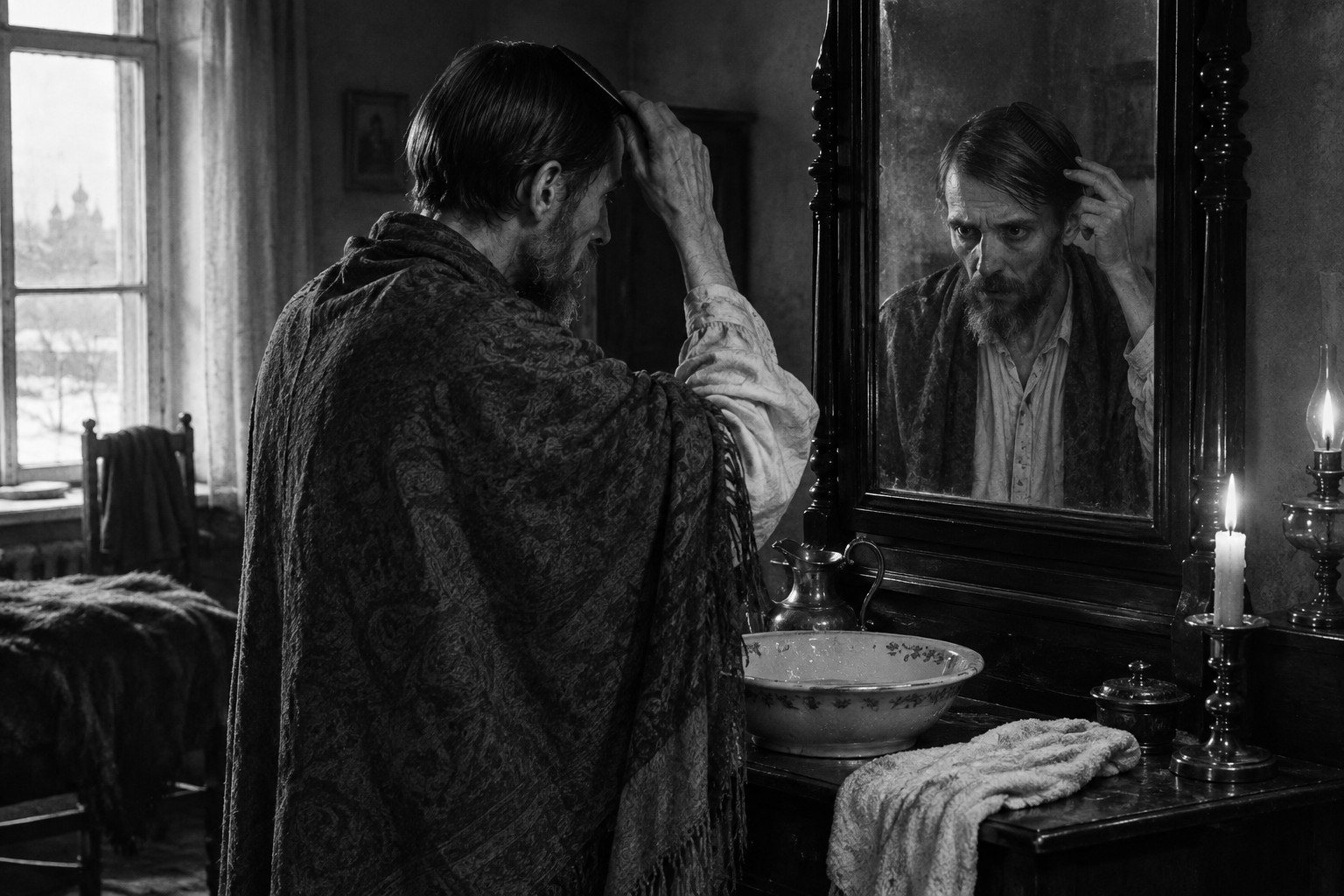
And no matter how much Iván Ilích afterward led his brother-in-law up to talk about his appearance, his brother-in-law kept quiet about it. Praskóvya Fédorovna came home, and the brother-in-law went to see her. Iván Ilích locked the door and began to look at himself in the mirror, at first straight, and then from one side. He took the photograph of himself and his wife, and compared it with what he saw in the mirror. The change was tremendous. Then he bared his arms as high as the elbow; he looked at them, pulled down the sleeves, sat down on an ottoman, and grew darker than night.
“I must not, I must not,” he said to himself. He went up to the table, picked up a law case, and began to read it, but was unable to do so. He opened the door and went into the parlour. The door to the drawing-room was closed. He went up to it on tiptoe, and began to listen.
“No, you exaggerate it,” said Praskóvya Fédorovna.
“Exaggerate? No. You do not see it, he is a dead man,—look into his eyes. There is no light in them. What is the matter with him?”
“Nobody knows. Nikoláev” (that was the second doctor) “said something, but I do not know what. Leshchetítski” (that was the famous doctor) “said, on the contrary—”
Iván Ilích walked away and went to his room; he lay down and began to think: “The kidney, a floating kidney.” He recalled everything which the doctors had told him about how it had torn itself away and was floating around. He tried with an effort of the imagination to catch this kidney, and to arrest and fasten it. So little was needed for that, he thought. “No, I will call on Peter Ivánovich before I do anything else.” (This was that friend whose friend was a doctor.) He rang the bell, ordered the horse to be hitched up, and got himself ready to go.
“Whither are you going, Jean?” asked his wife, with a peculiarly sad and strangely kind expression.
This strangely kind expression made him furious. He cast a gloomy glance at her.
“I have some business with Peter Ivánovich.”
He drove to the house of his friend, who had a friend who was a doctor. With him he drove to the doctor. He found him at home, and conversed with him for a long time.
By analyzing anatomically and physiologically the details of what, according to the doctor’s opinion, was going on in him, he understood it all.
There was a thing, just a little thing, in his blind gut. All this might change for the better. Strengthen the energy of one organ, weaken the activity of another, there will take place a suction, and all will be well. He was a little too late for dinner. He dined and conversed merrily, but could not for a long time go back to his room to attend to his business. Finally he went to his cabinet, and immediately sat down to work. He read some cases and worked, but the consciousness of the fact that he had a reserved, important, confidential matter, with which he would busy himself after he was through, did not leave him. When he was through with work he recalled that this confidential matter was his thoughts about the blind gut. But he did not abandon himself to them: he went to the drawing-room for tea.
There were guests there, and they talked, and played the piano, and sang; there was also the investigating magistrate, his daughter’s intended. Iván Ilích, according to Praskóvya Fédorovna’s remark, passed a jollier evening than ever; but he did not for a moment forget the fact that he had some reserved, important thoughts about the blind gut.
At eleven o’clock he excused himself, and went to his room. Ever since the beginning of his disease he had slept by himself, in a small room near his cabinet. He went there, undressed himself, and took up a novel by Zola, but did not read it,—he was thinking. In his imagination took place the desired improvement in his blind gut. There was a suction and a secretion, and the regular activity was reestablished.
“Yes, that is all correct,” he said to himself. “All one has to do is to come to Nature’s aid.”
He thought of his medicine. He raised himself up, took the medicine, and lay down on his back, watching the beneficial effect of the medicine and the destruction of his pain by it.
“Take it regularly and avoid deleterious influences, that is all; I am beginning to feel a little better, much better.”
He began to feel his side, but it did not pain to the touch.
“Yes, I do not feel it,—really it is much better now.”
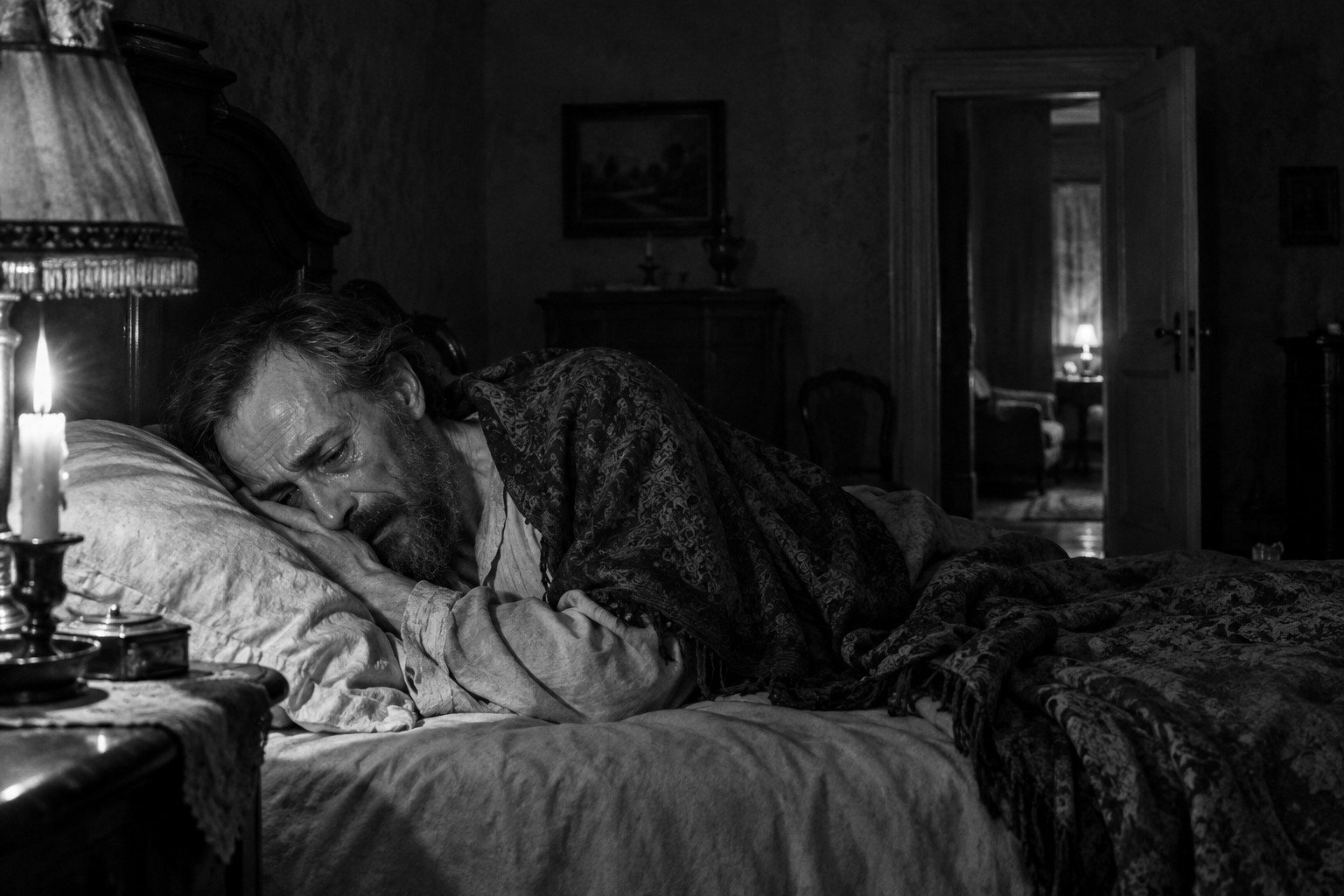
He put out the light, and lay down on his side. The blind gut is improving, and being sucked in. Suddenly he experienced his old, dull, gnawing pain,—it was stubborn, calm, and serious. In the mouth was the same familiar, abominable taste. His heart was pinched, his head was dizzy.
“My God, my God!” he muttered, “again and again, and it will never stop.”
Suddenly the matter presented itself to him from an entirely different side.
“The blind gut, the kidney!” he said to himself. “It is not a question of the blind gut, nor of the kidney, but of life and—death. Yes, there was life, and it is going away and away, and I cannot retain it. Yes. Why should I deceive myself? Is it not evident to all outside of me that I am dying? The question is only in the number of weeks and days—perhaps now. There was light, but now it is darkness. I was here until now, but now I am going thither! Whither?”
He was chilled, and his breath stopped. He heard only the beats of his heart.
“I shall be no longer, so what will there be? There will be nothing. But where shall I be, when I am no longer? Can it be death? No, I will not die.”
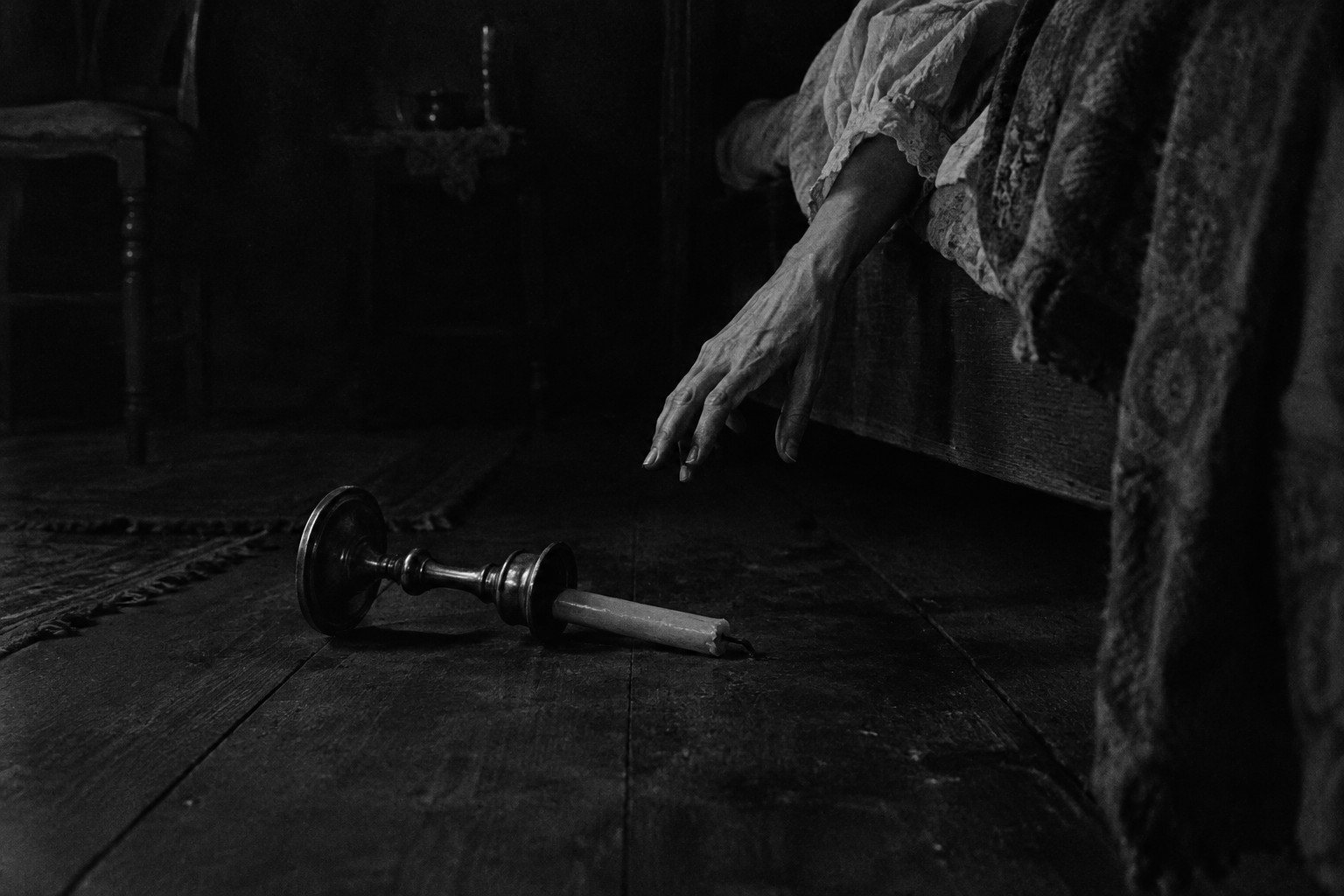
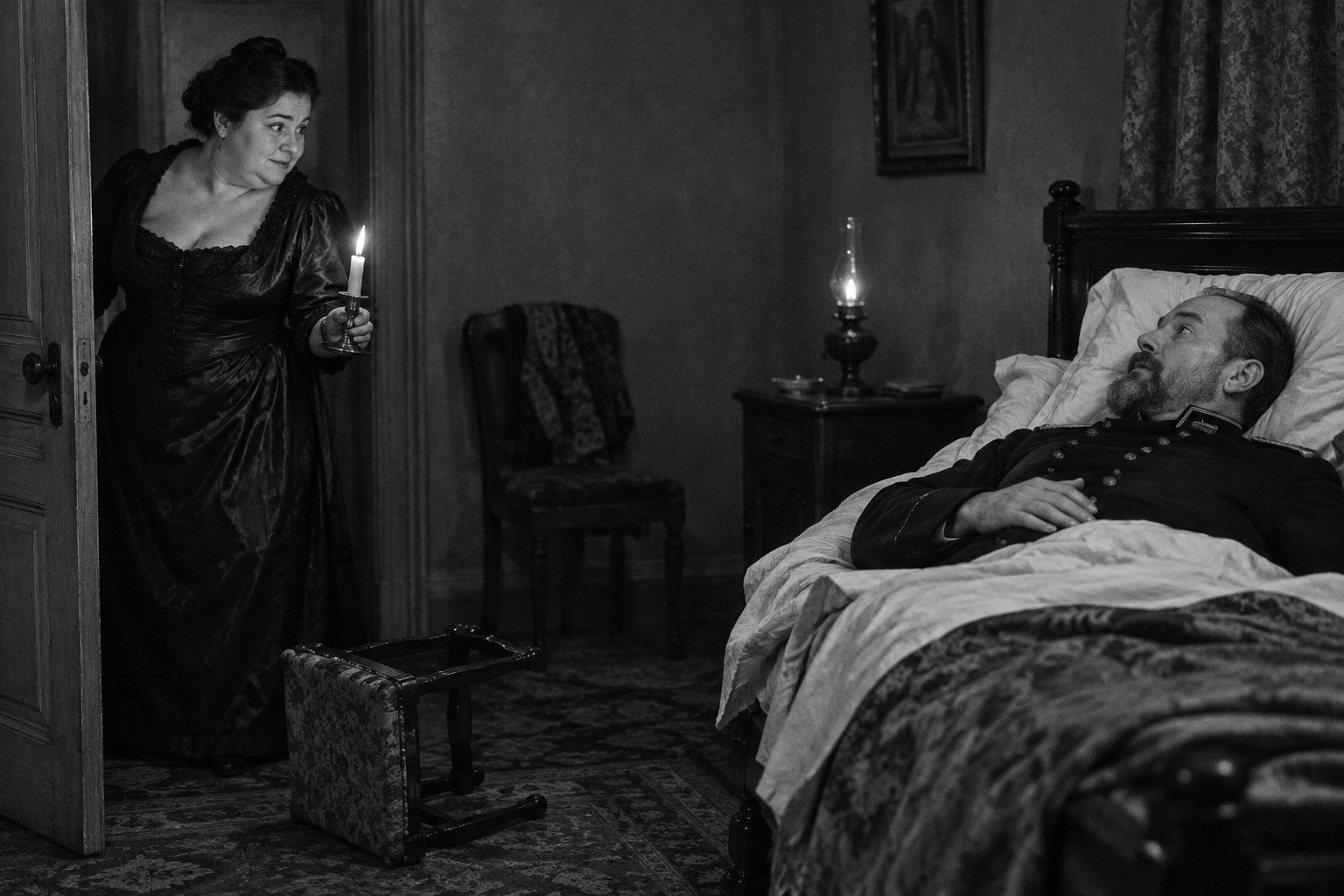
He leaped up and wanted to light a candle; he groped about with trembling hands, dropped the candle with the candlestick on the floor, and again fell back on the pillow.
“What’s the use? It makes no difference,” he said to himself, looking with open eyes into the darkness. “Death, yes, death. And not one of them knows, or wants to know, and they have no pity. They are playing.” (He was hearing beyond the door the peal of voices and of a ritornelle.) “It makes no difference to them, but they, too, will die. Foolishness! First I, and they after me; they will come to the same. And they are making merry. Beasts!”
Malice was choking him. He felt painfully and intolerably oppressed. It could not be that all should be fated to experience this terrible fear. He got up.
“Something is not quite right; I must calm myself, I must consider everything from the beginning.”
And he began to consider.
“Yes, the beginning of the disease. I struck my side, and I was all the time the same, to-day and to-morrow,—I had a little pain, then more, then the doctors, then a gnawing pain, then despair, again the doctors; and I kept coming nearer and nearer to the abyss. There is less strength. Nearer and nearer. And I wore myself out,—I have no light in my eyes. And there is death, and I am thinking all the time of the blind gut. I am thinking of mending the gut, but this is death. Is it really death?”
Again he was assailed by terror: he breathed heavily, and bent over, trying to find a match, and pressed with his elbow against the foot-rest. The foot-rest was in his way and caused him pain, so he grew angry at it and in his anger pressed harder against it and threw it down. In his despair he lost his breath and threw himself down on his back, expecting death to come at once.
At this time the guests were departing. Praskóvya Fédorovna was seeing them off. She heard something fall, and entered the room.
“What is the matter with you?”
“Nothing. I dropped it accidentally.”
She went out and brought a candle. He was lying down, breathing heavily and fast, like a man who had run a verst, and looked at her with an arrested glance.
“What is the matter with you, Jean?”
“Noth—ing. I—dropped—it.”
“What is the use of telling her? She will not understand it,” he thought. She did not understand it indeed. She lifted the foot-rest, lighted a candle for him, and hurried away. She had to see a guest off.
When she came back he was still lying on his back, looking at the ceiling.
“How are you? Are you feeling worse?”
“Yes.”
She shook her head, and sat awhile.
“Do you know, Jean? I think it would be well to send for Leshchetítski.”
This meant that she wanted to send for the famous doctor, and not to spare any expense. He smiled a sarcastic smile, and said, “No.” She sat awhile, and then went up to him and kissed his brow.
He hated her with all the strength of his soul just as she was kissing him, and he made an effort over himself not to push her back.
“Good night. God will grant you to fall asleep.”
“Yes.”
VI
Iván Ilích saw that he was dying, but he was not only not used to this, but simply did not understand and was absolutely unable to understand it.
That example of a syllogism which he had learned from Kiesewetter’s logic, “Caius is a man, men are mortal, consequently Caius is mortal,” had all his life seemed true to him only in regard to Caius, but by no means to him. That was Caius the man, man in general, and that was quite true; but he was not Caius, and not man in general; he had always been an entirely, entirely different being from all the rest; he had been Ványa with his mother, with his father, Mítya, and Volódya; with his toys, the coachman, and the nurse; then with Kátenka, with all the joys, sorrows, and delights of childhood, boyhood, youth. Had there ever existed for Caius that odour of the striped leather ball, which Ványa had been so fond of? Had Caius kissed his mother’s hand in the same way, and had the silk of the folds of his mother’s dress rustled in the same way for Caius? Had he been as riotous about patties at the Law School? Had Caius been in love like him? Had Caius been able to conduct a session like him?
“Caius is indeed mortal, and it is proper for him to die, but for me, Ványa, Iván Ilích, with all my feelings and thoughts, for me it is an entirely different matter. It cannot be proper for me to die. That would be too terrible.”
That was the way he felt about it.
“If I were to die like Caius, I should know it, and an inner voice would tell me so, but nothing similar has been the case with me, and I and all my friends understood that it is not all the same as with Caius. But now it is like this!” he said to himself. “It is impossible! It cannot be, but it is so. How is this? How is this to be comprehended?”
And he was unable to understand, and tried to dispel this thought as being false, irregular, and morbid, and to substitute for it other, regular, healthy thoughts. But this thought,—not merely thought, but, as it were, reality,—came back and stood before him.
And he invoked in the place of this thought other thoughts in rotation, in the hope of finding a support in them. He tried to return to former trains of thought, which heretofore had veiled the thought of death from him. But, strange to say, what formerly had veiled, concealed, and destroyed the consciousness of death, now could no longer produce this effect. Of late Iván Ilích passed the greater part of his time in these endeavours to reëstablish his former trains of feeling, which had veiled death from him.
He said to himself, “I will busy myself with my service, for have I not lived by it heretofore?” and he went to court, dispelling all doubts from himself; he entered into conversations with his associates, and seated himself in his customary manner, casting a distracted, pensive glance upon the crowd, and leaning with both his emaciated hands on the rests of the oak chair, leaning over to an associate, as on former occasions, moving up the case, and whispering, and then, suddenly casting an upward glance and seating himself straight, he pronounced the customary words and began the case. But suddenly, in the middle, the pain in his side, paying no attention to the period of the development of the case, began its own gnawing work. Iván Ilích listened to it and dispelled the thought of it, but it continued its work and came and stationed itself right in front of him and looked at him, and he was dazed, and the fire went out in his eyes, and he began to ask himself again, “Is it possible it alone is true?” And his associates and his men under him saw in surprise and sorrow that he, such a brilliant and shrewd judge, was getting mixed and making blunders. He shook himself, tried to come back to his senses, and somehow managed to bring the session to a close, and returned home with the sad consciousness that his judicial work could not, as it had done of old, conceal from him what he wished to be concealed, and that by means of his judicial work he could not be freed from it. And, what was worst of all, was this, that it drew him toward itself, not that he might be able to do something, but only that he might look at it, straight into its eyes,—that he might look at it and, without doing anything, might suffer unutterably.
And, while trying to escape this state, Iván Ilích sought consolation and other shields, and the other shields appeared and for a short time seemed to save him, but very soon they were again, not destroyed, but made transparent, as though it penetrated through everything, and nothing could shroud it.
During this last period he entered the drawing-room which he himself had furnished,—that drawing-room where he had fallen, for which he,—as he thought with sarcasm and ridicule,—for the arrangement of which he had sacrificed his life, for he knew that his disease had begun with that hurt; he entered and saw that there was a nick in the table. He looked for the cause of it, and found it in the bronze adornment of the album which was bent at the edge. He took the album, an expensive one,—he had made it himself with love,—and was annoyed at the carelessness of his daughter and her friends,—here there was a tear, and there the photographs were turned bottom side up. He brought it all carefully back into shape and bent the adornment back again.
Then occurred to him the thought of transplanting all this établissement with the albums to another corner, near the flowers. He called up a lackey; either his daughter or his wife came to his rescue: they did not agree and contradicted him,—he quarrelled and grew angry; but everything was good, for he did not think of it,—it was not to be seen.
But just then his wife said, as he moved the things, “Let the servants do it, you will only hurt yourself,” and suddenly it flashed above the screen, and he saw it. It flashed by, and he still hopes that it will pass, but he involuntarily listens to one side,—it is still seated there and still causing him the same gnawing pain, and he can no longer forget, and it looks at him quite clearly from behind the flowers. What is this all for?
“And it is true that I lost my life on this curtain, as though in the storming of a fortress. Is it really so? How terrible and how stupid! It cannot be! It cannot be, but it is so.”
He went into his cabinet, and lay down there, and was again left all alone with it,—face to face with it,—and there was nothing he could do with it. All he had to do was to look at it and grow cold.
VII
How it all happened in the third month of Iván Ilích’s disease is hard to tell, because it all happened imperceptibly step by step, but what happened was that his wife, and his son, and the servants, and his acquaintances, and the doctors, and, above all else, he himself knew that the whole interest in him consisted for others in nothing but the question how soon he would vacate the place, would free the living from the embarrassment produced by his presence, and would himself be freed from his sufferings.
He slept less and less: he was given opium, and they began to inject morphine into him. But this did not make it easier for him. The dull dejection which he experienced in his half-sleeping state at first gave him relief as something new, but later it grew to be the same, and even more agonizing, than the sharp pain.
They prepared particular kinds of food for him according to the doctor’s prescriptions; but these dishes tasted to him more and more insipid, and more and more abominable.
Special appliances, too, were used for his evacuations, and every time this was a torture to him,—a torture on account of the impurity, the indecency, and the smell, and from the consciousness that another person had to take part in it.
But in this most disagreeable matter Iván Ilích found his consolation. The peasant of the buffet, Gerásim, always came to carry out his vessel. Now Gerásim was a clean, fresh young peasant, who had improved much on his city food. He was always merry and precise. At first the sign of this cleanly man, who was dressed in Russian fashion and did this detestable work, embarrassed Iván Ilích.
One time, upon getting up from the vessel, and being unable to lift up his trousers, he dropped down into a soft chair and looked in terror at his bared, impotent thighs with their sharply defined muscles.
Gerásim, in heavy boots, spreading about him the agreeable odour of tar from his boots and of the freshness of the winter air, stepped into the room with heavy tread. He wore a clean hempen apron and a clean chintz shirt, the sleeves of which were rolled up on his bare, strong, youthful arms, and without looking at Iván Ilích, and apparently repressing the joy of life which shone upon his face, in order not to offend the patient, he walked over to the vessel.
“Gerásim,” Iván Ilích said, in a feeble voice.
Gerásim trembled, apparently in fear of having done something wrong, and with a rapid motion turned to the patient his fresh, kindly, simple, youthful face, which was just beginning to be covered with a beard.
“What do you wish?”
“I suppose this is unpleasant for you. Excuse me. I cannot help it.”
“Not at all, sir.” And Gerásim flashed his eyes and displayed his youthful, white teeth. “Why should you trouble yourself? You are sick.”
And with his strong, agile hands he did his usual work, and walked out, stepping lightly. Five minutes later he returned, stepping as lightly as before.
Iván Ilích was sitting in the chair in the same posture.
“Gerásim,” he said, when Gerásim had put down the vessel, which had been washed clean, “please, come here and help me.”
Gerásim went up to him.
“Lift me up. It is hard for me to do it all alone, and I have sent Dmítri away.”
Gerásim went up to him: with his strong arms he embraced him as lightly as he stepped, raised him skilfully and softly, held him up, with one hand pulled up his trousers, and wanted to put him down again in the chair. But Iván Ilích asked to be taken to the divan. Gerásim without an effort, and as though without pressing against him, took him, almost carried him, to the divan, and seated him on it.
“Thank you. How skilfully and well you do everything.”
Gerásim smiled again, and was on the point of leaving. But Iván Ilích felt so well with him that he did not want to dismiss him.
“Be so kind as to push that chair up to me. No, that,—under my feet. I feel more at ease when my legs are raised.”
Gerásim brought him the chair, which he put down evenly on the floor without making a noise with it, and raised Iván Ilích’s feet on the chair. It seemed to Iván Ilích that he felt more at ease while Gerásim was raising up his legs.
“I feel more at ease when my legs are higher,” said Iván Ilích. “Put that pillow under me.”
Gerásim did so. He raised the legs and put the pillow down. Again Iván Ilích felt better while Gerásim was holding his legs. When Gerásim put them down, he thought he felt worse.
“Gerásim,” he said to him, “are you busy now?”
“Not at all, sir,” said Gerásim, who had learned from city folk how to talk to gentlemen.
“What else have you to do?”
“What else have I to do? I have done everything, and have only to chop some wood for to-morrow.”
“If so, hold up my legs a little higher,—can you do it?”
“Why not? I can.”
Gerásim raised his legs higher. And it seemed to Iván Ilích that in this position he did not feel any pain at all.
“And how about the wood?”
“Do not trouble yourself. We shall get time for it.”
Iván Ilích ordered Gerásim to sit down and hold his legs, and entered into a conversation with him. And, strange to say, it seemed to him that he felt better so long as Gerásim was holding his legs.
From that time on Iván Ilích began to call in Gerásim, and made Gerásim keep his legs on his shoulders, and was fond of talking with him. Gerásim did this lightly, gladly, simply, and with a goodness which affected Iván Ilích. Health, strength, vivacity in all other people offended Iván Ilích; but Gerásim’s strength and vivacity did not sadden him,—it soothed him.
Iván Ilích’s chief suffering was from a lie. This lie, for some reason accepted by all, was this, that he was only sick and not dying, and that he needed but to be calm and be cured, and then all would go well. He knew full well that, no matter what they might do, nothing would come of it but still more agonizing suffering and death. And he was tormented by this lie and by this, that they would not confess what all, and he, too, knew, but insisted on lying about him in this terrible situation, and wanted and compelled him to take part in this lie. The lie, the lie, this lie which was perpetrated on him on the day previous to his death and which was to reduce this terrible, solemn act of his death to the level of all their visits, curtains, sturgeon at dinner, was dreadfully painful for Iván Ilích. And, strange to say, often, while they were perpetrating their jests on him, he was within a hair’s breadth of shouting out to them, “Stop lying! You know, and I, too, know that I am dying,—so stop at least your lying.” But he had never the courage to do it.
The horrible, terrible act of his dying, he saw, was by all those who surrounded him reduced to the level of an accidental unpleasantness and partly to that of an indecency (something the way they treat a man who, upon entering a drawing-room, spreads a bad odour), through that very “decency” which he had been serving all his life; he saw that no one would pity him, because no one wanted even to understand his position. Gerásim was the only one who understood this position and pitied him. And so Iván Ilích never felt happy except when he was with Gerásim. He felt well when Gerásim, frequently whole nights at a stretch, held his legs and would not go to bed, saying, “Please not to trouble yourself, Iván Ilích, I shall get enough sleep yet;” or when he, passing over to “thou,” suddenly added, “If thou wert not a sick man it would be different, but as it is, why should I not serve thee?”
Gerásim was the only one who did not lie; everything proved that he alone understood what the matter was, and did not consider it necessary to conceal it, but simply pitied his emaciated, feeble master. Once, when Iván Ilích sent him away, he went so far as to say:
“We shall all of us die. Why should we not trouble ourselves?” with which he meant to say that he did not find his labour annoying, for the reason that he was doing it for a dying man, and that he hoped that in the proper time some one would do the same for him.
Besides this lie, or in consequence of it, Iván Ilích was most annoyed by this, that no one pitied him the way he wanted to be pitied; at certain moments, after long sufferings, Iván Ilích wanted most of all, however much he was ashamed to acknowledge the fact, that some one should pity him like a sick child. He wanted to be petted, kissed, and fondled, as they pet and console children. He knew that he was an important member of the court and that his beard was streaked gray, and that, therefore, that was impossible; but he none the less desired it. In his relations with Gerásim there was something resembling it, and so his relations with Gerásim gave him consolation.
Iván Ilích feels like crying, and wants to be petted and cried over; and there comes his associate, member Shébek, and, instead of crying and being petted, Iván Ilích assumes a serious, stern, pensive aspect, and from inertia expresses his opinion on the decree of the court of cassation, and stubbornly sticks to his view. This lie all around him and in himself more than anything else poisoned the last days of Iván Ilích’s life.
VIII
It was morning. It was morning, because Gerásim went away, and Peter the lackey came in his place: he put out the candles, drew aside one curtain, and began softly to fix up the room. Whether it was morning or evening, Friday or Sunday, did not make the slightest difference,—it was all the same: the gnawing, agonizing pain, which did not subside for a minute; the consciousness of the hopelessly receding, but not yet receded life; the same impending, terrible, hateful death, which alone was reality, and still the same lie. Where could there be here days, weeks, and hours of the day?
“Do you command me to bring you tea?”
“His order demands that gentlemen should drink tea in the morning,” he thought, but he said only:
“No.”
“Do you not wish to go over to the divan?”
“He has to tidy up the room, and I am in his way,—I am an impurity, a nuisance,” he thought, and all he said was:
“No, leave me.”
The lackey bustled a little while. Iván Ilích extended his hand. Peter came up, ready to serve him.
“What do you wish?”
“The watch.”
Peter got the watch which was lying under Iván Ilích’s hand, and gave it to him.
“Half-past eight. Have they not got up yet?”
“Not yet, sir. Vasíli Ivánovich” (that was his son) “has gone to the gymnasium, and Praskóvya Fédorovna has commanded that she be wakened, if you should ask for her. Do you command me?”
“No, don’t.”
“Maybe I had better try some tea?” he thought.
“Yes, tea. Bring me tea.”
Peter started to go out. Iván Ilích felt terribly at being alone.
“How can I keep him? Yes, the medicine.”
“Peter, give me the medicine.”
“Why not? Maybe the medicine will help me yet.”
He took a spoonful and swallowed it.
“No, it will not help me. It is all nonsense and a deception,” he decided, the moment he had the familiar, detestable, hopeless taste in his mouth. “No, I can no longer believe. But the pain, the pain, what is it for? If it would only stop for just a minute.”
And he sobbed. Peter came back.
“No, go. Bring me some tea.”
Peter went away. When Iván Ilích was left alone, he groaned, not so much from pain, no matter how terrible it was, as from despondency. “Always the same and the same, all these endless days and nights. If it would only come at once. What at once? Death, darkness. No, no. Anything is better than death!”
When Peter came back with the tea on a tray, Iván Ilích for a long time looked distractedly at him, being unable to make out who he was, or what he wanted. Peter was confounded by this look. When Peter looked confounded, Iván Ilích came to his senses.
“Yes,” he said, “the tea; all right, put it down. Only help me to get washed, and let me have a clean shirt.”
And Iván Ilích got up to wash himself. Stopping occasionally, he washed his hands and face, cleaned his teeth, began to comb his hair, and looked into the mirror. He felt terribly, especially so, because his hair lay flat over his pale brow.
As his shirt was being changed, he knew that he would feel more terribly still if he looked at his body, and so he did not look at himself. But all was ended. He put on his morning-gown, covered himself with a shawl, and sat down in a chair to his tea. For a minute he felt himself refreshed, but the moment he began to drink the tea there was again the same taste, and the same pain. He with difficulty finished his glass and lay down, stretching his legs. He lay down, and dismissed Peter.
Again the same. Now a drop of hope would sparkle, and now a sea of despair would be agitated, and all the time the pain, and the pain, and the despondency, and again the same and the same. He felt terribly despondent by himself and wanted to call some one in, but he knew in advance that in the presence of others it would be worse still.
“If I just had some morphine again,—I should forget. I will tell him, the doctor, to think out something else. It cannot go on this way, it cannot.”
Thus an hour, two hours pass. But now there is the bell in the antechamber. Perhaps the doctor. Indeed, it is the doctor, fresh, vivacious, fat, jolly, with an expression which seems to say, “Now there you are all frightened, but we will fix it all in a minute.” The doctor knows that this expression is of no use here, but he has put it on once for all and cannot take it off, like a man who in the morning puts on his dress coat and goes out calling.
The doctor rubs his hands briskly and in a consoling manner.
“I am cold. It is a cutting frost. Just let me get warmed up,” he says with an expression which says that all that is necessary is for him to get warmed up, and as soon as he is warm he will fix it all.
“Well, how is it?”
Iván Ilích feels that the doctor wants to say, “How are our affairs?” but that he himself feels that it would not do to speak in this manner, and so he says, “How did you pass the night?”
Iván Ilích looks at the doctor with a questioning expression:
“Will you never feel ashamed of lying?”
But the doctor does not want to understand the expression, and Iván Ilích says:
“Just as terribly as ever. The pain does not pass away, does not subside. If it would stop just a little!”
“You patients are always like that. Well, sir, now, it seems, I am all warmed up, and even most exact Praskóvya Fédorovna would not be able to object to my temperature. Well, sir, good morning,” and the doctor presses his hand.
Throwing aside his former playfulness, the doctor begins with a serious glance to investigate the patient, his pulse, his temperature, and there begin tappings and auscultations.
Iván Ilích knows full well and indubitably that all this is nonsense and mere deception, but when the doctor, getting down on his knees, stretches out over him, leaning his ear now higher up, and now lower down, and with a significant expression on his face makes over him all kinds of gymnastic evolutions, Iván Ilích submits to it, as he submitted to the speeches of the lawyers, though he knew well that they were ranting all the time, and why they were ranting.
The doctor was still kneeling on the divan, tapping at something, when Praskóvya Fédorovna’s silk dress rustled at the door, and there was heard her reproach to Peter for not having announced to her the doctor’s arrival.
She comes in, kisses her husband, and immediately proceeds to prove that she got up long ago, and that only by a misunderstanding did she fail to be present when the doctor came.
Iván Ilích looks at her, examines her whole figure, and finds fault with the whiteness, chubbiness, and cleanliness of her hands and neck, the gloss of her hair, and the sparkle of her vivacious eyes. He hates her with the whole strength of his soul. Her touch makes him suffer from an access of hatred toward her.
Her relation to him and his sickness is still the same. As the doctor had worked out for himself a relation to his patients, which he was unable to divest himself of, so she had worked out a certain relation to him,—that he was somehow not doing what he ought to do, and was himself to blame for it, and she lovingly reproached him for it,—and was unable to divest herself of this relation to him.
“Well, he pays no attention. He does not take the medicine on time. Above all else, he lies down in a position which, no doubt, is injurious to him,—with his legs up.”
She told the doctor how he made Gerásim hold up his legs.
The doctor smiled a contemptuously kind smile:
“Well, what is to be done? These patients at times invent such foolish things,—but we can forgive them.”
When the examination was ended, the doctor looked at his watch, and Praskóvya Fédorovna announced to Iván Ilích that she did not care what he would do, but she had sent for a famous doctor, who in company with Mikhaíl Danílovich (so the ordinary doctor was called) would make an examination and have a consultation.
“Don’t object to this, if you please. I am doing this for my own sake,” she said ironically, giving him to understand that she was doing everything for his sake, and in this way did not give him the right to refuse her. He was silent, and frowned. He felt that this lie which surrounded him was becoming so entangled that it was getting hard to make out anything.
She was doing everything about him for her own sake, and she told him that she was doing for herself everything that she really was doing for herself, as though it were such an incredible thing that he ought to understand it as the exact opposite.
Indeed, at half-past eleven the famous doctor arrived. Again there were auscultations and significant conversations in his presence and in another room about the kidney and the blind gut, and questions and answers with such significant looks that instead of the real question about life and death, which alone now stood before him, there again came forward the question about the kidney and the blind gut, which were not acting as they ought to, and which Mikhail Danílovich and the celebrity will for this reason attack and compel to get better.
The famous doctor departed with a serious, but not with a hopeless, look. In reply to the timid question, which Iván Ilích directed to him with eyes raised to him and shining with terror and hope, as to whether there was any possibility of recovery, he replied that he could not guarantee it, but that it was possible. The glance of hope with which Iván Ilích saw the doctor off was so pitiful that, seeing it, Praskóvya Fédorovna even burst out into tears as she went out of the cabinet, in order to give the famous doctor his fee.
The elation of spirit, produced by the doctor’s encouragement, did not last long. There were again the same room, the same pictures, curtains, wall-paper, bottles, and the same paining, suffering body. Iván Ilích began to groan; they gave him an injection, and he forgot himself.
When he came to, it was growing dark; they brought him his dinner. He took with difficulty some soup, and again it was the same, and again nightfall.
After dinner, at seven o’clock, the room was entered by Praskóvya Fédorovna, who was dressed as for an evening entertainment, with swelling, raised up breasts, and traces of powder on her face. She had talked to him in the morning of going to the theatre. Sarah Bernhardt was in the city, and they had a box which he had insisted that they should take. Now he forgot about it, and her attire offended him. But he concealed his offence when he recalled that he himself had insisted on their taking a box and going, because this was for the children an educational, æsthetic enjoyment.
Praskóvya Fédorovna came in satisfied with herself, but seemingly guilty. She sat down for awhile, asked him about his health, as he saw, merely to ask, but not to find out, knowing that there was nothing to find out, and began to speak of what she wanted to speak of, that she would not go at all if the box had not been engaged, and that with her were going Hélène, and their daughter, and Petríshchev (their daughter’s fiancé), and that it was impossible to let them go by themselves. It really would give her more pleasure to stay at home; but he must be sure and do in her absence according to the doctor’s prescription.
“Yes, Fédor Petróvich” (the fiancé) “wanted to come in. May he? And Líza.”
“Let them come in.”
The daughter came in. She was all dressed up, with a bared youthful body, that body which caused him to suffer so much; but she exposed it. She was strong, healthy, apparently in love, and vexed at the disease, suffering, and death, which interfered with her happiness.
There entered also Fédor Petróvich, in dress coat, with his hair fixed à la Capoul, with a long sinewy neck, tightly surrounded by a white collar, with an enormous white chest and close-fitting trousers over powerful thighs, with a white handkerchief drawn over his hand, and with an opera hat.
After him imperceptibly crawled in the little gymnasiast, in a bran-new uniform,—poor fellow,—and with terrible blue marks under his eyes, the meaning of which Iván Ilích knew.
His son always looked pitiful to him, and terrible was his frightened and compassionate glance. Besides Gerasim, it seemed to Iván Ilích, Vásya was the only one who understood and pitied him.
All sat down, and again asked about his health. There ensued a silence. Líza asked her mother about the opera-glass. Mother and daughter exchanged words about who was at fault for having mislaid it. It was an unpleasant incident.
Fédor Petrovich asked Iván Ilích whether he had seen Sarah Bernhardt. At first Iván Ilích did not understand what it was they were asking him, but later he said:
“No, and have you seen her already?”
“Yes, in Adrienne Lecouvreur.”
Praskóvya Fédorovna said that she was particularly good in this or that. Her daughter objected. There ensued a conversation about the art and the realism of her play, that very conversation which is always one and the same.
In the middle of the conversation Fédor Petrovich looked at Iván Ilích, and grew silent. The others looked at him, too, and grew silent. Iván Ilích was looking with glistening eyes ahead of him, apparently vexed at them. It was necessary to mend all this, but it was impossible to do so. It was necessary to interrupt the silence. Nobody could make up his mind to do so, and all felt terribly at the thought that now the decent lie would somehow be broken, and every one would see clearly how it all was. Líza was the first to make up her mind. She interrupted the silence. She wanted to conceal what all were experiencing, but she gave herself away:
“If we are to go at all, it is time we started,” she said, looking at her watch, a present from her father, and she smiled at the young man a faint, significant smile about something which they alone knew, and got up, causing her dress to rustle.
All arose, said good-bye, and departed.
When they went out, it seemed to Iván Ilích that he was feeling easier: there was no lie,—it departed with them,—but the pain was still left. The old pain, the old terror made him feel neither harder, nor easier. It was all worse.
Again minute after minute elapsed, and hour after hour, and again the same, and again no end, and more and more terrible the inevitable end.
“Yes, call Gerásim,” he answered to Peter’s question.
IX
His wife returned late in the night. She entered on tiptoe, but he heard her. He opened his eyes and hastened to shut them again. She wanted to send Gerásim away and to sit up with him. He opened his eyes, and said:
“No, go.”
“Do you suffer very much?”
“It makes no difference.”
“Take some opium.”
He consented, and took some. She went away.
Until about three o’clock he was in agonizing oblivion. It seemed to him that he with his pain was being shoved somewhere into a narrow, black, and deep bag, and shoved farther and farther, without coming out of it. And this terrible act was accompanied by suffering. And he was afraid, and wanted to go through the bag, and fought, and helped along. And suddenly he tore away, and fell, and woke up.
The same Gerásim was sitting at his feet on the bed, drowsing calmly and patiently. But Iván Ilích was lying, his emaciated, stockinged feet resting on Gerásim’s shoulders, and there was the same candle with the shade, and the same uninterrupted pain.
“Go away, Gerásim,” he whispered.
“Never mind, sir, I will sit up.”
“No, go.”
He took off his feet, and lay down sidewise on his arm and began to feel pity for himself. He just waited for Gerásim to go to the adjoining room, and no longer restrained himself, but burst out into tears, like a child. He wept on account of his helplessness, his terrible loneliness, the cruelty of men, the cruelty of God, the absence of God.
“Why hast Thou done all this? Why didst Thou bring me to this? Why, why dost Thou torment me so terribly?”
He did not expect any answer, and was weeping because there was no answer and could be none. The pain rose again, but he did not stir, did not call. He said to himself:
“Go on, strike me! But for what? What have I done to Thee? For what?”
Then he grew silent and stopped not only weeping, but also breathing, and became all attention: it was as though he listened, not to the voice which spoke with sounds, but to the voice of his soul, to the train of thoughts which rose in him.
“What do you want?” was the first clear expression, capable of being uttered in words, which he heard.
“What do you want? What do you want?” he repeated to himself. “What? Not to suffer. To live!” he answered.
And again he abandoned himself wholly to attention, to such tense listening, that his pain even did not distract him.
“To live? To live how?” asked the voice of his soul.
“To live as I used to live before, well,—pleasantly.”
“As you lived before, well and pleasantly?” asked a voice. And he began in imagination to pass in review the best minutes of his pleasant life. But, strange to say, all these best minutes of his pleasant life now seemed to him to be different from what they had seemed to be before,—all of them, except the first recollections of childhood. There, in childhood, there had been something really agreeable, with which it would be possible to live if life should return; but the man who had experienced those pleasant sensations was no more; it was like a recollection of somebody else.
As soon as there began that which resulted in the present man, in Iván Ilích, everything which then had appeared as joys now melted in his sight and changed into something insignificant and even abominable.
And the farther away from childhood and nearer to the present, the more insignificant and doubtful were the joys. This began with the law school. There had been there something truly good; there had been there merriment, friendship, hopes. But in the upper classes these good minutes had happened more rarely; those were the recollections of the love of woman. Then all got mixed, and there was still less of what was good. Farther on there was still less of what was good, and the farther, the less.
“The marriage—so sudden, and the disenchantment, and the odour from my wife’s mouth, and sensuality, and hypocrisy! And this dead service, and these cares about the money, and thus passed a year, and two, and ten, and twenty,—all the time the same. The farther, the deader. It was as though I were going evenly down-hill, imagining that I was going up-hill. And so it was. In public opinion I went up-hill,—and just in that proportion did my life vanish under me.—And now it is all done,—go and die!
“So what is this? Why? Impossible. It cannot be that life should be so senseless and so abominable! And if it has indeed been so abominable and meaningless, what sense is there in dying, and in dying with suffering? Something is wrong.
“Perhaps I did not live the proper way,” it suddenly occurred to him. “But how can that be, since I did everything that was demanded of me?” he said to himself, and immediately he repelled from himself this only solution of the whole enigma of life and of death, as something totally impossible.
“What do you want now? To live? To live how? To live as you live in the court, when the bailiff proclaims, ‘The court is coming!’ The court is coming, the court is coming!” he repeated to himself. “Here is the court! But I am not guilty!” he shouted in anger. “For what?” And he stopped weeping and, turning his face to the wall, began to think of nothing but this one thing: “Why, for what is all this terror?”
But, no matter how much he thought, he found no answer. And when the thought occurred to him, and it occurred to him often, that all this was due to the fact that he had not lived in the proper way, he immediately recalled all the regularity of his life, and dispelled this strange thought.
X
Two more weeks passed. Iván Ilích no longer rose from his divan. He did not want to lie in his bed, and lay on the divan. Lying nearly all the time with his face to the wall, he suffered in loneliness the same insoluble sufferings, and in loneliness thought the same insoluble thought. “What is this? Is this really death?” And an inner voice answered him: “Yes, it is.” “What are these torments for?” and the voice answered: “For no special reason.” After that and outside of that there was nothing.
From the very beginning of his sickness, from the first time that he went to see the doctor, his life was divided into two opposite moods which gave way to one another: now it was despair and the expectancy of incredible and terrible death, and now hope and an absorbing observation of the activity of his body. Now there was before his eyes nothing but his kidney or gut, which had for the time being deflected from the fulfilment of its obligations, and now it was the one incomprehensible, terrible death, from which it was impossible to be freed in any way whatever.
These two moods alternated from the very beginning of his sickness; but the farther his disease proceeded, the more doubtful and fantastic did his imagination grow in respect to the kidney, and the more real came to be the consciousness of impending death.
He needed but to recall what he had been three months before and what he now was, to recall how evenly he had been going down-hill, in order that every possibility of hope should be destroyed.
During the last stage of the loneliness in which he was, lying with his face turned to the back of the divan, of that loneliness amidst a populous city and his numerous acquaintances and his family,—a loneliness fuller than which can nowhere be found,—neither at the bottom of the sea, nor in the earth,—during the last stages of this terrible loneliness Iván Ilích lived in his imagination only in the past. One after another there arose before him pictures of his past. They always began with what was nearest in time and ran back to what was most remote, to childhood, and there they stopped. If Iván Ilích thought of the stewed prunes which he was offered to-day to eat, he recalled the raw, wrinkled French prunes of his childhood, their particular taste, and the abundance of saliva when he reached the stone, and side by side with this recollection of the taste there arose a whole series of recollections from that time,—the nurse, the brother, the toys.
“I must not think of this,—it is too painful,” Iván Ilích said to himself, and again transferred himself to the present. “A button on the back of the divan and wrinkles in the morocco. The morocco is expensive,—not durable,—there was a quarrel on account of it. It was a different kind of morocco, and a different quarrel, when we tore father’s portfolio, and were punished, and mother brought us patties.” And again his thoughts stopped at his childhood, and again he felt a pain, and tried to dispel it and to think of something else.
And again, together with this train of his recollections, another train of recollections passed through his soul as to how his disease increased and grew. Again it was the same: the farther back, the more there was of life. There was more good in life and more of life itself. Both blended.
“Just as my suffering is growing worse and worse, so my whole life has been getting worse and worse,” he thought. There was one bright point there behind, in the beginning of life, and then everything grows blacker and blacker, and goes faster and faster. “In inverse proportion to the square of the distance from death,” thought Iván Ilích. And this representation of a stone flying downward with increasing rapidity fell into his soul. Life, a series of increasing sufferings, flew more and more rapidly toward its end, a most terrible suffering. “I fly—” He trembled, and shook, and wanted to resist; but he knew that it was useless to resist, and again he looked at the back of the divan with eyes weary from looking, which could not help but look at what was in front of him, and he waited and waited for that terrible fall, push, and destruction.
“It is impossible to resist,” he said to himself. “But if I only understood what it is all for. And this is impossible. One might be able to explain it, if it could be said that I had not lived properly. But that can by no means be asserted,” he said to himself, as he recalled all the lawfulness, regularity, and decency of his life. “It is impossible to admit this,” he said to himself, smiling with his lips, as though some one could see this smile of his and be deceived by it. “There is no explanation! Torment, death— Why?”
XI
Thus passed two weeks. During these weeks there took place an event which had been desired by Iván Ilích and his wife. Petríshchev made a formal proposal. This happened in the evening. On the following day Praskóvya Fédorovna entered her husband’s room, wondering how she should announce Fédor Petróvich’s proposal to Iván Ilích, but that very night Iván Ilích had taken a turn for the worst. Praskóvya Fédorovna found him on the same divan, but in a new position. He was lying on his back and groaning and looking in front of him with an arrested glance.
She began to speak of the medicines. He transferred his look to her. She did not finish saying what she had begun,—such malice, especially to her, was expressed in this glance.
“For Christ’s sake, let me die in peace,” he said.
She wanted to go away, but just then her daughter entered, and she went up to him to greet him. He looked at his daughter in the same way as at his wife, and in reply to her questions about his health he said dryly to her that he would soon free them all from himself. Both grew silent and, after sitting awhile, went out.
“In what way is it our fault?” Líza said to her mother. “It is as though we had done something. I am sorry for papa, but why does he torment us?”
The doctor arrived at the usual hour. Iván Ilích answered him, “Yes, no,” without taking his glance of fury from him, and finally said:
“You know yourself that nothing will help me, so let it go.”
“We can alleviate your suffering,” said the doctor.
“You cannot do that, either,—let it go.”
The doctor went into the drawing-room and informed Praskóvya Fédorovna that he was in a very bad state, and that there was one means,—opium,—in order to alleviate the sufferings, which must be terrible.
The doctor said that his physical suffering was terrible, and that was true; but more terrible than his physical suffering was his moral suffering, and in this lay his chief agony.
His moral suffering consisted in this, that on that night, as he looked upon Gerásim’s sleepy, good-natured face with its prominent cheek-bones, it suddenly occurred to him, “What if indeed my whole life, my conscious life, was not the right thing?”
It occurred to him that what before had presented itself to him as an utter impossibility, namely, that he had passed all his life improperly, might after all be the truth. It occurred to him that those faint endeavours at struggling against that which was regarded as good by persons in superior positions, faint endeavours which he had immediately repelled from himself, might be real, while everything else might be the wrong thing. He tried to defend all this to himself. And suddenly he felt the weakness of everything which he was defending, and there was nothing to defend.
“And if this is so,” he said to himself, “and I go away from life with the consciousness of having ruined everything which was given me, and that it is impossible to mend it, what then?”
He lay down on his back and began to pass his life in review in an entirely new fashion. When, in the morning, he saw the lackey, then his wife, then his daughter, then the doctor, every one of their motions, every word of theirs confirmed for him the terrible truth which had been revealed to him the night before. In them he saw himself, all that he had been living by, and saw clearly that all that was not the right thing, that it was all a terrible, huge deception, which concealed both life and death. This consciousness increased, multiplied tenfold his physical sufferings. He groaned and tossed about and picked at his clothes. It seemed to him that his clothes choked and suffocated him. And for this he hated them.
He was given a big dose of opium and he fell into oblivion, but at dinner the same began once more. He drove all away from himself, and tossed from one place to another.
His wife came to him, and said:
“Jean, my darling, do this for me.” (“For me?”) “It cannot hurt, and frequently it helps. Healthy people frequently do it.”
He opened his eyes wide.
“What? Communion? What for? It is not necessary! Still—”
She burst out weeping.
“Yes, my dear? I will send for our priest,—he is such a nice man.”
“All right, very well,” he muttered.
When the priest came and took his confession, he softened, seemed to feel a relief from his doubts, and so from his suffering, and for a moment was assailed by hope. He began once more to think of his blind gut and the possibility of mending it. He took his communion with tears in his eyes.
When, after the communion, he was put down on the bed, he for a moment felt easier, and again there appeared hope of life. He began to think of the operation which had been proposed to him. “I want to live, to live,” he said to himself. His wife came back to congratulate him; she said the customary words, and added:
“Truly, are you not feeling better?”
Without looking at her, he said, “Yes.”
Her attire, her figure, the expression of her face, the sound of her voice,—everything told him one and the same thing: “It is not the right thing. Everything which you have lived by is a lie, a deception, which conceals from you life and death.” The moment he thought so, there arose his hatred, and with his hatred came physical, agonizing sufferings, and with the sufferings the consciousness of inevitable, near perdition. Something new had taken place: something began to screw up and shoot, and to choke him.
The expression of his face, when he uttered, “Yes,” was terrible. Having said this “Yes,” he looked straight into her face and with unusual rapidity for his weakness turned his face downward, and called out:
“Go away, go away, leave me alone!”
XII
From this moment there began that cry which lasted for three days and was so terrible that it was not possible to hear it without horror through two doors. At the moment when he answered his wife, he understood that he was lost, that there was no return, that the end had come, the real end, and yet his doubt was not solved,—it remained the doubt it had been.
“Oo! Oo! Oo!” he cried, in various intonations. He had begun to cry, “I do not want to!” and continued to cry the sound “oo.”
During the three days, in the course of which time did not exist for him, he fluttered about in that black bag whither an invisible, invincible force was shoving him. He struggled as a prisoner condemned to death struggles in the hands of the hangman, knowing that he cannot be saved; and with every minute he felt that, in spite of all the efforts of the struggle, he was coming nearer and nearer to what terrified him. He felt that his suffering consisted in his being shoved into that black hole, and still more in his not being able to get through it. What hindered him from crawling through was the consciousness of this, that his life was good. This justification of his life grappled him and did not allow him to get on and tormented him more than anything.
Suddenly a certain force pushed him in the chest and in the side, and still more compressed his throat, and he fell into the hole, and there, at the end of the hole, there was some light. What happened to him was what happens in a railway car, when a man thinks that he is riding forward, while he is riding backward, and suddenly discovers the real direction.
“Yes, it was all the wrong thing,” he said to himself, “but that is nothing. It is possible, it is possible to do the right thing. What is the right thing?” he asked himself, and suddenly grew quiet.
This happened at the end of the third day, two hours before his death. At just this time the little gymnasiast stole quietly up to his father, and walked over to his bed. The dying man was crying pitifully and tossing about his hands. His hand fell on the head of the little gymnasiast. The little gymnasiast caught it and pressed it to his lips, and burst out weeping.
Just then Iván Ilích tumbled in and saw the light, and it was revealed to him that his life had not been what it ought to have been, but that it was still possible to mend it. He asked himself: “What is the right thing?” and he grew silent, and listened. Here he felt that some one was kissing his hand. He opened his eyes and glanced at his son. He was sorry for him. His wife came up to him. He glanced at her. She looked at him with a desperate expression, her mouth being wide open and the tears remaining unwiped on her nose. He was sorry for her.
“Yes, I am tormenting them,” he thought. “They are sorry, but they will be better off when I am dead.” That was what he meant to say, but he did not have the strength to utter it. “However, what is the use of talking? I must do,” he thought. He indicated his son to his wife with his glance, and said:
“Take him away—am sorry—and you, too—”
He wanted to add, “Forgive,” but said, “Forgigive,” and being unable to correct himself, he waved his hand, knowing that who needed would understand.
Suddenly it became clear to him that what had been vexing him and could not come out, now was coming out all at once, from two sides, from ten sides, from all sides. They were to be pitied; it was necessary to do something to save them pain, to free them and free himself from these sufferings.
“How good and how simple!” he thought. “And the pain?” he asked himself. “What of it? Well, pain, where are you?”
He began to listen.
“Yes, here it is. Well, let it pain.”
“And death? Where is it?”
And he sought his former customary fear of death, and could not find it.
“Where is it? What death?”
There was no fear, because there was also no death.
Instead of death there was a light.
“So this it is!” he suddenly spoke out in a loud voice. “What joy!”
For him all this took place in one moment, and the significance of this moment no longer changed. But for those who were present the agony lasted two hours longer. Something palpitated in his heart, and his emaciated body jerked. Then the palpitation and the râle grew rarer and rarer.
“It is ended!” some one said over him.
He heard these words and repeated them in his soul.
“Death is ended,” he said to himself. “It is no more.”
He inhaled the air, stopped in the middle of his breath, stretched himself, and died.
March 22, 1886.