The End of Something — full text
Complete and unaltered, as performed. Read along, or read it after.
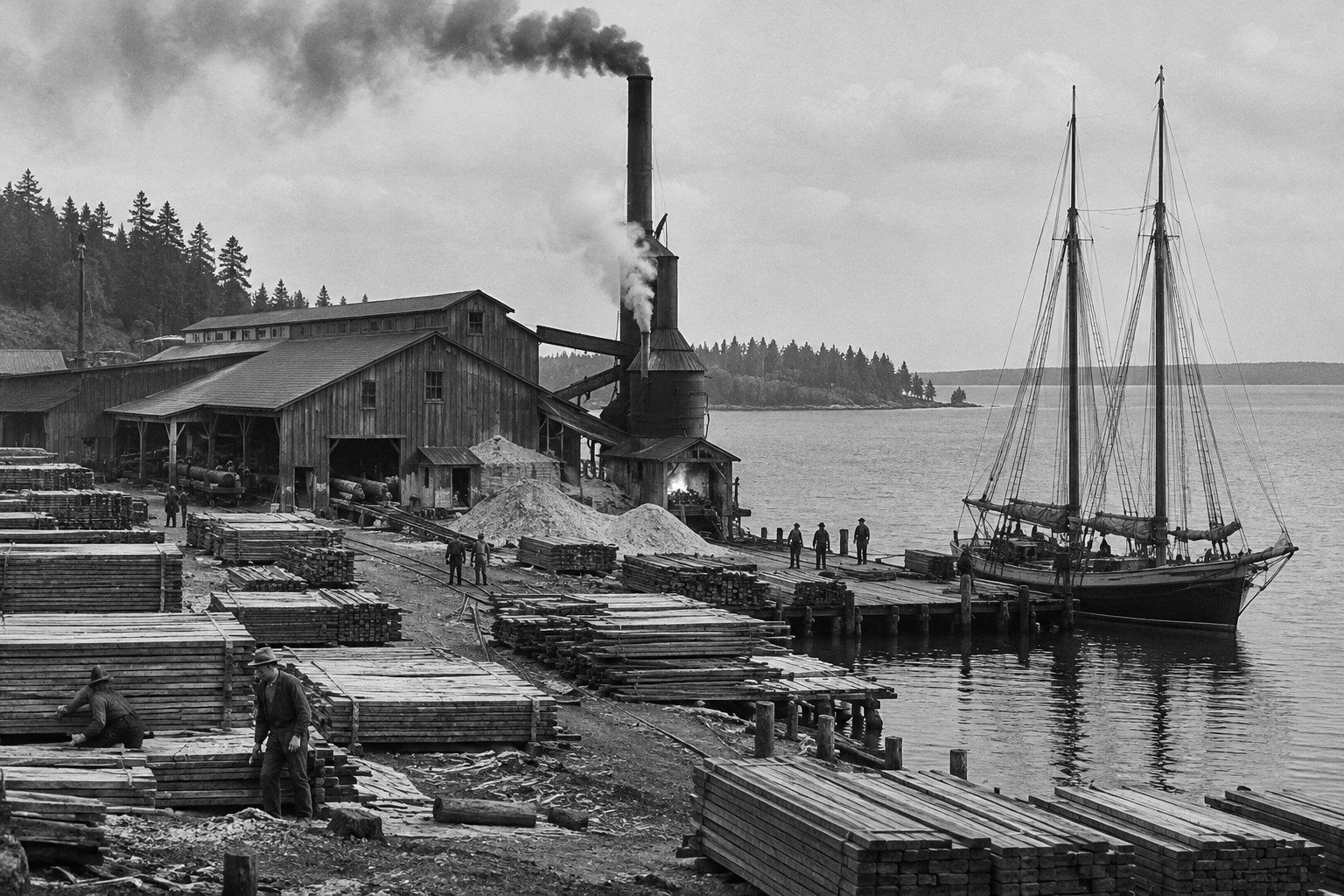
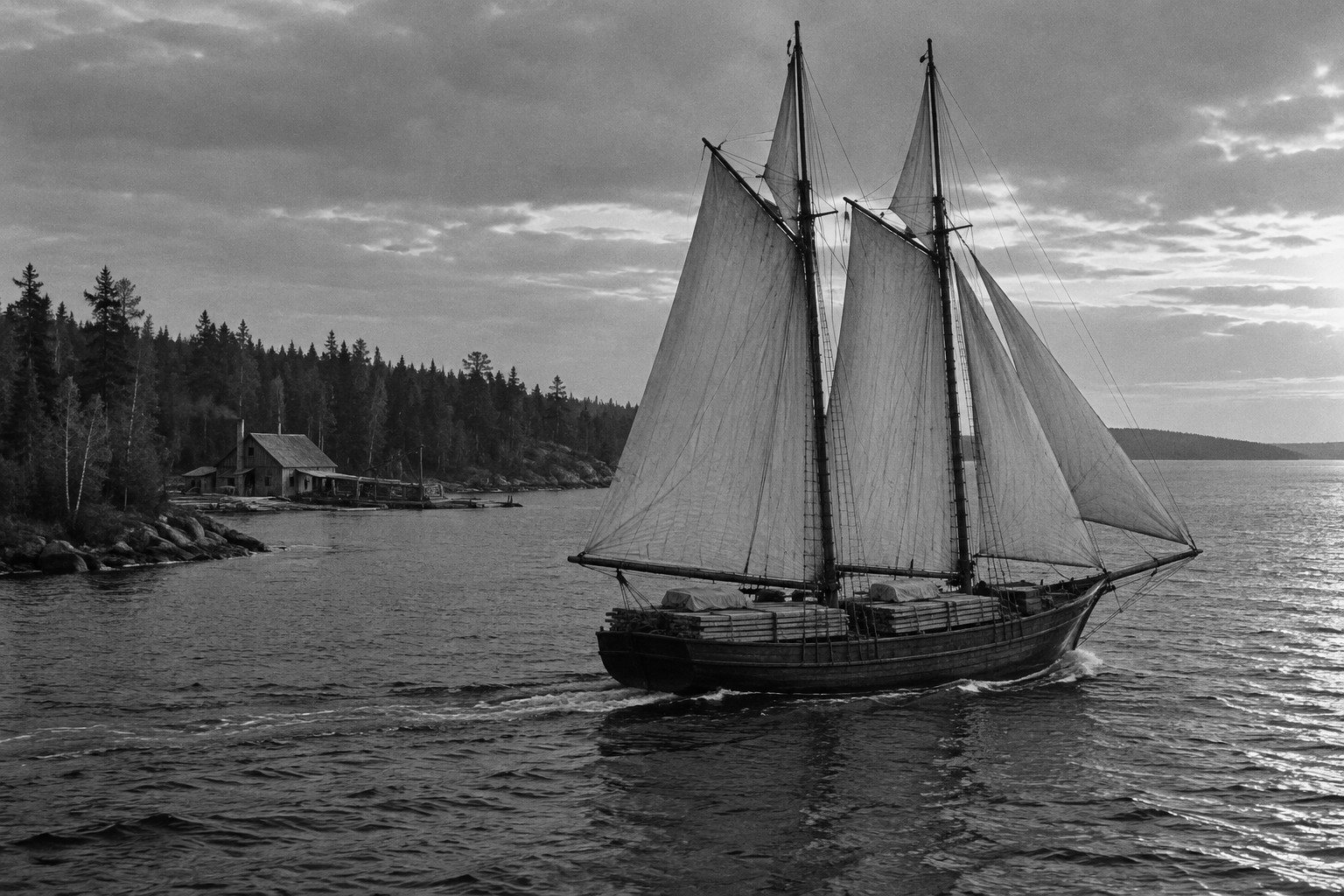
In the old days Hortons Bay was a lumbering town. No one who lived in it was out of sound of the big saws in the mill by the lake. Then one year there were no more logs to make lumber. The lumber schooners came into the bay and were loaded with the cut of the mill that stood stacked in the yard. All the piles of lumber were carried away. The big mill building had all its machinery that was removable taken out and hoisted on board one of the schooners by the men who had worked in the mill. The schooner moved out of the bay toward the open lake carrying the two great saws, the traveling carriage that hurled the logs against the revolving, circular saws and all the rollers, wheels, belts and iron piled on a hull-deep load of lumber. Its open hold covered with canvas and lashed tight, the sails of the schooner filled and it moved out into the open lake, carrying with it everything that had made the mill a mill and Hortons Bay, a town.
The one-story bunk houses, the eating-house, the company store, the mill offices, and the big mill itself stood deserted in the acres of sawdust that covered the swampy meadow by the shore of the bay.
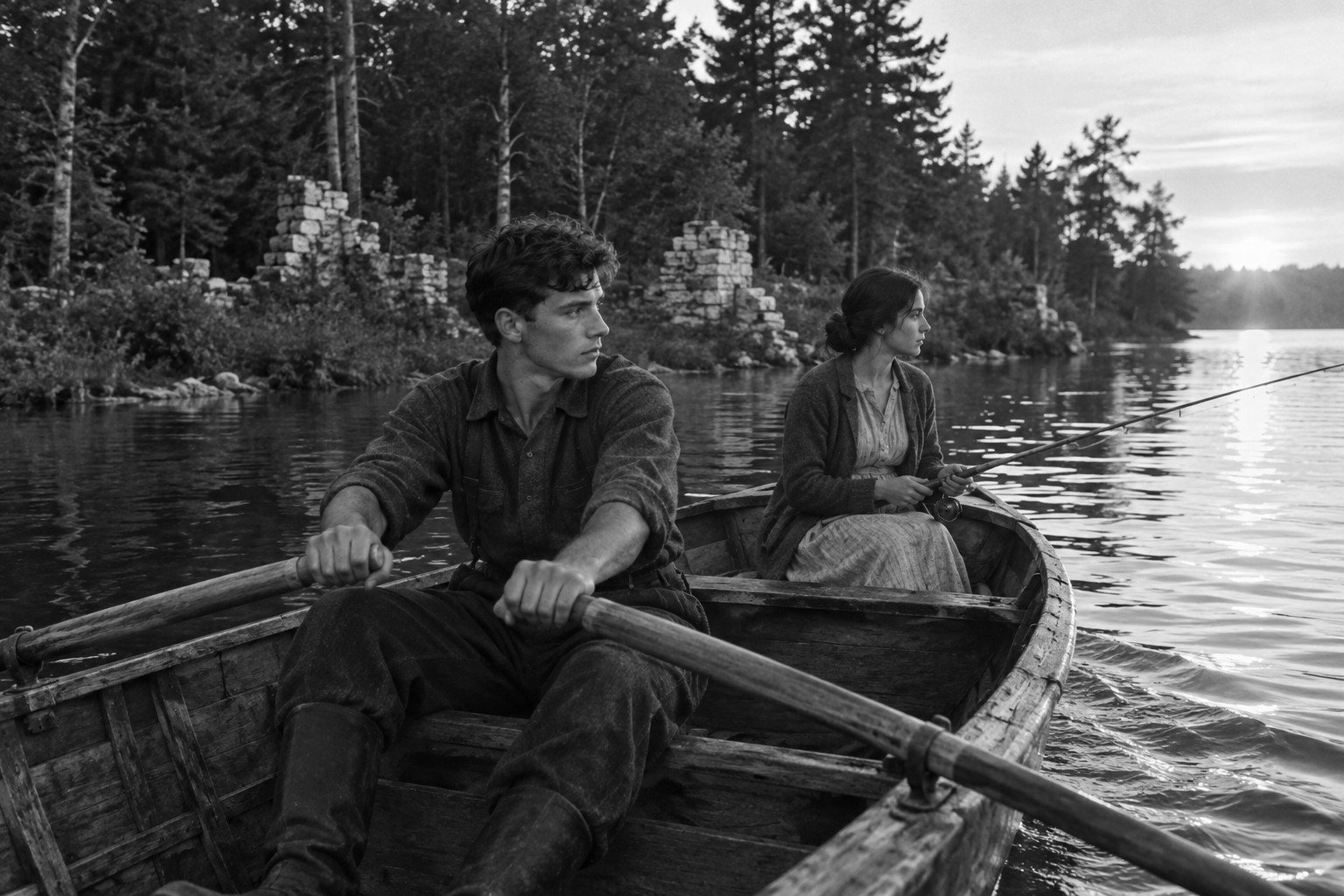
Ten years later there was nothing of the mill left except the broken white limestone of its foundations showing through the swampy second growth as Nick and Marjorie rowed along the shore. They were trolling along the edge of the channel-bank where the bottom dropped off suddenly from sandy shallows to twelve feet of dark water. They were trolling on their way to the point to set night lines for rainbow trout.
“There’s our old ruin, Nick,” Marjorie said.
Nick, rowing, looked at the white stone in the green trees.
“There it is,” he said.
“Can you remember when it was a mill?” Marjorie asked.
“I can just remember,” Nick said.
“It seems more like a castle,” Marjorie said.
Nick said nothing. They rowed on out of sight of the mill, following the shore line. Then Nick cut across the bay.
“They aren’t striking,” he said.
“No,” Marjorie said. She was intent on the rod all the time they trolled, even when she talked. She loved to fish. She loved to fish with Nick.
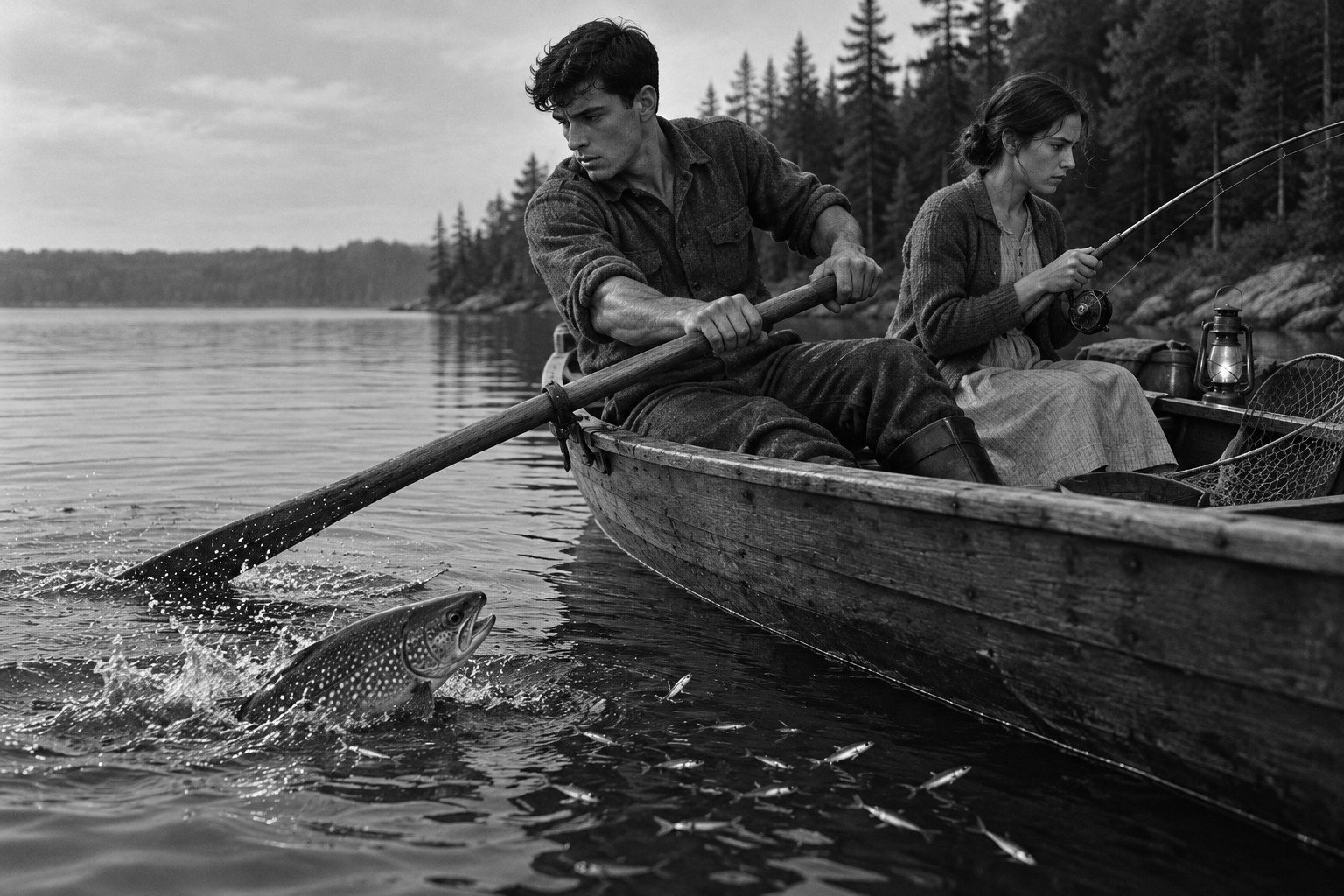
Close beside the boat a big trout broke the surface of the water. Nick pulled hard on one oar so the boat would turn and the bait spinning far behind would pass where the trout was feeding. As the trout’s back came up out of the water the minnows jumped wildly. They sprinkled the surface like a handful of shot thrown into the water. Another trout broke water, feeding on the other side of the boat.
“They’re feeding,” Marjorie said.
“But they won’t strike,” Nick said.
He rowed the boat around to troll past both the feeding fish, then headed it for the point. Marjorie did not reel in until the boat touched the shore.
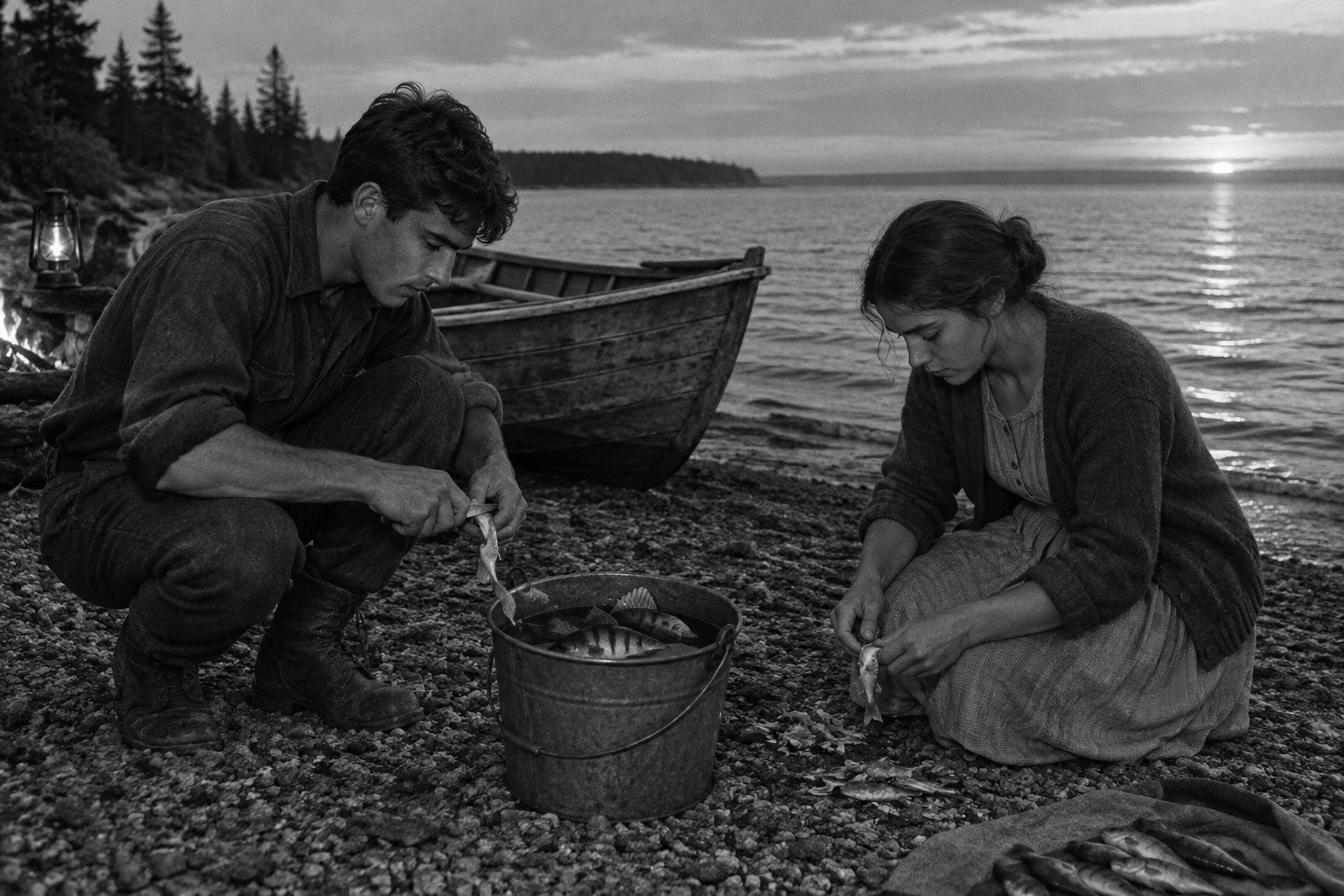
They pulled the boat up the beach and Nick lifted out a pail of live perch. The perch swam in the water in the pail. Nick caught three of them with his hands and cut their heads off and skinned them while Marjorie chased with her hands in the bucket, finally caught a perch, cut its head off and skinned it. Nick looked at her fish.
“You don’t want to take the ventral fin out,” he said. “It’ll be all right for bait but it’s better with the ventral fin in.”
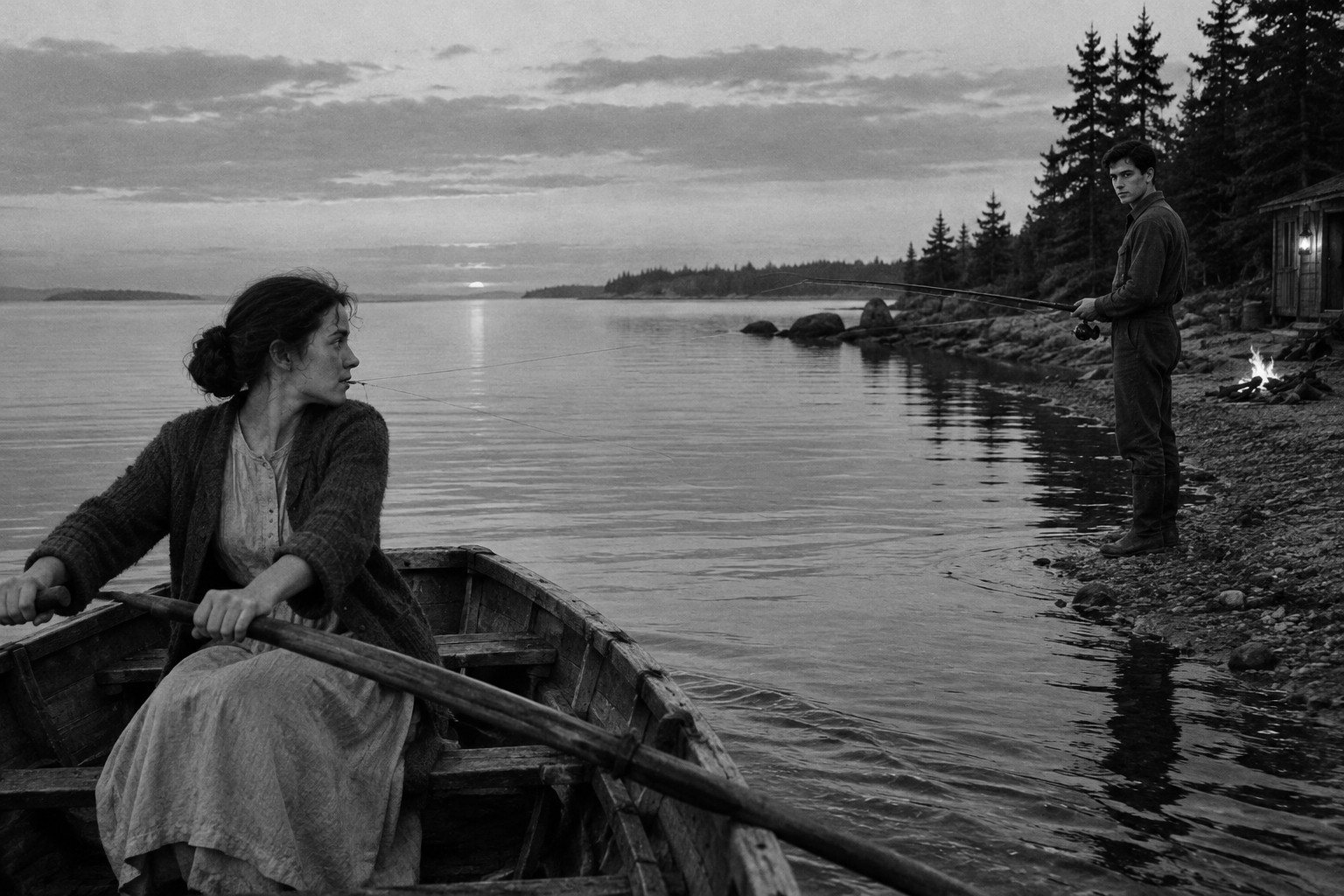
He hooked each of the skinned perch through the tail. There were two hooks attached to a leader on each rod. Then Marjorie rowed the boat out over the channel-bank, holding the line in her teeth, and looking toward Nick, who stood on the shore holding the rod and letting the line run out from the reel.
“That’s about right,” he called.
“Should I let it drop?” Marjorie called back, holding the line in her hand.
“Sure. Let it go.” Marjorie dropped the line overboard and watched the baits go down through the water.
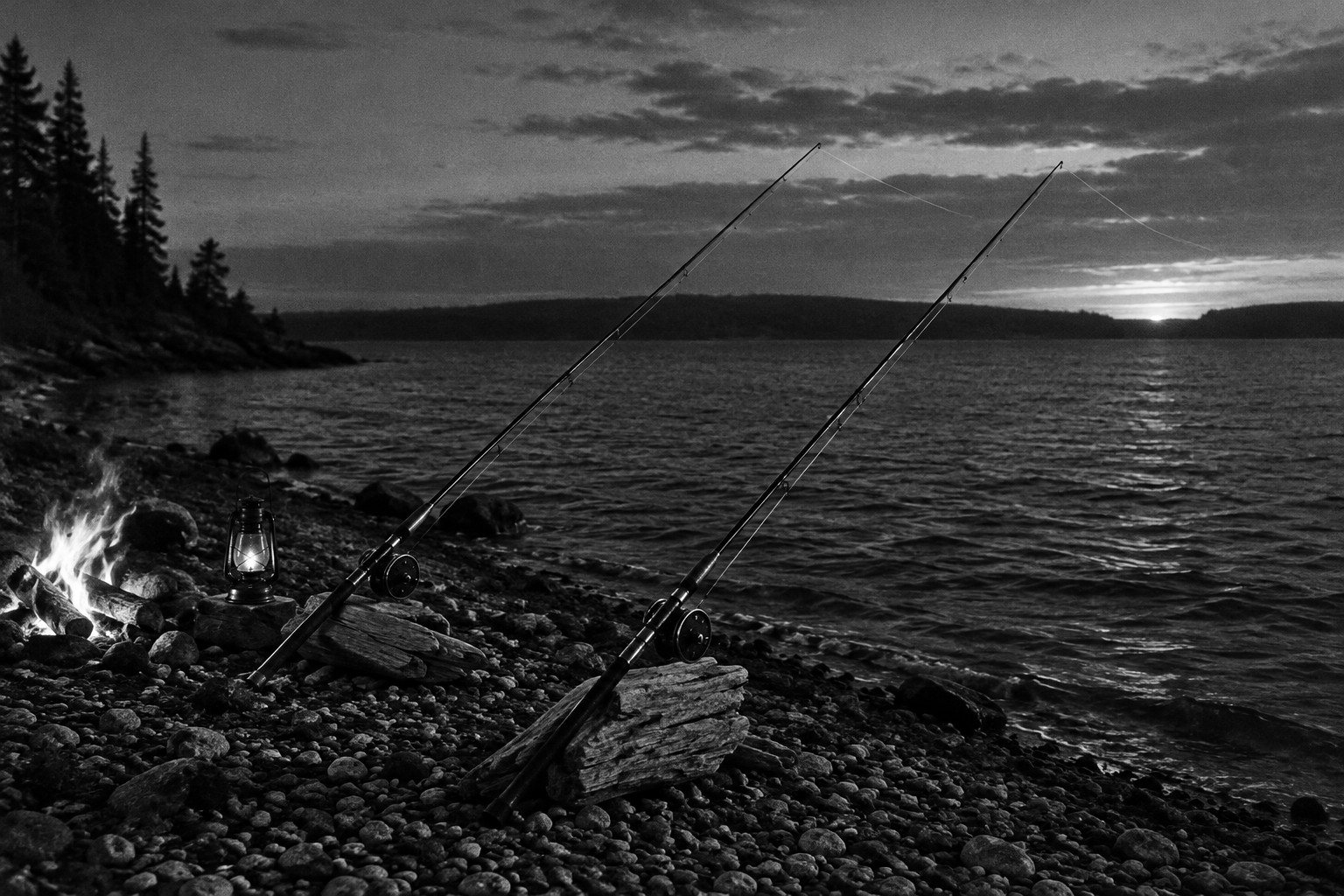
She came in with the boat and ran the second line out the same way. Each time Nick set a heavy slab of driftwood across the butt of the rod to hold it solid and propped it up at an angle with a small slab. He reeled in the slack line so the line ran taut out to where the bait rested on the sandy floor of the channel and set the click on the reel. When a trout, feeding on the bottom, took the bait it would run with it, taking line out of the reel in a rush and making the reel sing with the click on.
Marjorie rowed up the point a little way so she would not disturb the line. She pulled hard on the oars and the boat went way up the beach. Little waves came in with it. Marjorie stepped out of the boat and Nick pulled the boat high up the beach.
“What’s the matter, Nick?” Marjorie asked.
“I don’t know,” Nick said, getting wood for a fire.
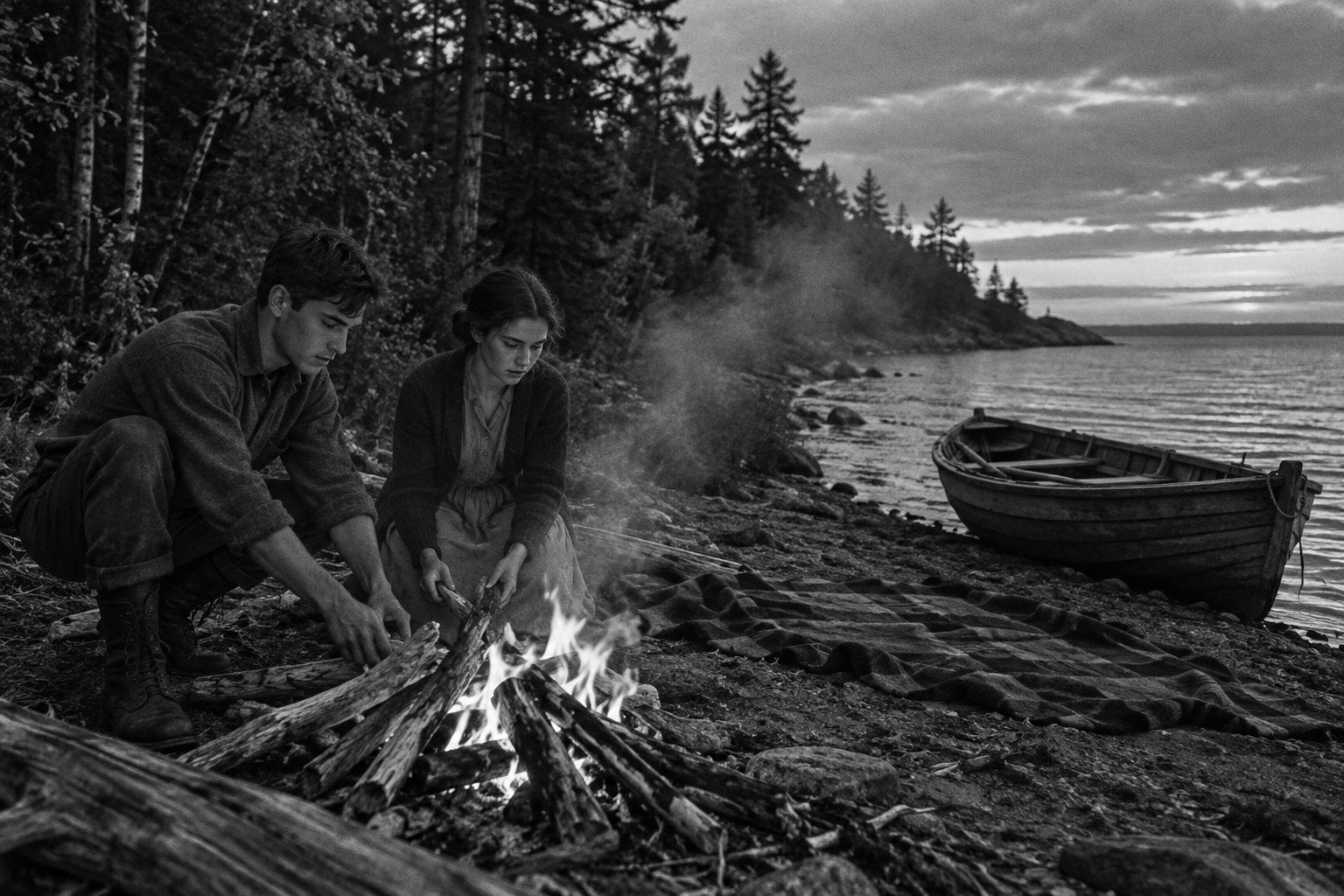
They made a fire with driftwood. Marjorie went to the boat and brought a blanket. The evening breeze blew the smoke toward the point, so Marjorie spread the blanket out between the fire and the lake.
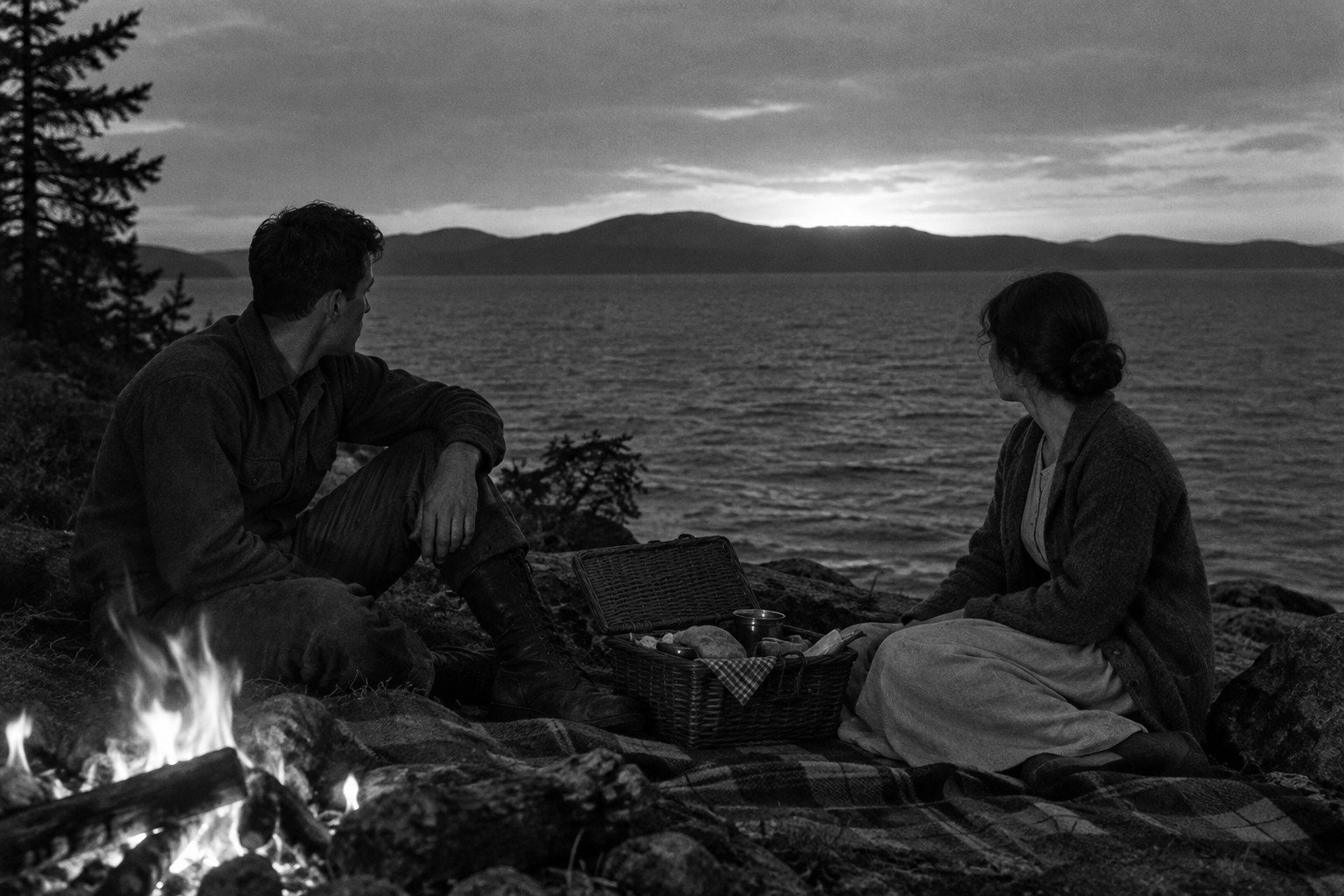
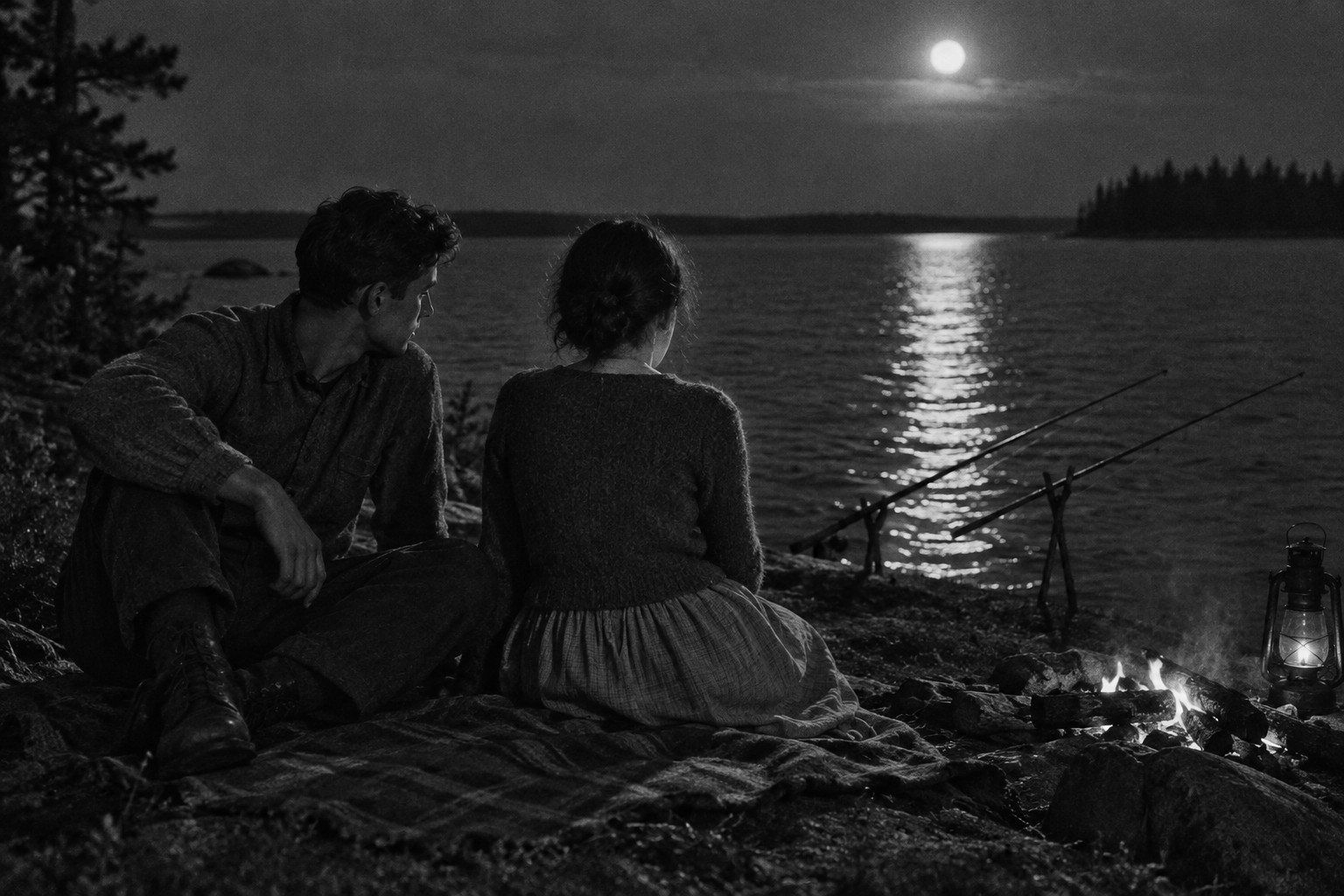
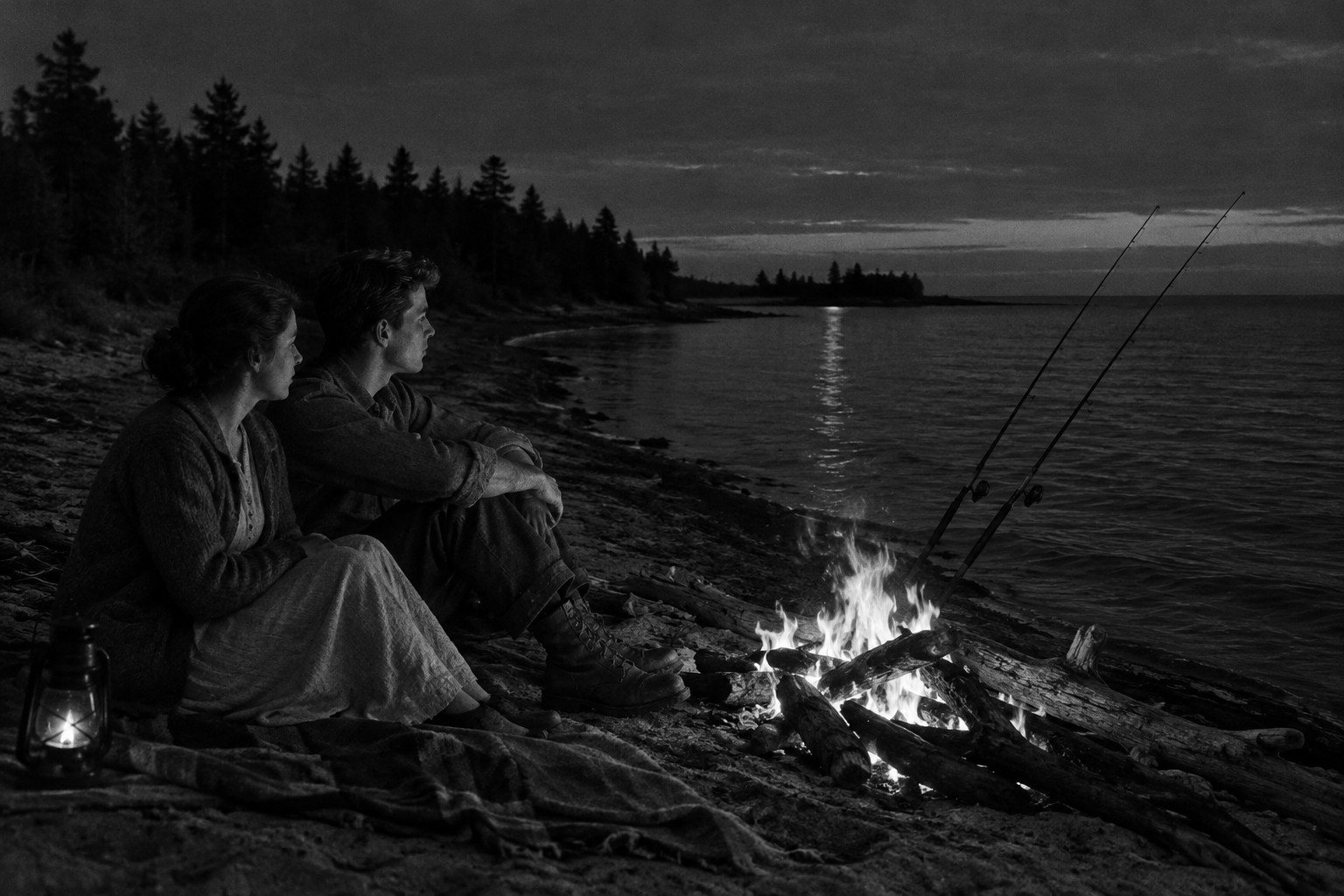
Marjorie sat on the blanket with her back to the fire and waited for Nick. He came over and sat down beside her on the blanket. In back of them was the close second-growth timber of the point and in front was the bay with the mouth of Hortons Creek. It was not quite dark. The firelight went as far as the water. They could both see the two steel rods at an angle over the dark water. The fire glinted on the reels.
Marjorie unpacked the basket of supper.
“I don’t feel like eating,” said Nick.
“Come on and eat, Nick.”
“All right.”
They ate without talking, and watched the two rods and the fire-light in the water.
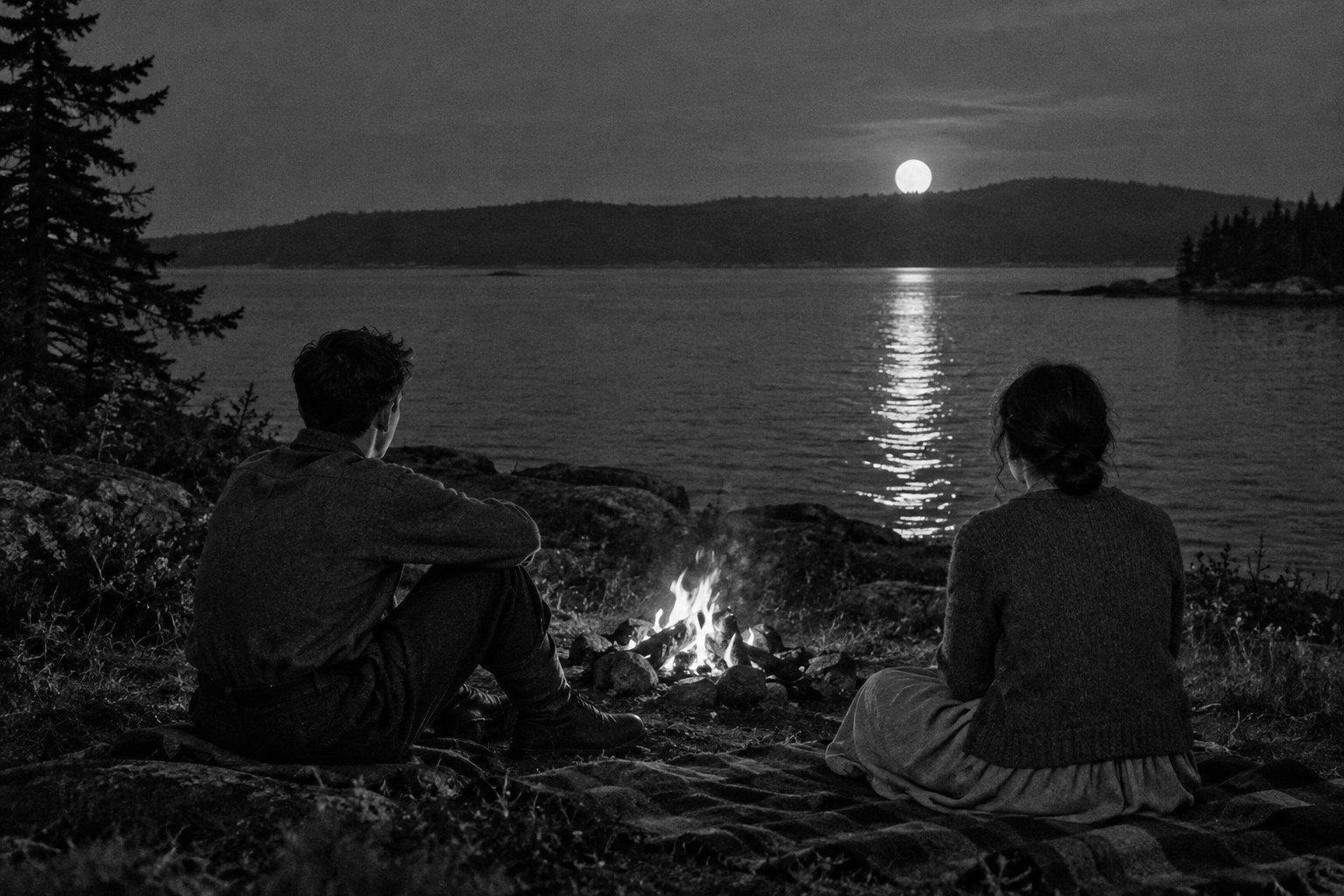
“There’s going to be a moon tonight,” said Nick. He looked across the bay to the hills that were beginning to sharpen against the sky. Beyond the hills he knew the moon was coming up.
“I know it,” Marjorie said happily.
“You know everything,” Nick said.
“Oh, Nick, please cut it out! Please, please don’t be that way!”
“I can’t help it,” Nick said. “You do. You know everything. That’s the trouble. You know you do.”
Marjorie did not say anything.
“I’ve taught you everything. You know you do. What don’t you know, anyway?”
“Oh, shut up,” Marjorie said. “There comes the moon.”
They sat on the blanket without touching each other and watched the moon rise.
“You don’t have to talk silly,” Marjorie said; “what’s really the matter?”
“I don’t know.”
“Of course you know.”
“No I don’t.”
“Go on and say it.”
Nick looked on at the moon, coming up over the hills.
“It isn’t fun any more.”
He was afraid to look at Marjorie. He looked at Marjorie. She sat there with her back toward him. He looked at her back. “It isn’t fun any more. Not any of it.”
She didn’t say anything. He went on. “I feel as though everything was gone to hell inside of me. I don’t know, Marge. I don’t know what to say.”
He looked on at her back.
“Isn’t love any fun?” Marjorie said.
“No,” Nick said. Marjorie stood up. Nick sat there, his head in his hands.
“I’m going to take the boat,” Marjorie called to him. “You can walk back around the point.”
“All right,” Nick said. “I’ll push the boat off for you.”
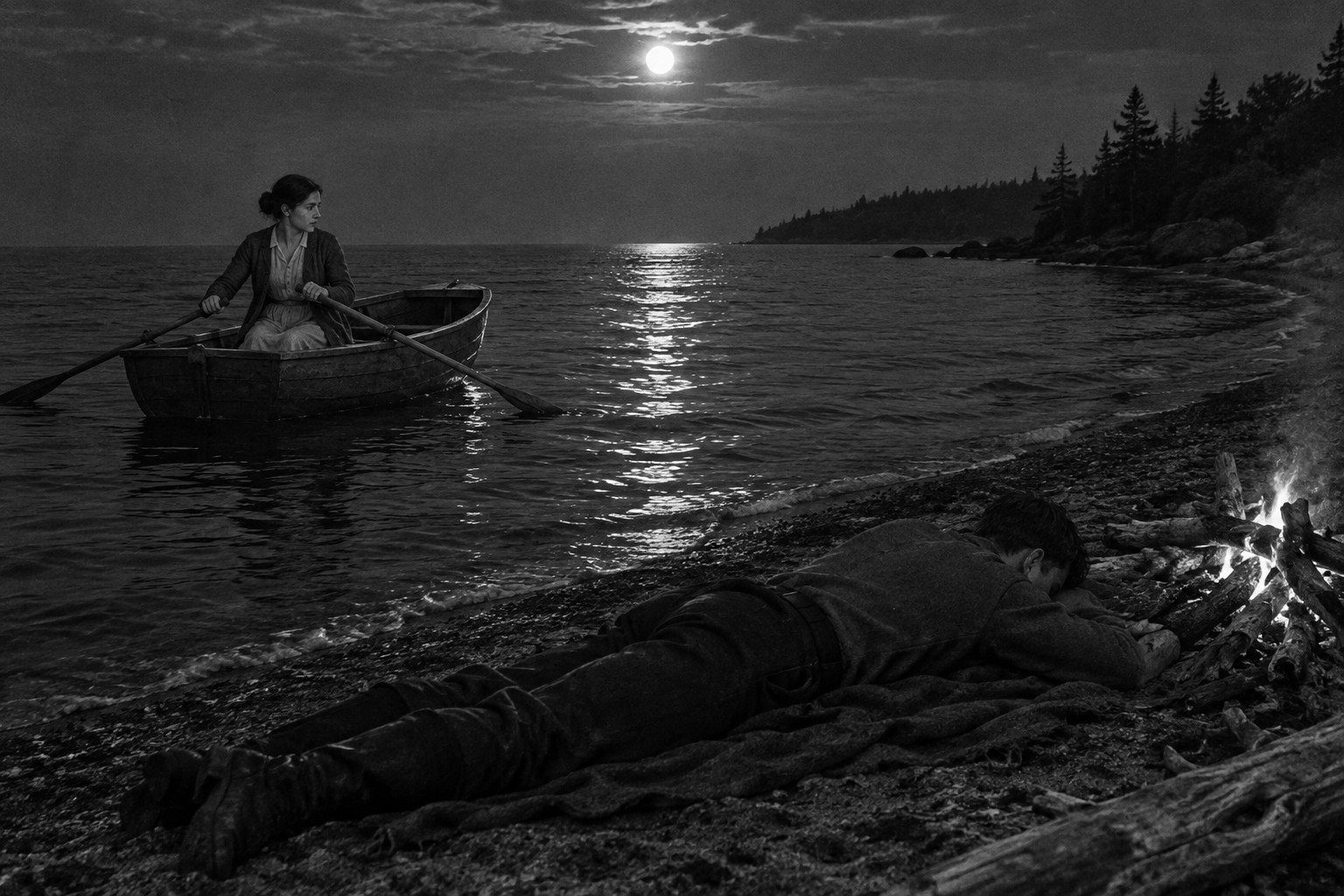
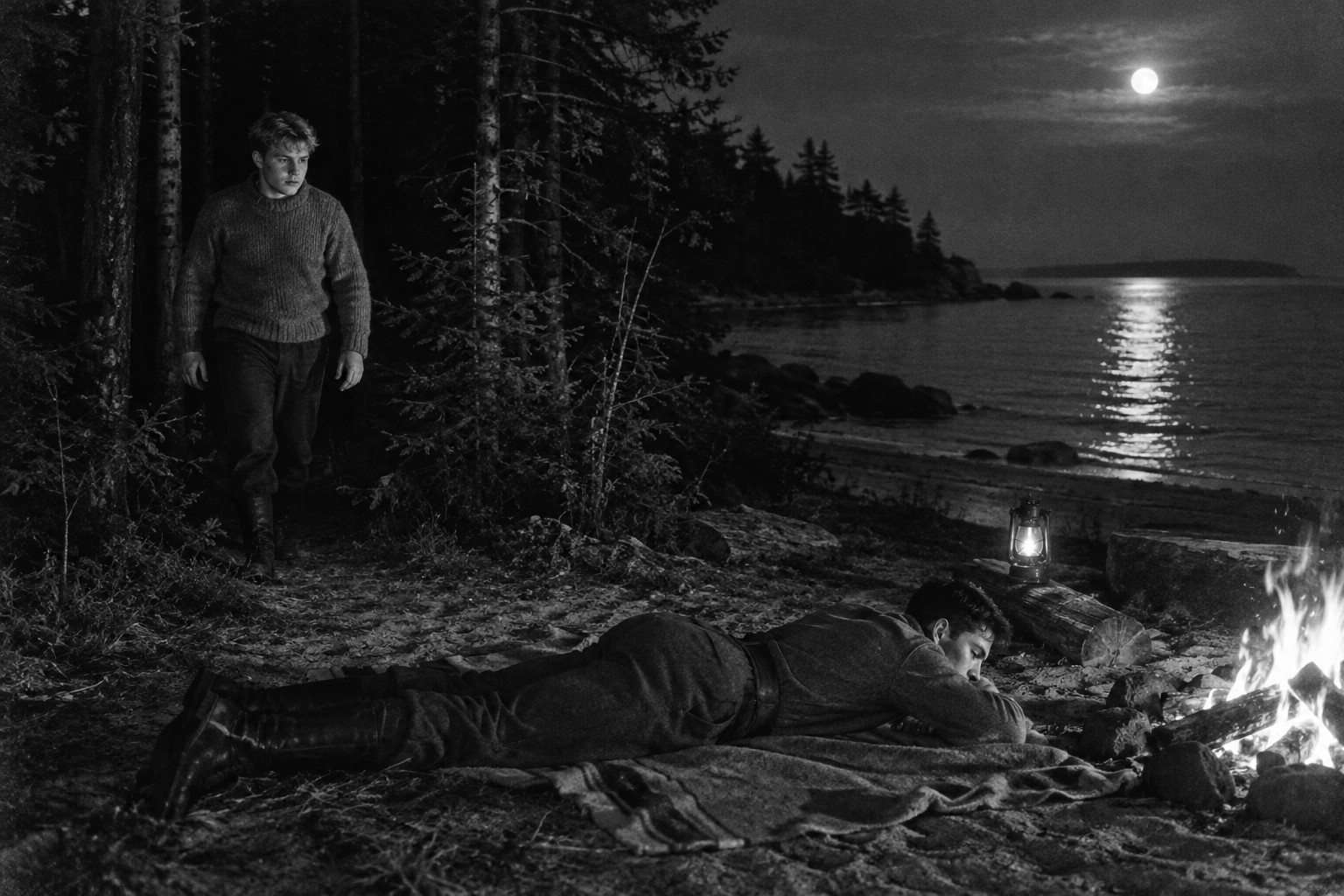
“You don’t need to,” she said. She was afloat in the boat on the water with the moonlight on it. Nick went back and lay down with his face in the blanket by the fire. He could hear Marjorie rowing on the water.
He lay there for a long time. He lay there while he heard Bill come into the clearing, walking around through the woods. He felt Bill coming up to the fire. Bill didn’t touch him, either.
“Did she go all right?” Bill said.
“Oh, yes.” Nick said, lying, his face on the blanket.
“Have a scene?”
“No, there wasn’t any scene.”
“How do you feel?”
“Oh, go away, Bill! Go away for a while.”
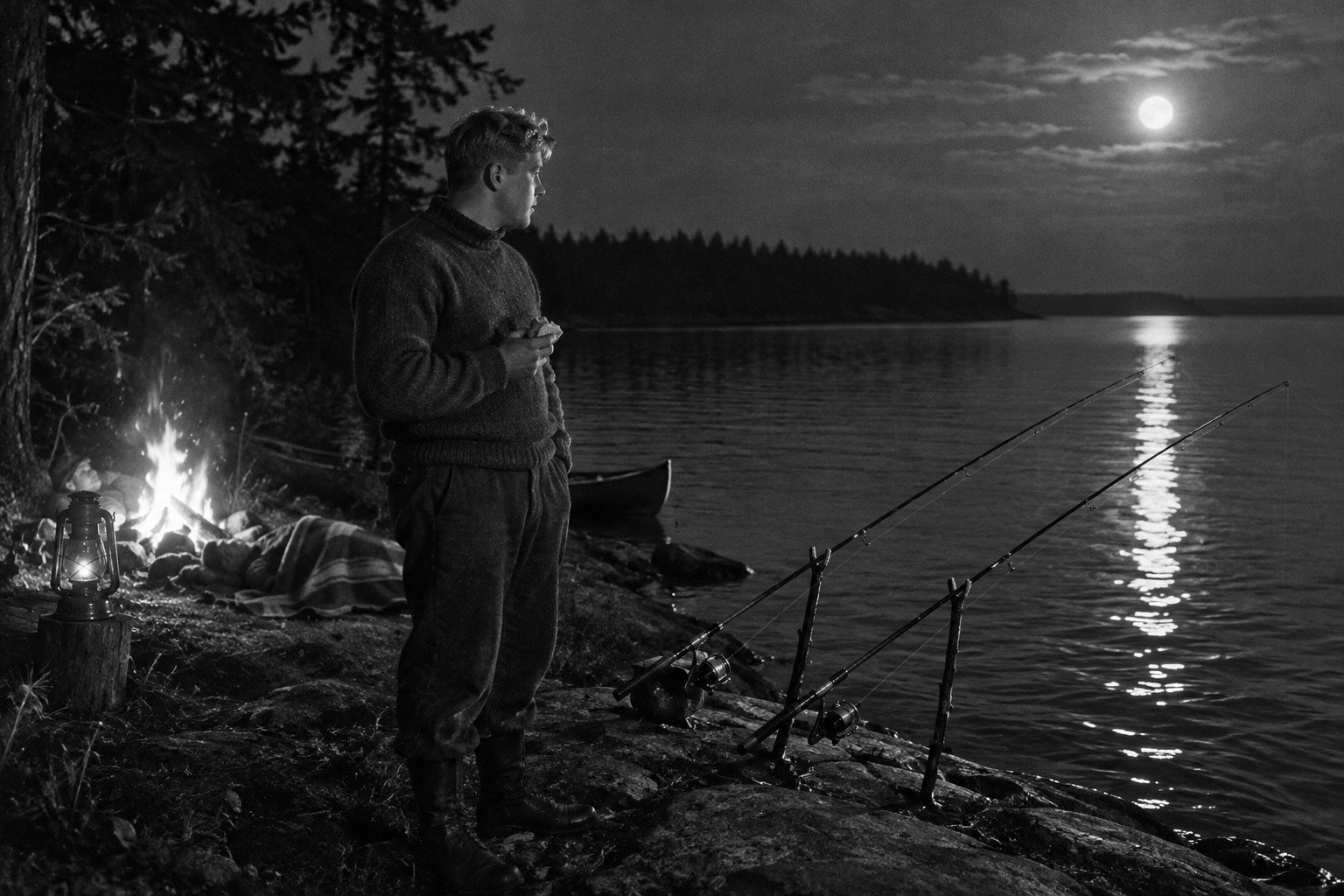
Bill selected a sandwich from the lunch basket and walked over to have a look at the rods.