This Side of Paradise · Part 2 — full text
Complete and unaltered, as performed. Read along, or read it after.
Book One, Chapter Two: Spires and Gargoyles, continued
ISABELLE
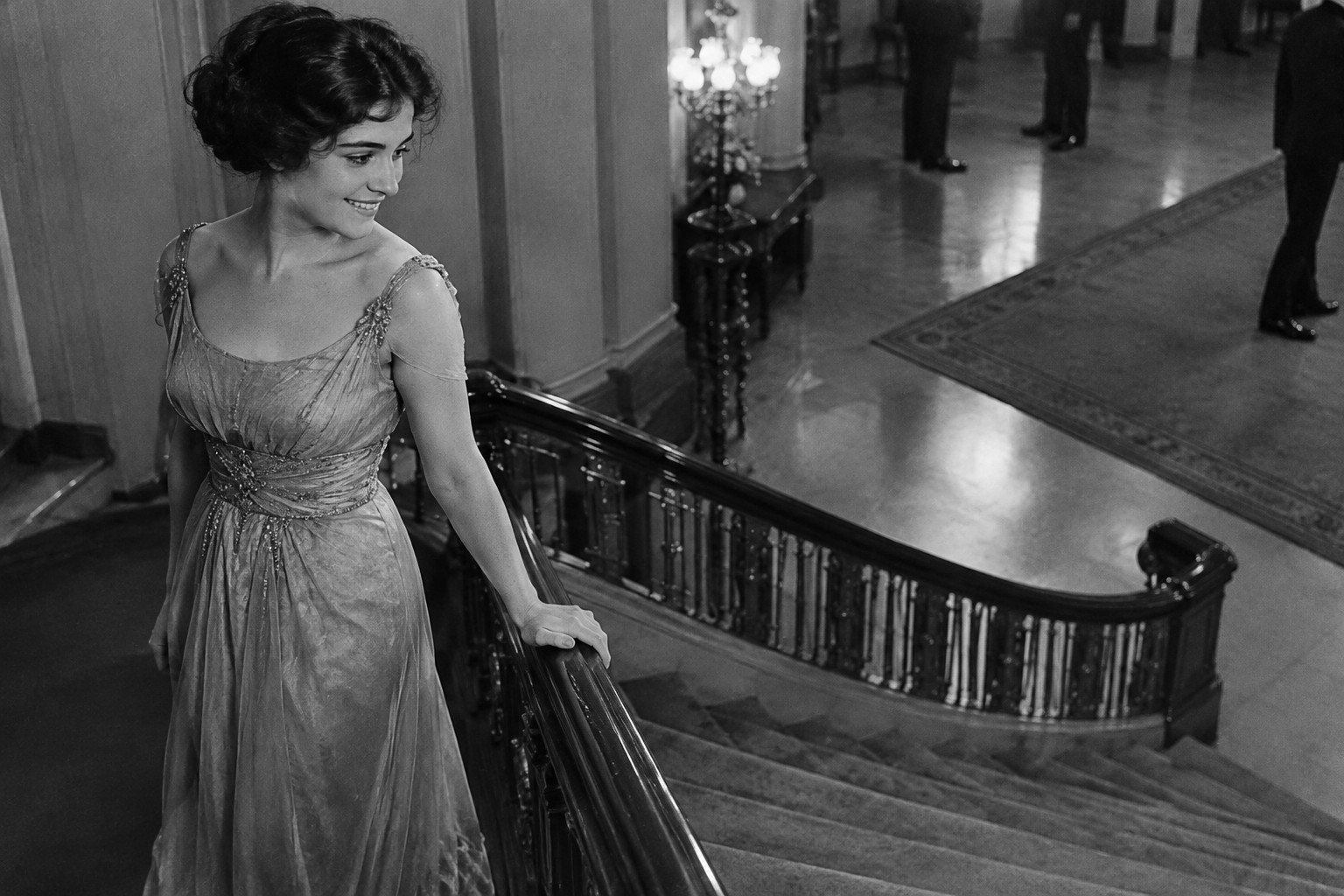
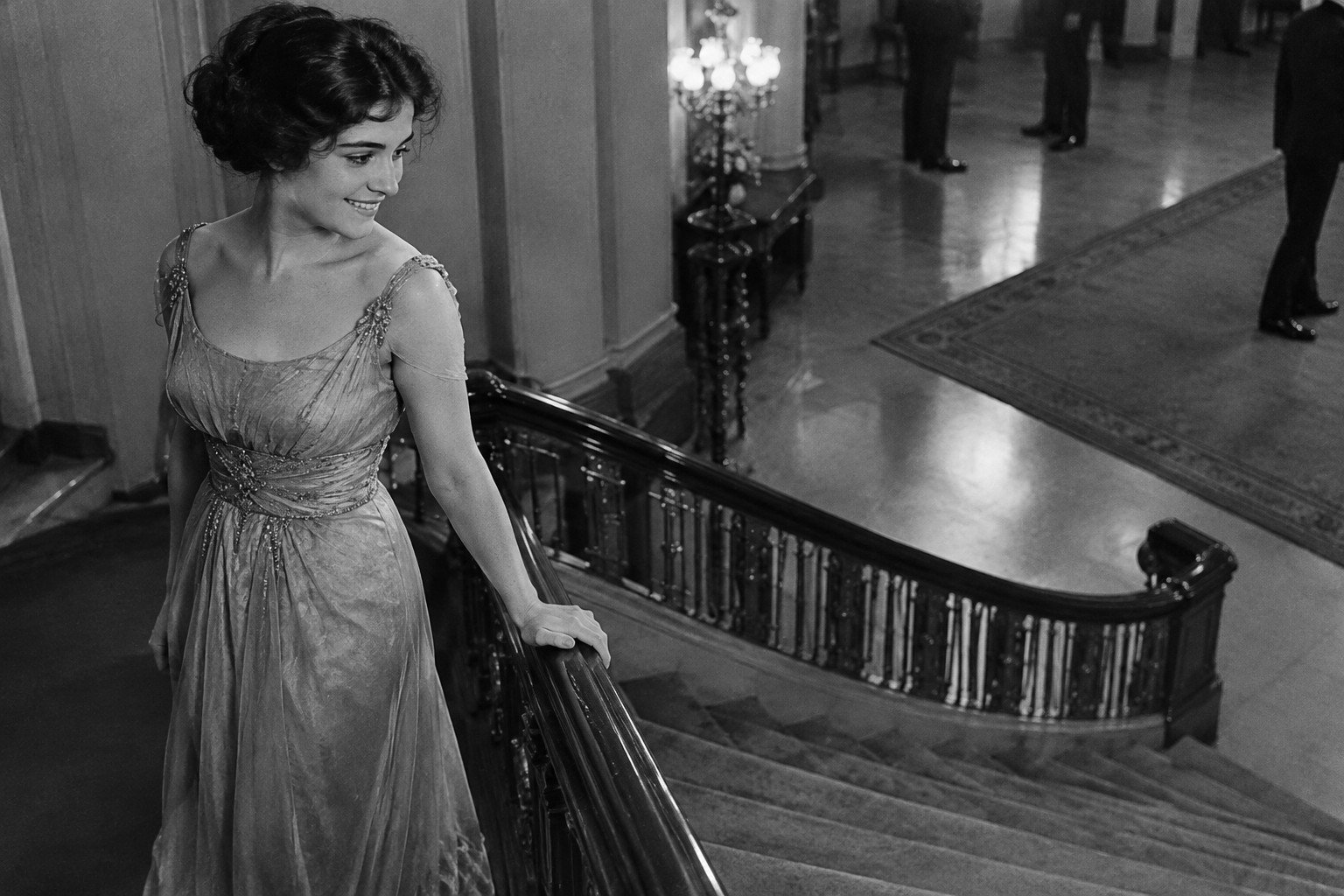
She paused at the top of the staircase. The sensations attributed to divers on spring-boards, leading ladies on opening nights, and lumpy, husky young men on the day of the Big Game, crowded through her. She should have descended to a burst of drums or a discordant blend of themes from “Thais” and “Carmen.” She had never been so curious about her appearance, she had never been so satisfied with it. She had been sixteen years old for six months.
“Isabelle!” called her cousin Sally from the doorway of the dressing-room.
“I’m ready.” She caught a slight lump of nervousness in her throat.
“I had to send back to the house for another pair of slippers. It’ll be just a minute.”
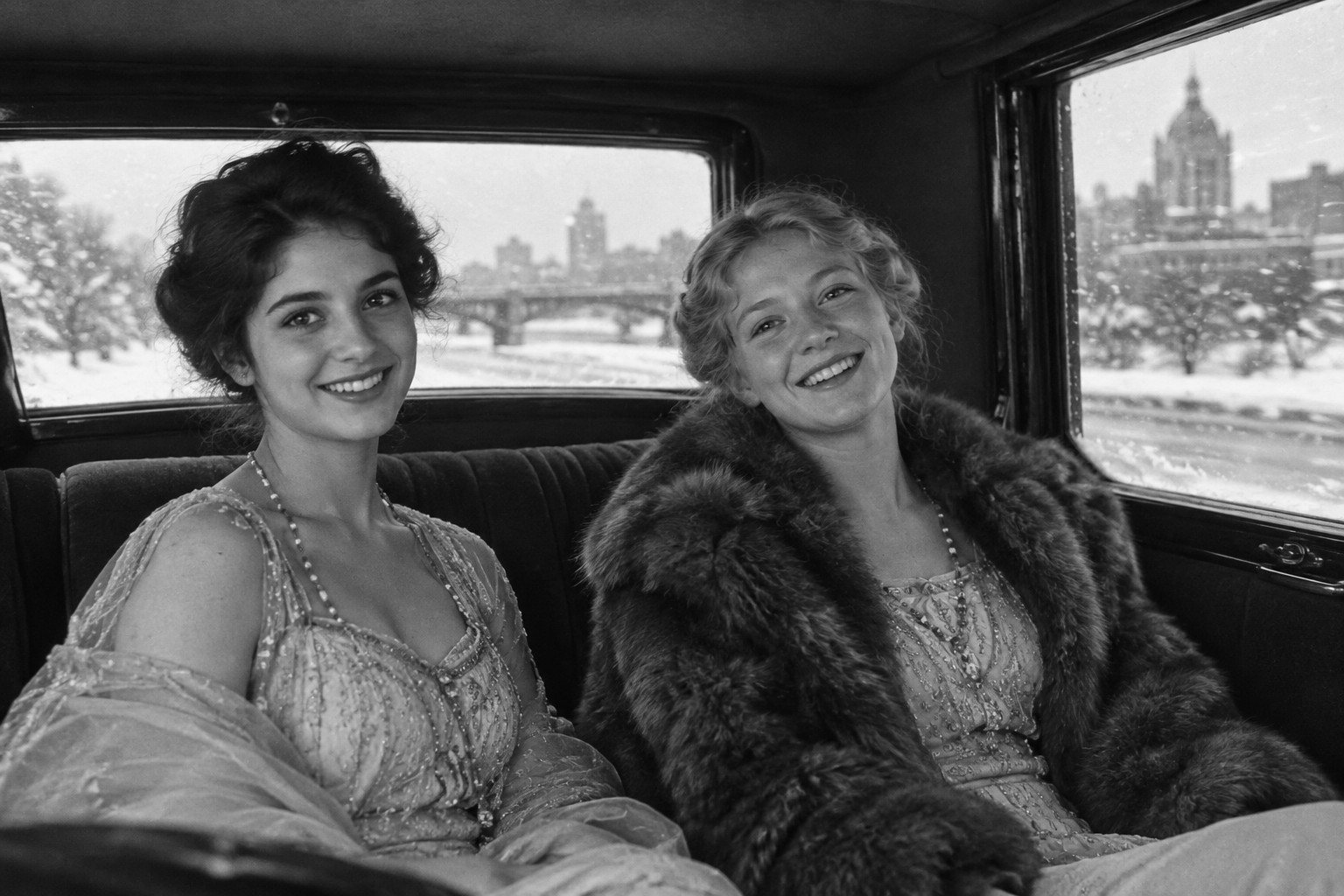
Isabelle started toward the dressing-room for a last peek in the mirror, but something decided her to stand there and gaze down the broad stairs of the Minnehaha Club. They curved tantalizingly, and she could catch just a glimpse of two pairs of masculine feet in the hall below. Pump-shod in uniform black, they gave no hint of identity, but she wondered eagerly if one pair were attached to Amory Blaine. This young man, not as yet encountered, had nevertheless taken up a considerable part of her day—the first day of her arrival. Coming up in the machine from the station, Sally had volunteered, amid a rain of question, comment, revelation, and exaggeration:
“You remember Amory Blaine, of course. Well, he’s simply mad to see you again. He’s stayed over a day from college, and he’s coming to-night. He’s heard so much about you—says he remembers your eyes.”
This had pleased Isabelle. It put them on equal terms, although she was quite capable of staging her own romances, with or without advance advertising. But following her happy tremble of anticipation, came a sinking sensation that made her ask:
“How do you mean he’s heard about me? What sort of things?”
Sally smiled. She felt rather in the capacity of a showman with her more exotic cousin.
“He knows you’re—you’re considered beautiful and all that”—she paused—“and I guess he knows you’ve been kissed.”
At this Isabelle’s little fist had clinched suddenly under the fur robe. She was accustomed to be thus followed by her desperate past, and it never failed to rouse in her the same feeling of resentment; yet—in a strange town it was an advantageous reputation. She was a “Speed,” was she? Well—let them find out.
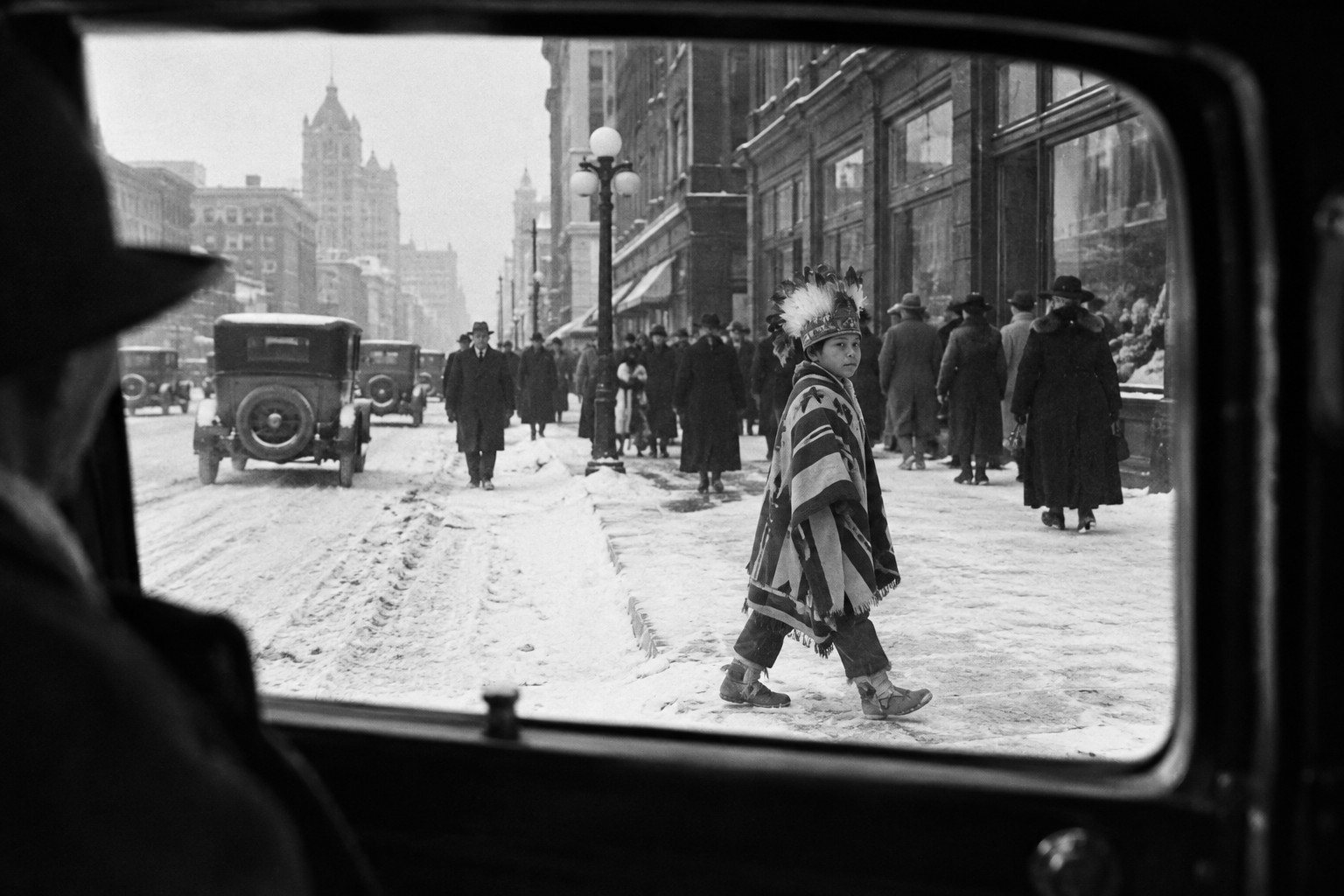
Out of the window Isabelle watched the snow glide by in the frosty morning. It was ever so much colder here than in Baltimore; she had not remembered; the glass of the side door was iced, the windows were shirred with snow in the corners. Her mind played still with one subject. Did he dress like that boy there, who walked calmly down a bustling business street, in moccasins and winter-carnival costume? How very Western! Of course he wasn’t that way: he went to Princeton, was a sophomore or something. Really she had no distinct idea of him. An ancient snap-shot she had preserved in an old kodak book had impressed her by the big eyes (which he had probably grown up to by now). However, in the last month, when her winter visit to Sally had been decided on, he had assumed the proportions of a worthy adversary. Children, most astute of match-makers, plot their campaigns quickly, and Sally had played a clever correspondence sonata to Isabelle’s excitable temperament. Isabelle had been for some time capable of very strong, if very transient emotions....
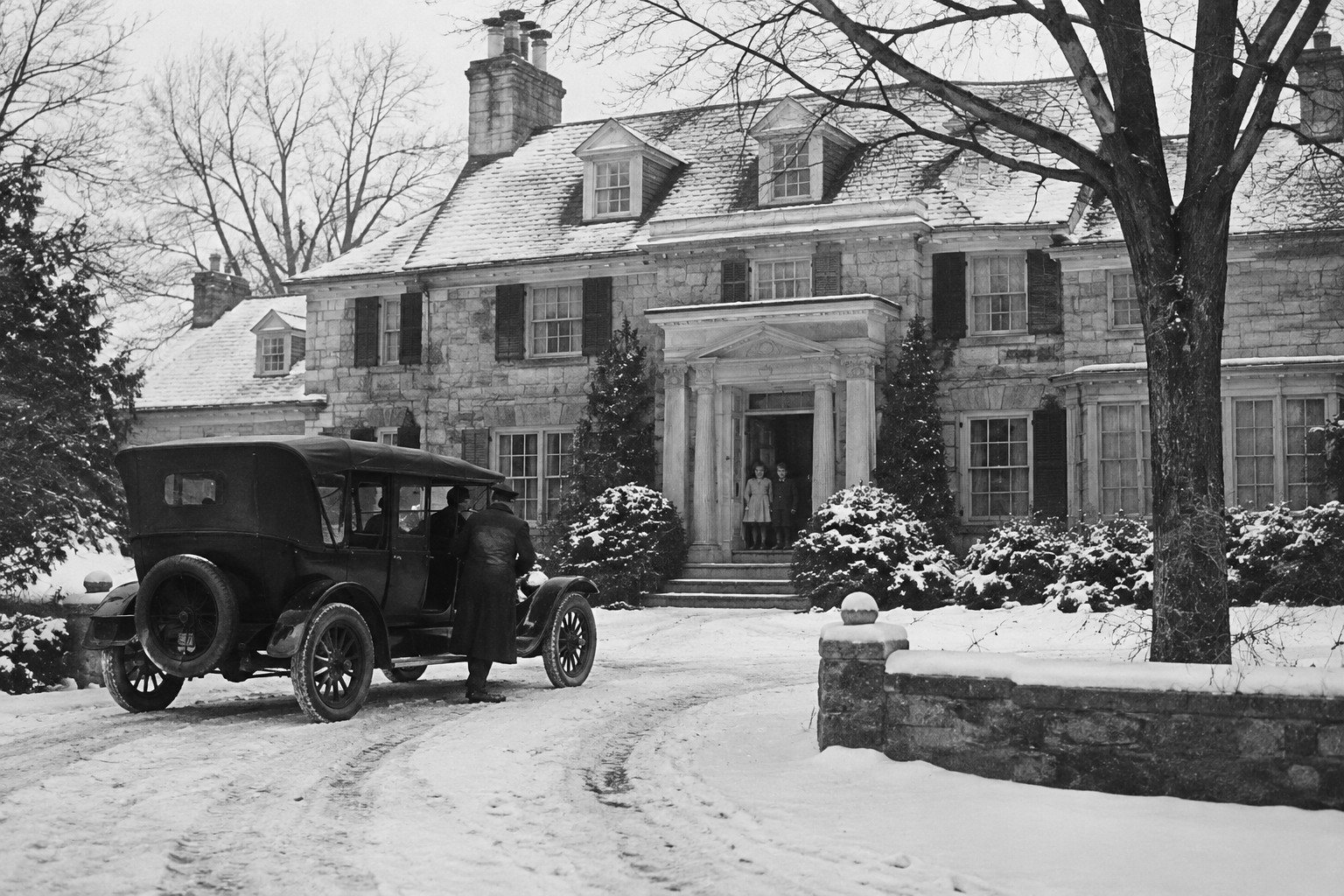
They drew up at a spreading, white-stone building, set back from the snowy street. Mrs. Weatherby greeted her warmly and her various younger cousins were produced from the corners where they skulked politely. Isabelle met them tactfully. At her best she allied all with whom she came in contact—except older girls and some women. All the impressions she made were conscious. The half-dozen girls she renewed acquaintance with that morning were all rather impressed and as much by her direct personality as by her reputation. Amory Blaine was an open subject. Evidently a bit light of love, neither popular nor unpopular—every girl there seemed to have had an affair with him at some time or other, but no one volunteered any really useful information. He was going to fall for her.... Sally had published that information to her young set and they were retailing it back to Sally as fast as they set eyes on Isabelle. Isabelle resolved secretly that she would, if necessary, force herself to like him—she owed it to Sally. Suppose she were terribly disappointed. Sally had painted him in such glowing colors—he was good-looking, “sort of distinguished, when he wants to be,” had a line, and was properly inconstant. In fact, he summed up all the romance that her age and environment led her to desire. She wondered if those were his dancing-shoes that fox-trotted tentatively around the soft rug below.
All impressions and, in fact, all ideas were extremely kaleidoscopic to Isabelle. She had that curious mixture of the social and the artistic temperaments found often in two classes, society women and actresses. Her education or, rather, her sophistication, had been absorbed from the boys who had dangled on her favor; her tact was instinctive, and her capacity for love-affairs was limited only by the number of the susceptible within telephone distance. Flirt smiled from her large black-brown eyes and shone through her intense physical magnetism.
So she waited at the head of the stairs that evening while slippers were fetched. Just as she was growing impatient, Sally came out of the dressing-room, beaming with her accustomed good nature and high spirits, and together they descended to the floor below, while the shifting search-light of Isabelle’s mind flashed on two ideas: she was glad she had high color to-night, and she wondered if he danced well.
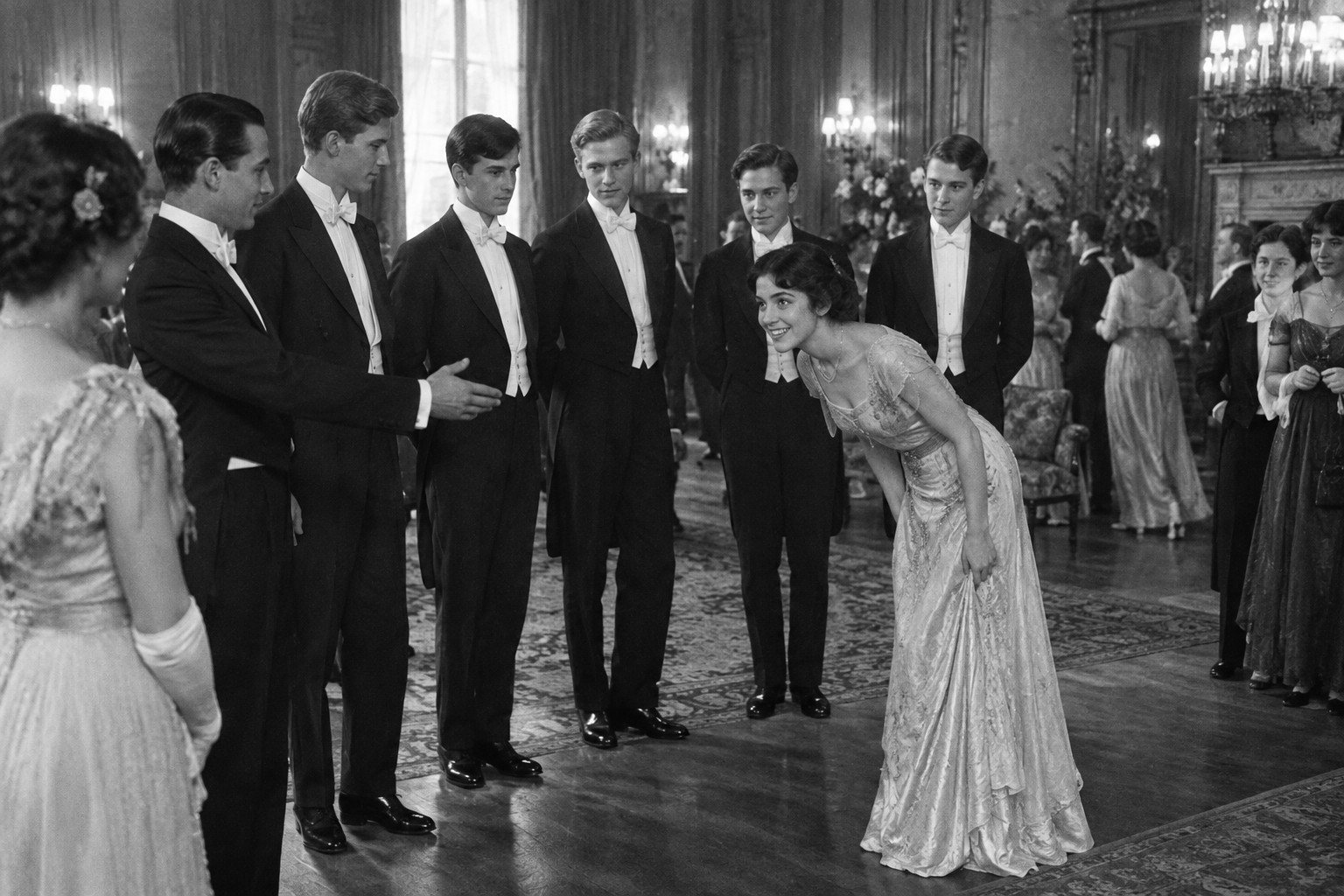
Down-stairs, in the club’s great room, she was surrounded for a moment by the girls she had met in the afternoon, then she heard Sally’s voice repeating a cycle of names, and found herself bowing to a sextet of black and white, terribly stiff, vaguely familiar figures. The name Blaine figured somewhere, but at first she could not place him. A very confused, very juvenile moment of awkward backings and bumpings followed, and every one found himself talking to the person he least desired to. Isabelle manoeuvred herself and Froggy Parker, freshman at Harvard, with whom she had once played hop-scotch, to a seat on the stairs. A humorous reference to the past was all she needed. The things Isabelle could do socially with one idea were remarkable. First, she repeated it rapturously in an enthusiastic contralto with a soupcon of Southern accent; then she held it off at a distance and smiled at it—her wonderful smile; then she delivered it in variations and played a sort of mental catch with it, all this in the nominal form of dialogue. Froggy was fascinated and quite unconscious that this was being done, not for him, but for the green eyes that glistened under the shining carefully watered hair, a little to her left, for Isabelle had discovered Amory. As an actress even in the fullest flush of her own conscious magnetism gets a deep impression of most of the people in the front row, so Isabelle sized up her antagonist. First, he had auburn hair, and from her feeling of disappointment she knew that she had expected him to be dark and of garter-advertisement slenderness.... For the rest, a faint flush and a straight, romantic profile; the effect set off by a close-fitting dress suit and a silk ruffled shirt of the kind that women still delight to see men wear, but men were just beginning to get tired of.
During this inspection Amory was quietly watching.
“Don’t you think so?” she said suddenly, turning to him, innocent-eyed.
There was a stir, and Sally led the way over to their table. Amory struggled to Isabelle’s side, and whispered:
“You’re my dinner partner, you know. We’re all coached for each other.”
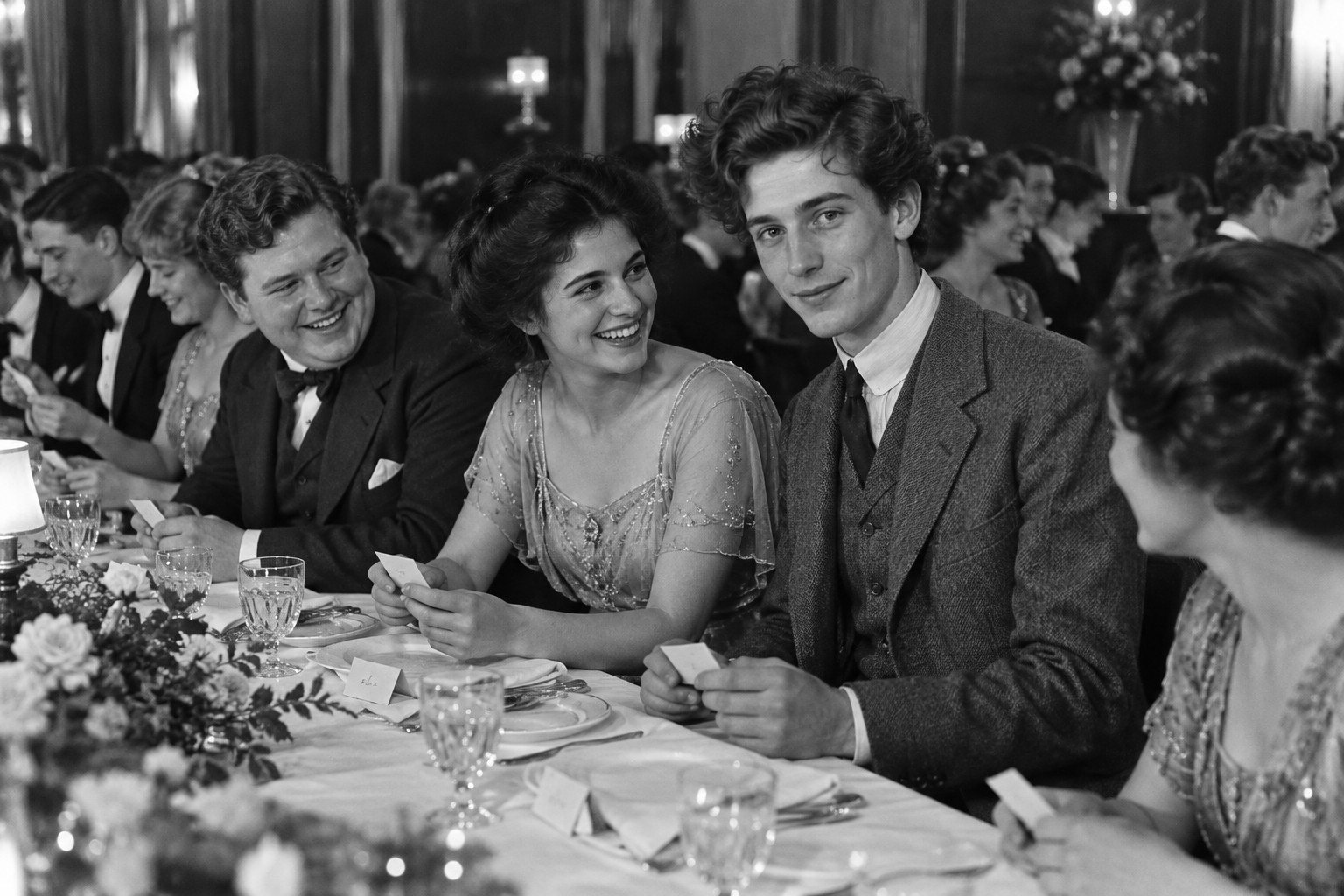
Isabelle gasped—this was rather right in line. But really she felt as if a good speech had been taken from the star and given to a minor character.... She mustn’t lose the leadership a bit. The dinner-table glittered with laughter at the confusion of getting places and then curious eyes were turned on her, sitting near the head. She was enjoying this immensely, and Froggy Parker was so engrossed with the added sparkle of her rising color that he forgot to pull out Sally’s chair, and fell into a dim confusion. Amory was on the other side, full of confidence and vanity, gazing at her in open admiration. He began directly, and so did Froggy:
“I’ve heard a lot about you since you wore braids—”
“Wasn’t it funny this afternoon—”
Both stopped. Isabelle turned to Amory shyly. Her face was always enough answer for any one, but she decided to speak.
“How—from whom?”
“From everybody—for all the years since you’ve been away.” She blushed appropriately. On her right Froggy was hors de combat already, although he hadn’t quite realized it.
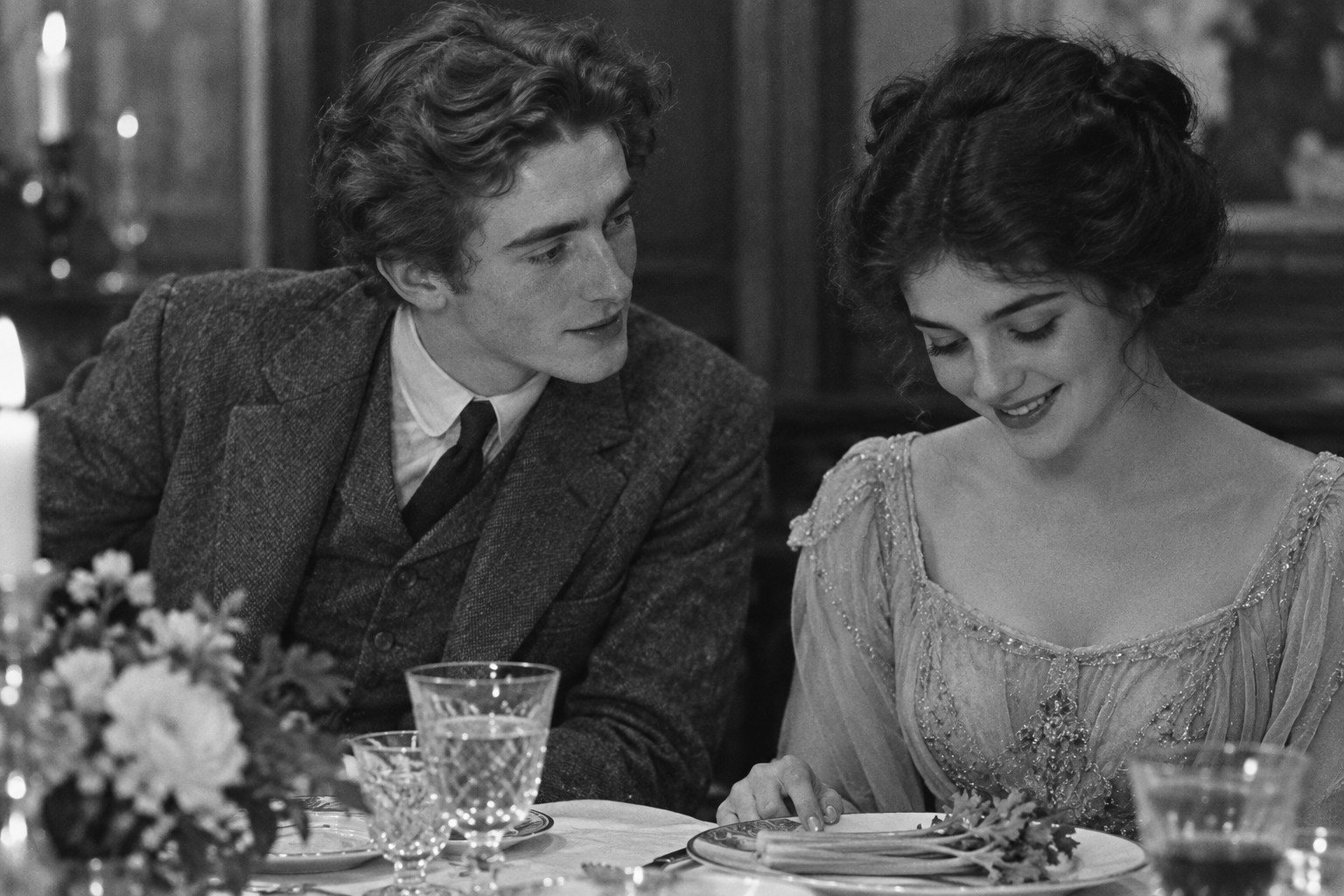
“I’ll tell you what I remembered about you all these years,” Amory continued. She leaned slightly toward him and looked modestly at the celery before her. Froggy sighed—he knew Amory, and the situations that Amory seemed born to handle. He turned to Sally and asked her if she was going away to school next year. Amory opened with grape-shot.
“I’ve got an adjective that just fits you.” This was one of his favorite starts—he seldom had a word in mind, but it was a curiosity provoker, and he could always produce something complimentary if he got in a tight corner.
“Oh—what?” Isabelle’s face was a study in enraptured curiosity.
Amory shook his head.
“I don’t know you very well yet.”
“Will you tell me—afterward?” she half whispered.
He nodded.
“We’ll sit out.”
Isabelle nodded.
“Did any one ever tell you, you have keen eyes?” she said.
Amory attempted to make them look even keener. He fancied, but he was not sure, that her foot had just touched his under the table. But it might possibly have been only the table leg. It was so hard to tell. Still it thrilled him. He wondered quickly if there would be any difficulty in securing the little den up-stairs.
BABES IN THE WOODS
Isabelle and Amory were distinctly not innocent, nor were they particularly brazen. Moreover, amateur standing had very little value in the game they were playing, a game that would presumably be her principal study for years to come. She had begun as he had, with good looks and an excitable temperament, and the rest was the result of accessible popular novels and dressing-room conversation culled from a slightly older set. Isabelle had walked with an artificial gait at nine and a half, and when her eyes, wide and starry, proclaimed the ingenue most. Amory was proportionately less deceived. He waited for the mask to drop off, but at the same time he did not question her right to wear it. She, on her part, was not impressed by his studied air of blasé sophistication. She had lived in a larger city and had slightly an advantage in range. But she accepted his pose—it was one of the dozen little conventions of this kind of affair. He was aware that he was getting this particular favor now because she had been coached; he knew that he stood for merely the best game in sight, and that he would have to improve his opportunity before he lost his advantage. So they proceeded with an infinite guile that would have horrified her parents.
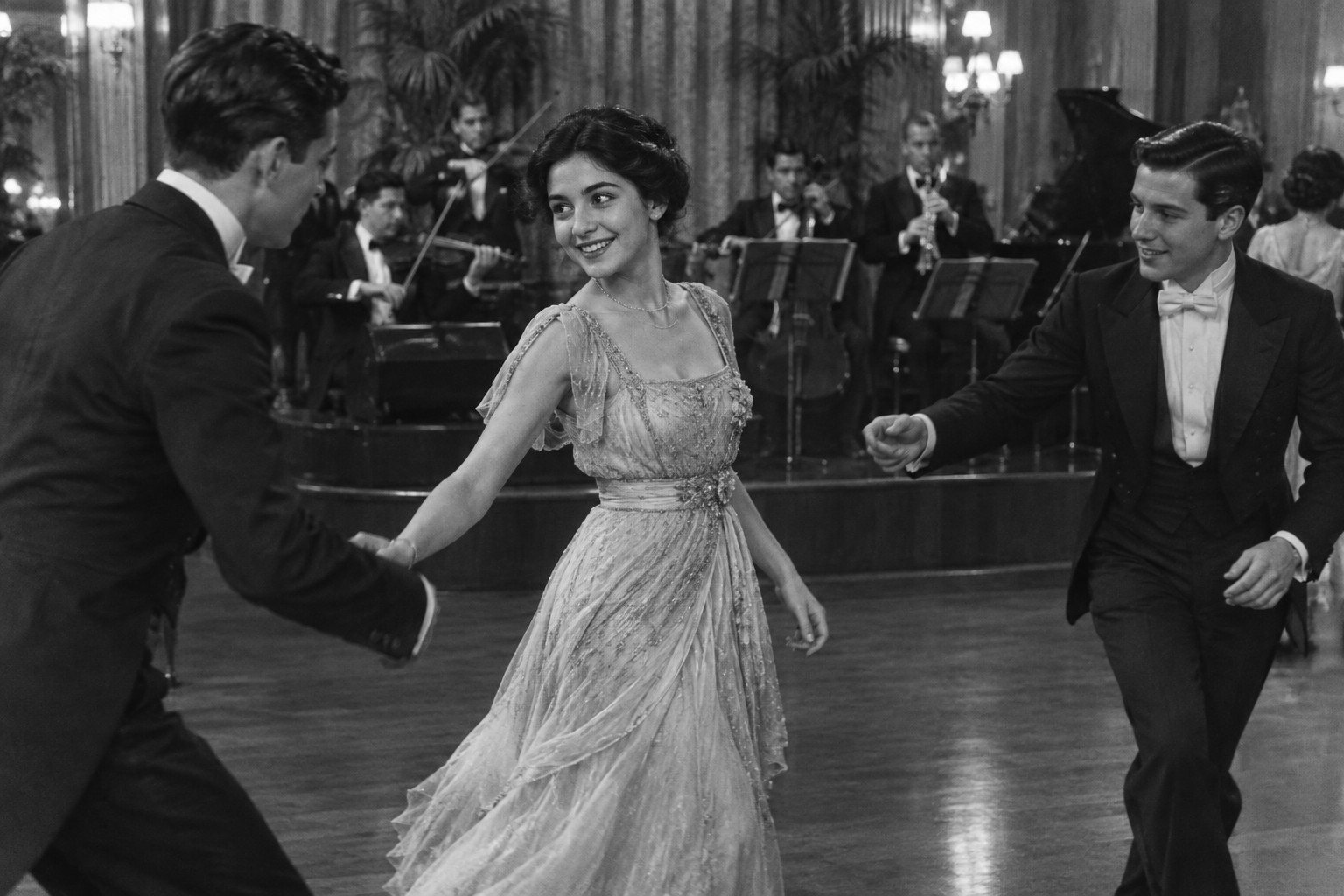
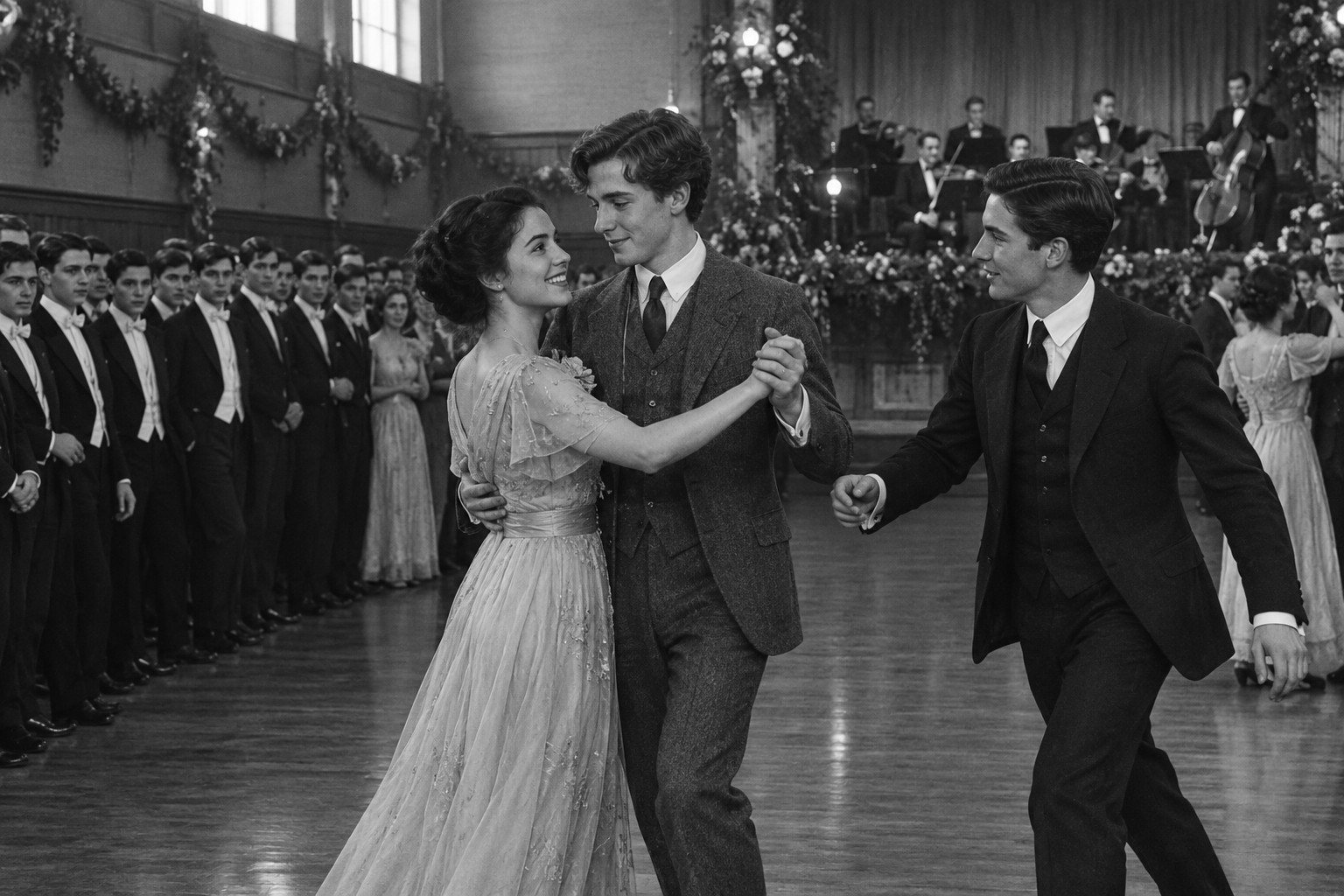
After the dinner the dance began... smoothly. Smoothly?—boys cut in on Isabelle every few feet and then squabbled in the corners with: “You might let me get more than an inch!” and “She didn’t like it either—she told me so next time I cut in.” It was true—she told every one so, and gave every hand a parting pressure that said: “You know that your dances are making my evening.”
But time passed, two hours of it, and the less subtle beaux had better learned to focus their pseudo-passionate glances elsewhere, for eleven o’clock found Isabelle and Amory sitting on the couch in the little den off the reading-room up-stairs. She was conscious that they were a handsome pair, and seemed to belong distinctively in this seclusion, while lesser lights fluttered and chattered down-stairs.
Boys who passed the door looked in enviously—girls who passed only laughed and frowned and grew wise within themselves.
They had now reached a very definite stage. They had traded accounts of their progress since they had met last, and she had listened to much she had heard before. He was a sophomore, was on the Princetonian board, hoped to be chairman in senior year. He learned that some of the boys she went with in Baltimore were “terrible speeds” and came to dances in states of artificial stimulation; most of them were twenty or so, and drove alluring red Stutzes. A good half seemed to have already flunked out of various schools and colleges, but some of them bore athletic names that made him look at her admiringly. As a matter of fact, Isabelle’s closer acquaintance with the universities was just commencing. She had bowing acquaintance with a lot of young men who thought she was a “pretty kid—worth keeping an eye on.” But Isabelle strung the names into a fabrication of gayety that would have dazzled a Viennese nobleman. Such is the power of young contralto voices on sink-down sofas.
He asked her if she thought he was conceited. She said there was a difference between conceit and self-confidence. She adored self-confidence in men.
“Is Froggy a good friend of yours?” she asked.
“Rather—why?”
“He’s a bum dancer.”
Amory laughed.
“He dances as if the girl were on his back instead of in his arms.”
She appreciated this.
“You’re awfully good at sizing people up.”
Amory denied this painfully. However, he sized up several people for her. Then they talked about hands.
“You’ve got awfully nice hands,” she said. “They look as if you played the piano. Do you?”
I have said they had reached a very definite stage—nay, more, a very critical stage. Amory had stayed over a day to see her, and his train left at twelve-eighteen that night. His trunk and suitcase awaited him at the station; his watch was beginning to hang heavy in his pocket.
“Isabelle,” he said suddenly, “I want to tell you something.” They had been talking lightly about “that funny look in her eyes,” and Isabelle knew from the change in his manner what was coming—indeed, she had been wondering how soon it would come. Amory reached above their heads and turned out the electric light, so that they were in the dark, except for the red glow that fell through the door from the reading-room lamps. Then he began:
“I don’t know whether or not you know what you—what I’m going to say. Lordy, Isabelle—this sounds like a line, but it isn’t.”
“I know,” said Isabelle softly.
“Maybe we’ll never meet again like this—I have darned hard luck sometimes.” He was leaning away from her on the other arm of the lounge, but she could see his eyes plainly in the dark.
“You’ll meet me again—silly.” There was just the slightest emphasis on the last word—so that it became almost a term of endearment. He continued a bit huskily:
“I’ve fallen for a lot of people—girls—and I guess you have, too—boys, I mean, but, honestly, you—” he broke off suddenly and leaned forward, chin on his hands: “Oh, what’s the use—you’ll go your way and I suppose I’ll go mine.”
Silence for a moment. Isabelle was quite stirred; she wound her handkerchief into a tight ball, and by the faint light that streamed over her, dropped it deliberately on the floor. Their hands touched for an instant, but neither spoke. Silences were becoming more frequent and more delicious. Outside another stray couple had come up and were experimenting on the piano in the next room. After the usual preliminary of “chopsticks,” one of them started “Babes in the Woods” and a light tenor carried the words into the den:
“Give me your hand I’ll understand We’re off to slumberland.”
Isabelle hummed it softly and trembled as she felt Amory’s hand close over hers.
“Isabelle,” he whispered. “You know I’m mad about you. You do give a darn about me.”
“Yes.”
“How much do you care—do you like any one better?”
“No.” He could scarcely hear her, although he bent so near that he felt her breath against his cheek.
“Isabelle, I’m going back to college for six long months, and why shouldn’t we—if I could only just have one thing to remember you by—”
“Close the door....” Her voice had just stirred so that he half wondered whether she had spoken at all. As he swung the door softly shut, the music seemed quivering just outside.
“Moonlight is bright, Kiss me good night.”
What a wonderful song, she thought—everything was wonderful to-night, most of all this romantic scene in the den, with their hands clinging and the inevitable looming charmingly close. The future vista of her life seemed an unending succession of scenes like this: under moonlight and pale starlight, and in the backs of warm limousines and in low, cosy roadsters stopped under sheltering trees—only the boy might change, and this one was so nice. He took her hand softly. With a sudden movement he turned it and, holding it to his lips, kissed the palm.
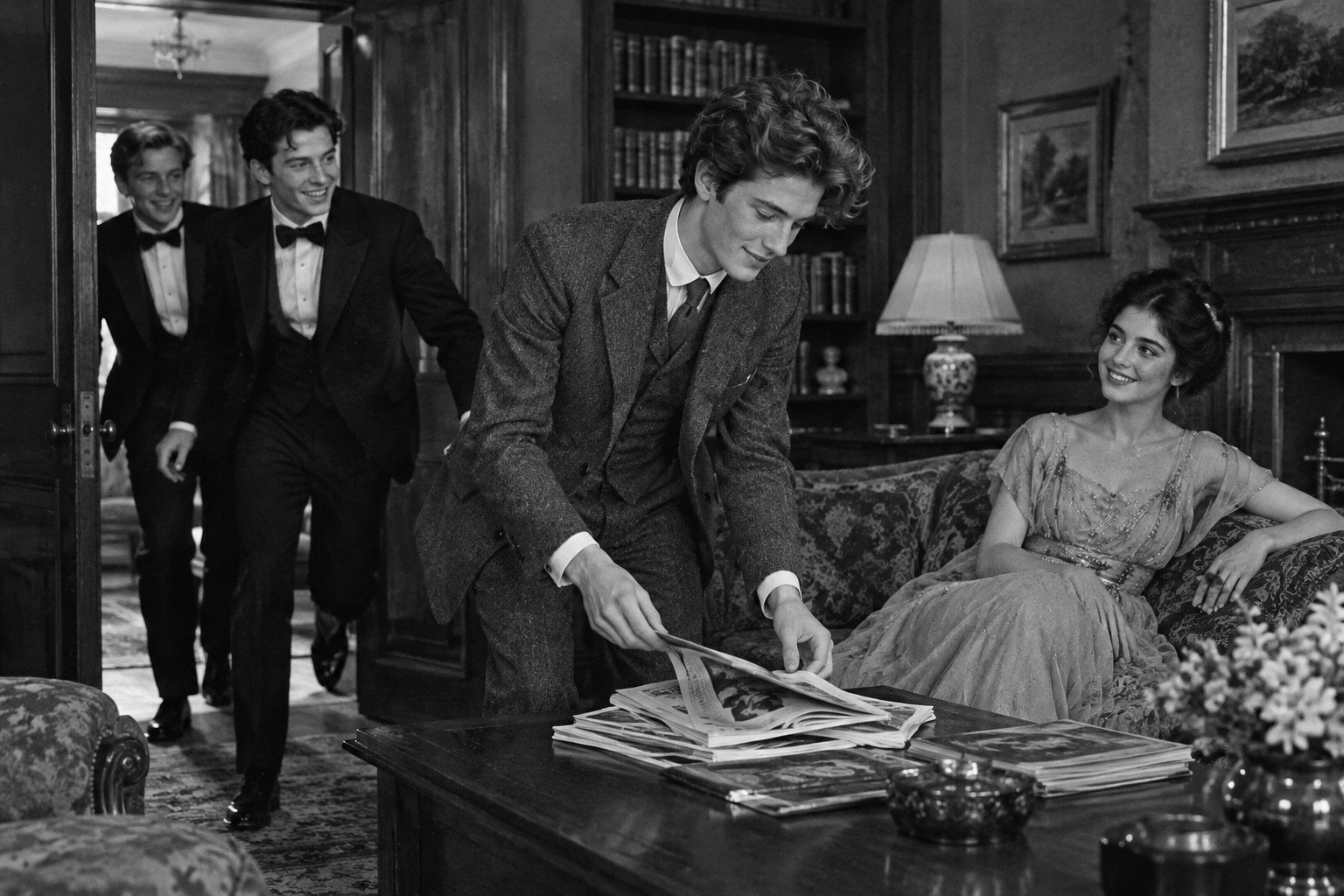
“Isabelle!” His whisper blended in the music, and they seemed to float nearer together. Her breath came faster. “Can’t I kiss you, Isabelle—Isabelle?” Lips half parted, she turned her head to him in the dark. Suddenly the ring of voices, the sound of running footsteps surged toward them. Quick as a flash Amory reached up and turned on the light, and when the door opened and three boys, the wrathy and dance-craving Froggy among them, rushed in, he was turning over the magazines on the table, while she sat without moving, serene and unembarrassed, and even greeted them with a welcoming smile. But her heart was beating wildly, and she felt somehow as if she had been deprived.
It was evidently over. There was a clamor for a dance, there was a glance that passed between them—on his side despair, on hers regret, and then the evening went on, with the reassured beaux and the eternal cutting in.
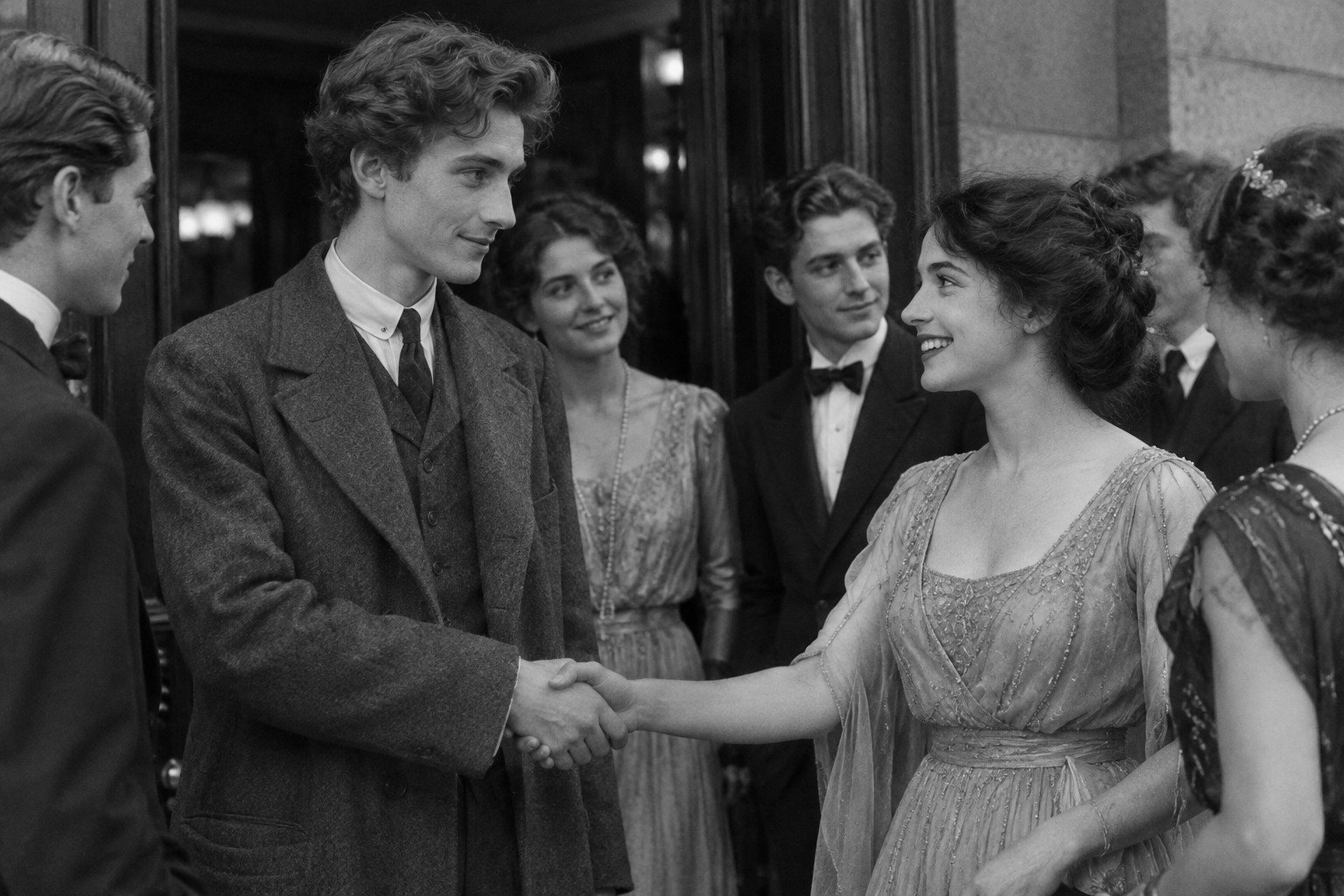
At quarter to twelve Amory shook hands with her gravely, in the midst of a small crowd assembled to wish him good-speed. For an instant he lost his poise, and she felt a bit rattled when a satirical voice from a concealed wit cried:
“Take her outside, Amory!” As he took her hand he pressed it a little, and she returned the pressure as she had done to twenty hands that evening—that was all.
At two o’clock back at the Weatherbys’ Sally asked her if she and Amory had had a “time” in the den. Isabelle turned to her quietly. In her eyes was the light of the idealist, the inviolate dreamer of Joan-like dreams.
“No,” she answered. “I don’t do that sort of thing any more; he asked me to, but I said no.”
As she crept in bed she wondered what he’d say in his special delivery to-morrow. He had such a good-looking mouth—would she ever—?
“Fourteen angels were watching o’er them,” sang Sally sleepily from the next room.
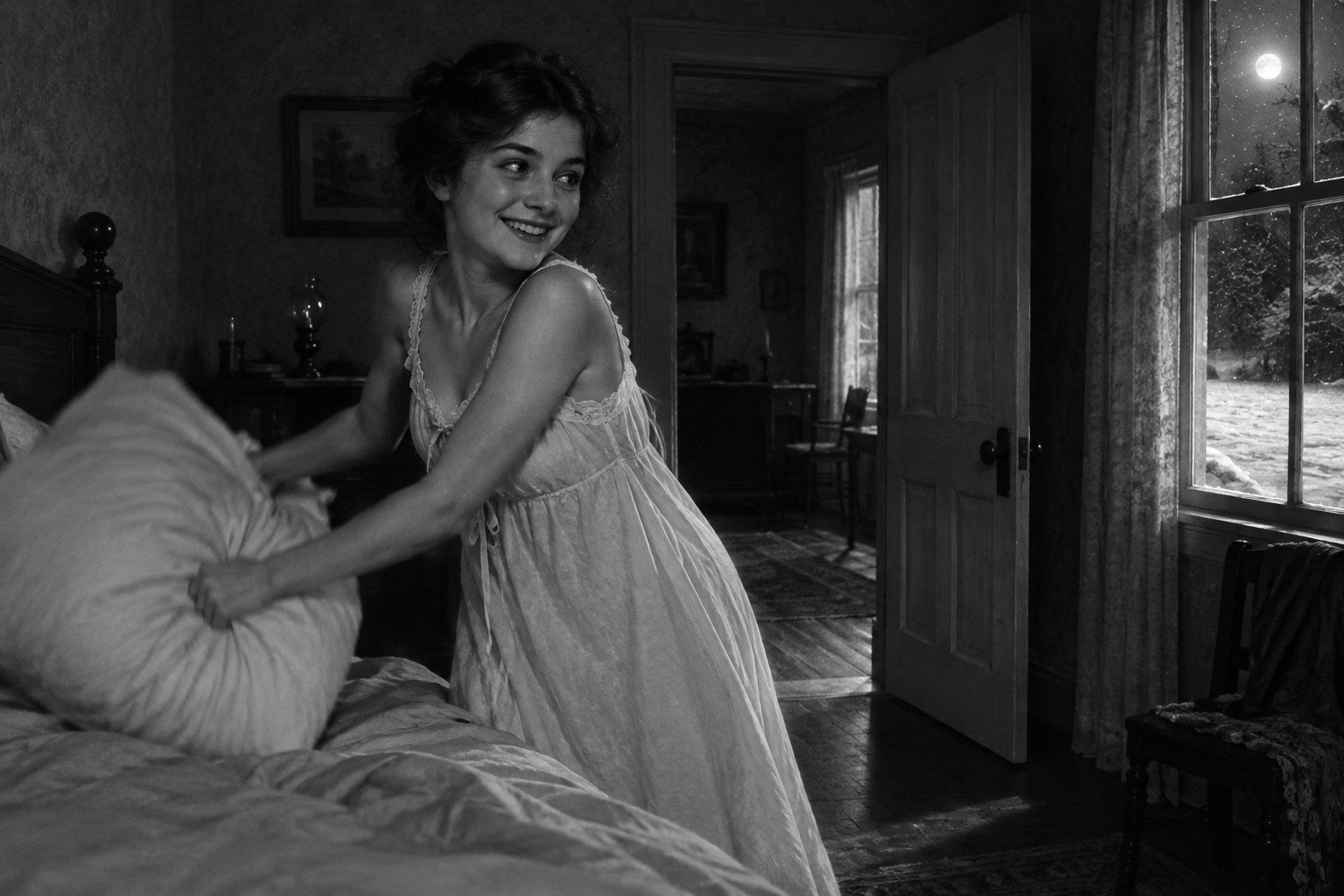
“Damn!” muttered Isabelle, punching the pillow into a luxurious lump and exploring the cold sheets cautiously. “Damn!”
CARNIVAL
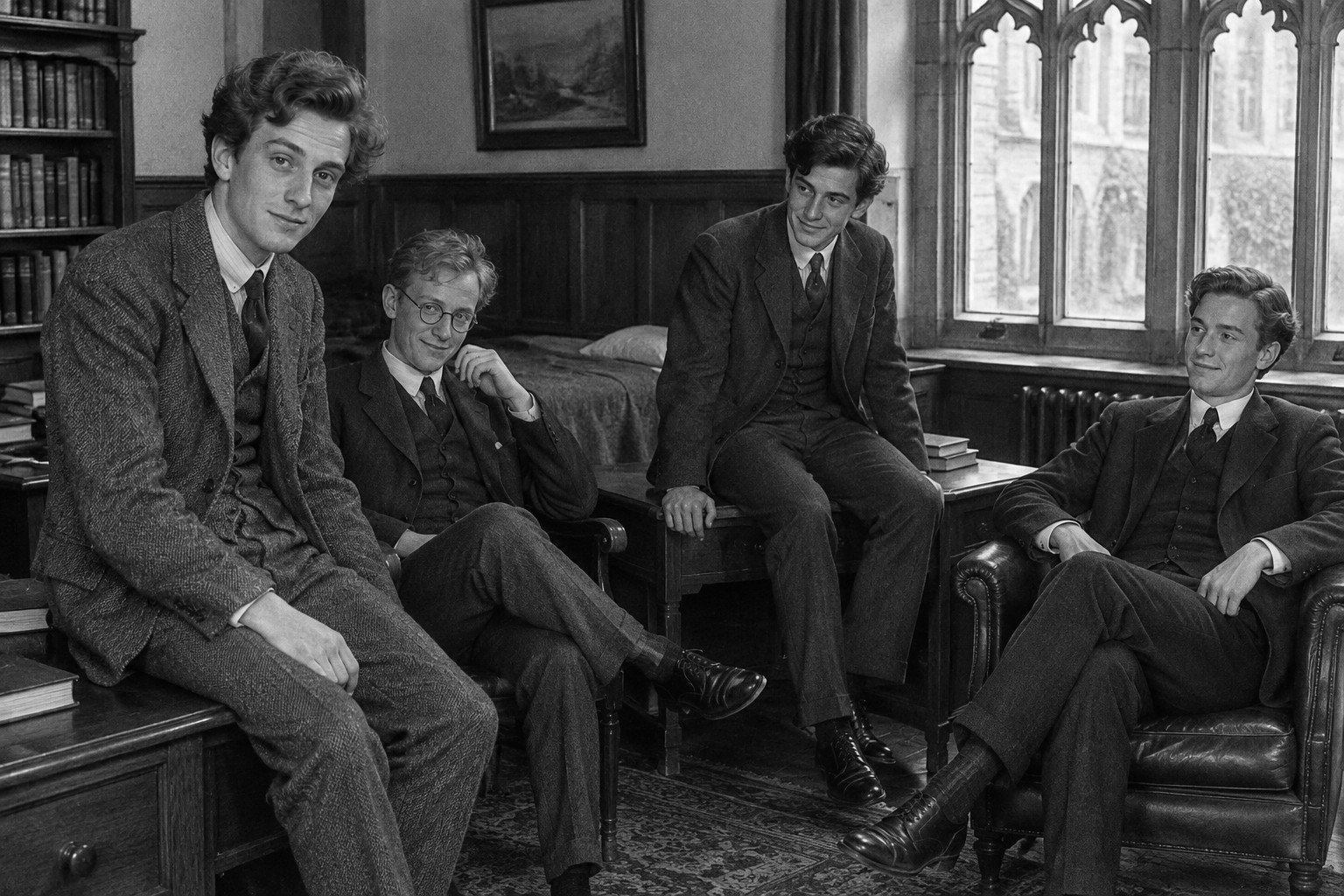
Amory, by way of the Princetonian, had arrived. The minor snobs, finely balanced thermometers of success, warmed to him as the club elections grew nigh, and he and Tom were visited by groups of upper classmen who arrived awkwardly, balanced on the edge of the furniture and talked of all subjects except the one of absorbing interest. Amory was amused at the intent eyes upon him, and, in case the visitors represented some club in which he was not interested, took great pleasure in shocking them with unorthodox remarks.
“Oh, let me see—” he said one night to a flabbergasted delegation, “what club do you represent?”
With visitors from Ivy and Cottage and Tiger Inn he played the “nice, unspoilt, ingenuous boy” very much at ease and quite unaware of the object of the call.
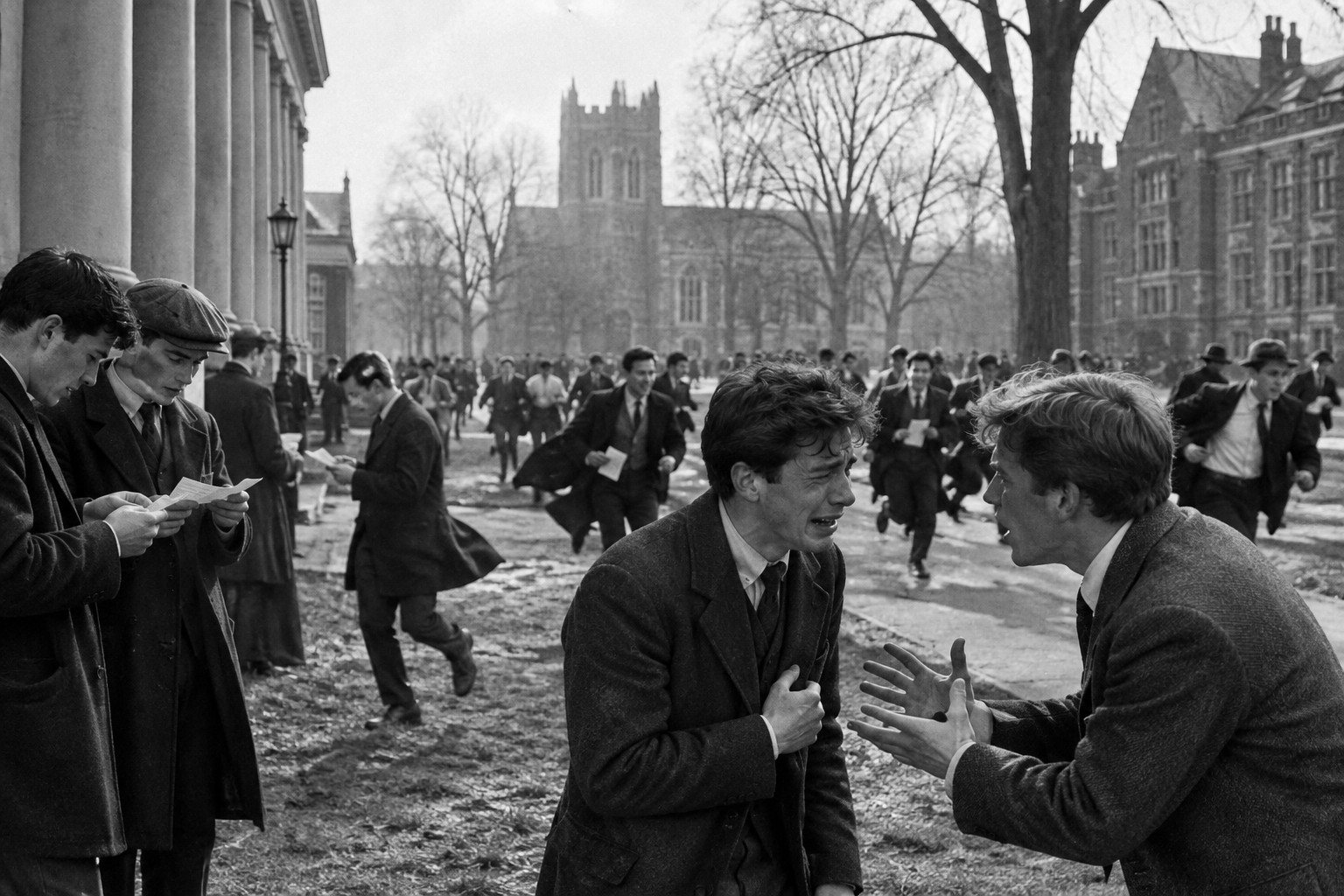
When the fatal morning arrived, early in March, and the campus became a document in hysteria, he slid smoothly into Cottage with Alec Connage and watched his suddenly neurotic class with much wonder.
There were fickle groups that jumped from club to club; there were friends of two or three days who announced tearfully and wildly that they must join the same club, nothing should separate them; there were snarling disclosures of long-hidden grudges as the Suddenly Prominent remembered snubs of freshman year. Unknown men were elevated into importance when they received certain coveted bids; others who were considered “all set” found that they had made unexpected enemies, felt themselves stranded and deserted, talked wildly of leaving college.
In his own crowd Amory saw men kept out for wearing green hats, for being “a damn tailor’s dummy,” for having “too much pull in heaven,” for getting drunk one night “not like a gentleman, by God,” or for unfathomable secret reasons known to no one but the wielders of the black balls.
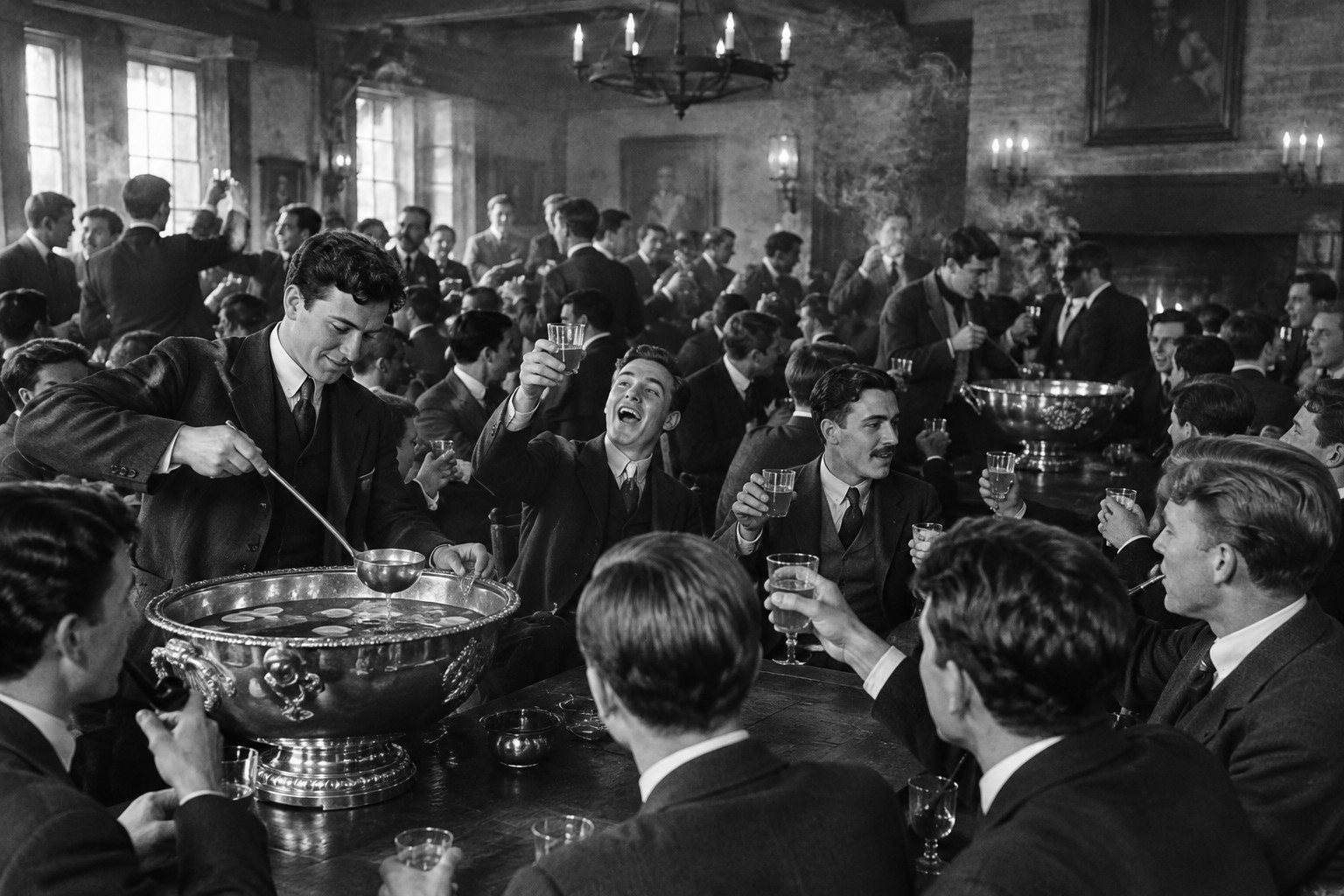
This orgy of sociability culminated in a gigantic party at the Nassau Inn, where punch was dispensed from immense bowls, and the whole down-stairs became a delirious, circulating, shouting pattern of faces and voices.
“Hi, Dibby—’gratulations!”
“Goo’ boy, Tom, you got a good bunch in Cap.”
“Say, Kerry—”
“Oh, Kerry—I hear you went Tiger with all the weight-lifters!” “Well, I didn’t go Cottage—the parlor-snakes’ delight.”
“They say Overton fainted when he got his Ivy bid—Did he sign up the first day?—oh, no. Tore over to Murray-Dodge on a bicycle—afraid it was a mistake.”
“How’d you get into Cap—you old roue?”
“’Gratulations!”
“’Gratulations yourself. Hear you got a good crowd.”
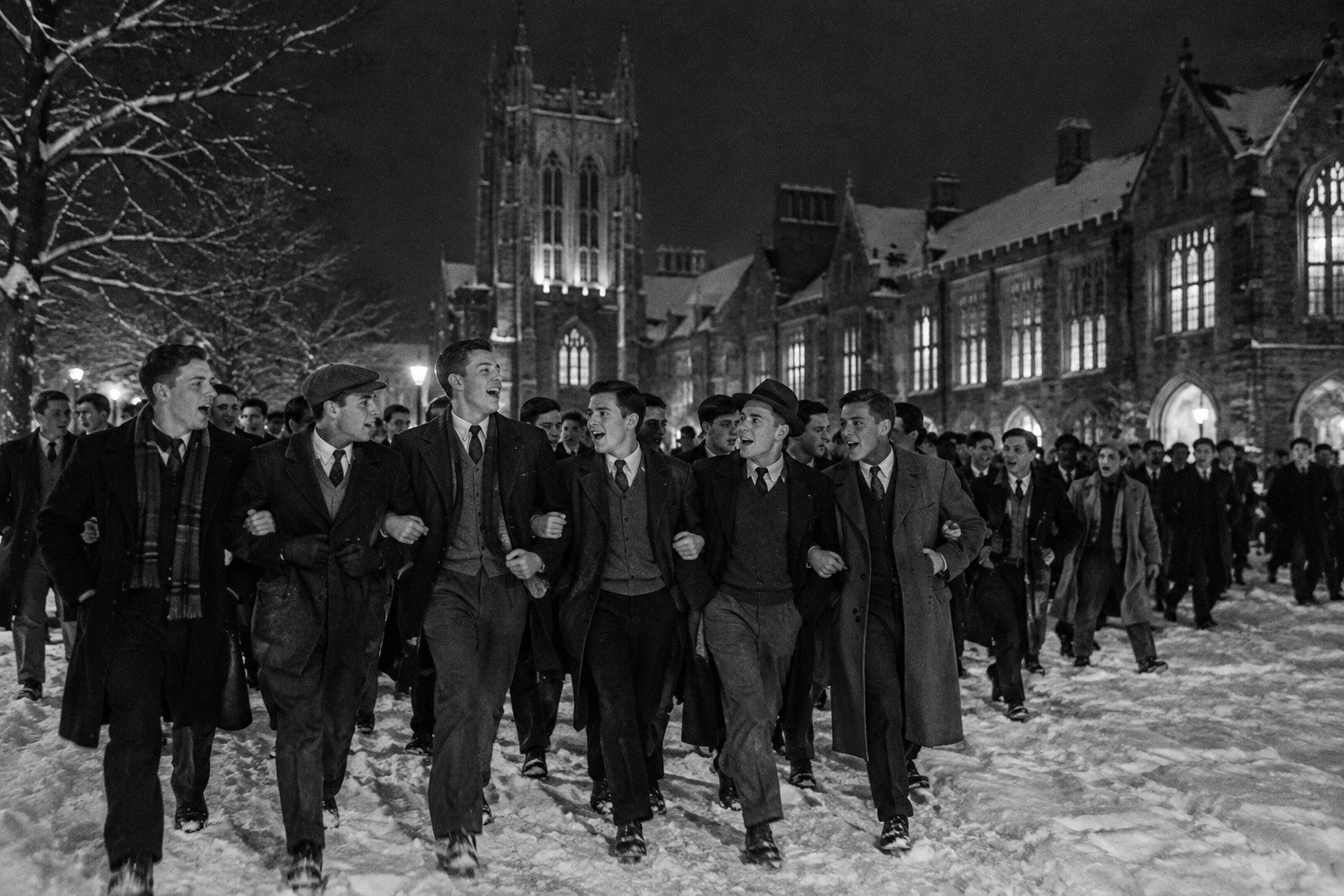
When the bar closed, the party broke up into groups and streamed, singing, over the snow-clad campus, in a weird delusion that snobbishness and strain were over at last, and that they could do what they pleased for the next two years.
Long afterward Amory thought of sophomore spring as the happiest time of his life. His ideas were in tune with life as he found it; he wanted no more than to drift and dream and enjoy a dozen new-found friendships through the April afternoons.
Alec Connage came into his room one morning and woke him up into the sunshine and peculiar glory of Campbell Hall shining in the window.
“Wake up, Original Sin, and scrape yourself together. Be in front of Renwick’s in half an hour. Somebody’s got a car.” He took the bureau cover and carefully deposited it, with its load of small articles, upon the bed.
“Where’d you get the car?” demanded Amory cynically.
“Sacred trust, but don’t be a critical goopher or you can’t go!”
“I think I’ll sleep,” Amory said calmly, resettling himself and reaching beside the bed for a cigarette.
“Sleep!”
“Why not? I’ve got a class at eleven-thirty.”
“You damned gloom! Of course, if you don’t want to go to the coast—”
With a bound Amory was out of bed, scattering the bureau cover’s burden on the floor. The coast... he hadn’t seen it for years, since he and his mother were on their pilgrimage.
“Who’s going?” he demanded as he wriggled into his B. V. D.’s.
“Oh, Dick Humbird and Kerry Holiday and Jesse Ferrenby and—oh about five or six. Speed it up, kid!”
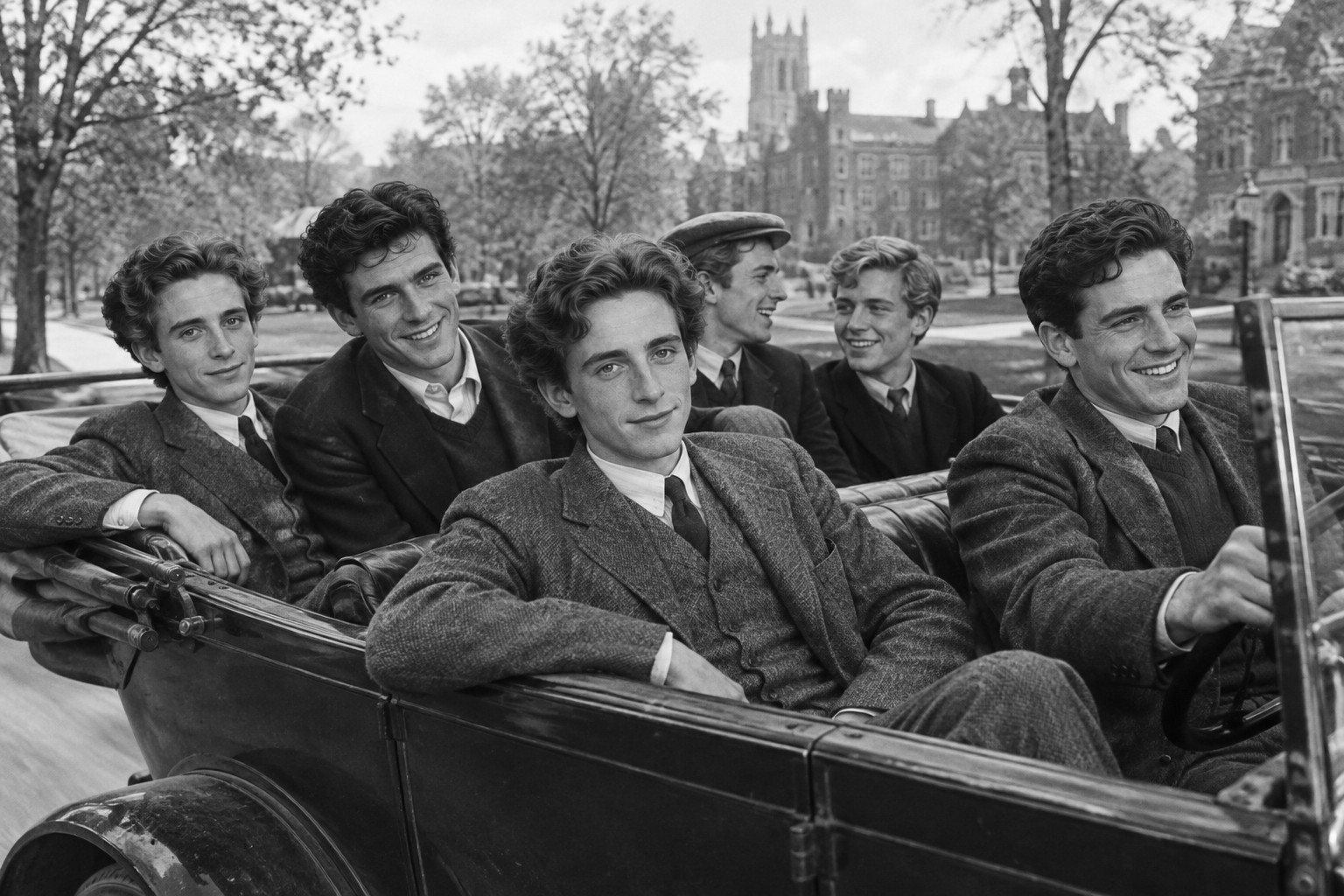
In ten minutes Amory was devouring cornflakes in Renwick’s, and at nine-thirty they bowled happily out of town, headed for the sands of Deal Beach.
“You see,” said Kerry, “the car belongs down there. In fact, it was stolen from Asbury Park by persons unknown, who deserted it in Princeton and left for the West. Heartless Humbird here got permission from the city council to deliver it.”
“Anybody got any money?” suggested Ferrenby, turning around from the front seat.
There was an emphatic negative chorus.
“That makes it interesting.”
“Money—what’s money? We can sell the car.”
“Charge him salvage or something.”
“How’re we going to get food?” asked Amory.
“Honestly,” answered Kerry, eying him reprovingly, “do you doubt Kerry’s ability for three short days? Some people have lived on nothing for years at a time. Read the Boy Scout Monthly.”
“Three days,” Amory mused, “and I’ve got classes.”
“One of the days is the Sabbath.”
“Just the same, I can only cut six more classes, with over a month and a half to go.”
“Throw him out!”
“It’s a long walk back.”
“Amory, you’re running it out, if I may coin a new phrase.”
“Hadn’t you better get some dope on yourself, Amory?”
Amory subsided resignedly and drooped into a contemplation of the scenery. Swinburne seemed to fit in somehow.
“Oh, winter’s rains and ruins are over, And all the seasons of snows and sins; The days dividing lover and lover, The light that loses, the night that wins; And time remembered is grief forgotten, And frosts are slain and flowers begotten, And in green underwood and cover, Blossom by blossom the spring begins. “The full streams feed on flower of—”
“What’s the matter, Amory? Amory’s thinking about poetry, about the pretty birds and flowers. I can see it in his eye.”
“No, I’m not,” he lied. “I’m thinking about the Princetonian. I ought to make up to-night; but I can telephone back, I suppose.”
“Oh,” said Kerry respectfully, “these important men—”
Amory flushed and it seemed to him that Ferrenby, a defeated competitor, winced a little. Of course, Kerry was only kidding, but he really mustn’t mention the Princetonian.
It was a halcyon day, and as they neared the shore and the salt breezes scurried by, he began to picture the ocean and long, level stretches of sand and red roofs over blue sea. Then they hurried through the little town and it all flashed upon his consciousness to a mighty paean of emotion....
“Oh, good Lord! Look at it!” he cried.
“What?”
“Let me out, quick—I haven’t seen it for eight years! Oh, gentlefolk, stop the car!”
“What an odd child!” remarked Alec.
“I do believe he’s a bit eccentric.”
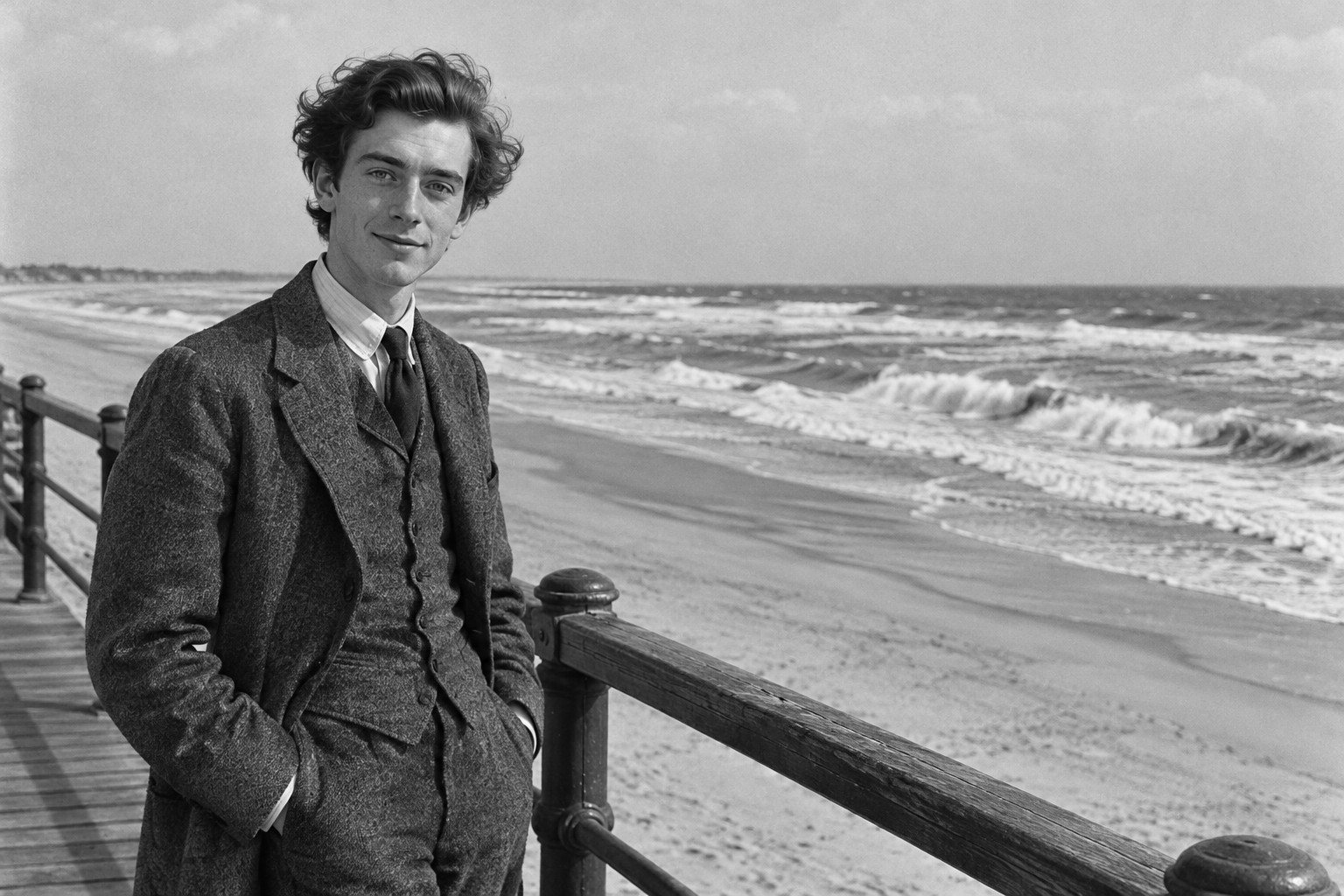
The car was obligingly drawn up at a curb, and Amory ran for the boardwalk. First, he realized that the sea was blue and that there was an enormous quantity of it, and that it roared and roared—really all the banalities about the ocean that one could realize, but if any one had told him then that these things were banalities, he would have gaped in wonder.
“Now we’ll get lunch,” ordered Kerry, wandering up with the crowd. “Come on, Amory, tear yourself away and get practical.”
“We’ll try the best hotel first,” he went on, “and thence and so forth.”
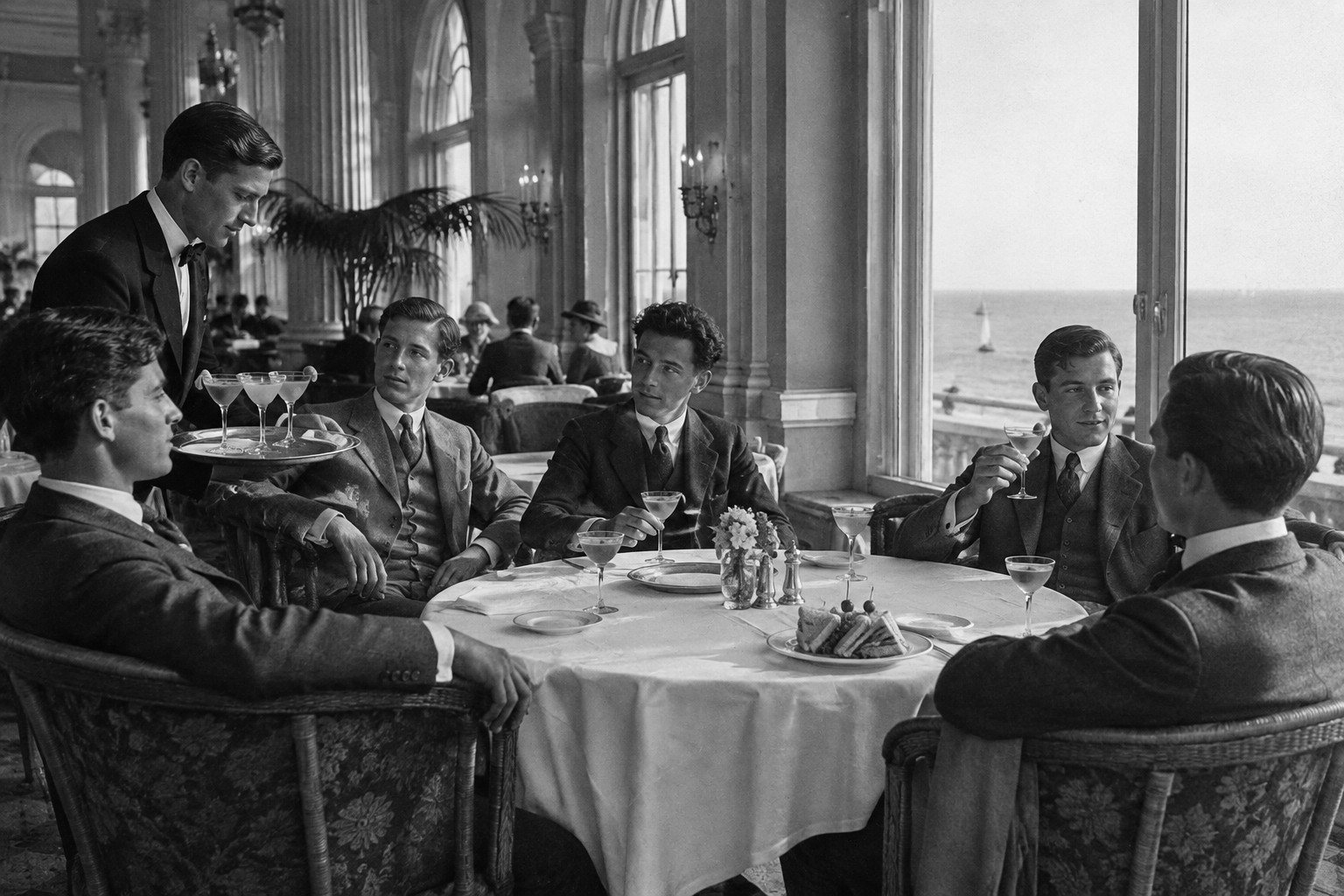
They strolled along the boardwalk to the most imposing hostelry in sight, and, entering the dining-room, scattered about a table.
“Eight Bronxes,” commanded Alec, “and a club sandwich and Juliennes. The food for one. Hand the rest around.”
Amory ate little, having seized a chair where he could watch the sea and feel the rock of it. When luncheon was over they sat and smoked quietly.
“What’s the bill?”
Some one scanned it.
“Eight twenty-five.”
“Rotten overcharge. We’ll give them two dollars and one for the waiter. Kerry, collect the small change.”
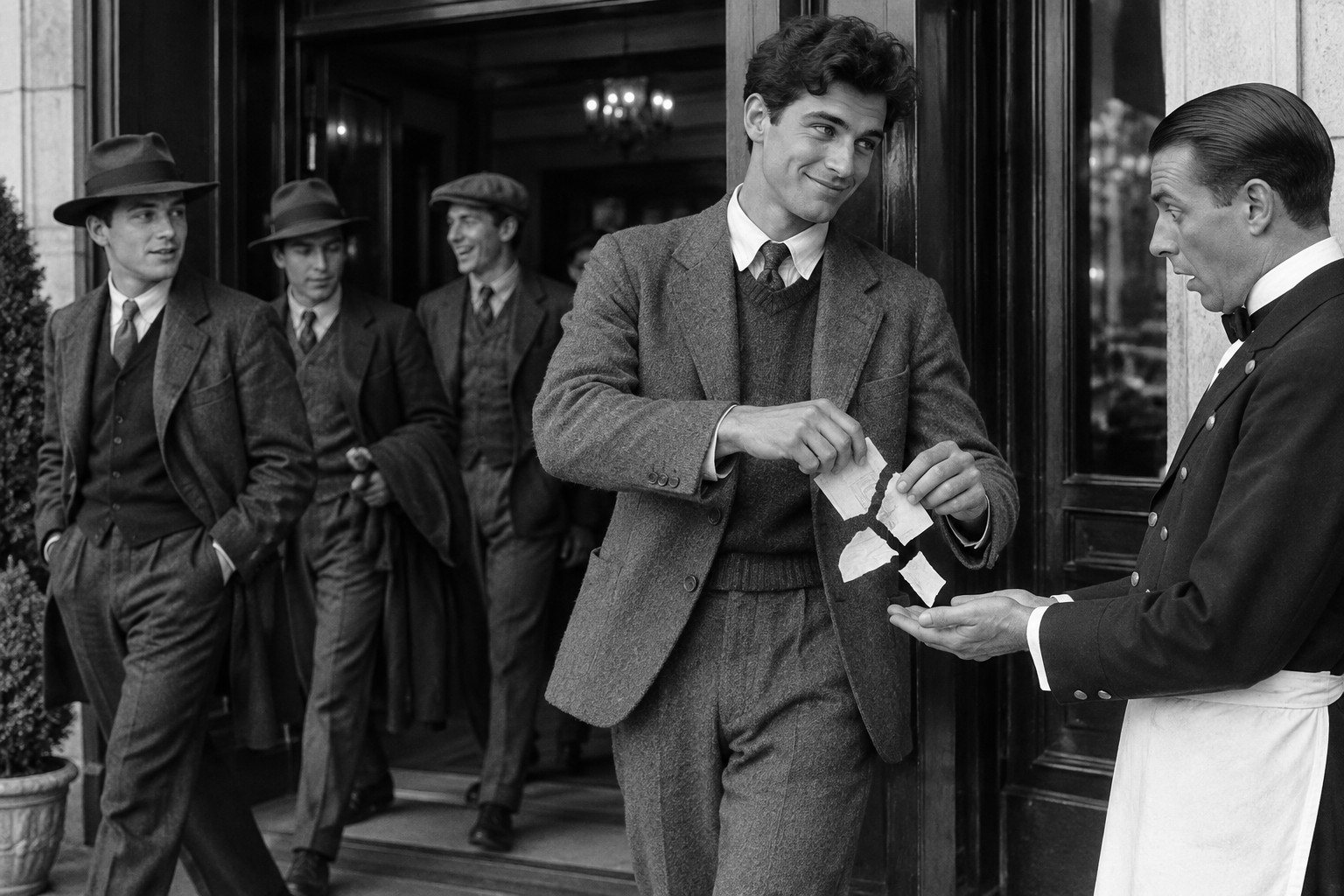
The waiter approached, and Kerry gravely handed him a dollar, tossed two dollars on the check, and turned away. They sauntered leisurely toward the door, pursued in a moment by the suspicious Ganymede.
“Some mistake, sir.”
Kerry took the bill and examined it critically.
“No mistake!” he said, shaking his head gravely, and, tearing it into four pieces, he handed the scraps to the waiter, who was so dumfounded that he stood motionless and expressionless while they walked out.
“Won’t he send after us?”
“No,” said Kerry; “for a minute he’ll think we’re the proprietor’s sons or something; then he’ll look at the check again and call the manager, and in the meantime—”
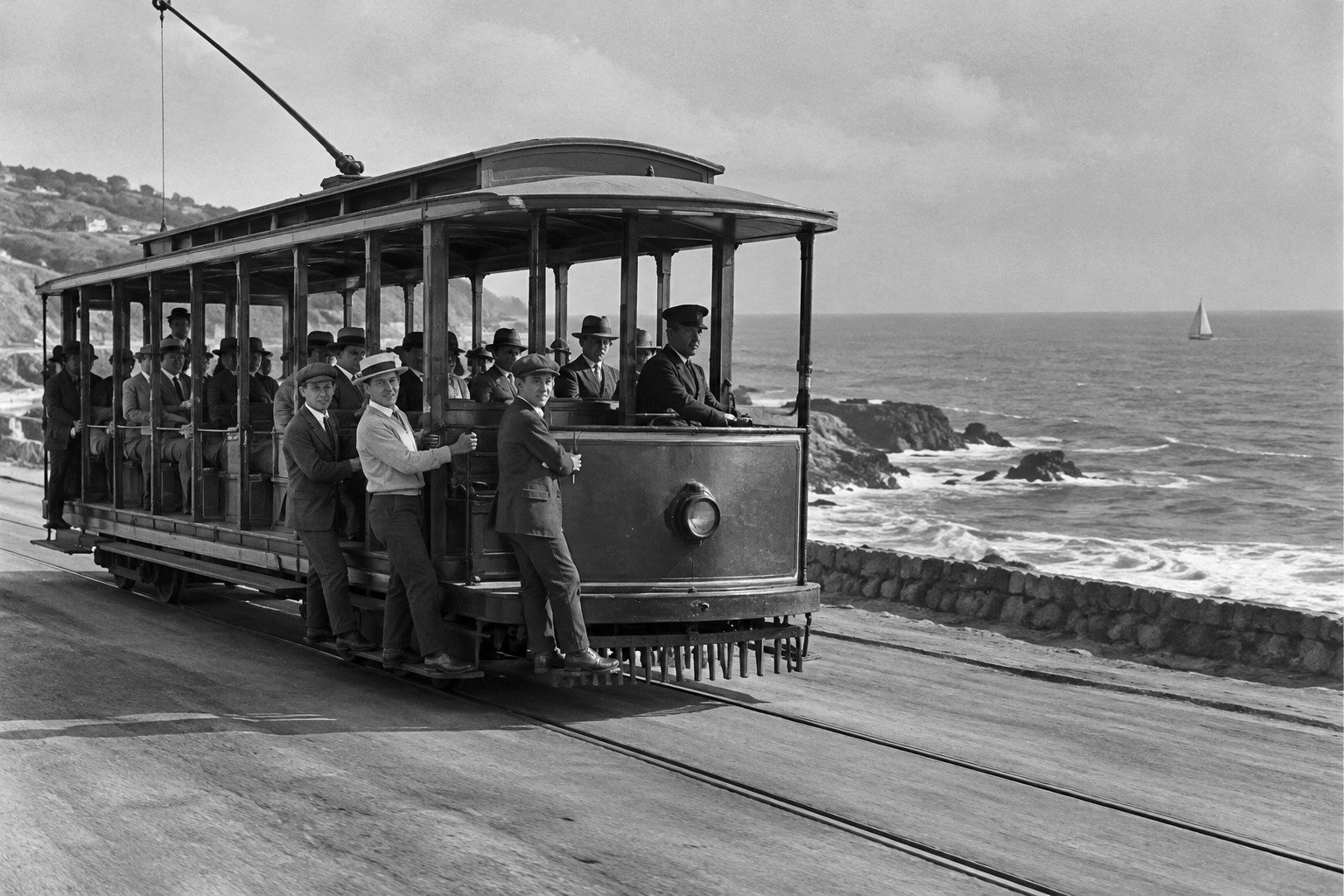
They left the car at Asbury and street-car’d to Allenhurst, where they investigated the crowded pavilions for beauty. At four there were refreshments in a lunch-room, and this time they paid an even smaller per cent on the total cost; something about the appearance and savoir-faire of the crowd made the thing go, and they were not pursued.
“You see, Amory, we’re Marxian Socialists,” explained Kerry. “We don’t believe in property and we’re putting it to the great test.”
“Night will descend,” Amory suggested.
“Watch, and put your trust in Holiday.”
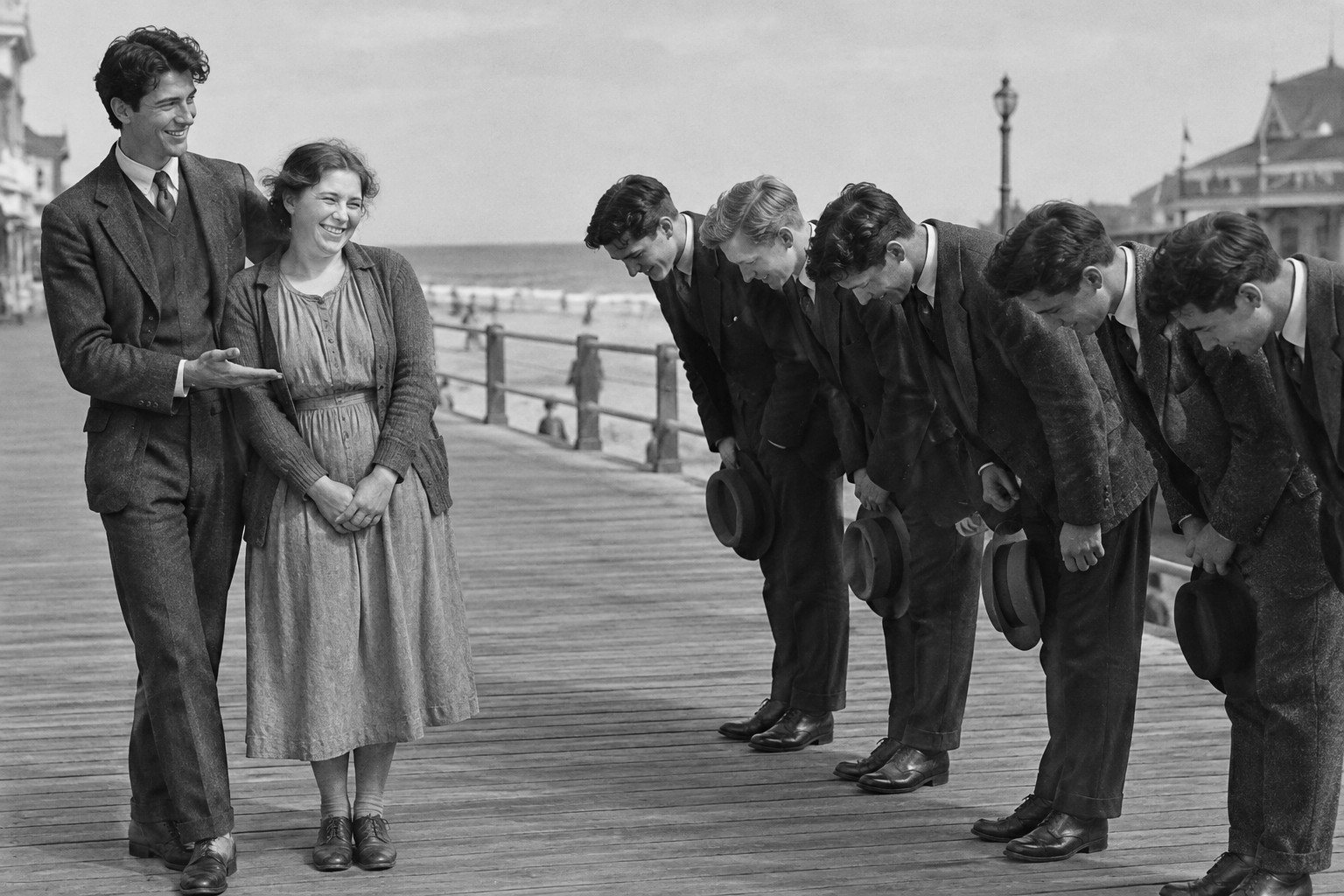
They became jovial about five-thirty and, linking arms, strolled up and down the boardwalk in a row, chanting a monotonous ditty about the sad sea waves. Then Kerry saw a face in the crowd that attracted him and, rushing off, reappeared in a moment with one of the homeliest girls Amory had ever set eyes on. Her pale mouth extended from ear to ear, her teeth projected in a solid wedge, and she had little, squinty eyes that peeped ingratiatingly over the side sweep of her nose. Kerry presented them formally.
“Name of Kaluka, Hawaiian queen! Let me present Messrs. Connage, Sloane, Humbird, Ferrenby, and Blaine.”
The girl bobbed courtesies all around. Poor creature; Amory supposed she had never before been noticed in her life—possibly she was half-witted. While she accompanied them (Kerry had invited her to supper) she said nothing which could discountenance such a belief.
“She prefers her native dishes,” said Alec gravely to the waiter, “but any coarse food will do.”
All through supper he addressed her in the most respectful language, while Kerry made idiotic love to her on the other side, and she giggled and grinned. Amory was content to sit and watch the by-play, thinking what a light touch Kerry had, and how he could transform the barest incident into a thing of curve and contour. They all seemed to have the spirit of it more or less, and it was a relaxation to be with them. Amory usually liked men individually, yet feared them in crowds unless the crowd was around him. He wondered how much each one contributed to the party, for there was somewhat of a spiritual tax levied. Alec and Kerry were the life of it, but not quite the centre. Somehow the quiet Humbird, and Sloane, with his impatient superciliousness, were the centre.
Dick Humbird had, ever since freshman year, seemed to Amory a perfect type of aristocrat. He was slender but well-built—black curly hair, straight features, and rather a dark skin. Everything he said sounded intangibly appropriate. He possessed infinite courage, an averagely good mind, and a sense of honor with a clear charm and noblesse oblige that varied it from righteousness. He could dissipate without going to pieces, and even his most bohemian adventures never seemed “running it out.” People dressed like him, tried to talk as he did.... Amory decided that he probably held the world back, but he wouldn’t have changed him. ...
He differed from the healthy type that was essentially middle class—he never seemed to perspire. Some people couldn’t be familiar with a chauffeur without having it returned; Humbird could have lunched at Sherry’s with a colored man, yet people would have somehow known that it was all right. He was not a snob, though he knew only half his class. His friends ranged from the highest to the lowest, but it was impossible to “cultivate” him. Servants worshipped him, and treated him like a god. He seemed the eternal example of what the upper class tries to be.
“He’s like those pictures in the Illustrated London News of the English officers who have been killed,” Amory had said to Alec. “Well,” Alec had answered, “if you want to know the shocking truth, his father was a grocery clerk who made a fortune in Tacoma real estate and came to New York ten years ago.”
Amory had felt a curious sinking sensation.
This present type of party was made possible by the surging together of the class after club elections—as if to make a last desperate attempt to know itself, to keep together, to fight off the tightening spirit of the clubs. It was a let-down from the conventional heights they had all walked so rigidly.
After supper they saw Kaluka to the boardwalk, and then strolled back along the beach to Asbury. The evening sea was a new sensation, for all its color and mellow age was gone, and it seemed the bleak waste that made the Norse sagas sad; Amory thought of Kipling’s
“Beaches of Lukanon before the sealers came.”
It was still a music, though, infinitely sorrowful.
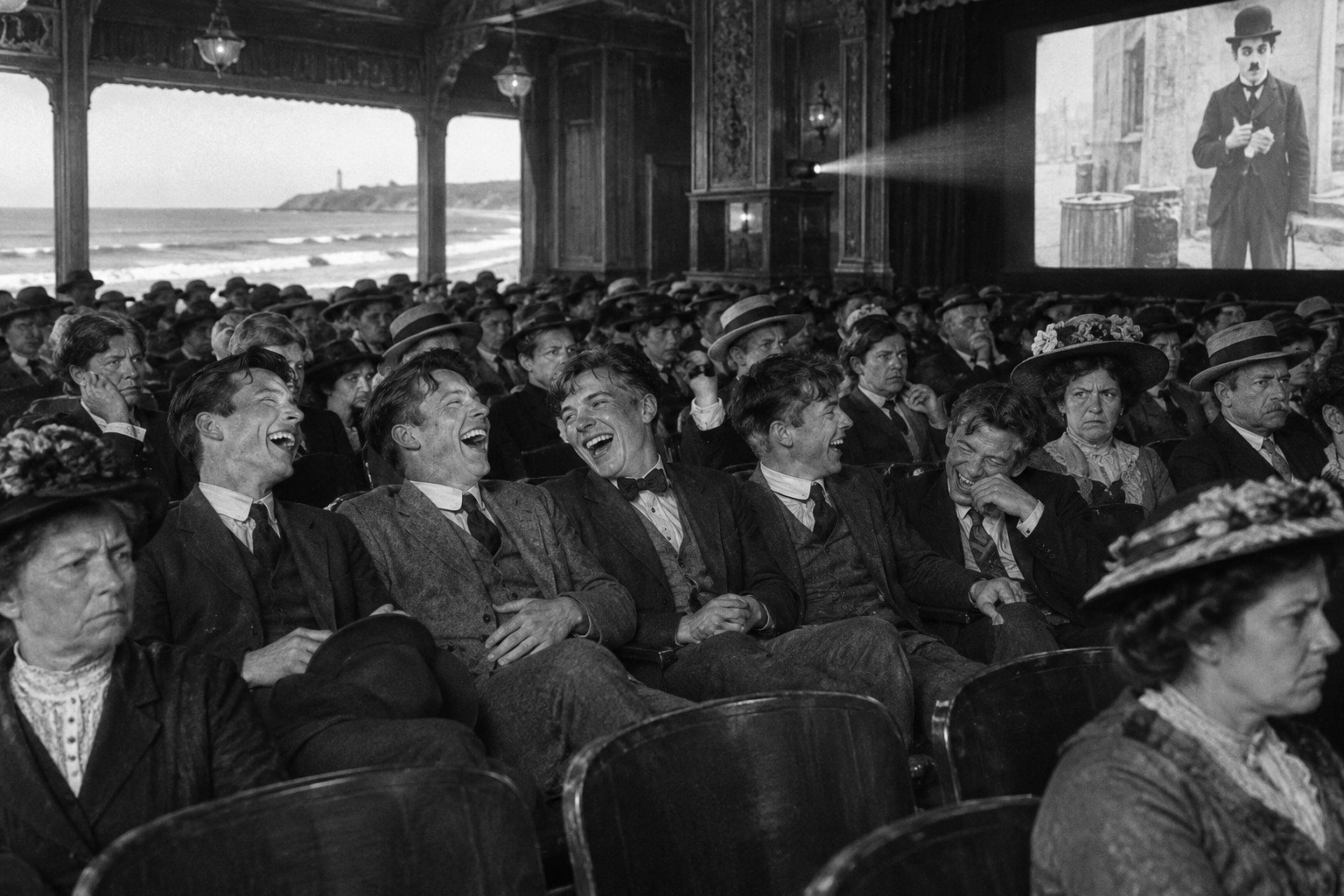
Ten o’clock found them penniless. They had suppered greatly on their last eleven cents and, singing, strolled up through the casinos and lighted arches on the boardwalk, stopping to listen approvingly to all band concerts. In one place Kerry took up a collection for the French War Orphans which netted a dollar and twenty cents, and with this they bought some brandy in case they caught cold in the night. They finished the day in a moving-picture show and went into solemn systematic roars of laughter at an ancient comedy, to the startled annoyance of the rest of the audience. Their entrance was distinctly strategic, for each man as he entered pointed reproachfully at the one just behind him. Sloane, bringing up the rear, disclaimed all knowledge and responsibility as soon as the others were scattered inside; then as the irate ticket-taker rushed in he followed nonchalantly.
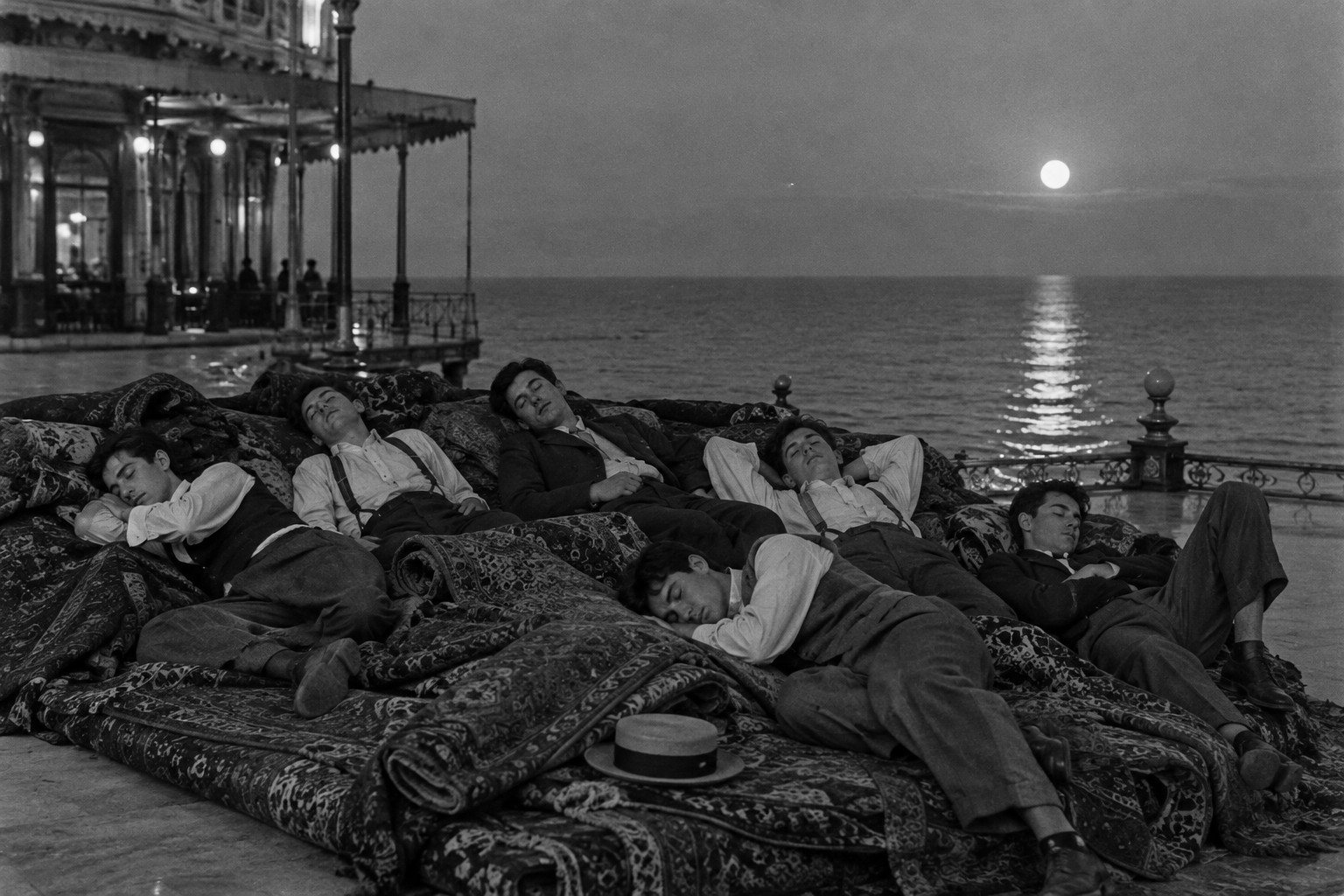
They reassembled later by the Casino and made arrangements for the night. Kerry wormed permission from the watchman to sleep on the platform and, having collected a huge pile of rugs from the booths to serve as mattresses and blankets, they talked until midnight, and then fell into a dreamless sleep, though Amory tried hard to stay awake and watch that marvellous moon settle on the sea.
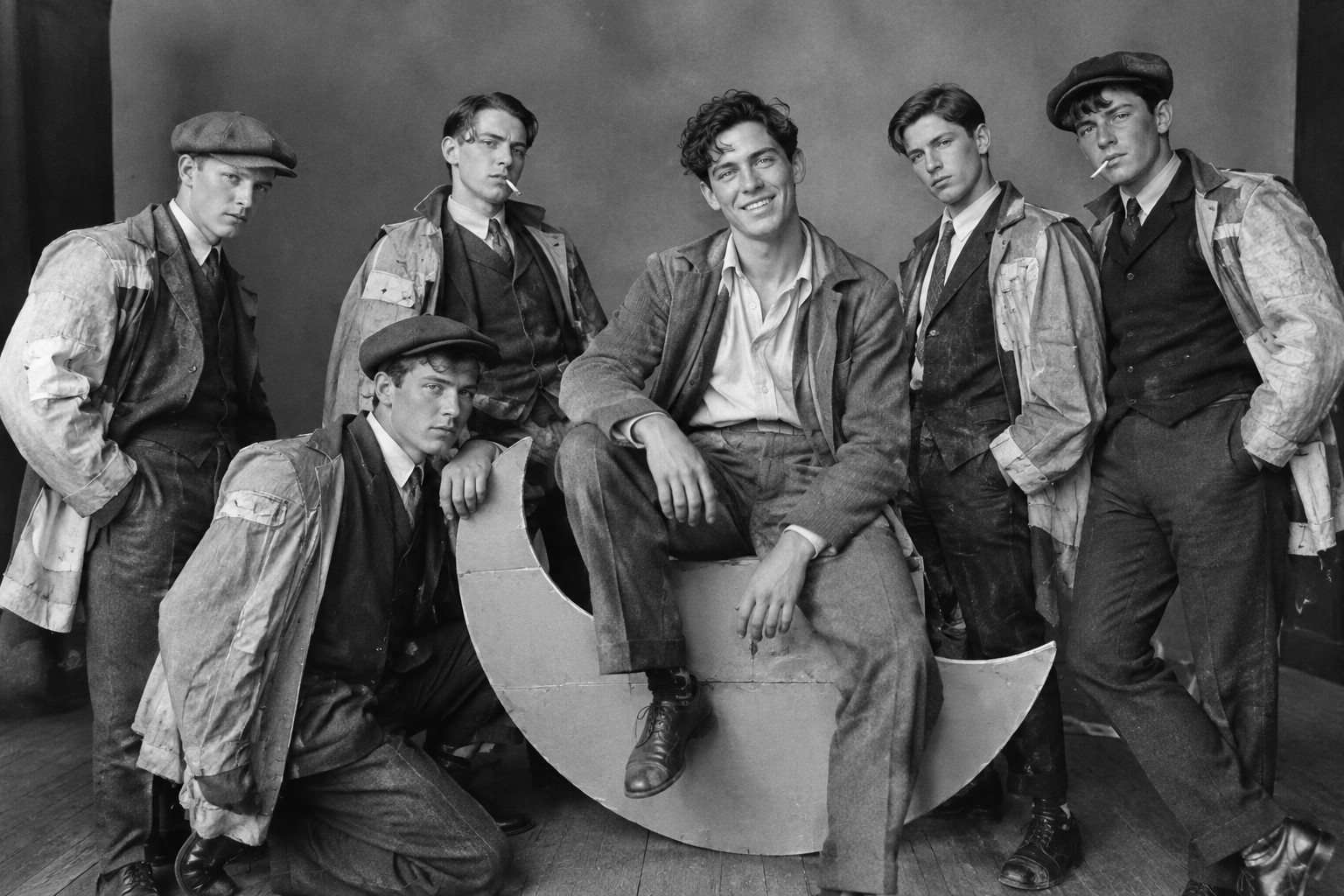
So they progressed for two happy days, up and down the shore by street-car or machine, or by shoe-leather on the crowded boardwalk; sometimes eating with the wealthy, more frequently dining frugally at the expense of an unsuspecting restaurateur. They had their photos taken, eight poses, in a quick-development store. Kerry insisted on grouping them as a “varsity” football team, and then as a tough gang from the East Side, with their coats inside out, and himself sitting in the middle on a cardboard moon. The photographer probably has them yet—at least, they never called for them. The weather was perfect, and again they slept outside, and again Amory fell unwillingly asleep.
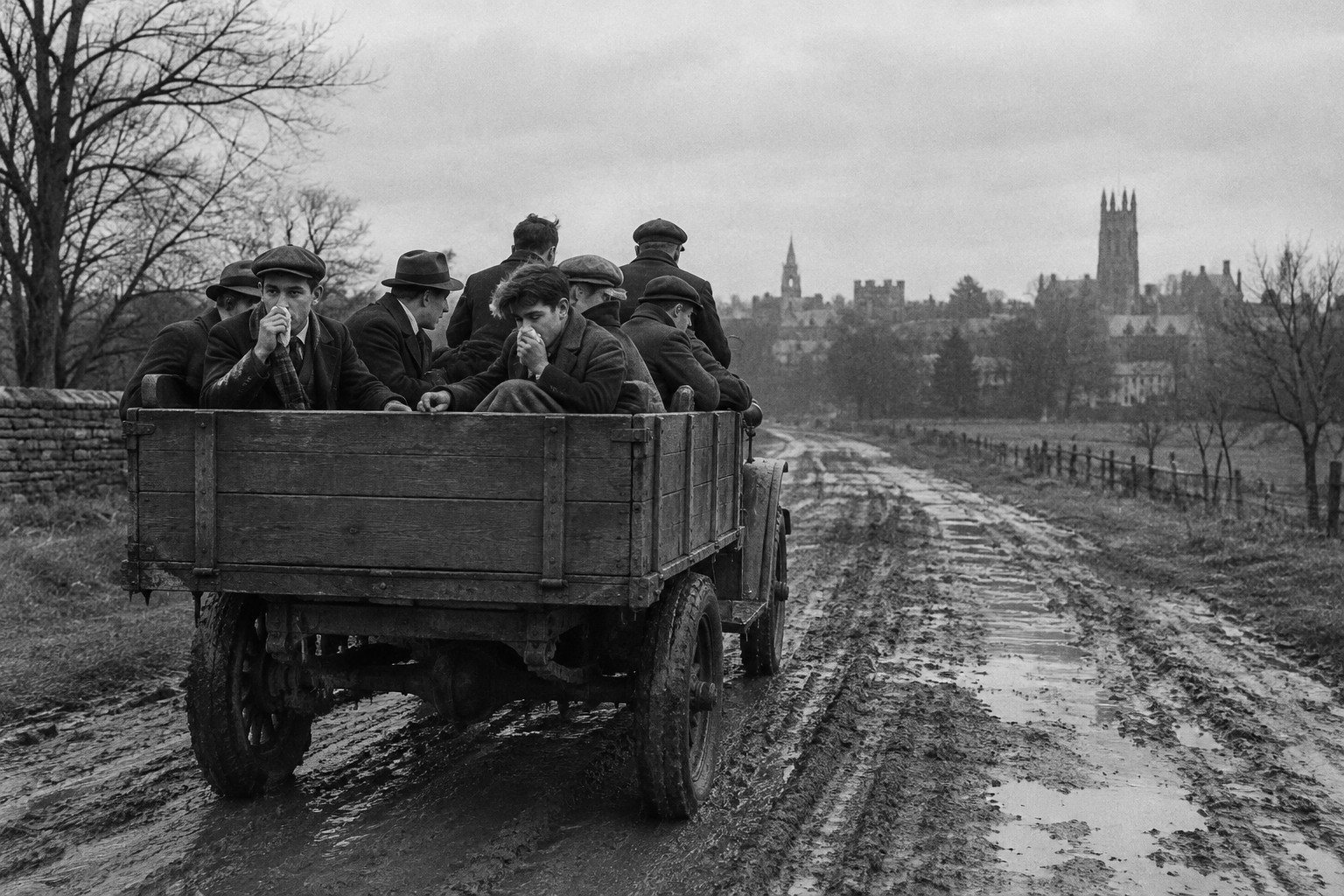
Sunday broke stolid and respectable, and even the sea seemed to mumble and complain, so they returned to Princeton via the Fords of transient farmers, and broke up with colds in their heads, but otherwise none the worse for wandering.
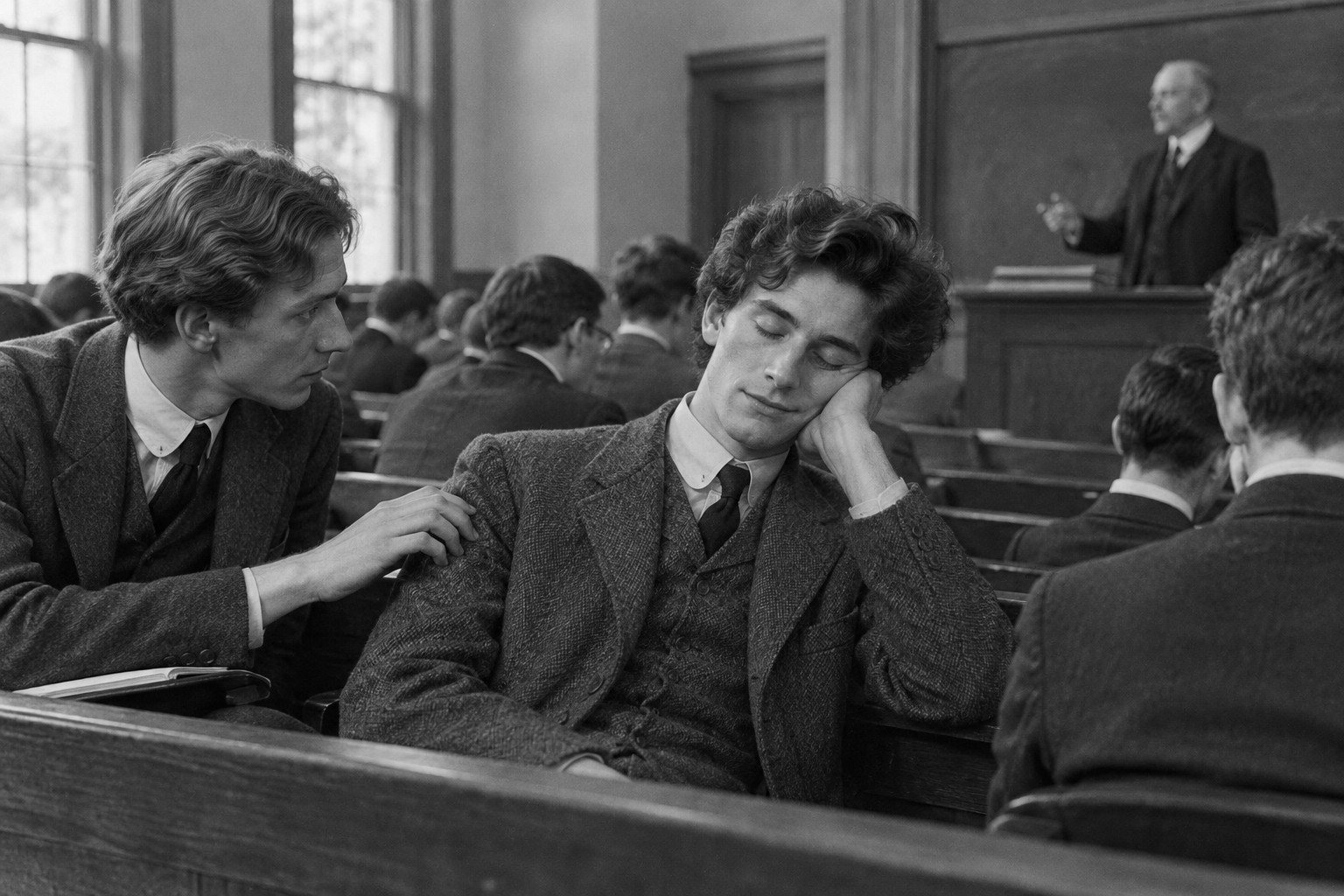
Even more than in the year before, Amory neglected his work, not deliberately but lazily and through a multitude of other interests. Co-ordinate geometry and the melancholy hexameters of Corneille and Racine held forth small allurements, and even psychology, which he had eagerly awaited, proved to be a dull subject full of muscular reactions and biological phrases rather than the study of personality and influence. That was a noon class, and it always sent him dozing. Having found that “subjective and objective, sir,” answered most of the questions, he used the phrase on all occasions, and it became the class joke when, on a query being levelled at him, he was nudged awake by Ferrenby or Sloane to gasp it out.
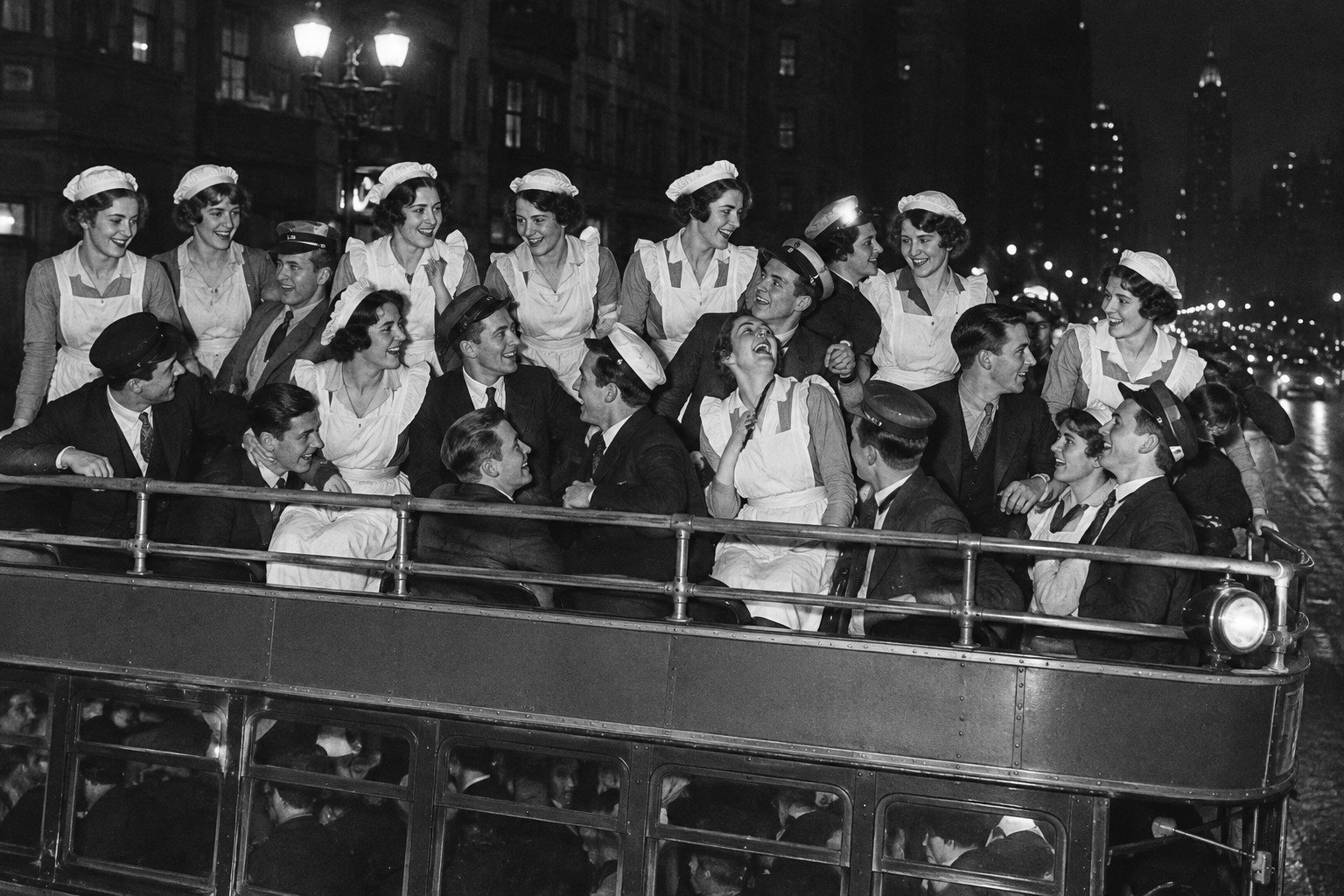
Mostly there were parties—to Orange or the Shore, more rarely to New York and Philadelphia, though one night they marshalled fourteen waitresses out of Childs’ and took them to ride down Fifth Avenue on top of an auto bus. They all cut more classes than were allowed, which meant an additional course the following year, but spring was too rare to let anything interfere with their colorful ramblings. In May Amory was elected to the Sophomore Prom Committee, and when after a long evening’s discussion with Alec they made out a tentative list of class probabilities for the senior council, they placed themselves among the surest. The senior council was composed presumably of the eighteen most representative seniors, and in view of Alec’s football managership and Amory’s chance of nosing out Burne Holiday as Princetonian chairman, they seemed fairly justified in this presumption. Oddly enough, they both placed D’Invilliers as among the possibilities, a guess that a year before the class would have gaped at.
All through the spring Amory had kept up an intermittent correspondence with Isabelle Borge, punctuated by violent squabbles and chiefly enlivened by his attempts to find new words for love. He discovered Isabelle to be discreetly and aggravatingly unsentimental in letters, but he hoped against hope that she would prove not too exotic a bloom to fit the large spaces of spring as she had fitted the den in the Minnehaha Club. During May he wrote thirty-page documents almost nightly, and sent them to her in bulky envelopes exteriorly labelled “Part I” and “Part II.”
“Oh, Alec, I believe I’m tired of college,” he said sadly, as they walked the dusk together.
“I think I am, too, in a way.”
“All I’d like would be a little home in the country, some warm country, and a wife, and just enough to do to keep from rotting.”
“Me, too.”
“I’d like to quit.”
“What does your girl say?”
“Oh!” Amory gasped in horror. “She wouldn’t think of marrying... that is, not now. I mean the future, you know.”
“My girl would. I’m engaged.”
“Are you really?”
“Yes. Don’t say a word to anybody, please, but I am. I may not come back next year.”
“But you’re only twenty! Give up college?”
“Why, Amory, you were saying a minute ago—”
“Yes,” Amory interrupted, “but I was just wishing. I wouldn’t think of leaving college. It’s just that I feel so sad these wonderful nights. I sort of feel they’re never coming again, and I’m not really getting all I could out of them. I wish my girl lived here. But marry—not a chance. Especially as father says the money isn’t forthcoming as it used to be.”
“What a waste these nights are!” agreed Alec.
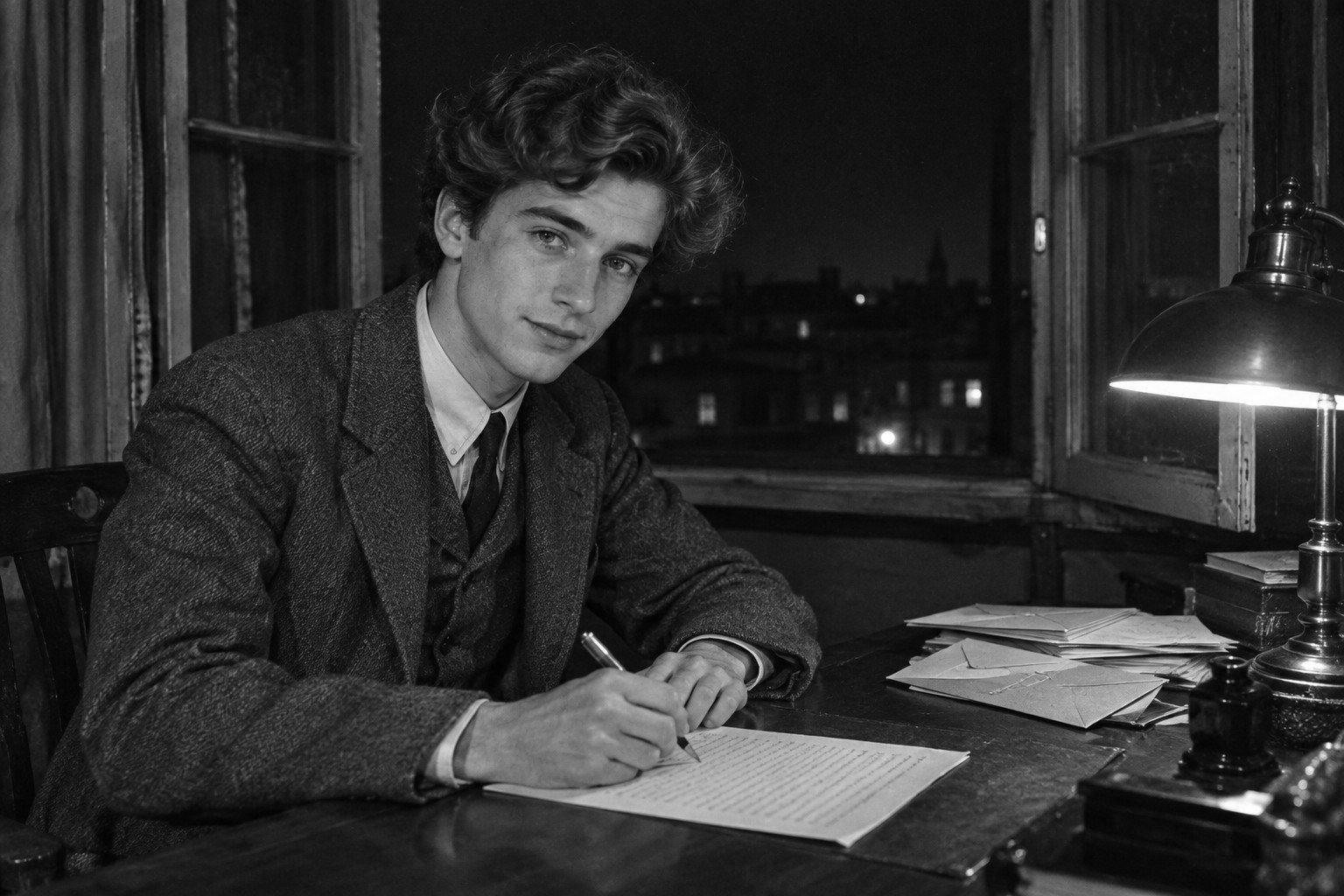
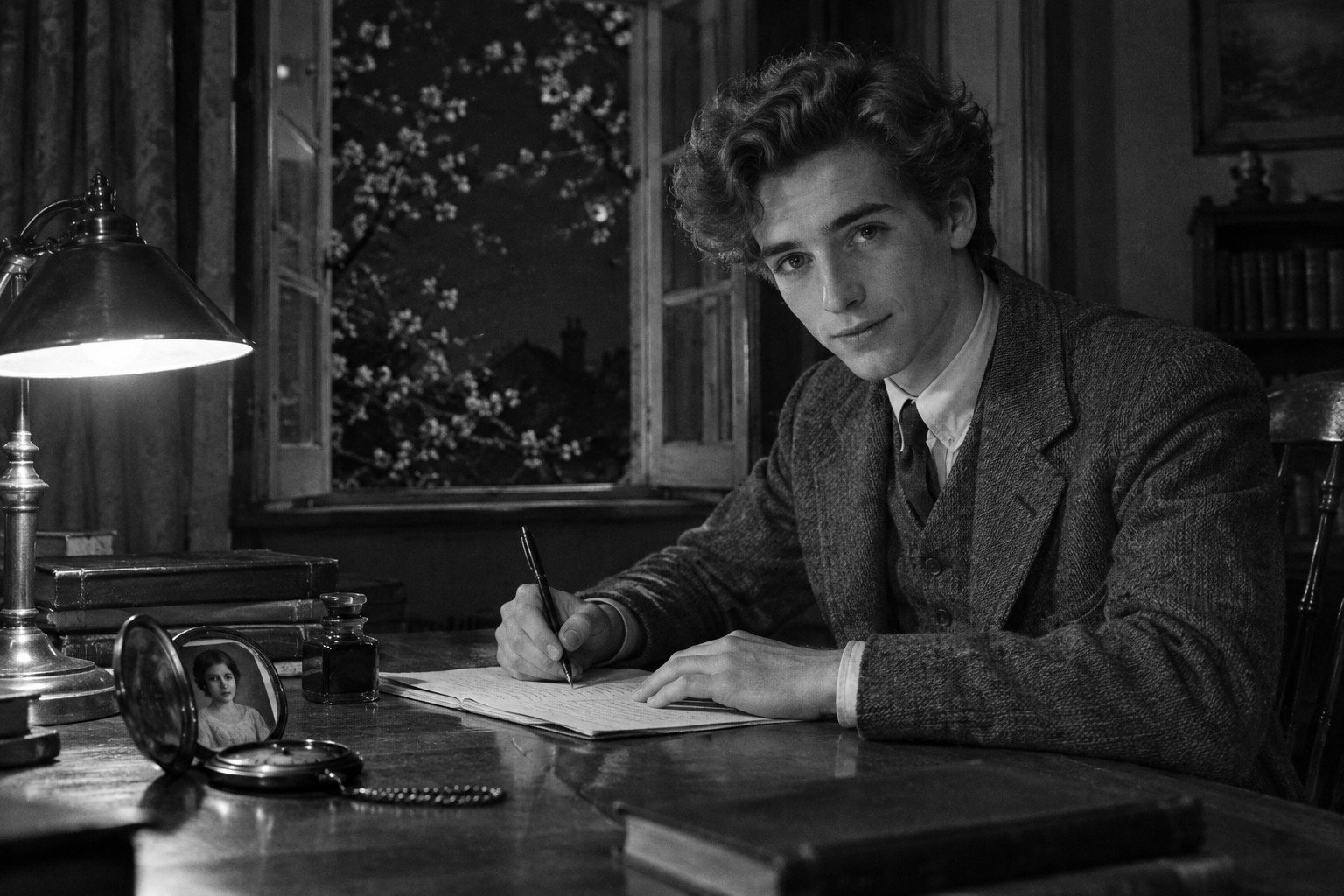
But Amory sighed and made use of the nights. He had a snap-shot of Isabelle, enshrined in an old watch, and at eight almost every night he would turn off all the lights except the desk lamp and, sitting by the open windows with the picture before him, write her rapturous letters.
... Oh it’s so hard to write you what I really feel when I think about you so much; you’ve gotten to mean to me a dream that I can’t put on paper any more. Your last letter came and it was wonderful! I read it over about six times, especially the last part, but I do wish, sometimes, you’d be more frank and tell me what you really do think of me, yet your last letter was too good to be true, and I can hardly wait until June! Be sure and be able to come to the prom. It’ll be fine, I think, and I want to bring you just at the end of a wonderful year. I often think over what you said on that night and wonder how much you meant. If it were anyone but you—but you see I thought you were fickle the first time I saw you and you are so popular and everthing that I can’t imagine you really liking me best. Oh, Isabelle, dear—it’s a wonderful night. Somebody is playing “Love Moon” on a mandolin far across the campus, and the music seems to bring you into the window. Now he’s playing “Good-by, Boys, I’m Through,” and how well it suits me. For I am through with everything. I have decided never to take a cocktail again, and I know I’ll never again fall in love—I couldn’t—you’ve been too much a part of my days and nights to ever let me think of another girl. I meet them all the time and they don’t interest me. I’m not pretending to be blasé, because it’s not that. It’s just that I’m in love. Oh, dearest Isabelle (somehow I can’t call you just Isabelle, and I’m afraid I’ll come out with the “dearest” before your family this June), you’ve got to come to the prom, and then I’ll come up to your house for a day and everything’ll be perfect....
And so on in an eternal monotone that seemed to both of them infinitely charming, infinitely new.
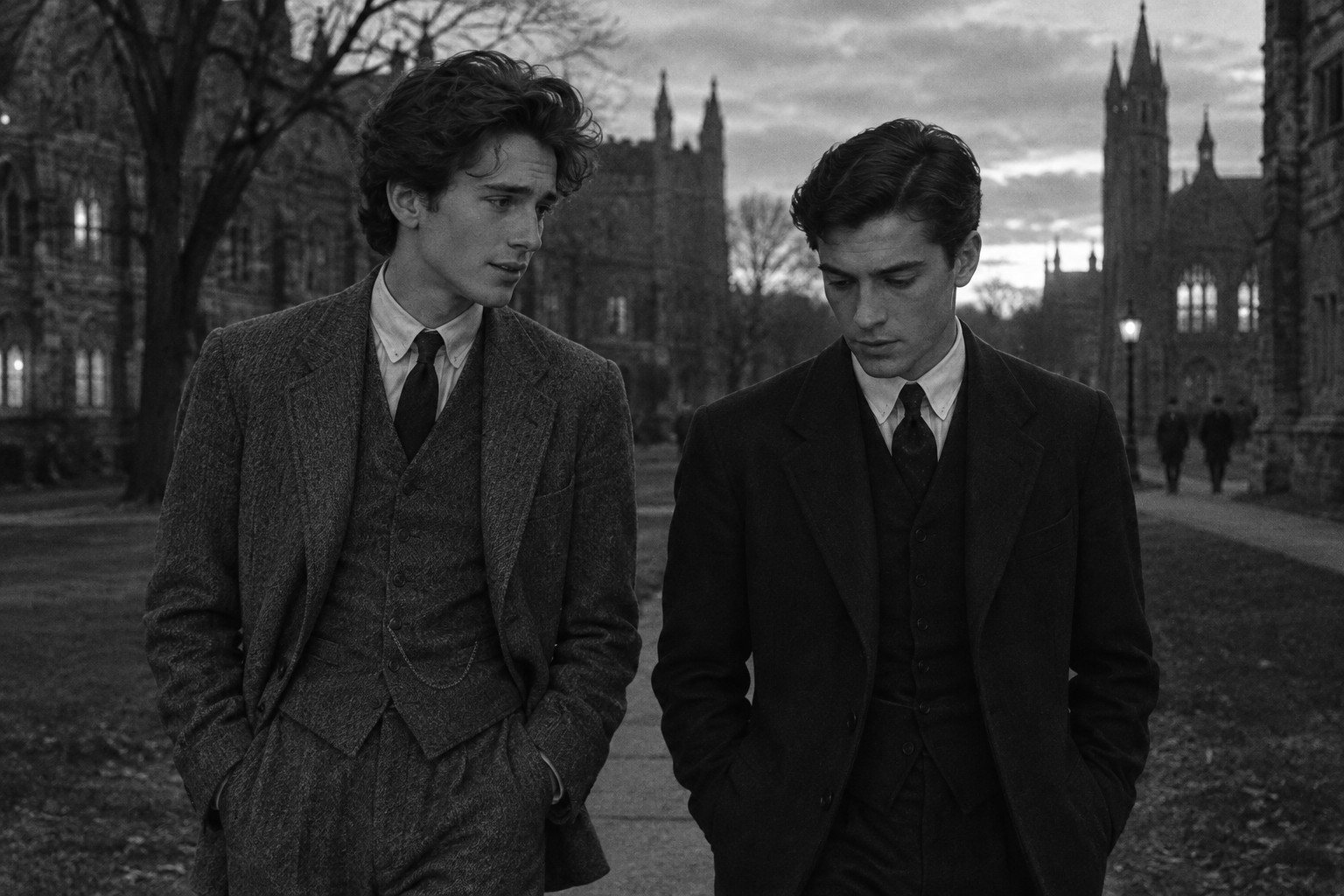
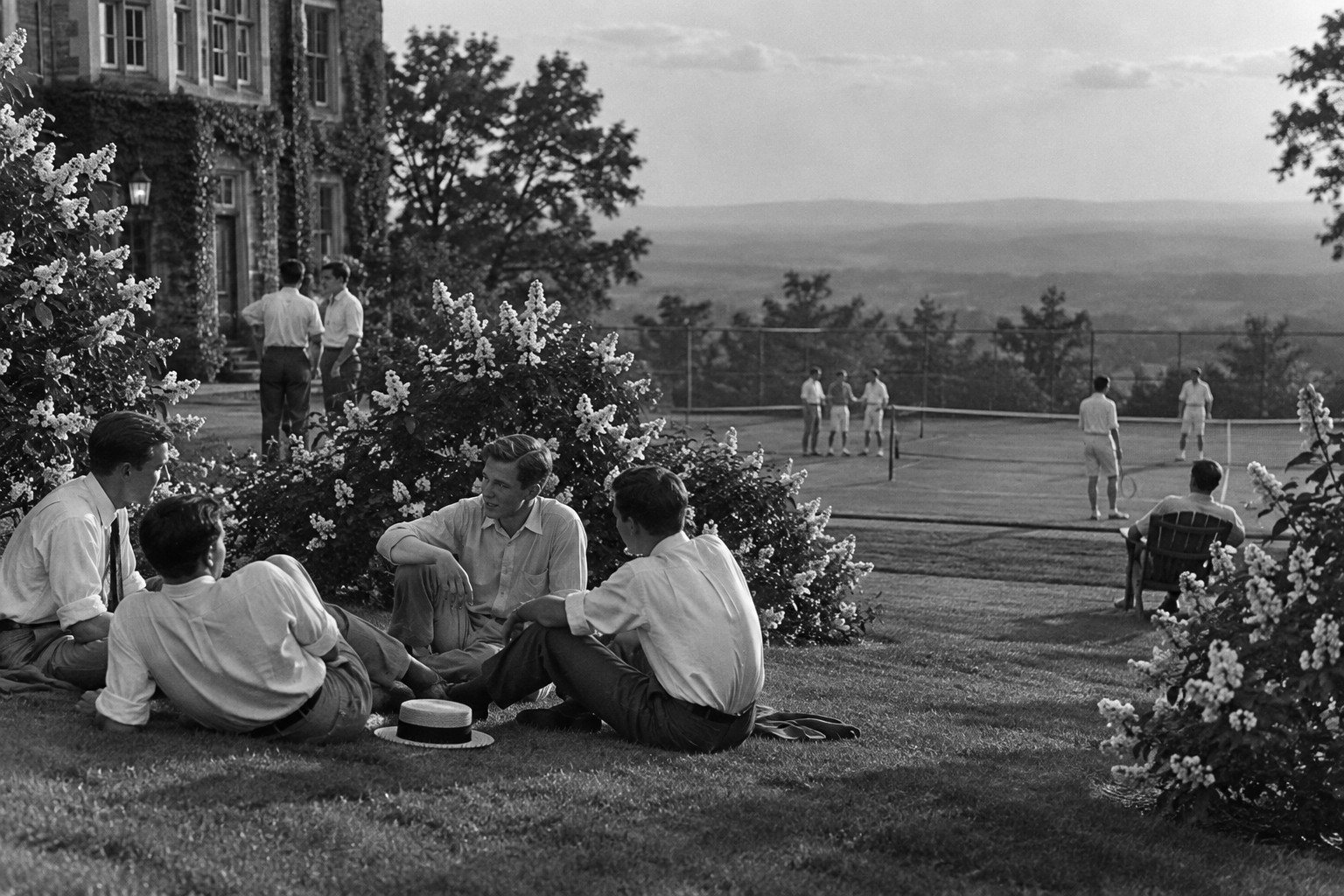
June came and the days grew so hot and lazy that they could not worry even about exams, but spent dreamy evenings on the court of Cottage, talking of long subjects until the sweep of country toward Stony Brook became a blue haze and the lilacs were white around tennis-courts, and words gave way to silent cigarettes.... Then down deserted Prospect and along McCosh with song everywhere around them, up to the hot joviality of Nassau Street.
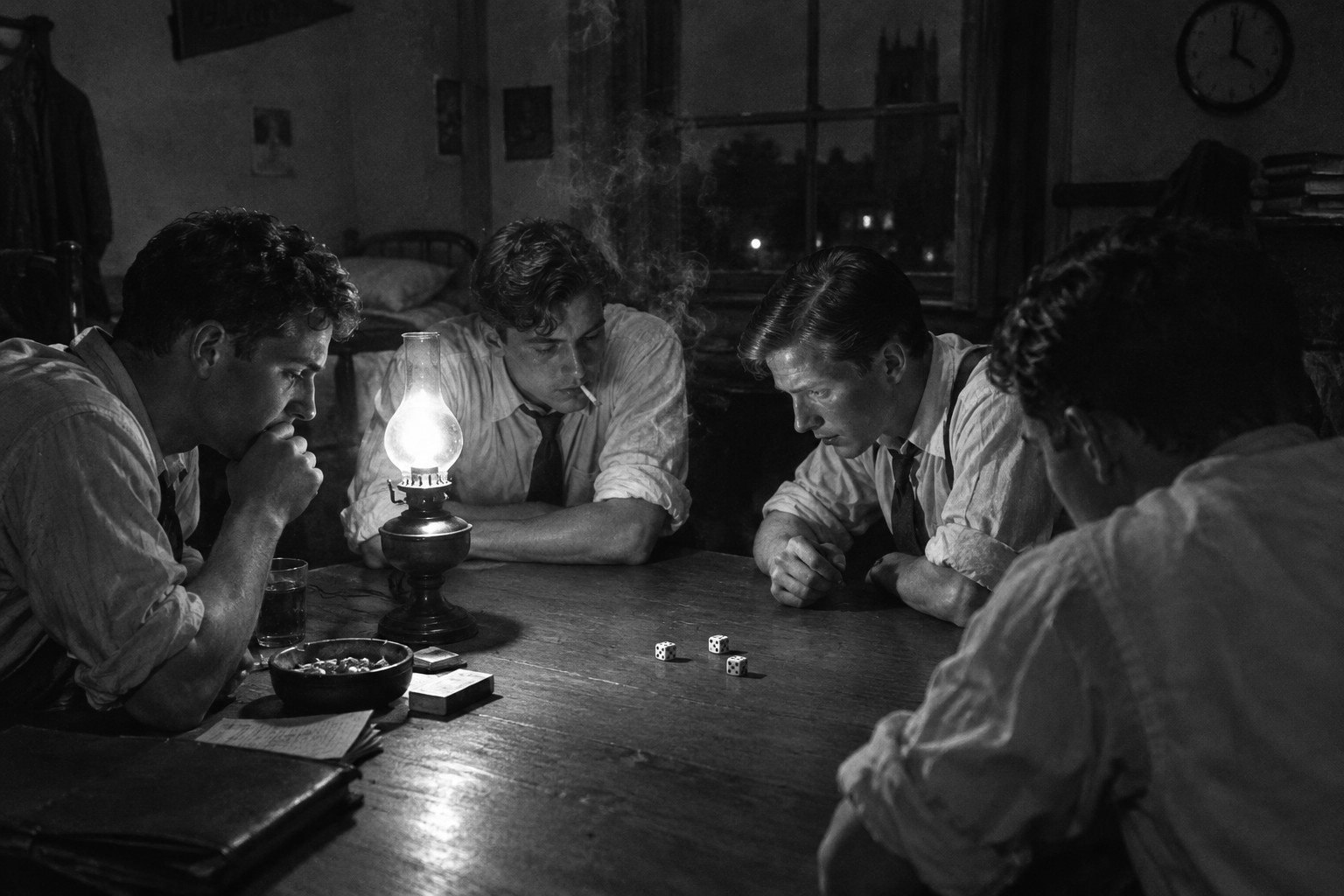
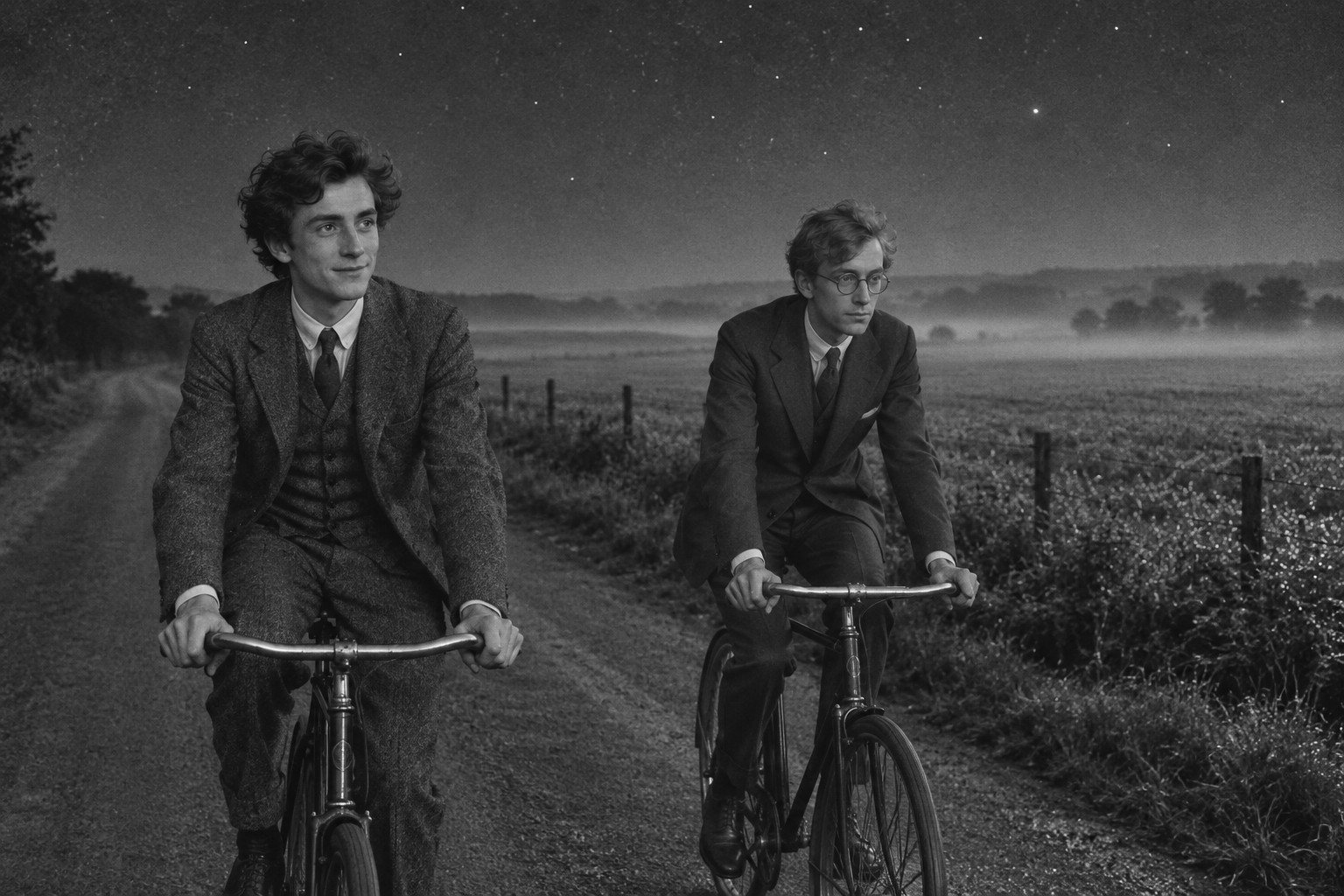
Tom D’Invilliers and Amory walked late in those days. A gambling fever swept through the sophomore class and they bent over the bones till three o’clock many a sultry night. After one session they came out of Sloane’s room to find the dew fallen and the stars old in the sky.
“Let’s borrow bicycles and take a ride,” Amory suggested.
“All right. I’m not a bit tired and this is almost the last night of the year, really, because the prom stuff starts Monday.”
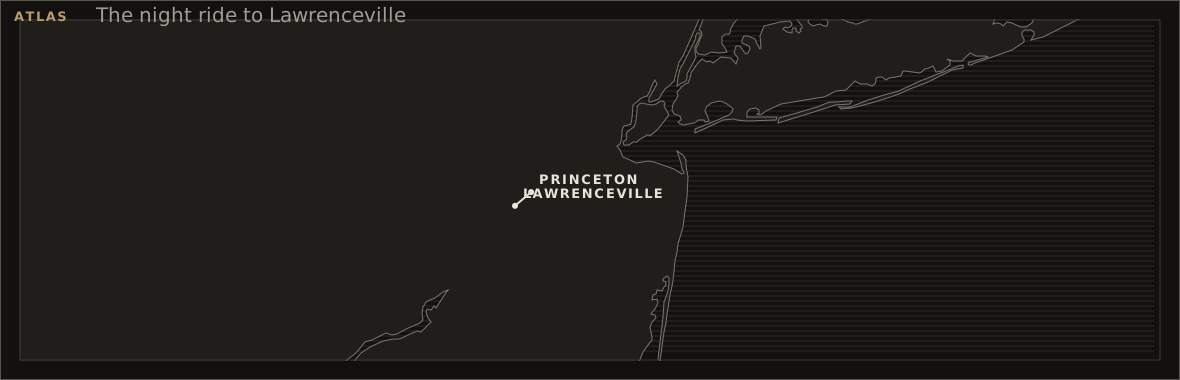
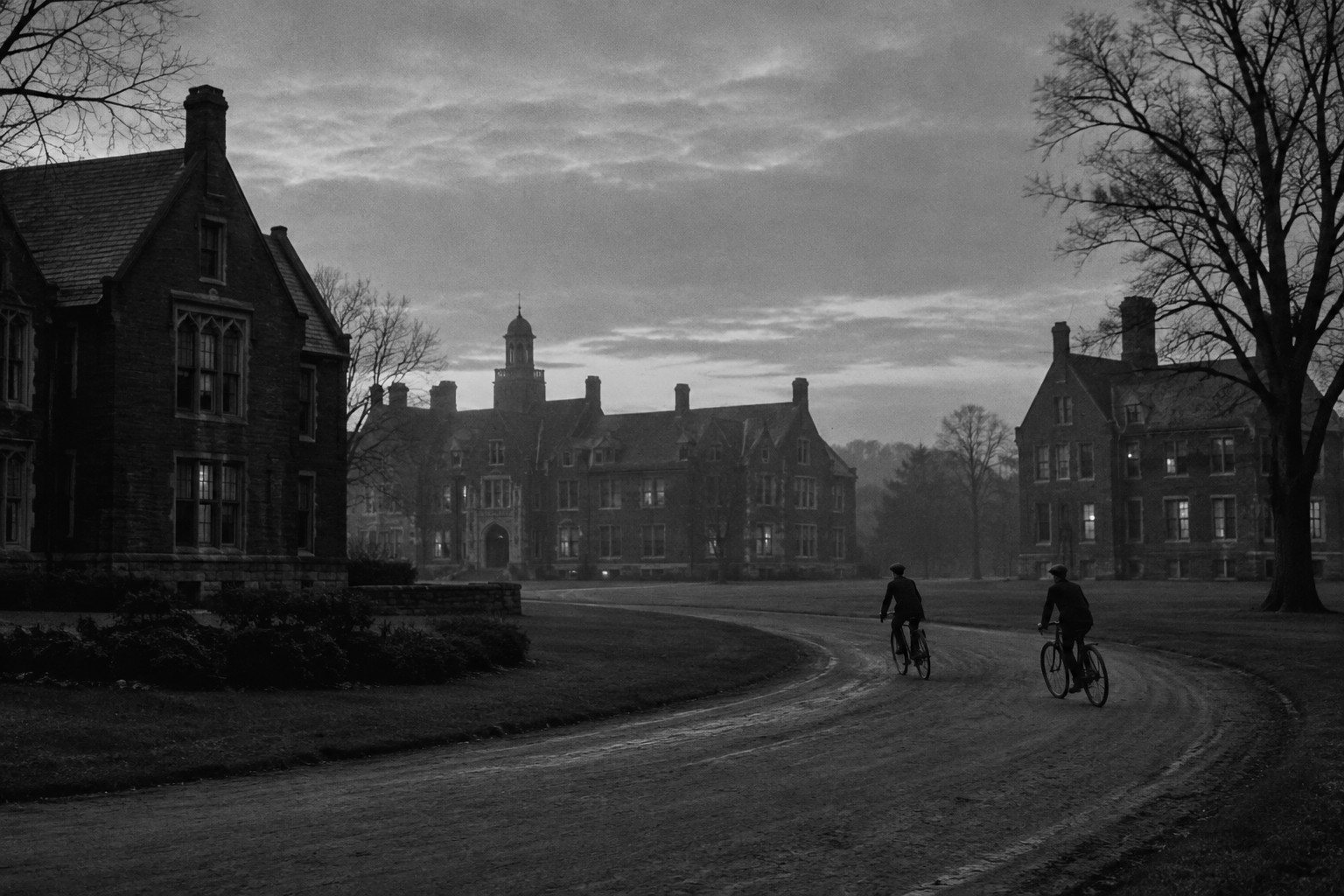
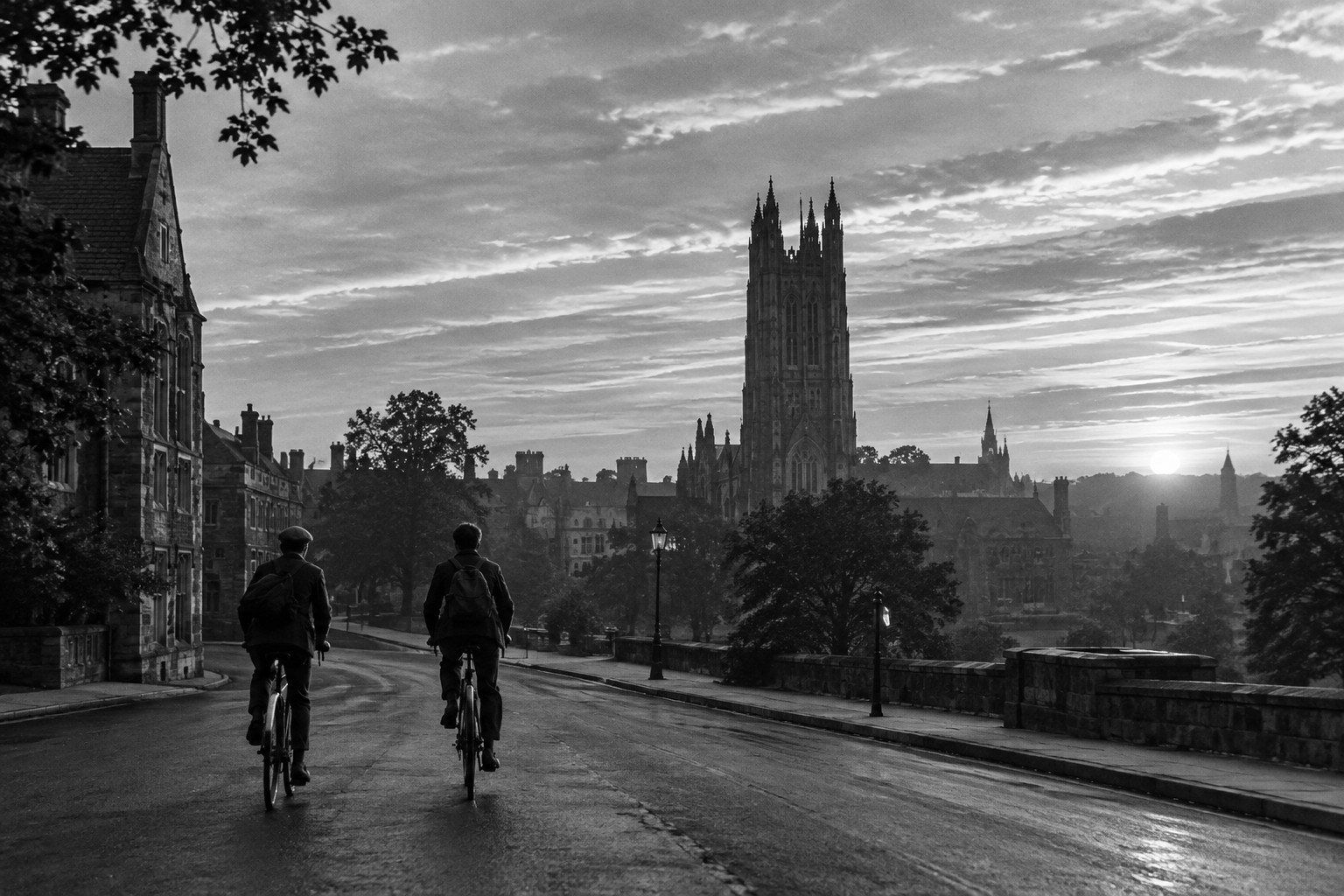
They found two unlocked bicycles in Holder Court and rode out about half-past three along the Lawrenceville Road.
“What are you going to do this summer, Amory?”
“Don’t ask me—same old things, I suppose. A month or two in Lake Geneva—I’m counting on you to be there in July, you know—then there’ll be Minneapolis, and that means hundreds of summer hops, parlor-snaking, getting bored—But oh, Tom,” he added suddenly, “hasn’t this year been slick!”
“No,” declared Tom emphatically, a new Tom, clothed by Brooks, shod by Franks, “I’ve won this game, but I feel as if I never want to play another. You’re all right—you’re a rubber ball, and somehow it suits you, but I’m sick of adapting myself to the local snobbishness of this corner of the world. I want to go where people aren’t barred because of the color of their neckties and the roll of their coats.”
“You can’t, Tom,” argued Amory, as they rolled along through the scattering night; “wherever you go now you’ll always unconsciously apply these standards of ‘having it’ or ‘lacking it.’ For better or worse we’ve stamped you; you’re a Princeton type!”
“Well, then,” complained Tom, his cracked voice rising plaintively, “why do I have to come back at all? I’ve learned all that Princeton has to offer. Two years more of mere pedantry and lying around a club aren’t going to help. They’re just going to disorganize me, conventionalize me completely. Even now I’m so spineless that I wonder how I get away with it.”
“Oh, but you’re missing the real point, Tom,” Amory interrupted. “You’ve just had your eyes opened to the snobbishness of the world in a rather abrupt manner. Princeton invariably gives the thoughtful man a social sense.”
“You consider you taught me that, don’t you?” he asked quizzically, eying Amory in the half dark.
Amory laughed quietly.
“Didn’t I?”
“Sometimes,” he said slowly, “I think you’re my bad angel. I might have been a pretty fair poet.”
“Come on, that’s rather hard. You chose to come to an Eastern college. Either your eyes were opened to the mean scrambling quality of people, or you’d have gone through blind, and you’d hate to have done that—been like Marty Kaye.”
“Yes,” he agreed, “you’re right. I wouldn’t have liked it. Still, it’s hard to be made a cynic at twenty.”
“I was born one,” Amory murmured. “I’m a cynical idealist.” He paused and wondered if that meant anything.
They reached the sleeping school of Lawrenceville, and turned to ride back.
“It’s good, this ride, isn’t it?” Tom said presently.
“Yes; it’s a good finish, it’s knock-out; everything’s good to-night. Oh, for a hot, languorous summer and Isabelle!”
“Oh, you and your Isabelle! I’ll bet she’s a simple one... let’s say some poetry.”
So Amory declaimed “The Ode to a Nightingale” to the bushes they passed.
“I’ll never be a poet,” said Amory as he finished. “I’m not enough of a sensualist really; there are only a few obvious things that I notice as primarily beautiful: women, spring evenings, music at night, the sea; I don’t catch the subtle things like ‘silver-snarling trumpets.’ I may turn out an intellectual, but I’ll never write anything but mediocre poetry.”
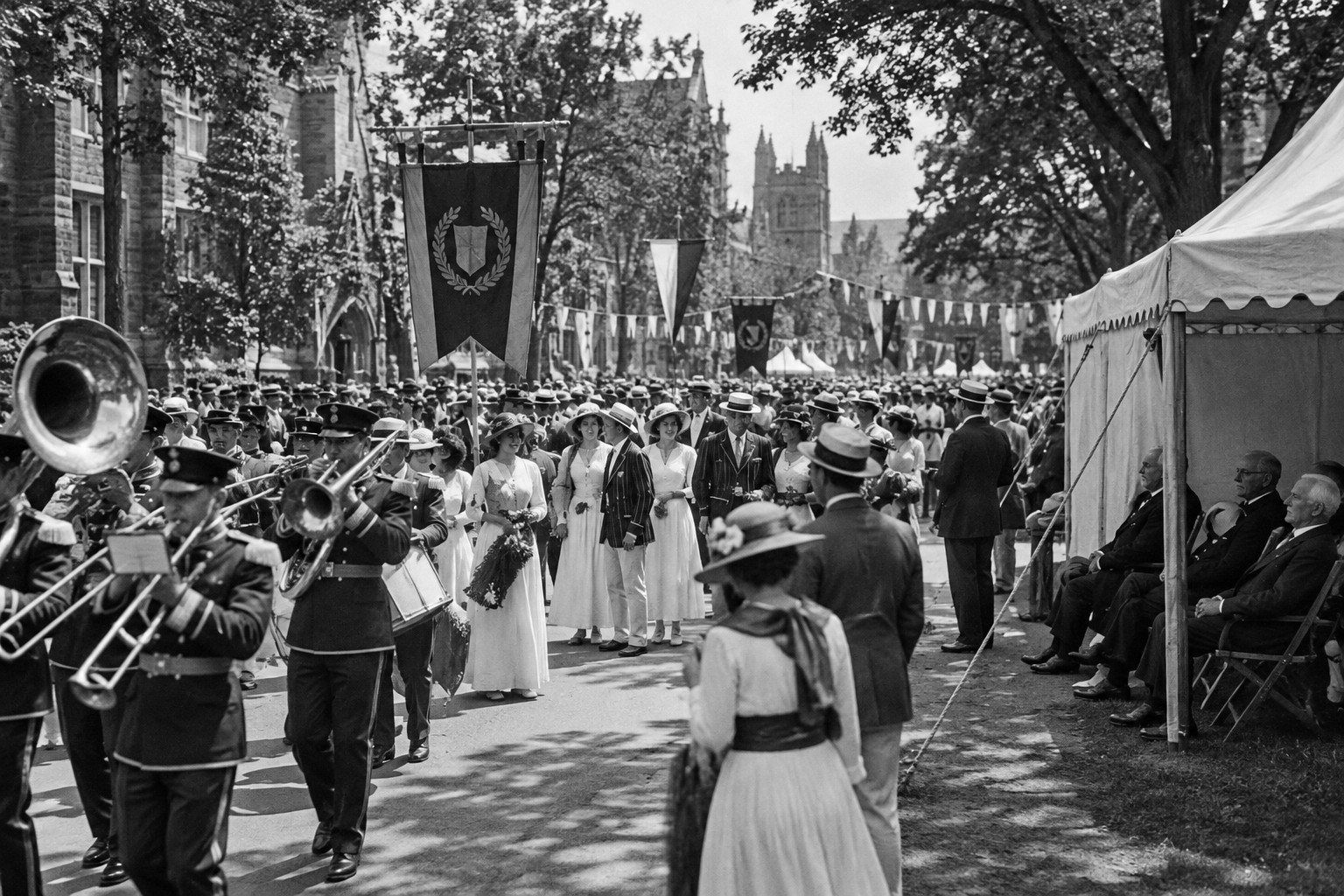
They rode into Princeton as the sun was making colored maps of the sky behind the graduate school, and hurried to the refreshment of a shower that would have to serve in place of sleep. By noon the bright-costumed alumni crowded the streets with their bands and choruses, and in the tents there was great reunion under the orange-and-black banners that curled and strained in the wind. Amory looked long at one house which bore the legend “Sixty-nine.” There a few gray-haired men sat and talked quietly while the classes swept by in panorama of life.
UNDER THE ARC-LIGHT
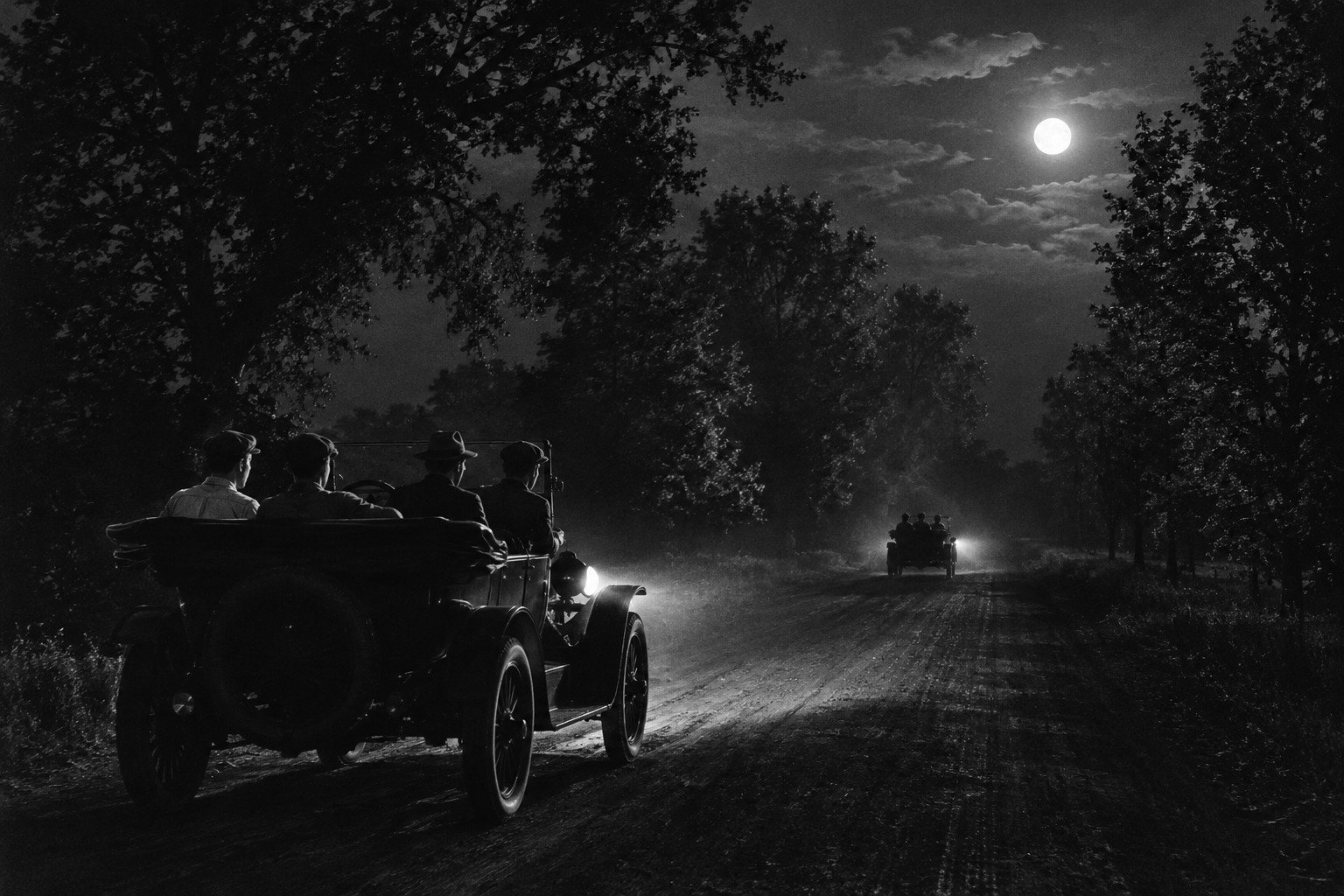
Then tragedy’s emerald eyes glared suddenly at Amory over the edge of June. On the night after his ride to Lawrenceville a crowd sallied to New York in quest of adventure, and started back to Princeton about twelve o’clock in two machines. It had been a gay party and different stages of sobriety were represented. Amory was in the car behind; they had taken the wrong road and lost the way, and so were hurrying to catch up.
It was a clear night and the exhilaration of the road went to Amory’s head. He had the ghost of two stanzas of a poem forming in his mind. ...
So the gray car crept nightward in the dark and there was no life stirred as it went by.... As the still ocean paths before the shark in starred and glittering waterways, beauty-high, the moon-swathed trees divided, pair on pair, while flapping nightbirds cried across the air.... A moment by an inn of lamps and shades, a yellow inn under a yellow moon—then silence, where crescendo laughter fades... the car swung out again to the winds of June, mellowed the shadows where the distance grew, then crushed the yellow shadows into blue....
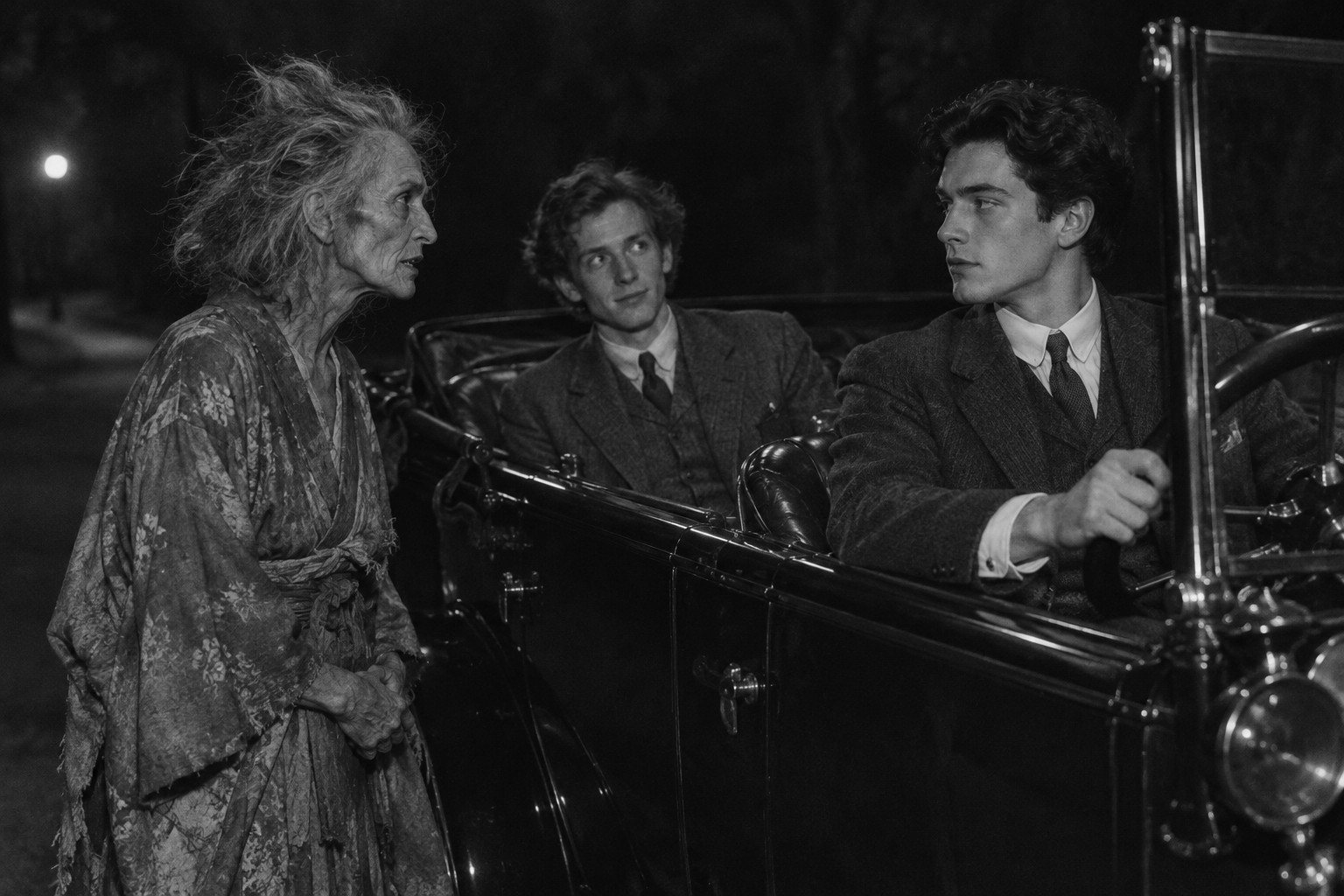
They jolted to a stop, and Amory peered up, startled. A woman was standing beside the road, talking to Alec at the wheel. Afterward he remembered the harpy effect that her old kimono gave her, and the cracked hollowness of her voice as she spoke:
“You Princeton boys?”
“Yes.”
“Well, there’s one of you killed here, and two others about dead.”
“My God!”
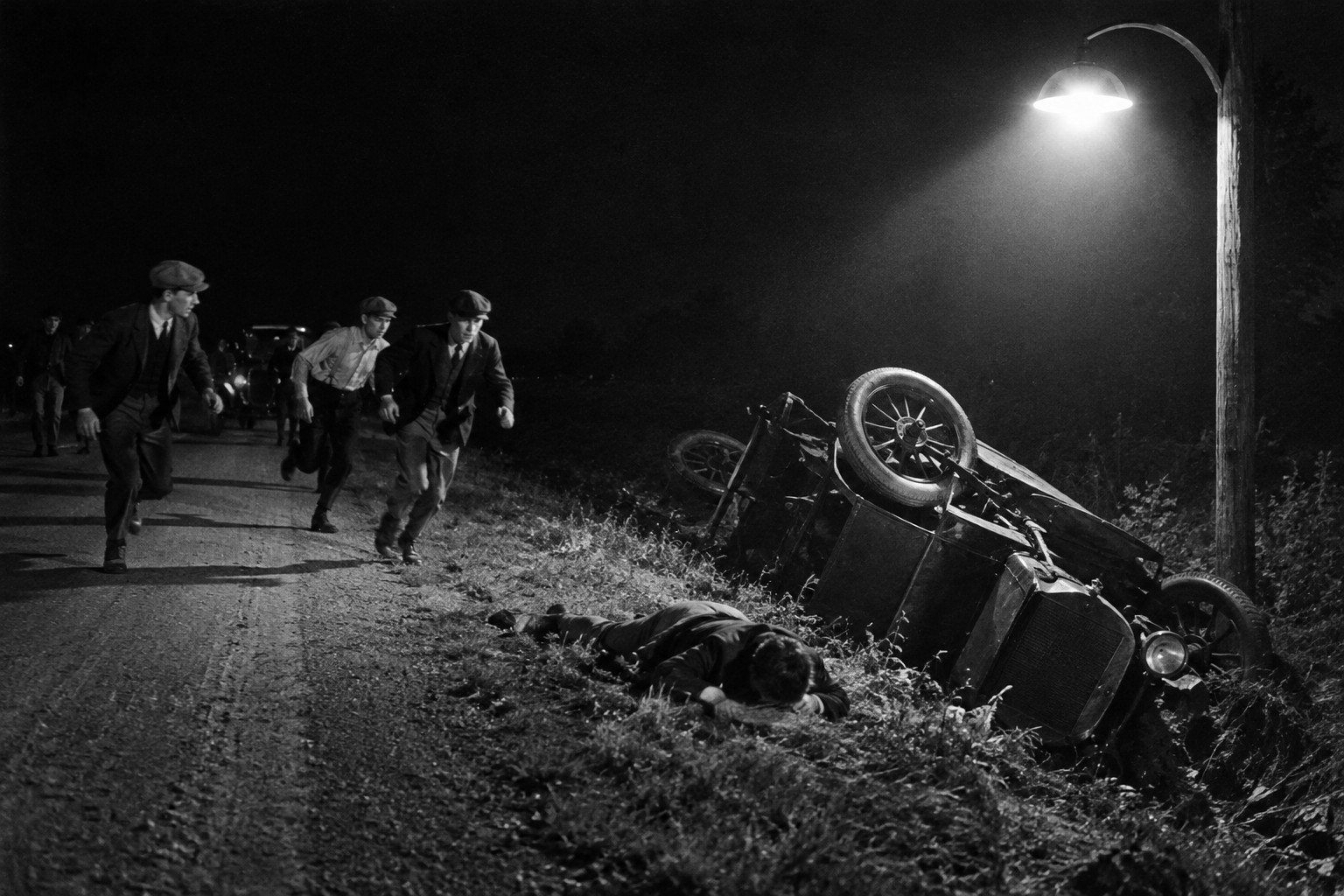
“Look!” She pointed and they gazed in horror. Under the full light of a roadside arc-light lay a form, face downward in a widening circle of blood.
They sprang from the car. Amory thought of the back of that head—that hair—that hair... and then they turned the form over.
“It’s Dick—Dick Humbird!”
“Oh, Christ!”
“Feel his heart!”
Then the insistent voice of the old crone in a sort of croaking triumph:
“He’s quite dead, all right. The car turned over. Two of the men that weren’t hurt just carried the others in, but this one’s no use.”
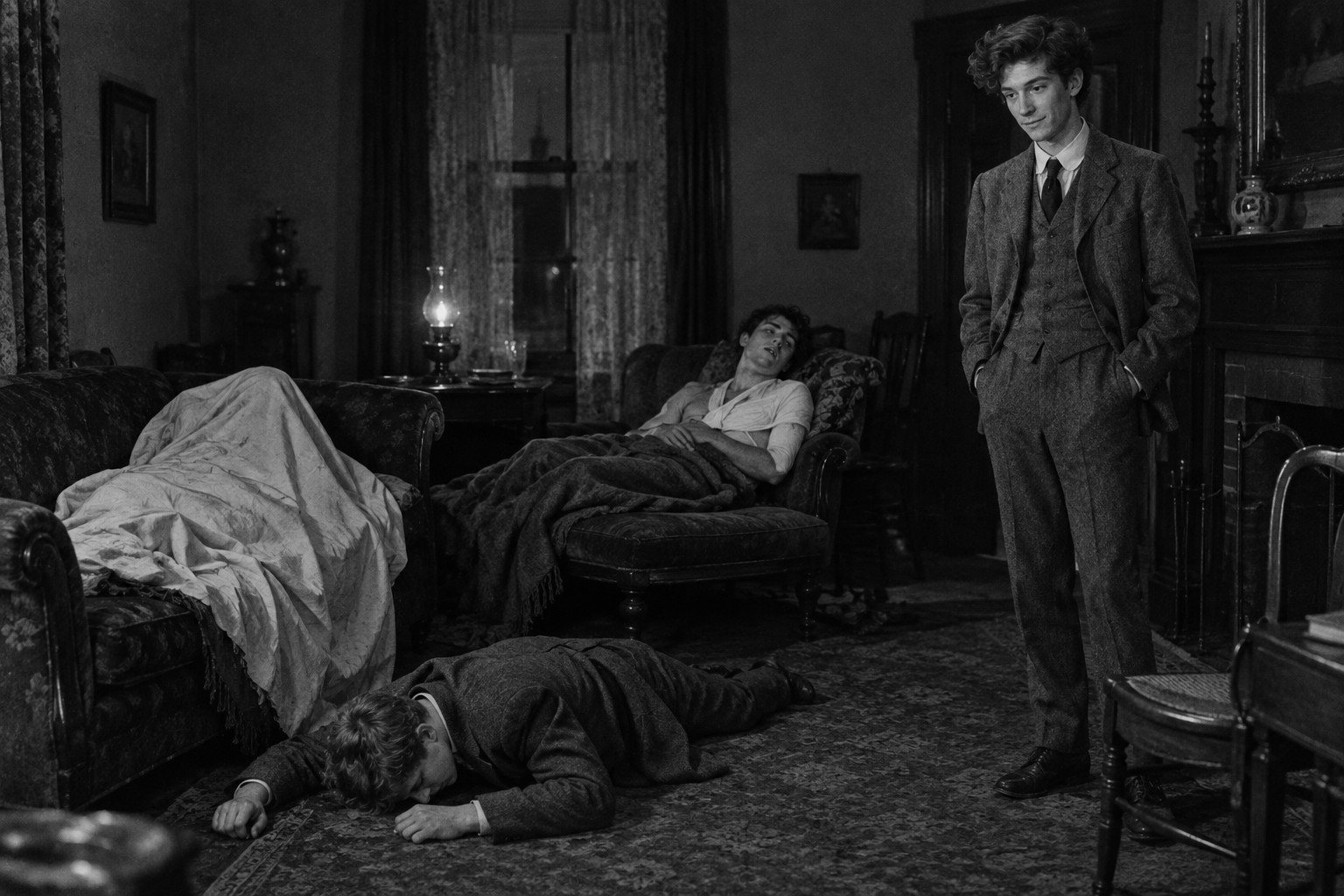
Amory rushed into the house and the rest followed with a limp mass that they laid on the sofa in the shoddy little front parlor. Sloane, with his shoulder punctured, was on another lounge. He was half delirious, and kept calling something about a chemistry lecture at 8:10.
“I don’t know what happened,” said Ferrenby in a strained voice. “Dick was driving and he wouldn’t give up the wheel; we told him he’d been drinking too much—then there was this damn curve—oh, my God!...” He threw himself face downward on the floor and broke into dry sobs.
The doctor had arrived, and Amory went over to the couch, where some one handed him a sheet to put over the body. With a sudden hardness, he raised one of the hands and let it fall back inertly. The brow was cold but the face not expressionless. He looked at the shoe-laces—Dick had tied them that morning. He had tied them—and now he was this heavy white mass. All that remained of the charm and personality of the Dick Humbird he had known—oh, it was all so horrible and unaristocratic and close to the earth. All tragedy has that strain of the grotesque and squalid—so useless, futile... the way animals die.... Amory was reminded of a cat that had lain horribly mangled in some alley of his childhood.
“Some one go to Princeton with Ferrenby.”
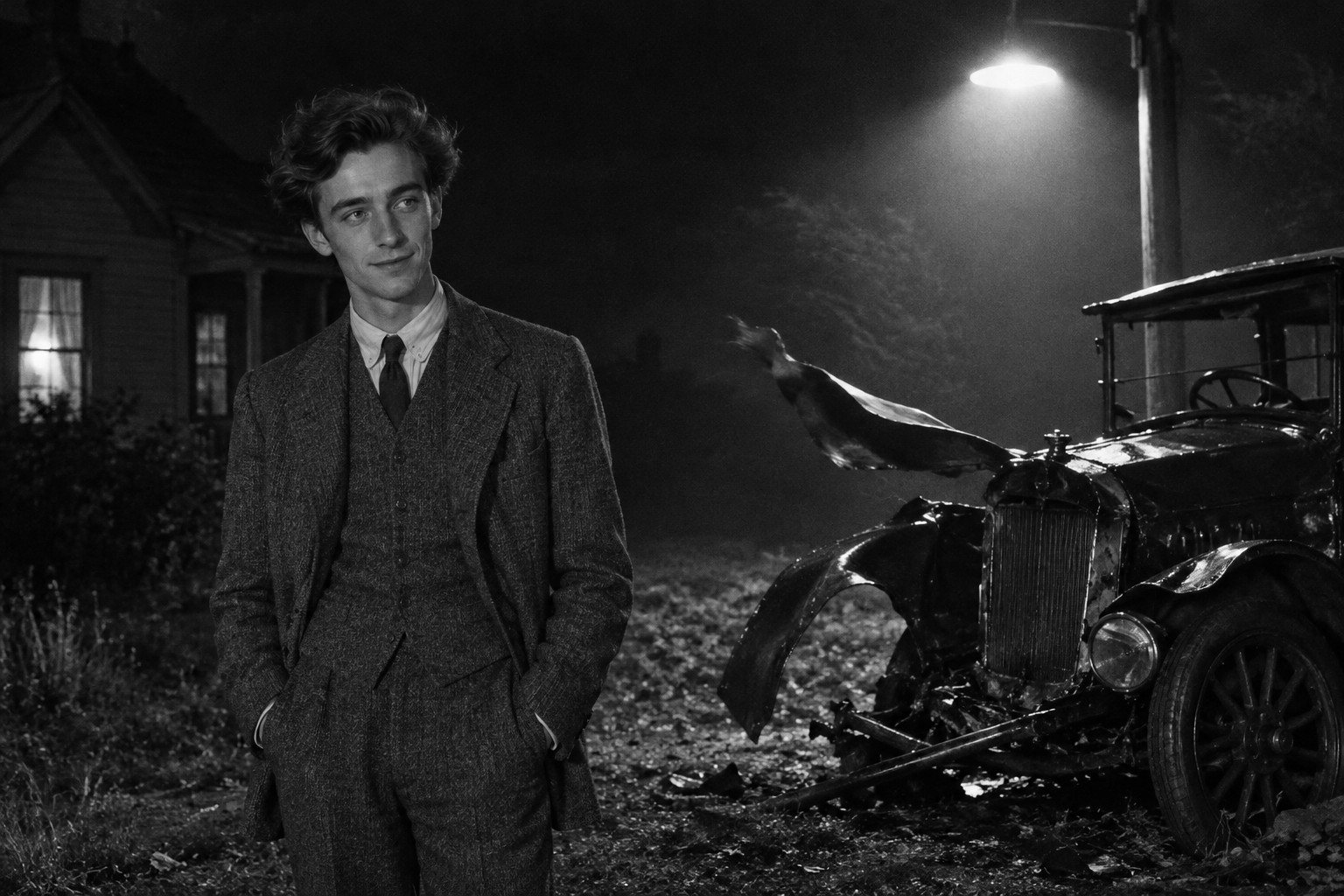
Amory stepped outside the door and shivered slightly at the late night wind—a wind that stirred a broken fender on the mass of bent metal to a plaintive, tinny sound.
CRESCENDO!
Next day, by a merciful chance, passed in a whirl. When Amory was by himself his thoughts zigzagged inevitably to the picture of that red mouth yawning incongruously in the white face, but with a determined effort he piled present excitement upon the memory of it and shut it coldly away from his mind.
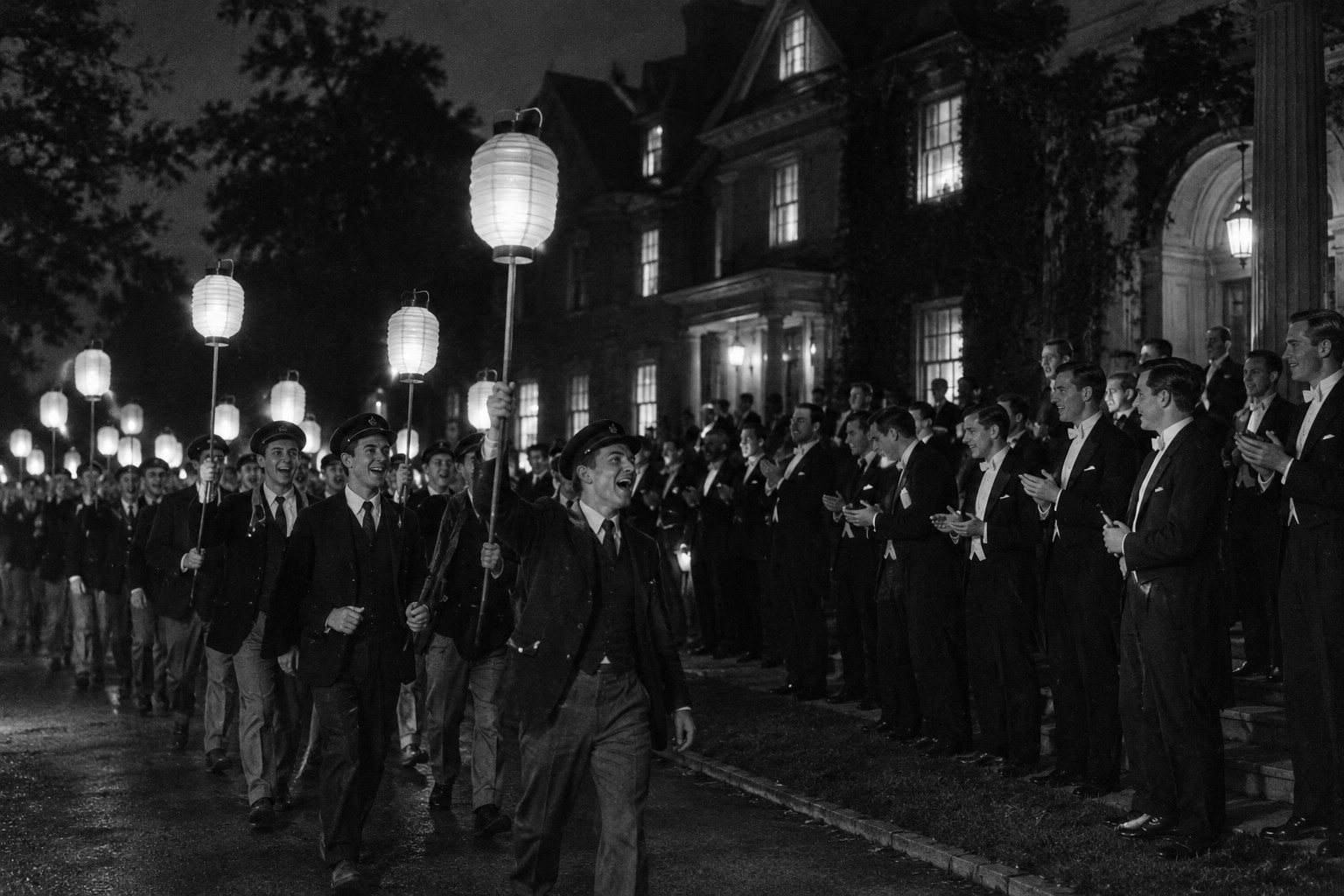
Isabelle and her mother drove into town at four, and they rode up smiling Prospect Avenue, through the gay crowd, to have tea at Cottage. The clubs had their annual dinners that night, so at seven he loaned her to a freshman and arranged to meet her in the gymnasium at eleven, when the upper classmen were admitted to the freshman dance. She was all he had expected, and he was happy and eager to make that night the centre of every dream. At nine the upper classes stood in front of the clubs as the freshman torchlight parade rioted past, and Amory wondered if the dress-suited groups against the dark, stately backgrounds and under the flare of the torches made the night as brilliant to the staring, cheering freshmen as it had been to him the year before.
The next day was another whirl. They lunched in a gay party of six in a private dining-room at the club, while Isabelle and Amory looked at each other tenderly over the fried chicken and knew that their love was to be eternal. They danced away the prom until five, and the stags cut in on Isabelle with joyous abandon, which grew more and more enthusiastic as the hour grew late, and their wines, stored in overcoat pockets in the coat room, made old weariness wait until another day. The stag line is a most homogeneous mass of men. It fairly sways with a single soul. A dark-haired beauty dances by and there is a half-gasping sound as the ripple surges forward and some one sleeker than the rest darts out and cuts in. Then when the six-foot girl (brought by Kaye in your class, and to whom he has been trying to introduce you all evening) gallops by, the line surges back and the groups face about and become intent on far corners of the hall, for Kaye, anxious and perspiring, appears elbowing through the crowd in search of familiar faces.
“I say, old man, I’ve got an awfully nice—”
“Sorry, Kaye, but I’m set for this one. I’ve got to cut in on a fella.”
“Well, the next one?”
“What—ah—er—I swear I’ve got to go cut in—look me up when she’s got a dance free.”
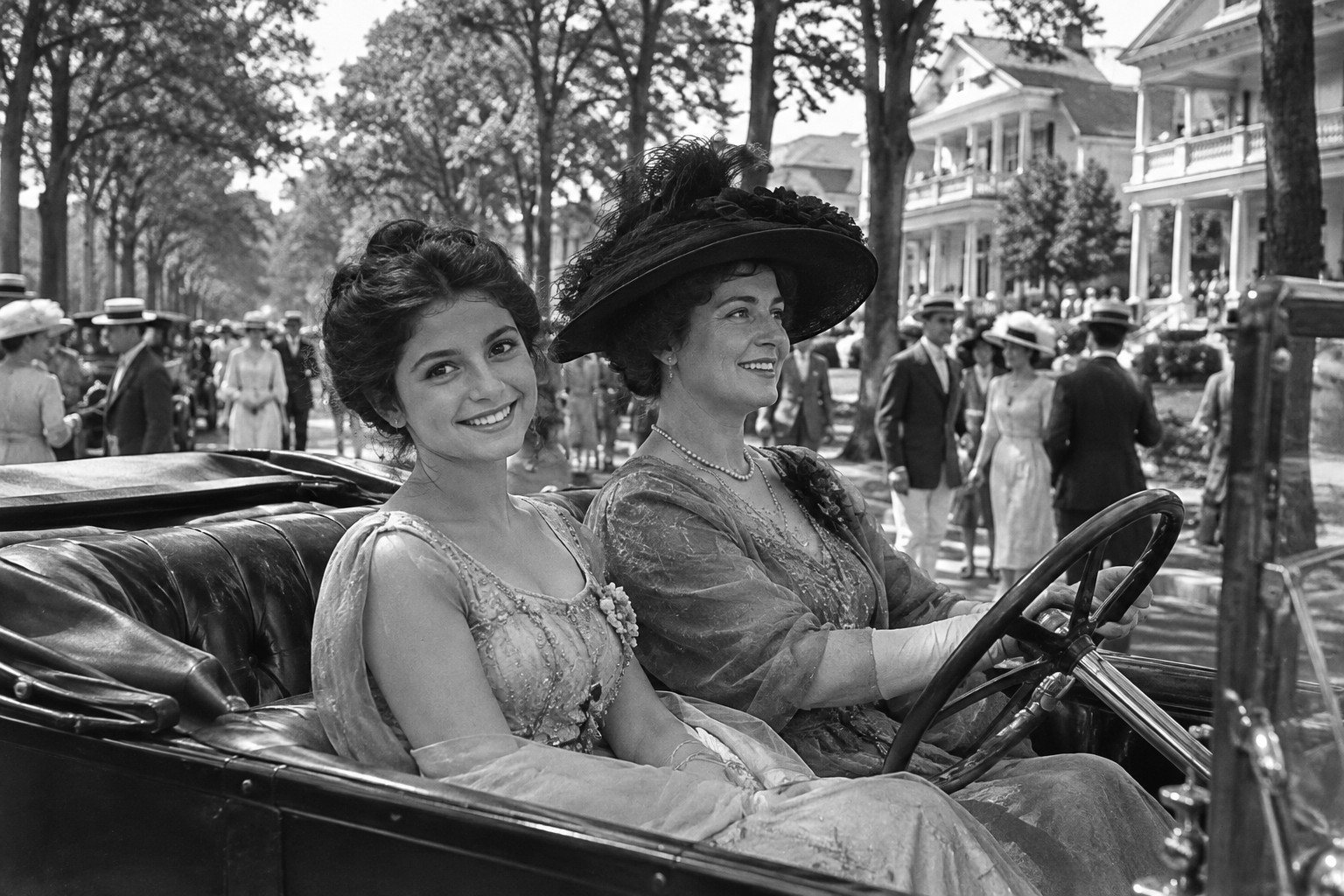
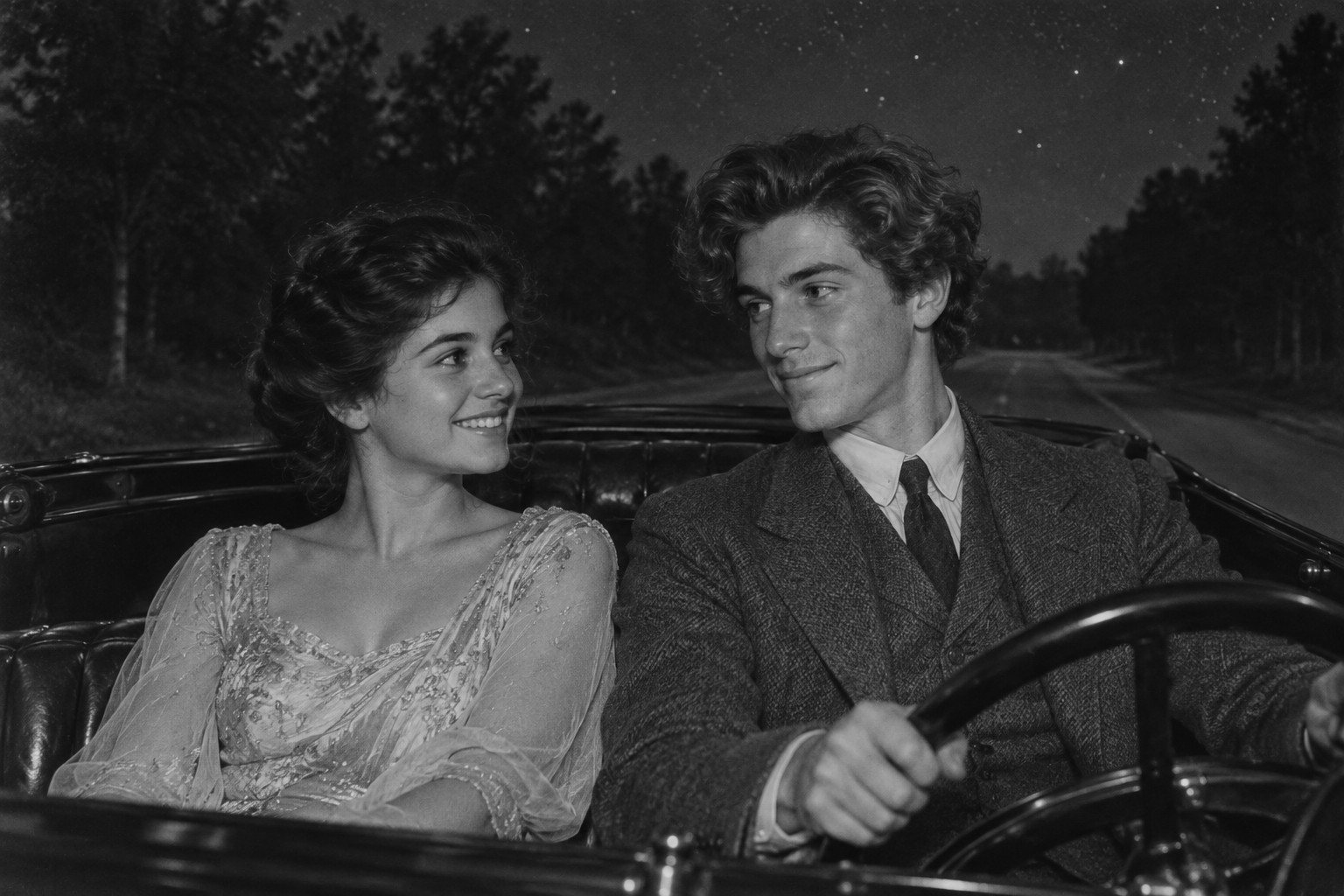
It delighted Amory when Isabelle suggested that they leave for a while and drive around in her car. For a delicious hour that passed too soon they glided the silent roads about Princeton and talked from the surface of their hearts in shy excitement. Amory felt strangely ingenuous and made no attempt to kiss her.
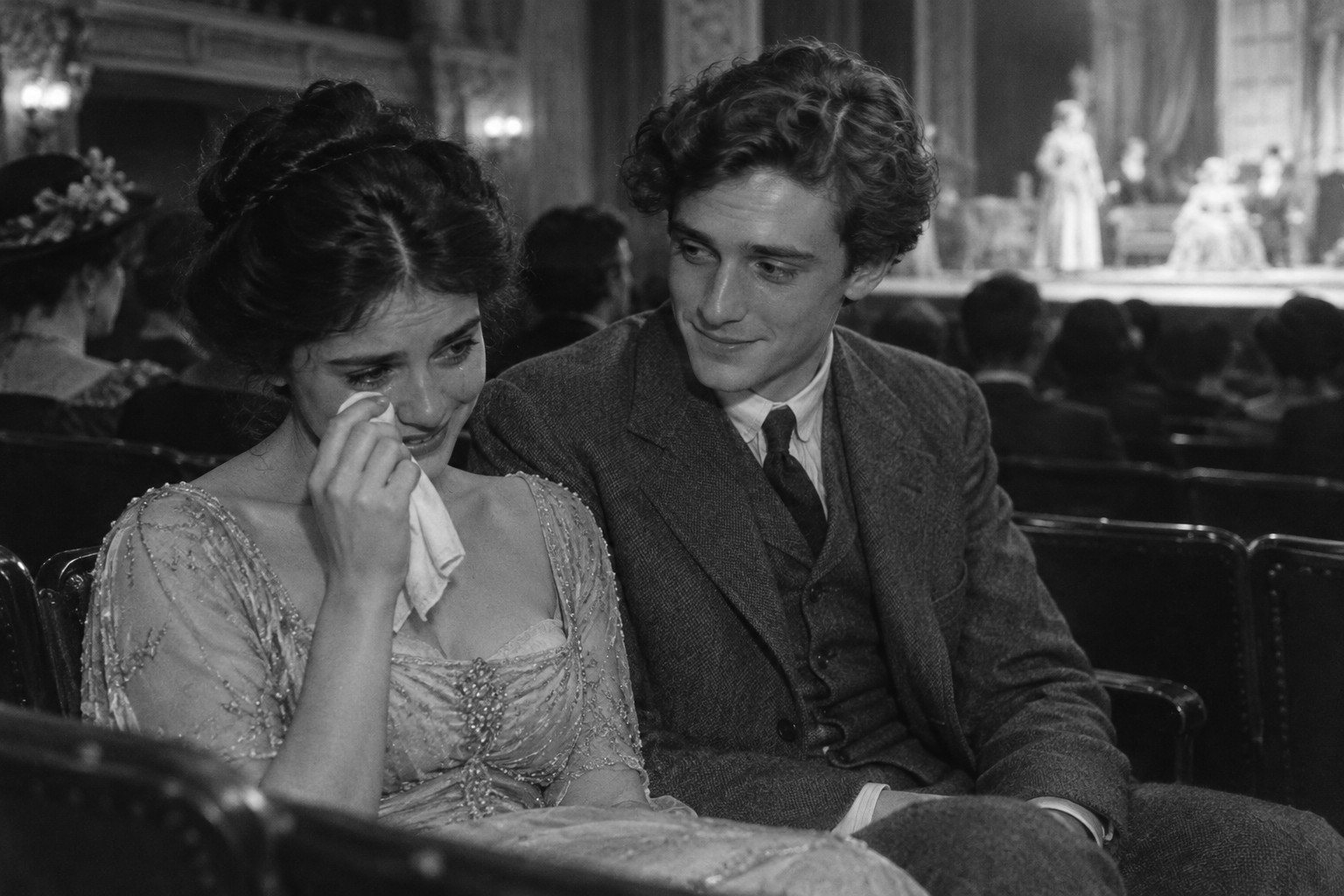
Next day they rode up through the Jersey country, had luncheon in New York, and in the afternoon went to see a problem play at which Isabelle wept all through the second act, rather to Amory’s embarrassment—though it filled him with tenderness to watch her. He was tempted to lean over and kiss away her tears, and she slipped her hand into his under cover of darkness to be pressed softly.
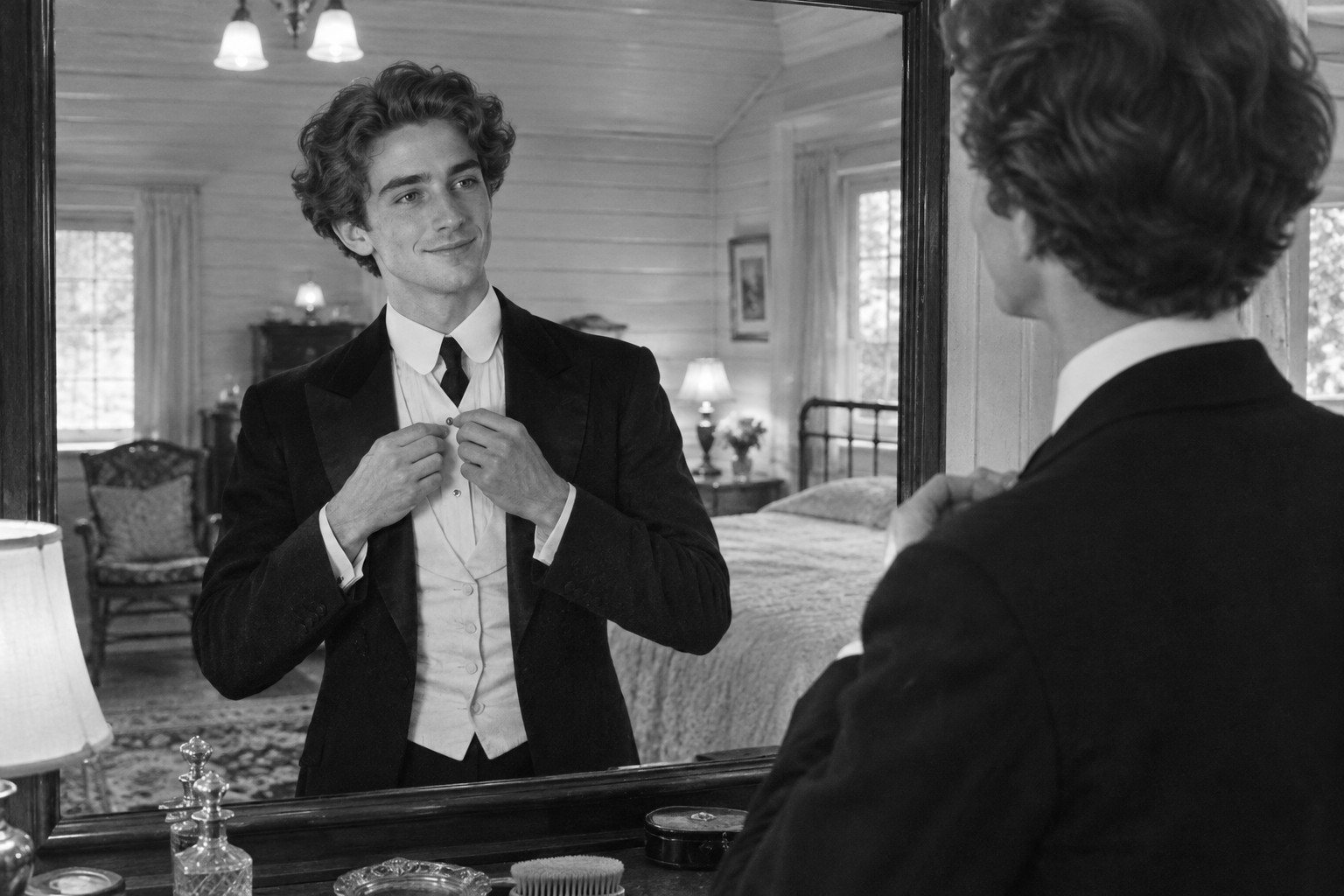
Then at six they arrived at the Borges’ summer place on Long Island, and Amory rushed up-stairs to change into a dinner coat. As he put in his studs he realized that he was enjoying life as he would probably never enjoy it again. Everything was hallowed by the haze of his own youth. He had arrived, abreast of the best in his generation at Princeton. He was in love and his love was returned. Turning on all the lights, he looked at himself in the mirror, trying to find in his own face the qualities that made him see clearer than the great crowd of people, that made him decide firmly, and able to influence and follow his own will. There was little in his life now that he would have changed. ... Oxford might have been a bigger field.
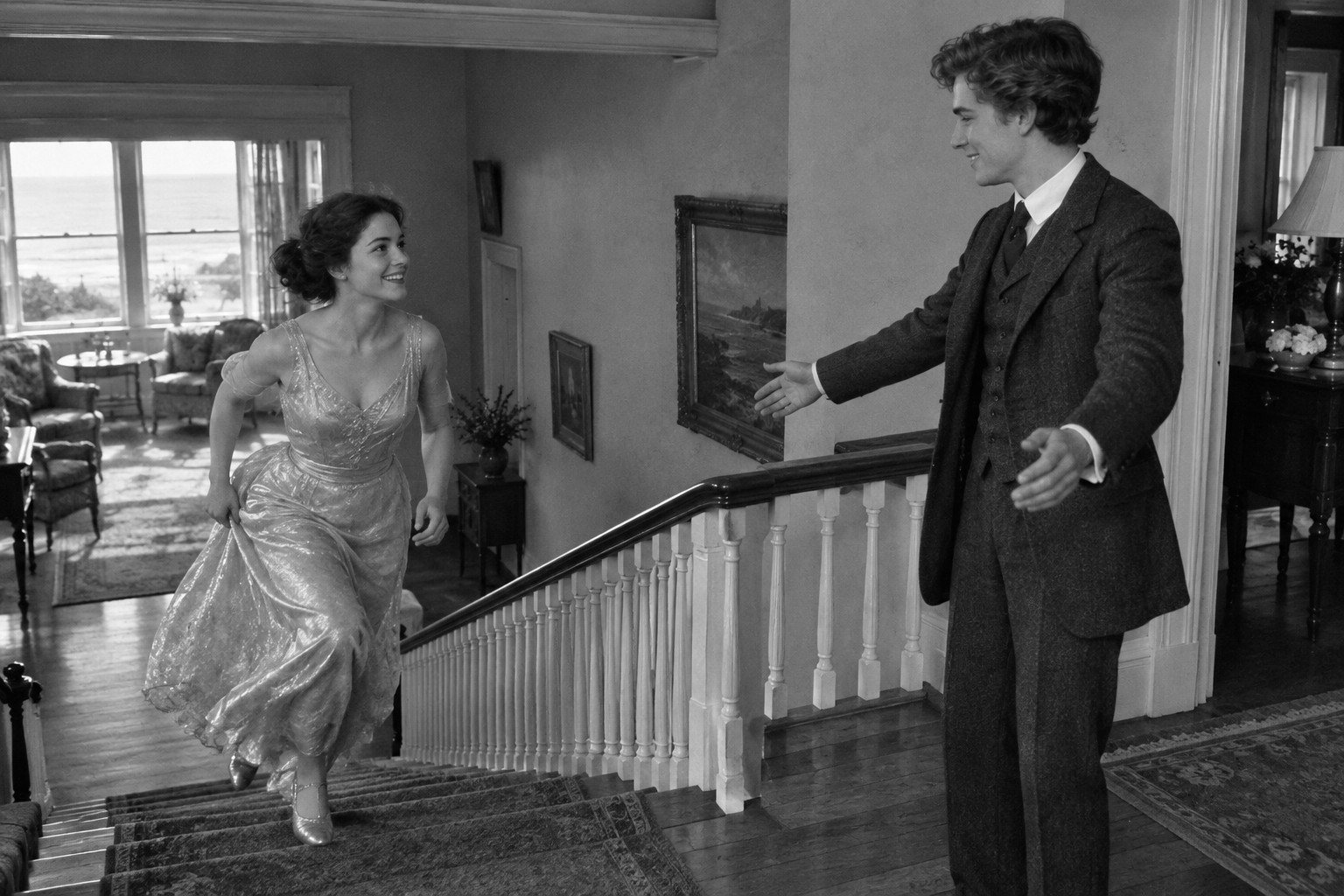
Silently he admired himself. How conveniently well he looked, and how well a dinner coat became him. He stepped into the hall and then waited at the top of the stairs, for he heard footsteps coming. It was Isabelle, and from the top of her shining hair to her little golden slippers she had never seemed so beautiful.
“Isabelle!” he cried, half involuntarily, and held out his arms. As in the story-books, she ran into them, and on that half-minute, as their lips first touched, rested the high point of vanity, the crest of his young egotism.