Two Thanksgiving Day Gentlemen — full text
Complete and unaltered, as performed. Read along, or read it after.
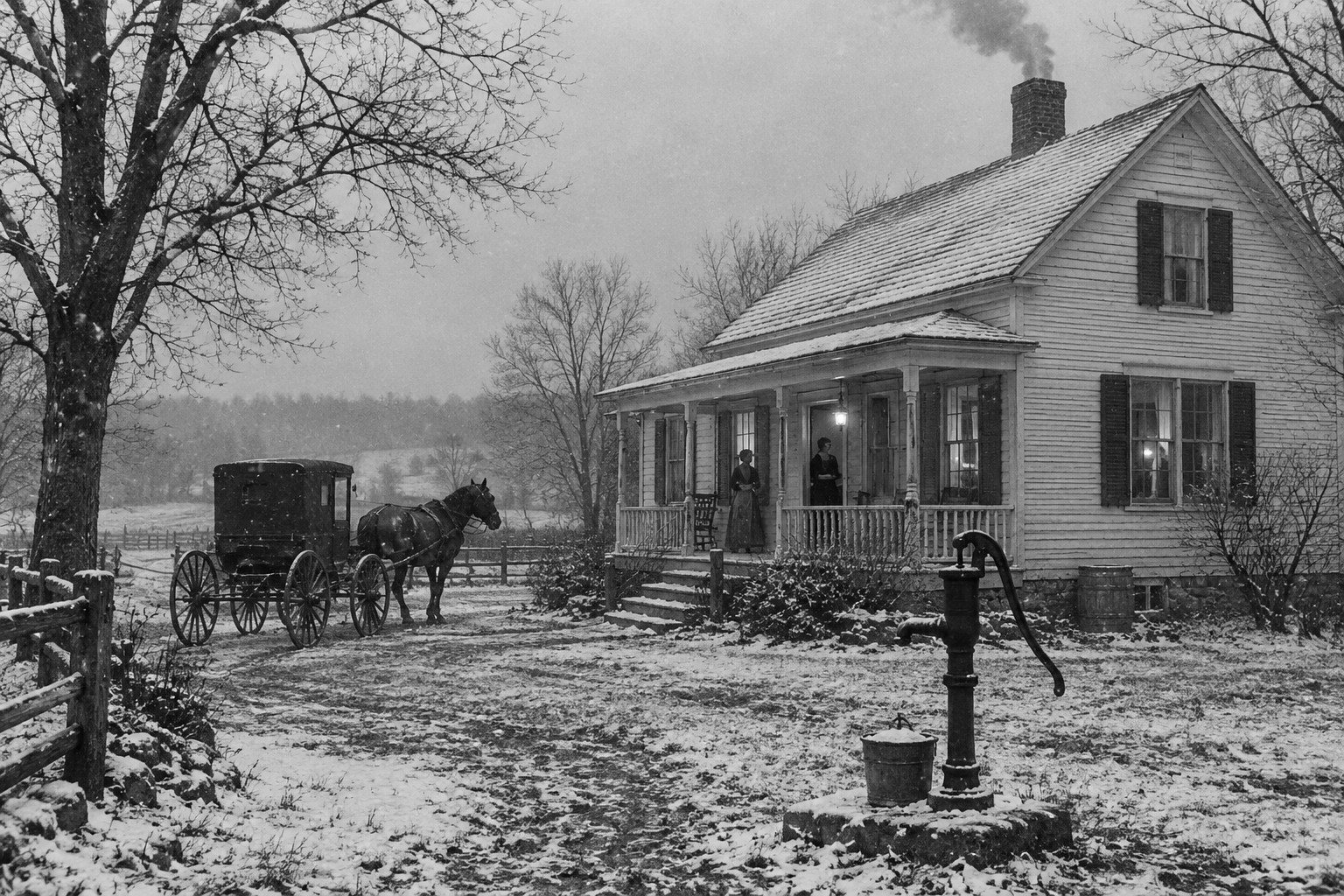
THERE is one day that is ours. There is one day when all we Americans who are not self-made go back to the old home to eat saleratus biscuits and marvel how much nearer to the porch the old pump looks than it use to. Bless the day. President Roosevelt gives it to us. We hear some talk of the Puritans, but don’t just remember who they were. Bet we can lick ’em, anyhow, if they try to land again. Plymouth Rocks? Well, that sounds more familiar. Lots of us have had to come down to hens since the Turkey Trust got its work in. Bet somebody in Washington is leaking out advance information to ’em about these Thanksgiving proclamations.
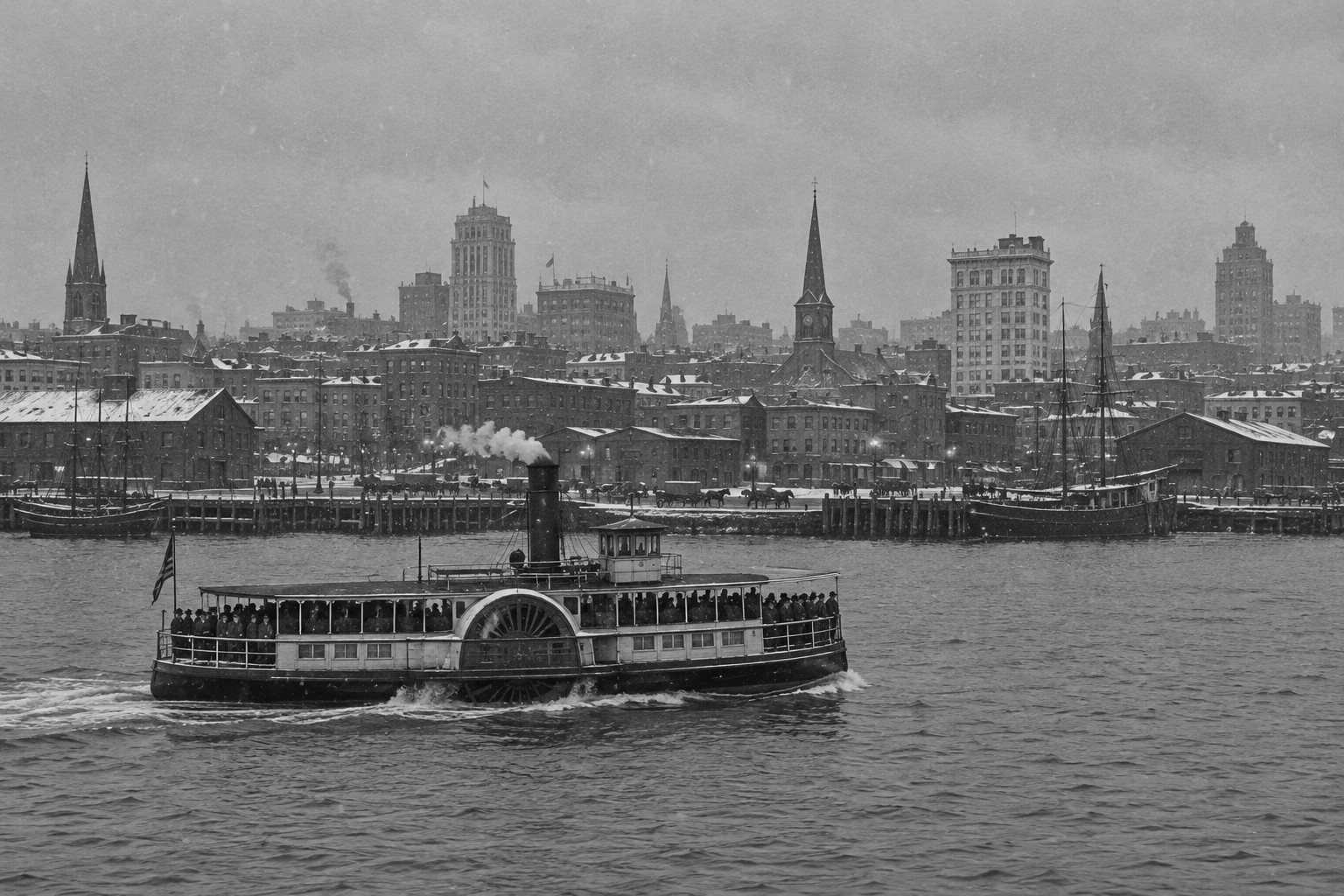
The big city east of the cranberry bogs has made Thanksgiving Day an institution. The last Thursday in November is the only day in the year on which it recognizes the part of America lying across the ferries. It is the one day that is purely American. Yes, a day of celebration, exclusively American.
And now for the story, which is to prove to you that we have traditions on this side of the ocean that are becoming older at a much rapider rate than those of England are—thanks to our git-up and enterprise.
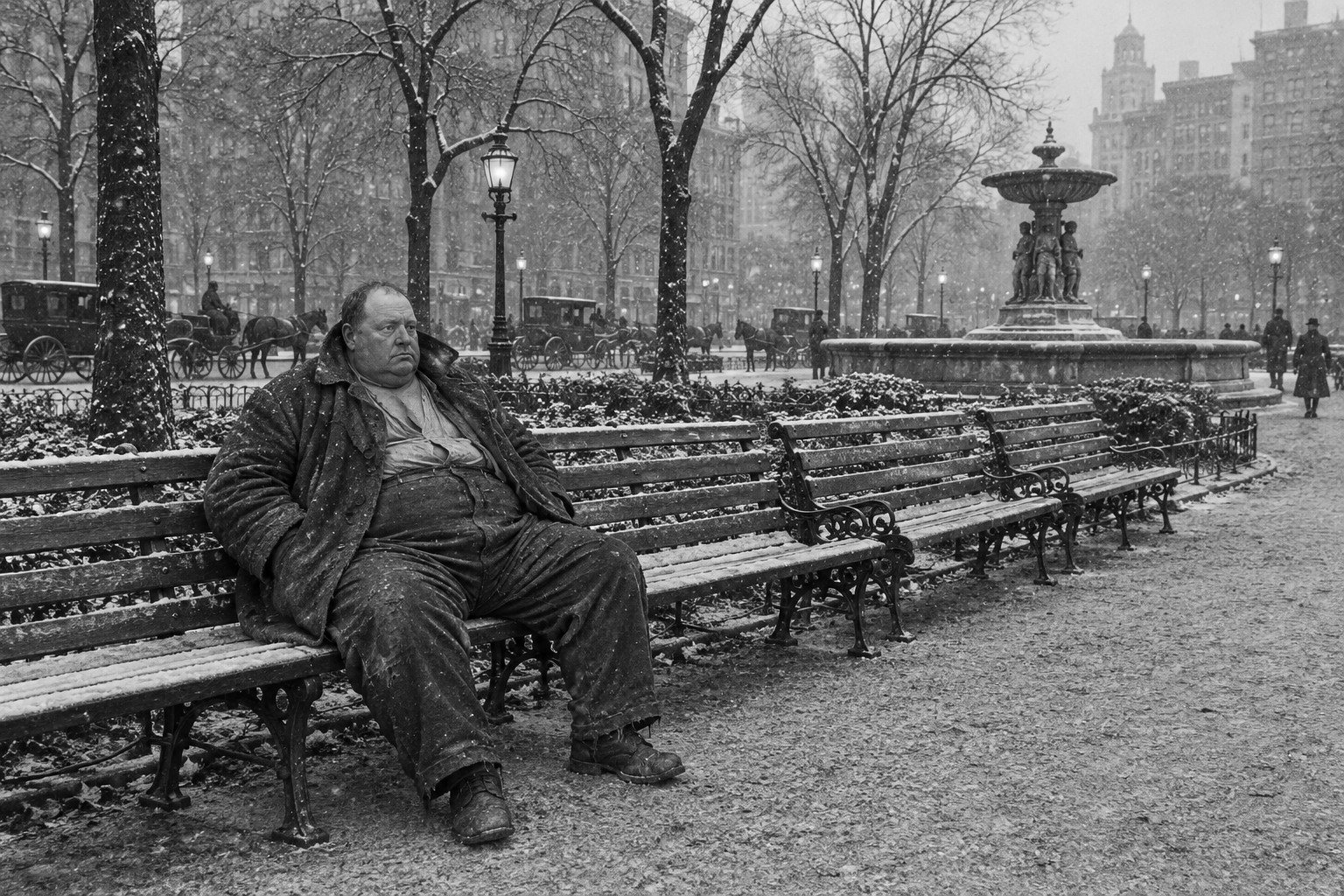
Stuffy Pete took his seat on the third bench to the right as you enter Union Square from the east, at the walk opposite the fountain. Every Thanksgiving Day for nine years he had taken his seat there promptly at 1 o’clock. For every time he had done so things had happened to him—Charles Dickensy things that swelled his waistcoat above his heart, and equally on the other side.
But to-day Stuffy Pete’s appearance at the annual trysting place seemed to have been rather the result of habit than of the yearly hunger which, as the philanthropists seem to think, afflicts the poor at such extended intervals.
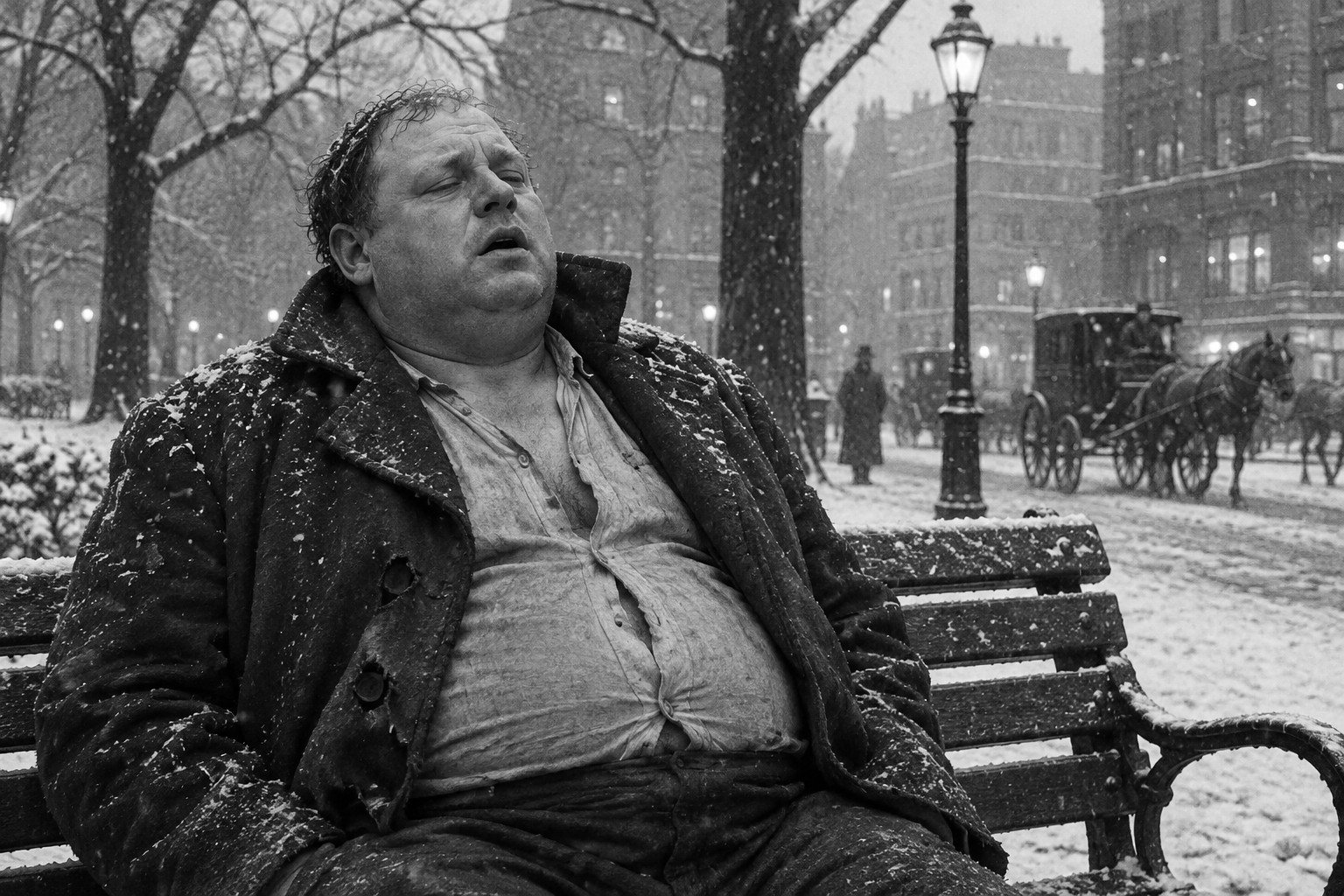
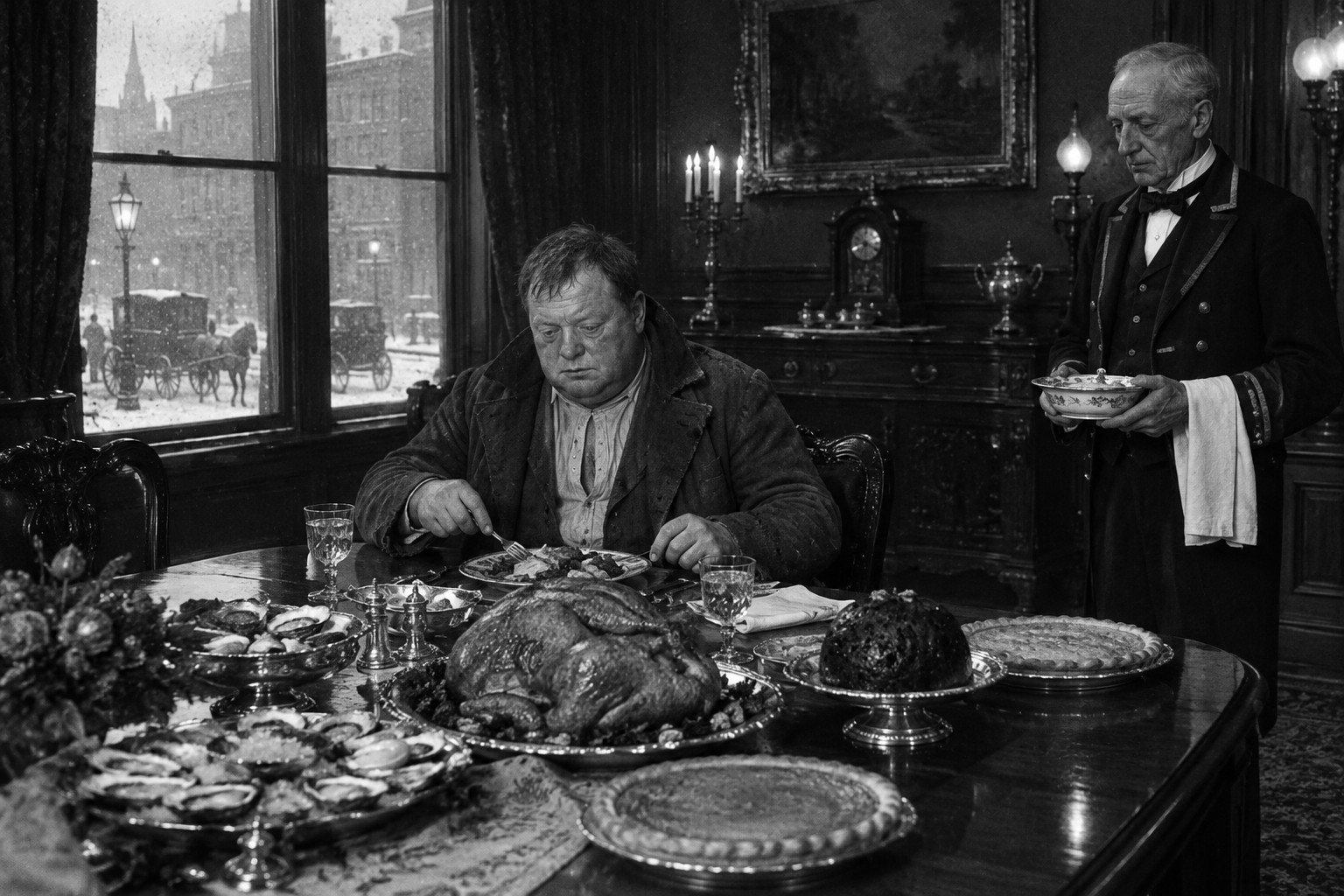
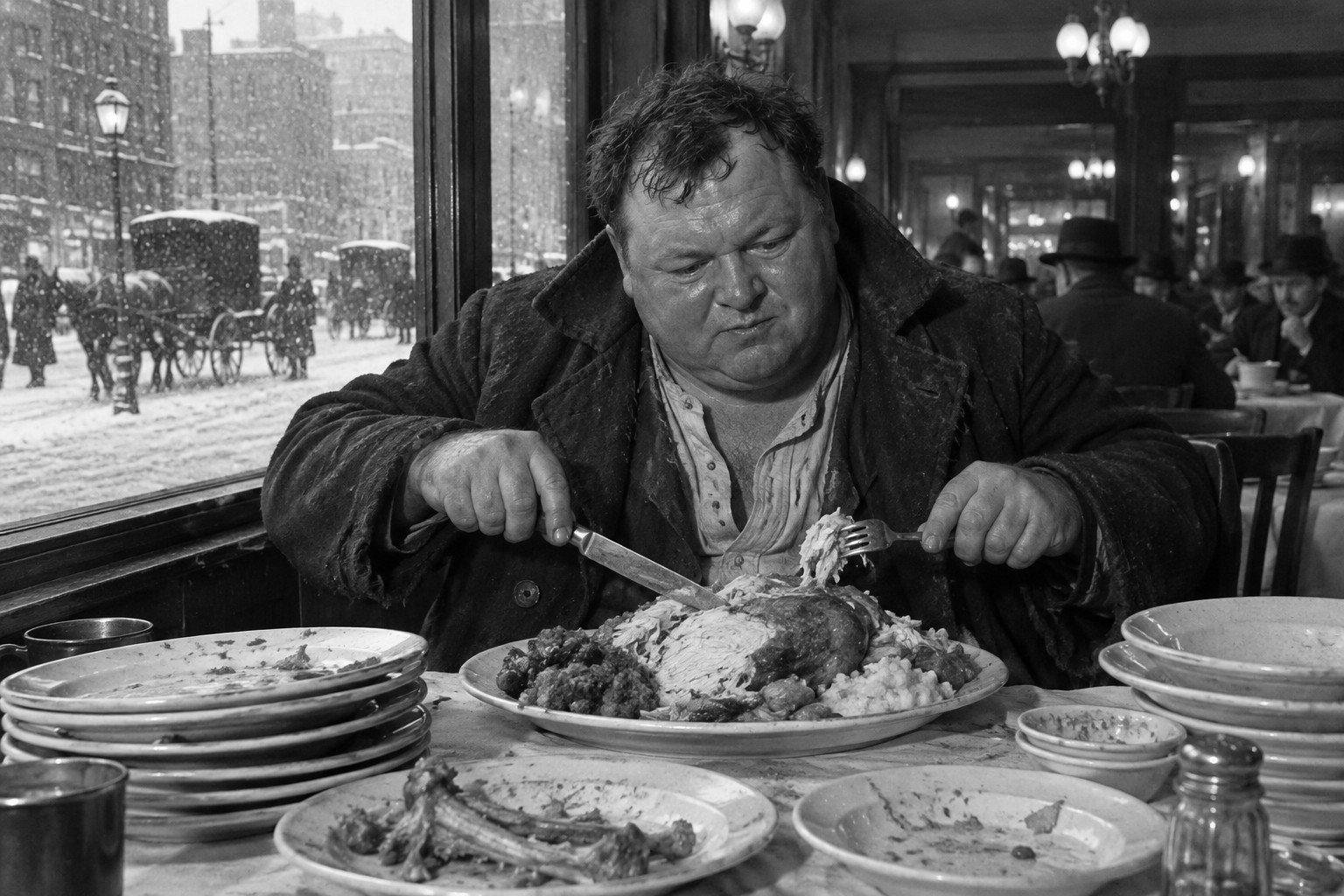
Certainly Pete was not hungry. He had just come from a feast that had left him of his powers barely those of respiration and locomotion. His eyes were like two pale gooseberries firmly imbedded in a swollen and gravy-smeared mask of putty. His breath came in a short wheezes; a senatorial roll of adipose tissue denied a fashionable set to his upturned coat collar. Buttons that had been sewed upon his clothes by kind Salvation fingers a week before flew like popcorn, strewing the earth around him. Ragged he was, with a split shirt front open to the wishbone; but the November breeze, carrying fine snowflakes, brought him only a grateful coolness. For Stuffy Pete was overcharged with the caloric produced by a super-bountiful dinner, beginning with oysters and ending with plum pudding, and including (it seemed to him) all the roast turkey and baked potatoes and chicken salad and squash pie and ice cream in the world.
Wherefore he sat, gorged, and gazed upon the world with after-dinner contempt.
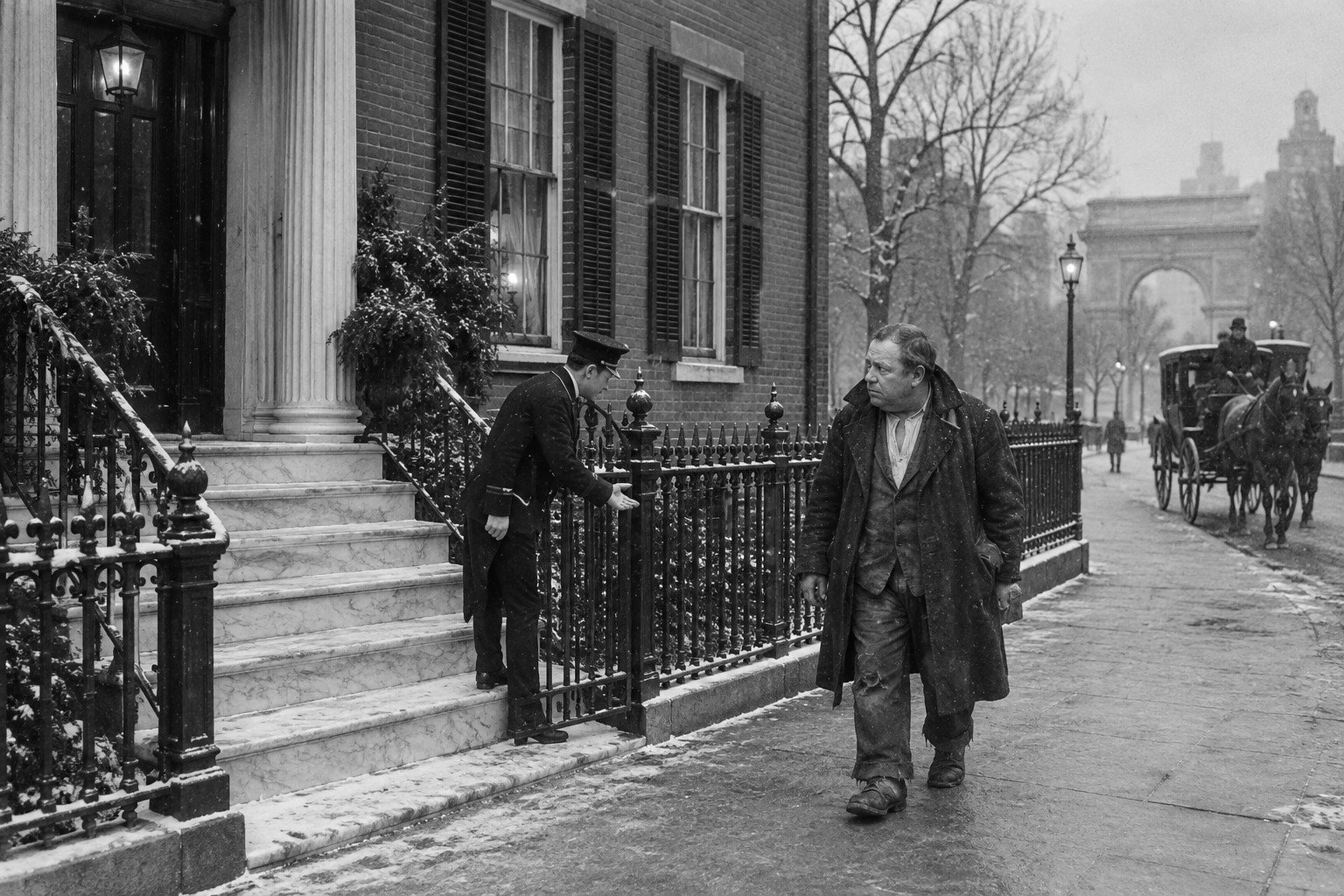
The meal had been an unexpected one. He was passing a red brick mansion near the beginning of Fifth avenue, in which lived two old ladies of ancient family and a reverence for traditions. They even denied the existence of New York, and believed that Thanksgiving Day was declared solely for Washington Square. One of their traditional habits was to station a servant at the postern gate with orders to admit the first hungry wayfarer that came along after the hour of noon had struck, and banquet him to a finish. Stuffy Pete happened to pass by on his way to the park, and the seneschals gathered him in and upheld the custom of the castle.
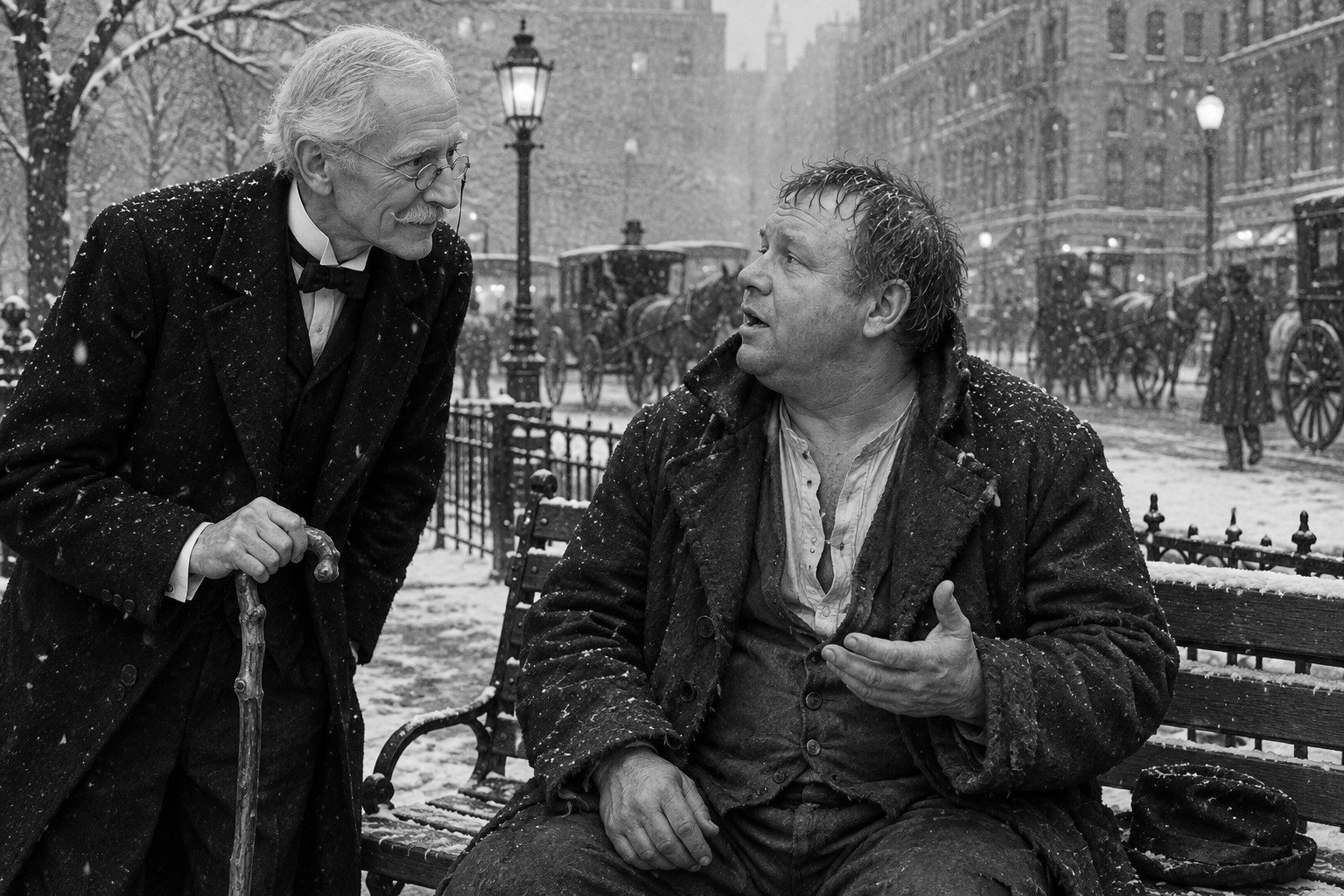
After Stuffy Pete had gazed straight before him for ten minutes he was conscious of a desire for a more varied field of vision. With a tremendous effort he moved his head slowly to the left. And then his eyes bulged out fearfully, and his breath ceased, and the rought-shod ends of his short legs wriggled and rustled on the gravel.
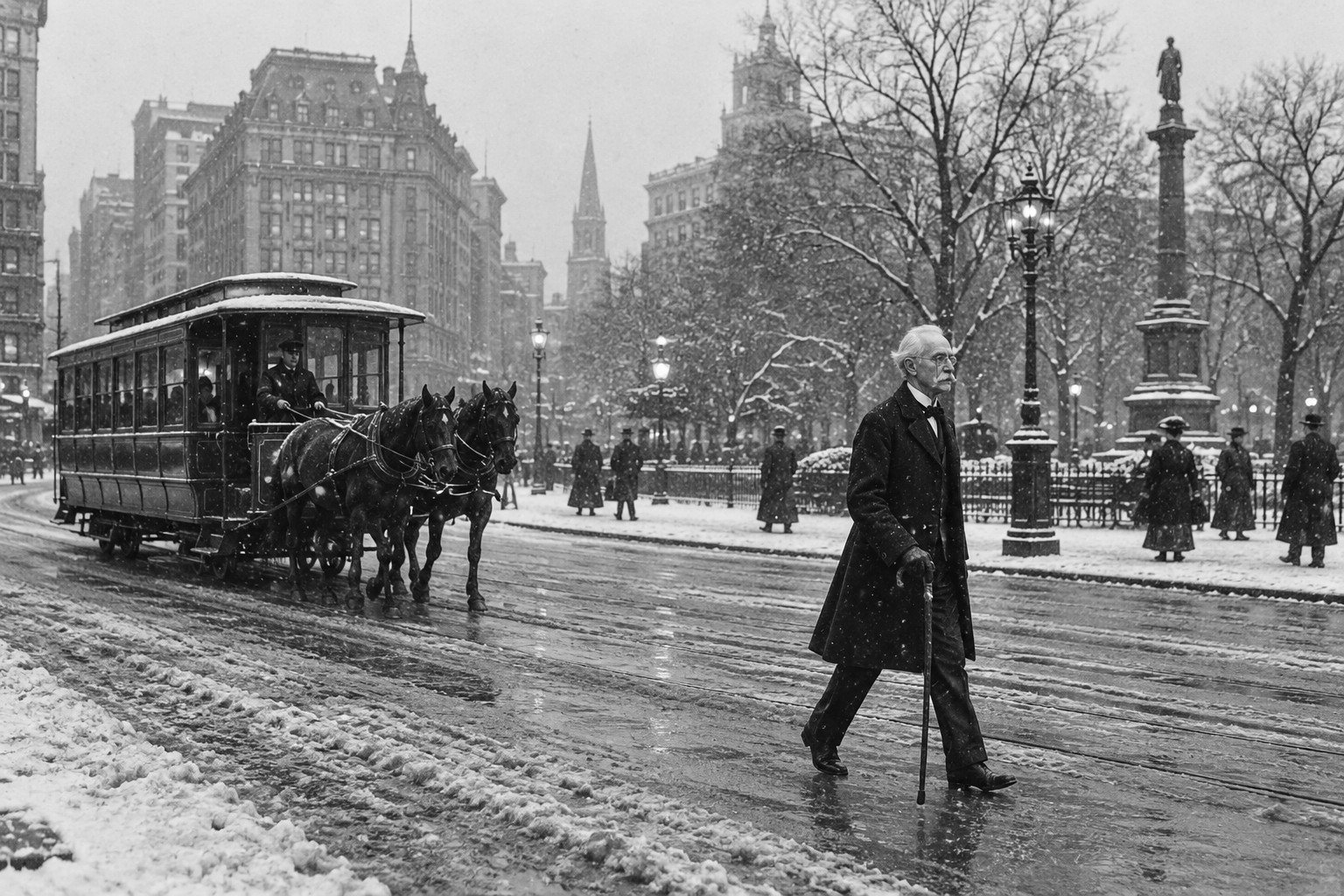
For the Old Gentleman was coming across Fourth avenue toward his bench.
Every Thanksgiving Day for nine years the Old Gentleman had come there and found Stuffy Pete on his bench. That was a thing that the Old Gentleman was trying to make a tradition of. Every Thanksgiving Day for nine years he had found Stuffy there, and had led him to a restaurant and watched him eat a big dinner. They do those things in England unconsciously. But this is a young country, and nine years is not so bad. The Old Gentleman was a staunch American patriot, and considered himself a pioneer in American tradition. In order to become picturesque we must keep on doing one thing for a long time without ever letting it get away from us. Something like collecting the weekly dimes in industrial insurance. Or cleaning the streets.
The Old Gentleman moved, straight and stately, toward the Institution that he was rearing. Truly, the annual feeding of Stuffy Pete was nothing national in its character, such as the Magna Charta or jam for breakfast was in England. But it was a step. It was almost feudal. It showed, at least, that a Custom was not impossible to New Y—ahem!—America.
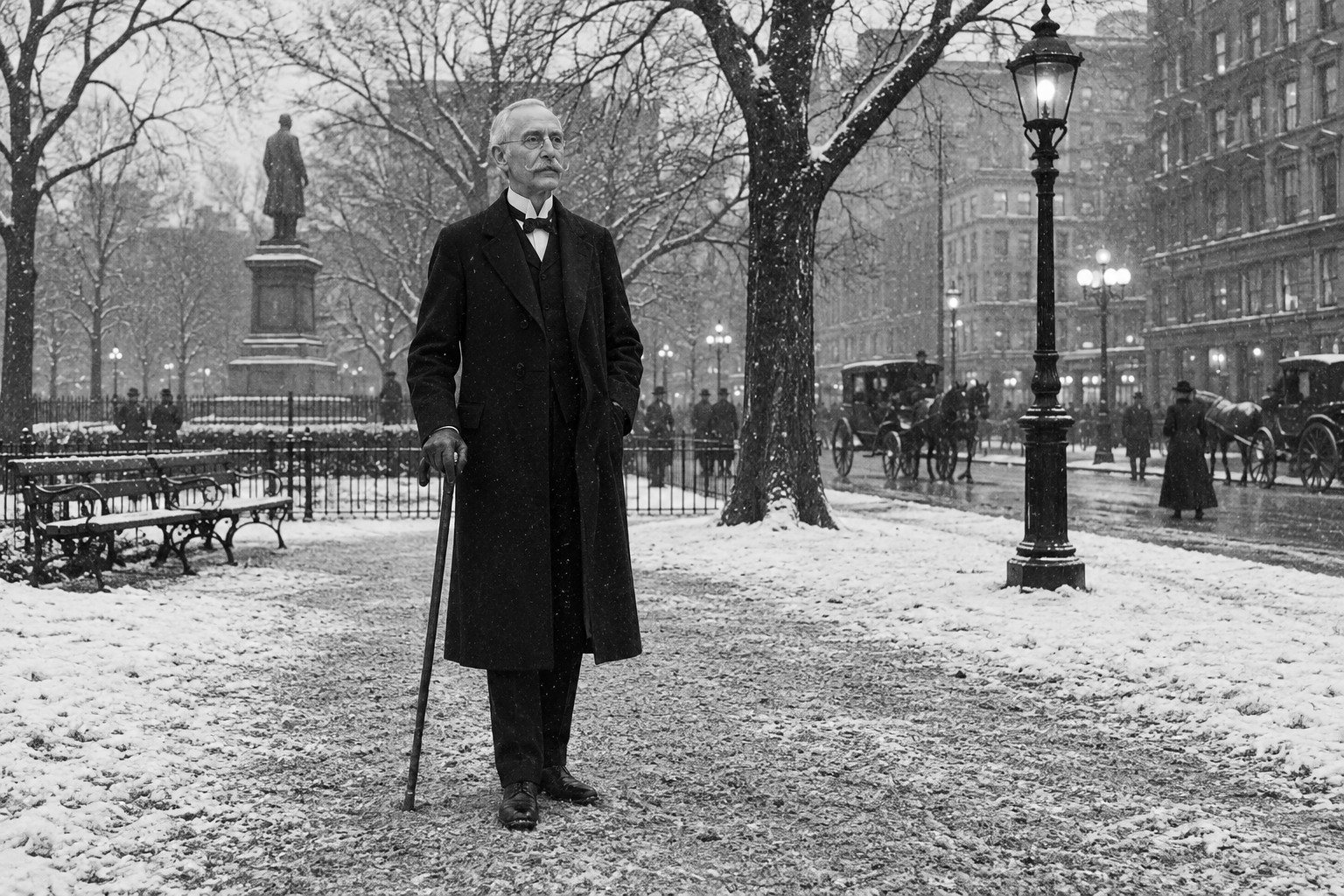
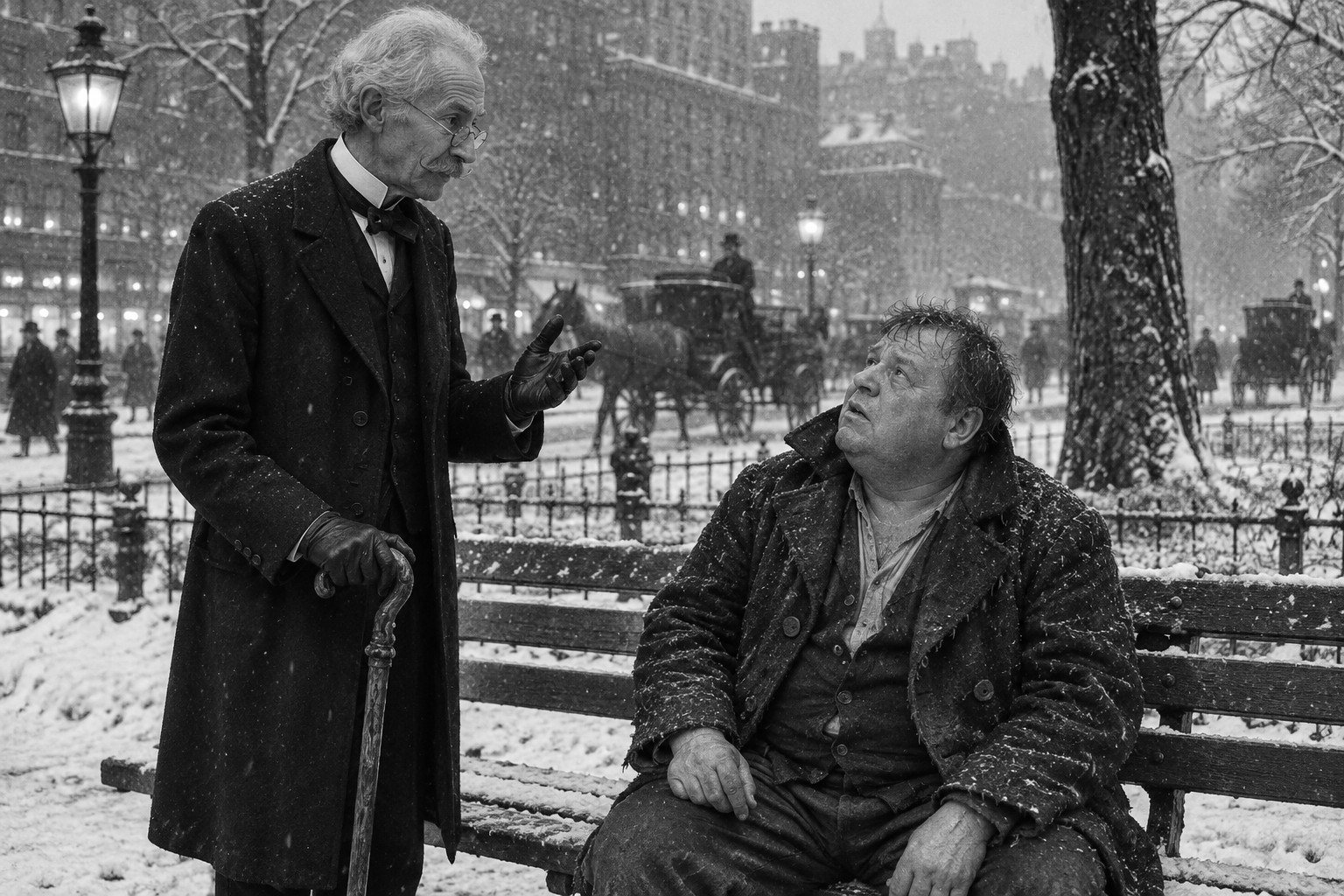
The Old Gentleman was thin and tall and sixty. He was dressed all in black, and wore the old-fashioned kind of glasses that won’t stay on your nose. His hair was whiter and thinner than it had been last year, and he seemed to make more use of his big, knobby cane with the crooked handle.
As his established benefactor came up Stuffy wheezed and shuddered like some woman’s over-fat pug when a street dog bristles up at him. He would have flown, but all the skill of Santos-Dumont could not have separated him from his bench. Well had the myrmidons of the two old ladies done their work.
“Good morning,” said the Old Gentleman. “I am glad to perceive that the vicissitudes of another year have spared you to move in health about the beautiful world. For that blessing alone this day of thanksgiving is well proclaimed to each of us. If you will come with me, my man, I will provide you with a dinner that should make your physical being accord with the mental.”
That is what the Old Gentleman said every time. Every Thanksgiving Day for nine years. The words themselves almost formed an Institution. Nothing could be compared with them except the Declaration of Independence. Always before they had been music in Stuffy’s ears. But now he looked up at the Old Gentleman’s face with tearful agony in his own. The fine snow almost sizzled when it fell upon his perspiring brow. But the Old Gentleman shivered a little and turned his back to the wind.
Stuffy had always wondered why the Old Gentleman spoke his speech rather sadly. He did not know that it was because he was wishing every time that he had a son to succeed him. A son who would come there after he was gone—a son who would stand proud and strong before some subsequent Stuffy, and say: “In memory of my father.” Then it would be an Institution.
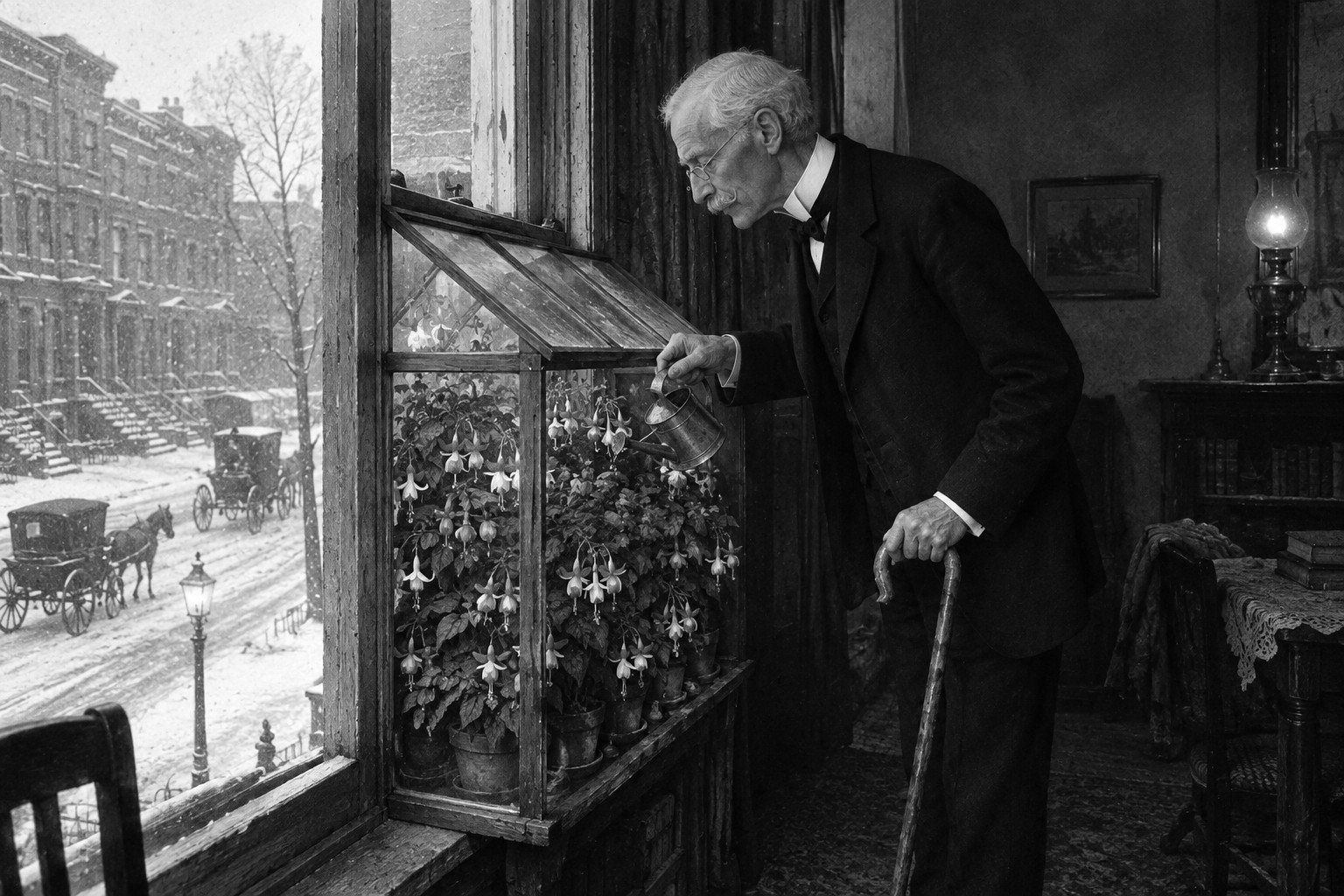
But the Old Gentleman had no relatives. He lived in rented rooms in one of the decayed old family brownstone mansions in one of the quiet streets east of the park. In the winter he raised fuschias in a little conservatory the size of a steamer trunk. In the spring he walked in the Easter parade. In the summer he lived at a farmhouse in the New Jersey hills, and sat in a wicker armchair, speaking of a butterfly, the ornithoptera amphrisius, that he hoped to find some day. In the autumn he fed Stuffy a dinner. These were the Old Gentleman’s occupations.
Stuffy Pete looked up at him for a half minute, stewing and helpless in his own self-pity. The Old Gentleman’s eyes were bright with the giving-pleasure. His face was getting more lined each year, but his little black necktie was in as jaunty a bow as ever, and his linen was beautiful and white, and his gray mustache was curled carefully at the ends. And then Stuffy made a noise that sounded like peas bubbling in a pot. Speech was intended; and as the Old Gentleman had heard the sounds nine times before, he rightly construed them into Stuffy’s old formula of acceptance.
“Thankee, sir. I’ll go with ye, and much obliged. I’m very hungry, sir.”
The coma of repletion had not prevented from entering Stuffy’s mind the conviction that he was the basis of an Institution. His Thanksgiving appetite was not his own; it belonged by all the sacred rights of established custom, if not by the actual Statute of Limitations, to this kind old gentleman who had preempted it. True, America is free; but in order to establish tradition some one must be a repetend—a repeating decimal. The heroes are not all heroes of steel and gold. See one here that wielded only weapons of iron, badly silvered, and tin.
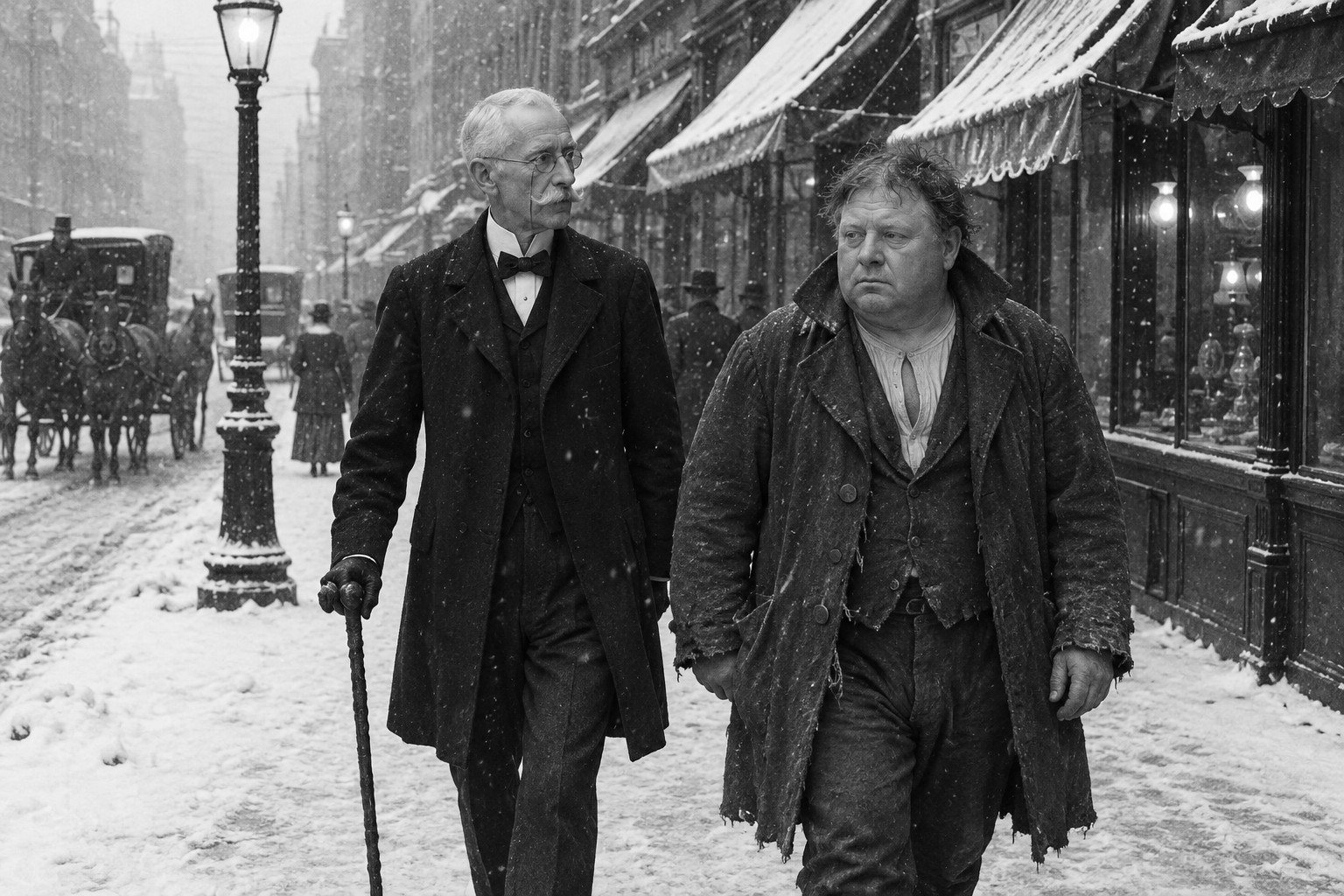
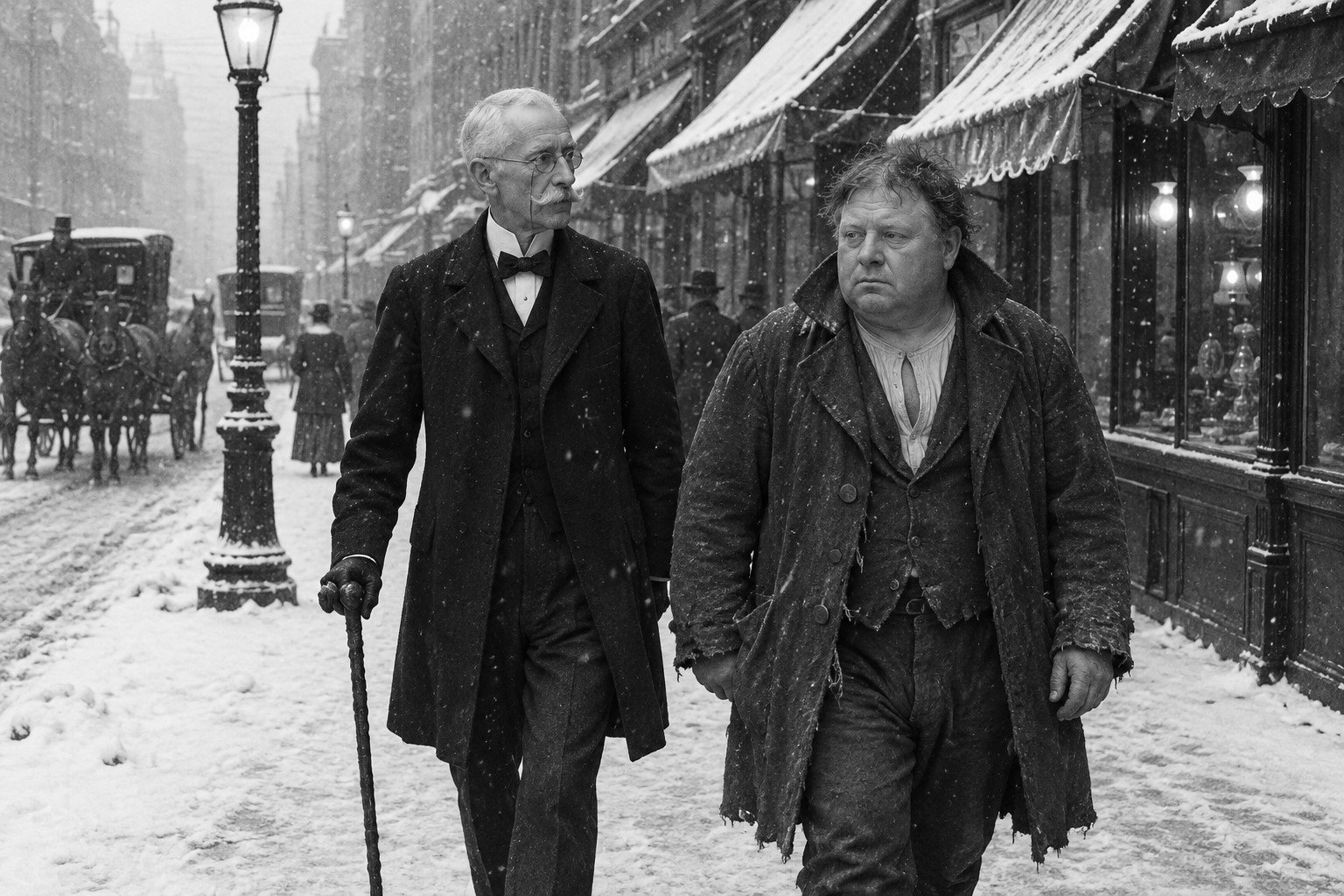
The Old Gentleman led his annual protégé southward to the restaurant, and to the table where the feast had always occurred. They were recognized.
“Here comes de old guy,” said a waiter, “dat blows dat same bum to a meal every, Thanksgiving.”
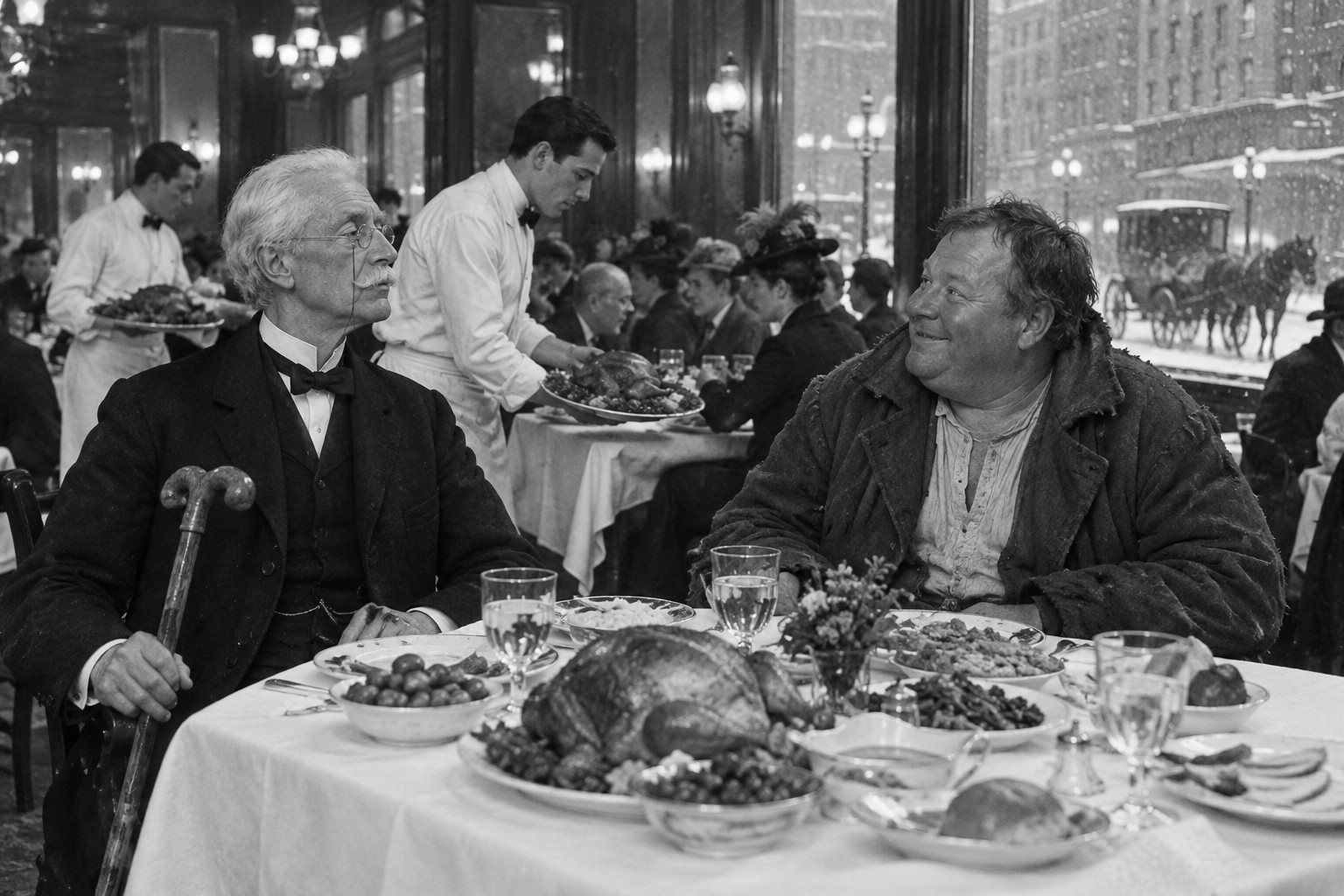
The Old Gentleman sat across the table glowing like a smoked pearl at his corner-stone of future ancient Tradition. The waiters heaped the table with holiday food—and Stuffy, with a sigh that was mistaken for hunger’s expression, raised knife and fork and carved for himself a crown of imperishable bay.
No more valiant hero ever fought his way through the ranks of an enemy. Turkey, chops, soups, vegetables, pies, disappeared before him as fast as they could be served. Gorged nearly to the uttermost when he entered the restaurant, the smell of food had almost caused him to lose his honor as a gentleman, but he rallied like a true knight. He saw the look of beneficent happiness on the Old Gentleman’s face—a happier look than even the fuschias and the ornithoptera amphrisus had ever brought to it—and he had not the heart to see it wane.
In an hour Stuffy, leaned back with a battle won.
“Thankee kindly, sir,” he puffed like a leaky steam pipe; “thankee kindly for a hearty meal.”
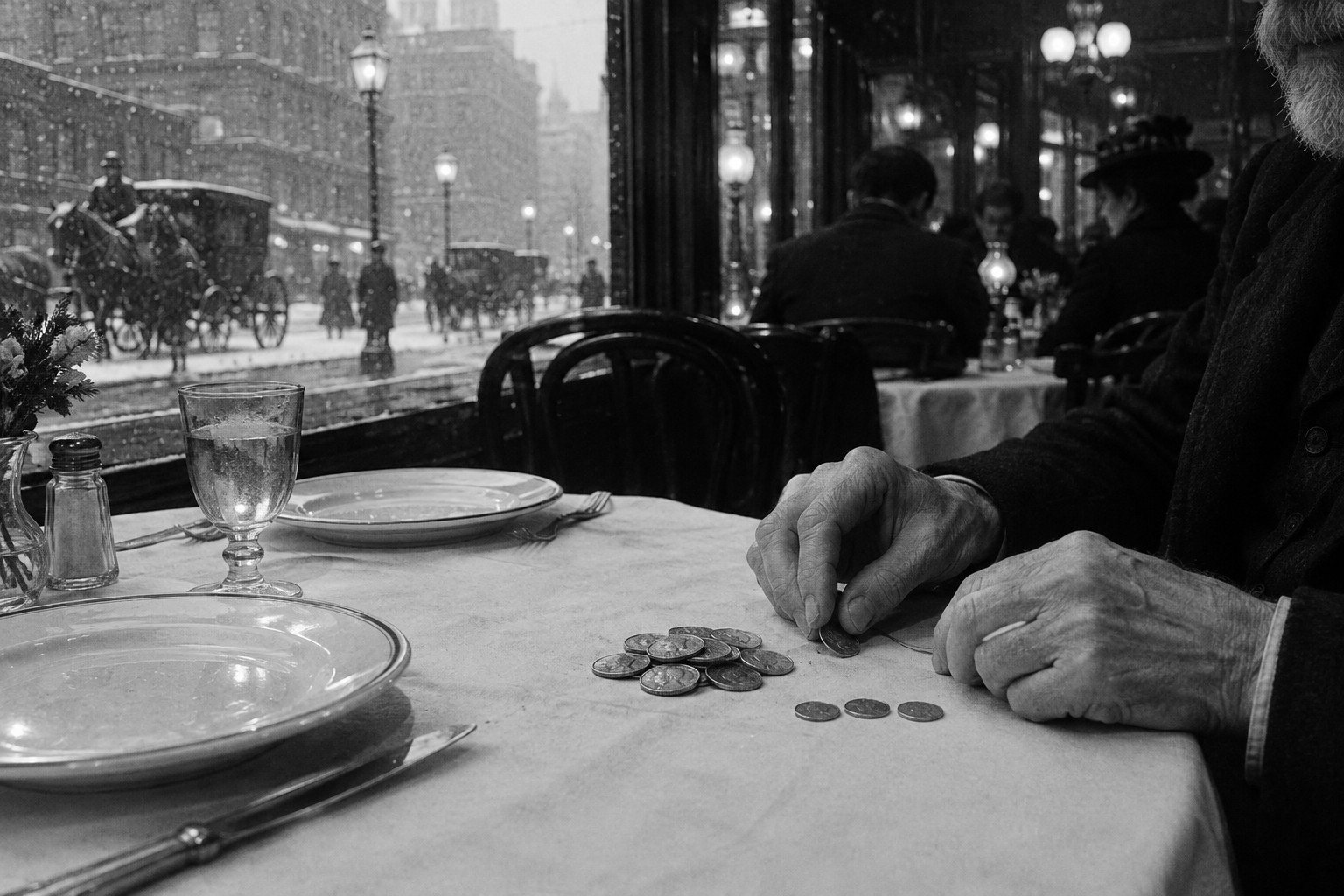
Then he arose heavily with glazed eyes and started toward the kitchen. A waiter turned him about like a top, and pointed him toward the door. The Old Gentleman carefully counted out $1.30 in silver change, leaving three nickels for the waiter.
They parted as they did each year at the door, the Old Gentleman going south, Stuffy north.
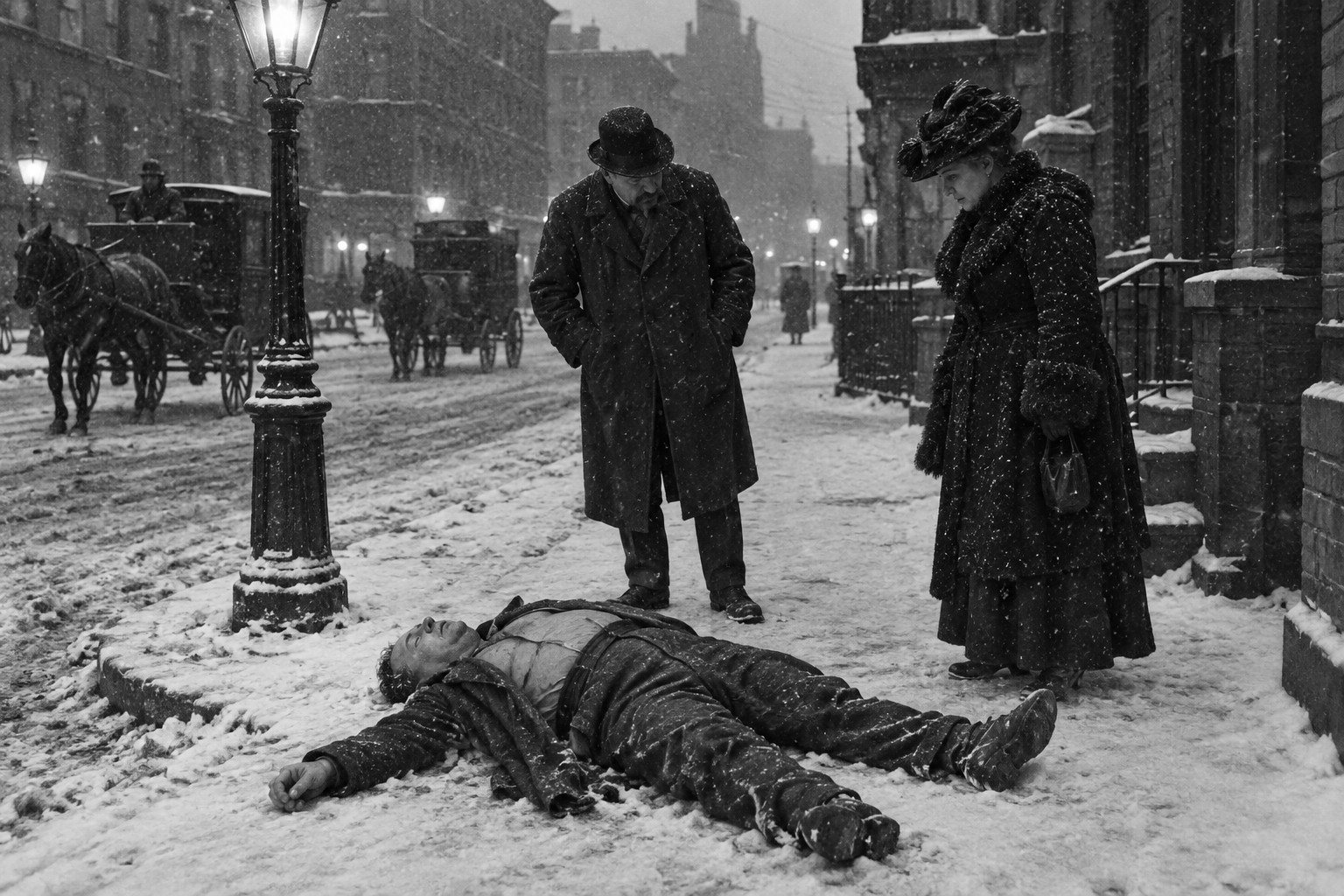
Around the first corner Stuffy turned, and stood for one minute. Then he seemed to puff out his rags as an owl puffs out his feathers, and fell to the sidewalk like a sunstricken horse.
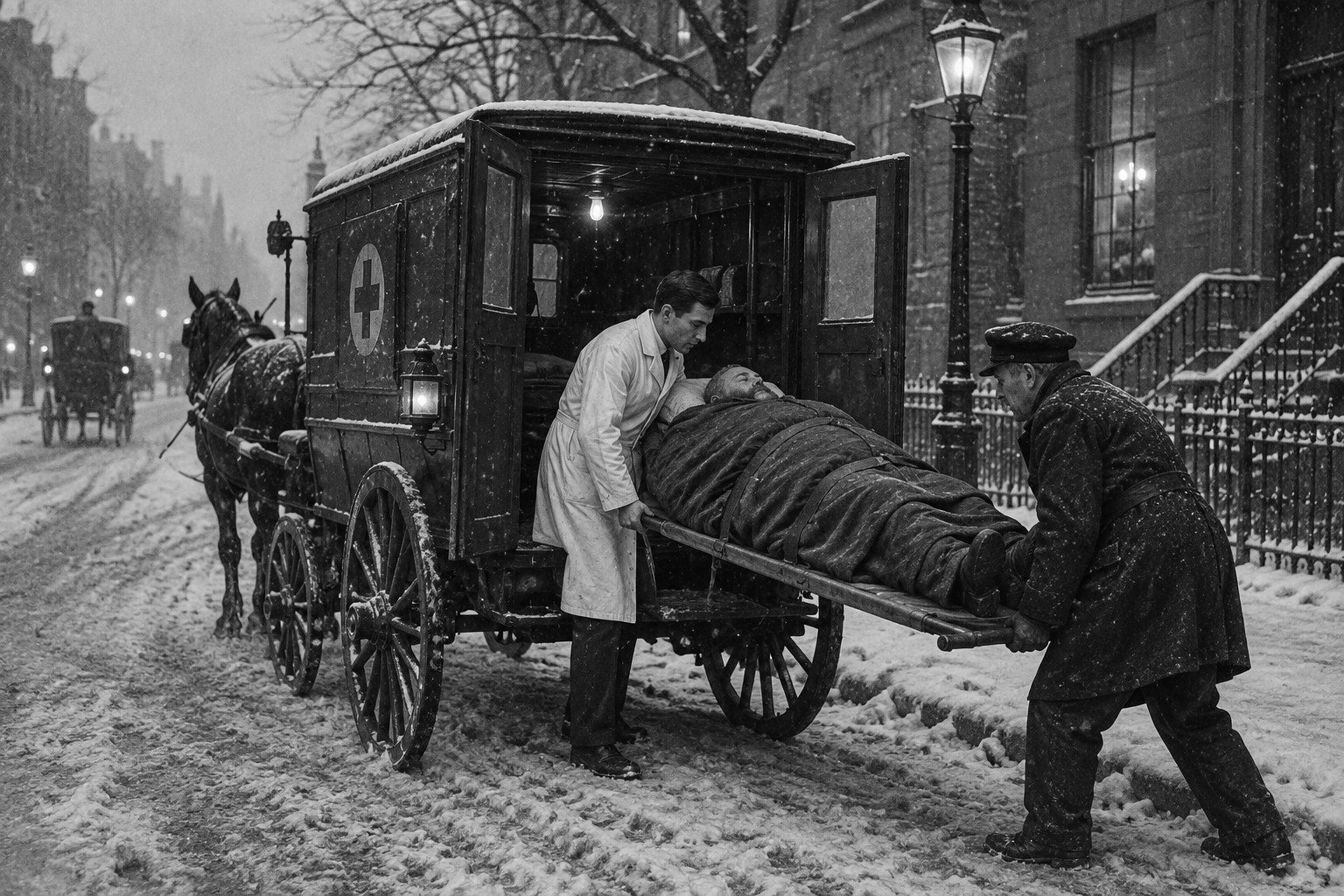
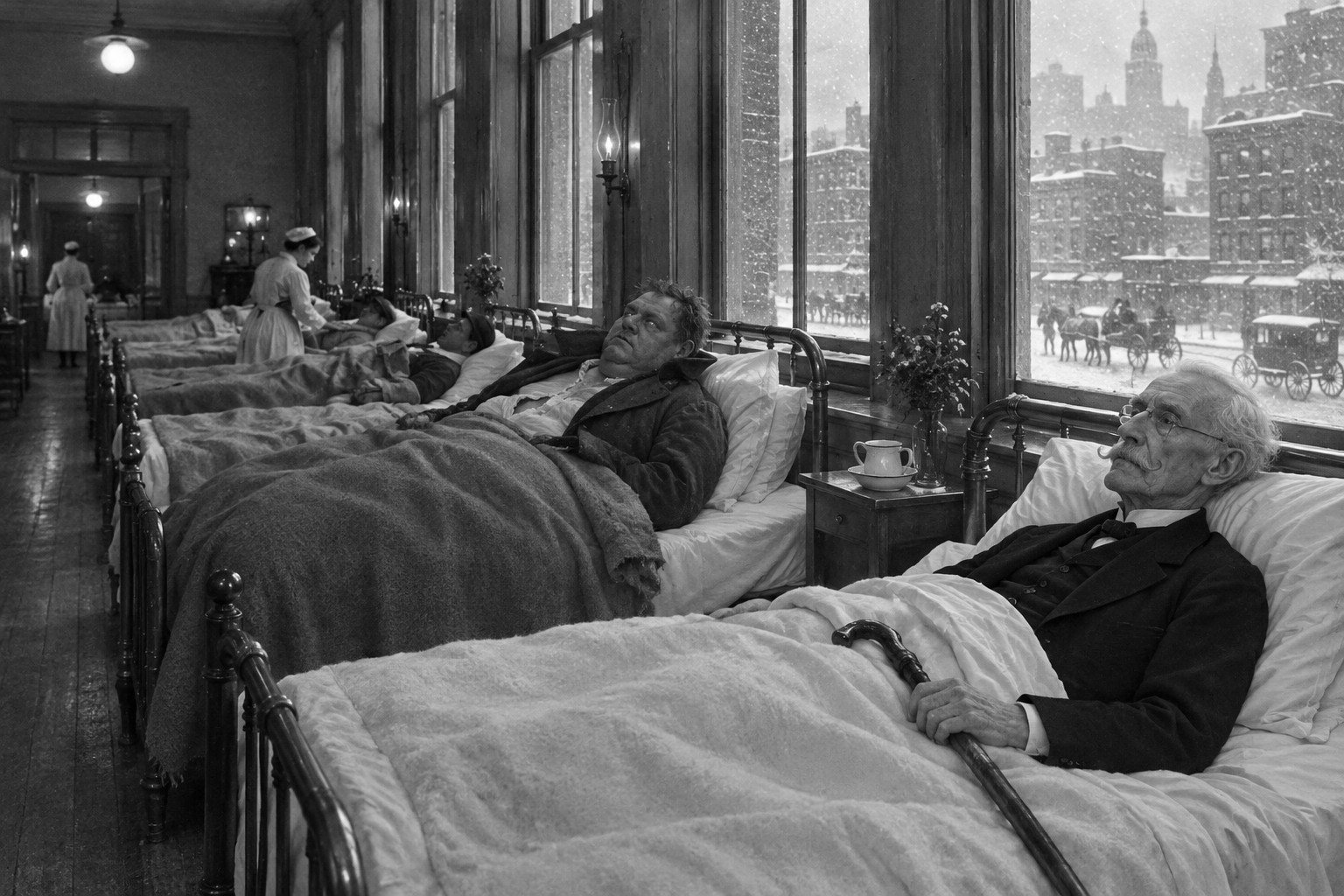
When the ambulance came the young surgeon and the driver cursed softly at his weight. There was no smell of whiskey to justify a transfer to the patrol wagon, so Stuffy and his two dinners went to the hospital. There they stretched him on a bed and began to test him for strange diseases, with the hope of getting a chance at some problem with the bare steel.
And lo! an hour later another ambulance brought the Old Gentleman. And they laid him on another bed and spoke of appendicitis, for he looked good for the bill.
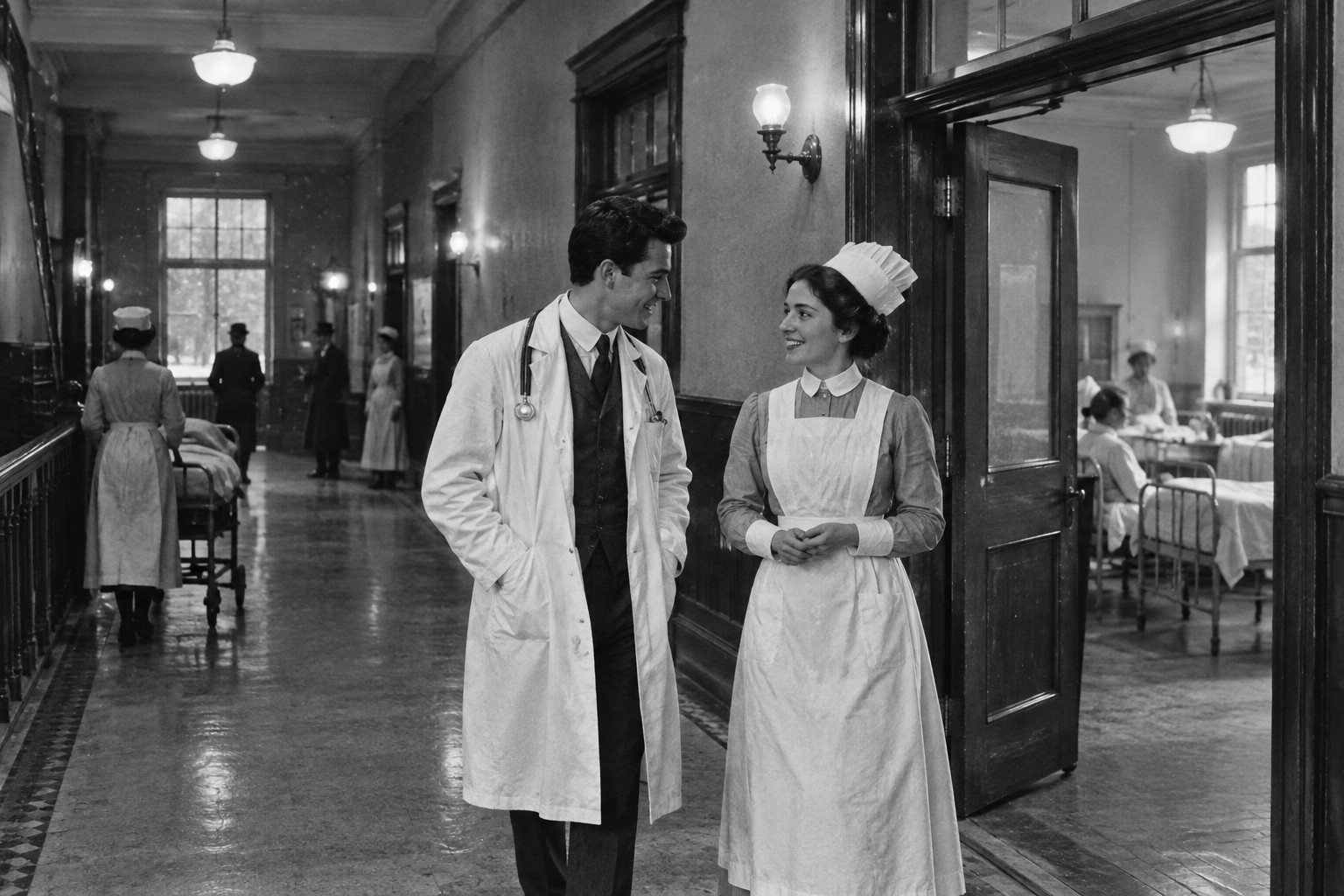
But pretty soon one of the young doctors met one of the young nurses whose eyes he liked, and stopped to chat with her about the cases.
“That nice old gentleman over there, now,” he said, “you wouldn’t think that was a case of almost starvation. Proud old family, I guess. He told me he hadn’t eaten a thing for three days.”